
STEADI: intervene
Winter-Proof Your Parent's Home to Prevent Cold-Weather Falls
This room-by-room checklist addresses winter-specific hazards like icy entryways, wet floors from melting snow, and reduced daylight. It helps prevent falls and hypothermia in older adults aging at home.
The first winter fall hazard is often just inside the door. A parent comes in with snow packed into boot treads, steps onto tile or laminate, reaches for the wall instead of a rail, and crosses a dim entry before the puddle is even visible. By late afternoon, the light is already poor. If the house is chilly, stiff knees and slower reactions make that small slip harder to correct.
That is why cold weather precautions for elderly parents need to be more specific than a general “remove clutter” checklist. More than half of older-adult falls happen at home, and winter adds wet thresholds, ice, shorter daylight, and indoor temperature problems to the usual risks.[1] The stakes are not minor: CDC fall-prevention materials note about 3 million emergency department visits each year from older-adult falls, and NCOA cites 1 million hospitalizations.[2][1]
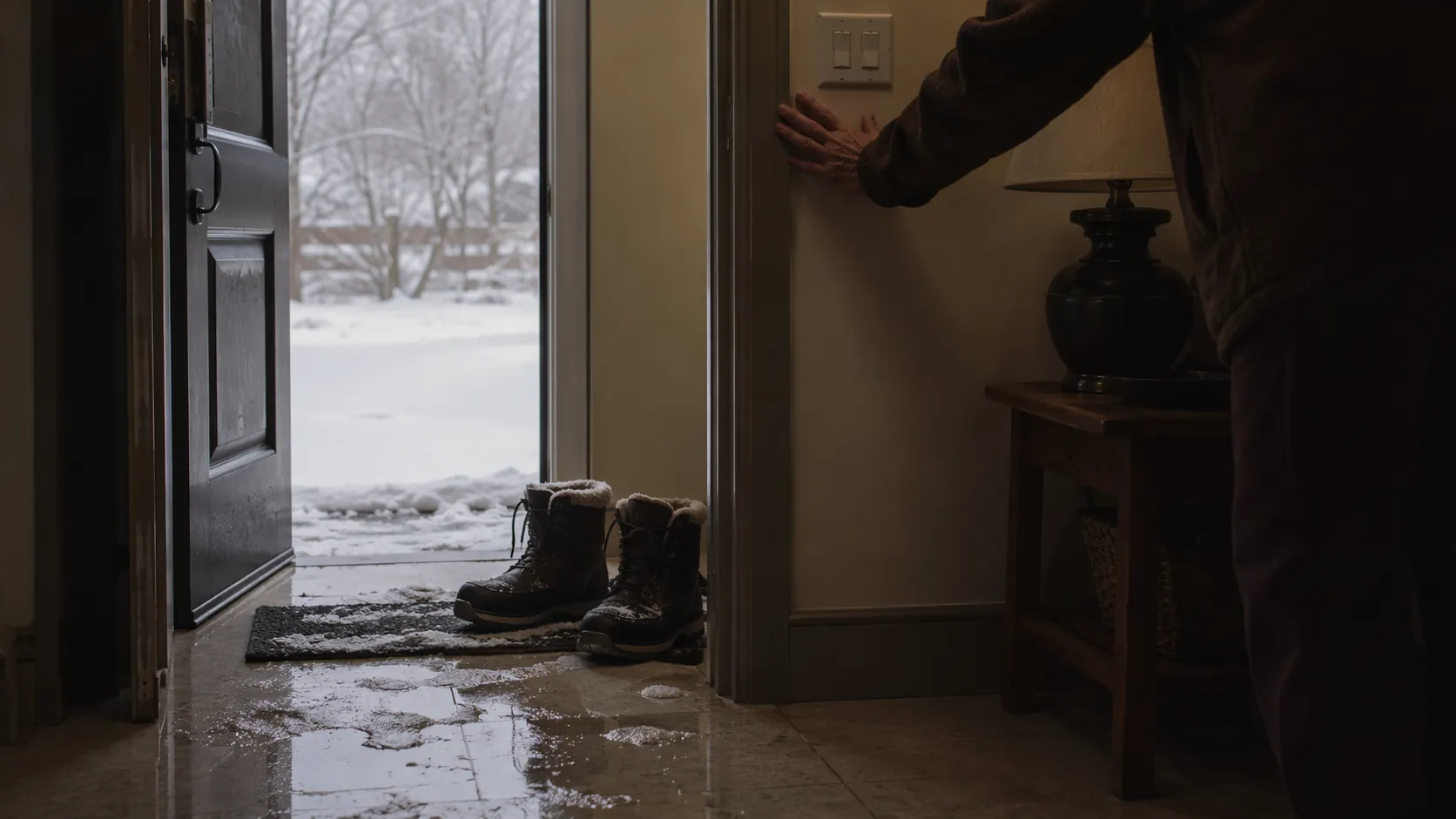
The walkthrough below assumes you have one afternoon, not a remodeling budget. Use a broader room-by-room fall prevention checklist as the baseline, then add these winter-specific checks before the next freeze.
Start Where Outside Weather Enters the House
Stand at the entrance your parent actually uses, not the front door you wish they used. In many homes, the daily route is the garage step, the side porch, the back door near the driveway, or a basement entrance with one awkward stair. That is where snow melts, bags get carried in, and a person tries to keep moving instead of stopping to reset.
| Check | What to Change Before Winter |
|---|---|
| Outside approach | Keep the walking path shoveled, treated, and wide enough for a cane, walker, or helper. |
| Porch or step | Add traction material before ice forms; keep a small container near the door so it is used. |
| Door threshold | Replace curled mats; use a low-profile, non-slip mat that does not catch toes or walker legs. |
| Inside landing | Set up a boot-removal spot with a chair, dry non-slip house shoes, and an absorbent mat. |
| Wall reaching | Add a rail or stable grab point if your parent braces on trim, a doorknob, or the wall. |
| Lighting | Make the switch reachable from the door or add motion-sensor lighting for late afternoons. |
Do not count on one welcome mat to solve the problem. The mat outside scrapes snow; the mat inside absorbs meltwater; the chair lets your parent stop before crossing the room in wet boots. If the house has two regularly used entrances, both need the same setup. The “safe” entrance is not safe if it is not the one used with groceries, mail, trash bags, or a dog leash.
NCOA includes several low-cost winter fixes that belong right at this threshold: cat litter can be thrown on slick surfaces for short-term traction, ice-gripper cane tips with metal spikes are listed at about $8 to $15, and spike-free snow-grip shoe covers are listed at about $15 to $25.[1] Those are not guarantees. They are targeted tools for the moments when a cane tip slides, a boot tread packs with snow, or a step becomes glazed before anyone has salted it.
If your parent uses a cane, check the tip before the first storm. A worn rubber tip is already a fall risk on a dry floor; on ice, it becomes a false sense of support. If they use a walker, look at the route from the car to the door and from the door to the nearest chair. A walker cannot help if the cleared path is too narrow or the indoor mat bunches under the front legs.
Dry the First Ten Steps Indoors
After the entry, follow the first ten steps your parent takes inside. This is where melting snow becomes a slick film on wood, tile, vinyl, or laminate. The danger is often hard to see because the floor looks clean; it is just wet enough for one foot to move faster than the other.
- Move shoes, umbrellas, pet bowls, delivery boxes, and laundry baskets out of the walking path.
- Put a washable absorbent mat where wet boots stop, not where the decor looks best.
- Keep a towel nearby for wiping puddles, but do not leave the towel on the floor as a temporary mat.
- Place dry non-slip house shoes within reach so changing footwear is easier than “just walking through.”
- Check that walker wheels, cane tips, and shoe soles are dry before your parent moves farther into the house.
This is also the place to decide whether a habit needs changing. If your parent comes in, keeps wet boots on, and heads straight to the kitchen, the fix is not a lecture about being careful. The fix is making the dry-shoe station so obvious and convenient that it becomes the easiest path.
Check Main Walking Paths Before You Check the Rooms
Winter changes how people move through a house. Coats take up chair backs. Boots sit near heat vents. Holiday bins, blankets, space heaters, and mail piles creep into narrow paths. Walk from the main entrance to the bathroom, bedroom, kitchen, favorite chair, and thermostat. Carry something in one hand while you do it, because your parent often will.
- Clear a continuous path wide enough for the mobility device your parent actually uses.
- Remove throw rugs that curl, slide, or create a raised edge near a turn.
- Secure cords from lamps, heated blankets, chargers, and space heaters away from foot traffic.
- Put frequently used items between waist and shoulder height so reaching does not happen on tiptoe or from a chair.
- Make sure there is a stable place to pause after coming in from the cold.
For a fuller baseline, the CDC STEADI home fall-prevention checklist is useful because it keeps the focus on visible home hazards and personal fall risk together, rather than treating the house as the only problem.
Bathroom: Treat Wet Floors as a Winter Problem, Too
The bathroom is always high-risk, but winter adds two extra pressures: cold floors and urgency. A parent who is chilled may move faster to undress, shower, or get to the toilet. If the bathroom is down a dark hall from the bedroom, the route matters as much as the room.
- Use non-slip bath mats with secure backing; remove any mat that skids when pushed with a foot.
- Check that grab bars are installed into proper support, not suctioned to tile as a main support.
- Keep a robe, towel, and slippers within reach so your parent does not cross the room wet or barefoot.
- Add a night light from bedroom to bathroom, especially during darker winter mornings.
- Move toiletries to reachable shelves so no one stretches from a wet tub or shower floor.
If you can only make one bathroom upgrade now, choose the one that changes where weight is placed: a properly installed grab bar, a shower chair if standing endurance is poor, or a raised toilet seat if standing from low surfaces has become difficult. Decorative changes can wait.
Bedroom: Make Cold, Dark Movement Less Likely
Many winter falls happen during ordinary transitions: getting out of bed, reaching for slippers, turning toward the bathroom, or pulling on a robe while half-awake. The goal is to reduce the number of decisions made in the dark.
- Place a lamp, phone, glasses, and water within reach without leaning.
- Keep slippers beside the bed with the openings facing the same direction every night.
- Choose slippers with backs and non-slip soles; loose scuffs can slide off at the worst moment.
- Remove floor blankets, loose bed skirts, and storage bins from the first steps out of bed.
- Use night lights or motion lights along the route to the bathroom.
If your parent resists changes that make the room feel clinical, start with swaps that preserve the room’s feel: a better bedside lamp, safer slippers, a warmer robe on a hook, and a clear path. Independence usually feels less threatened when the fix looks like comfort rather than equipment.
Kitchen: Watch for Reaching, Carrying, and Floor Spills
The kitchen is where winter clutter quietly accumulates: extra groceries, soup pots, pet food bags, recycling, boots by the back door. It is also where a parent may carry hot liquid while stepping around a rug or turning quickly toward the sink.
- Move heavy winter staples to waist-height shelves.
- Remove small rugs near the sink unless they have secure non-slip backing and flat edges.
- Keep salt, traction material, or snow supplies out of the food-prep path.
- Store mugs, bowls, and daily cookware where they can be reached without a step stool.
- Wipe drips from wet coats, reusable bags, and thawing items before they spread across the floor.
A good test is to ask your parent to make tea while you watch the route, not the person. Where do they pivot? Where do they reach? Where does one hand leave the counter because the other is carrying something hot? That tells you which small changes matter.
Stairs and Hallways: Fix the Light Before You Blame the Step
Winter compresses the useful daylight in a home. A hallway that is fine at noon may be dim by dinner. A stair edge that is obvious in summer light can disappear when the porch bulb is out and the living room lamp is the only light on.
- Replace burned-out bulbs at exterior doors, stair landings, basement stairs, and hallways.
- Add motion-sensor lights where your parent enters with full hands or reaches for a switch in the dark.
- Check that stair rails are secure and extend far enough to help at the top and bottom step.
- Remove objects left “temporarily” on stairs, including towels, shoes, packages, and laundry.
- Use contrast on stair edges if depth perception or low light makes the edge hard to see.
Dark navigation also becomes a bigger issue during storms and outages. If your parent’s home loses power often, pair this winter walkthrough with a storm power outage fall-prevention plan so flashlights, backup lighting, phones, and walking routes are already settled before the house goes dark.
Heat Is Part of Fall Prevention
A cold house is not just uncomfortable. For older adults, indoor cold can become dangerous even without going outside. AARP warns that older adults can be at risk when indoor temperatures fall below 65°F and recommends keeping the home at 68°F or warmer.[3] That matters for falls because cold muscles and joints move more slowly, and a chilled person may rush, brace poorly, or misjudge a step.
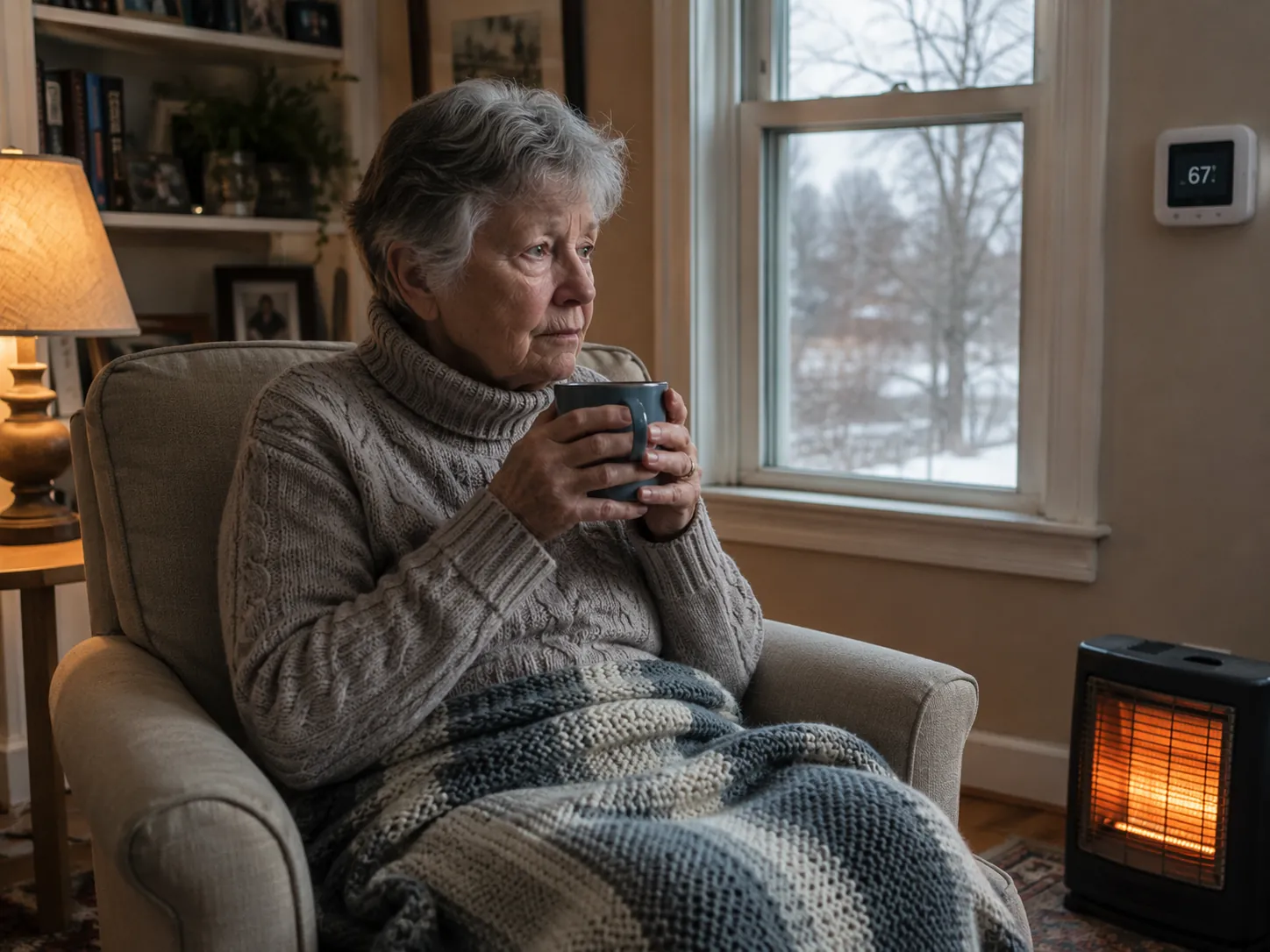
Do not rely on shivering as the warning sign. HealthInAging.org notes that older adults may shiver less, or not at all, when body temperature drops.[4] A parent who says “I’m fine” while sitting in a 64°F room may not be reading the risk the way a younger body would.
| Whole-Home Heat Check | What to Do |
|---|---|
| Thermostat | Set it to at least 68°F when your parent is home, especially during long sedentary periods. |
| Common sitting areas | Check the temperature where your parent actually sits, not only near the thermostat. |
| Bedroom | Confirm the room stays warm enough overnight and before getting out of bed. |
| Drafts | Seal obvious drafts around doors and windows without blocking exits or ventilation. |
| Space heaters | Keep cords out of walking paths and place heaters where they cannot be bumped during transfers. |
| Utility cost worries | Ask directly whether your parent is lowering the heat to save money. |
The money conversation needs some care. Many older parents are not being stubborn when they keep the heat low; they may be protecting a fixed budget, remembering older habits, or trying not to “waste” heat in unused rooms. Still, the safety threshold is not sentimental. If the home is sitting below the mid-60s, treat it as a health and fall-risk problem, not a preference.
Medication and Cold Sensitivity Belong in the Walkthrough
Some medications can make cold weather risk harder to see. AARP notes that beta-blockers, antidepressants, narcotic pain medicines, sedatives, and diuretics can interfere with temperature regulation.[3] That does not mean you should change or stop a medication during a home walkthrough. It means repeated chilliness, dizziness, sleepiness, near-misses, or confusion in cold weather should be brought to the prescribing clinician.
This is also where fall risk screening helps. If your parent has fallen, nearly fallen, started holding furniture, or become afraid of walking outside in winter, the home fixes are still worth doing, but they may not be enough by themselves. Use the CDC STEADI framework with their clinician to look at gait, balance, vision, blood pressure, medications, and prior falls together.
When a Low-Cost Fix Is Not Enough
Most winter hazards can be reduced with mats, light, traction, heat, and better placement of everyday items. A few situations need escalation because the home is asking too much of one person’s balance.
- The main entrance cannot be kept clear of ice, or the safest entrance is not the one your parent can realistically use.
- Your parent has repeated near-misses at the same threshold, stair, hallway, or bathroom route.
- The indoor temperature stays below the mid-60s, or your parent keeps turning the heat down despite risk.
- A cane, walker, or shoe traction aid is being used inconsistently because it feels awkward, ugly, or hard to manage.
- Medication side effects, dizziness, confusion, or unusual sleepiness appear worse during cold weather.
Escalation may mean hiring snow removal, asking an occupational therapist to assess the entrance and bathroom, reviewing medications, arranging help during storms, or changing which door is used in winter. The important part is not pretending that a mat can solve a route that freezes every afternoon.
The One-Afternoon Priority Order
If the next freeze is coming and you only have time for the work that changes risk today, do it in this order.
- Secure the entrance your parent actually uses: clear ice, add traction, replace unsafe mats, and make the rail or grab point obvious.
- Dry the indoor path: set up a chair, absorbent mat, towel, and dry non-slip house shoes before wet boots cross the floor.
- Improve light: replace burned-out bulbs and add motion lighting at doors, stairs, halls, and the bedroom-to-bathroom route.
- Confirm heat: keep the home at least 68°F where your parent spends time, and take a below-65°F room seriously.
- Check traction before the next trip outside: shoe soles, cane tips, walker contact points, and any ice-gripper or shoe-cover aid.
References
- Winterize to Prevent Falls, National Council on Aging
- Preventing Hypothermia and Frostbite, Centers for Disease Control and Prevention
- How Extreme Cold Can Hurt Older Adults, AARP
- Tip Sheet: Winter Safety for Older Adults, HealthInAging.org
Related reading
Noticed something outdated or inaccurate on this page? Flag a correction. We review every report against CDC, NIA, and AARP HomeFit guidance before updating a page.
Part of the Fall Prevention section.