
How the Zyrtec Recall Affects Seniors and Fall Risk
The July 2026 Zyrtec recall affects only specific generic lots, but the bigger concern for seniors is the drowsiness-related fall risk from any cetirizine. This guide explains how to check your medication and lists safer allergy alternatives for older adults.
You heard about a Zyrtec recall, and your parent takes an allergy pill. Start with the bottle, not the headline.
The July 2026 recall was not a brand-wide Zyrtec recall. It applied to four lots of generic cetirizine HCl 5 mg tablets from Unique Pharmaceutical Laboratories, distributed by Rising Pharma. The recalled product had NDC 16571-401-10 and lot numbers GY825029, GY825030, GY825031, and GY825032. The FDA posted the voluntary recall on July 18, 2026, because of possible ranitidine cross-contamination that could cause life-threatening hypersensitivity reactions; no adverse events had been reported as of the FDA posting.[1]

First, Check Whether the Recall Applies
For a caregiver standing at the kitchen table with several bottles in front of them, the useful question is narrow: does this bottle match the recalled product?
- Active ingredient: cetirizine HCl
- Strength: 5 mg tablet
- NDC: 16571-401-10
- Lot number: GY825029, GY825030, GY825031, or GY825032
- Manufacturer or distributor wording: Unique Pharmaceutical Laboratories or Rising Pharma
If the bottle does not match those details, the July 2026 recall likely does not apply to that bottle. That includes many bottles people casually call “Zyrtec,” because shoppers often use the brand name to mean the active ingredient cetirizine. The distinction matters: this was a specific generic-lot recall, not evidence that every cetirizine product on the shelf was contaminated.
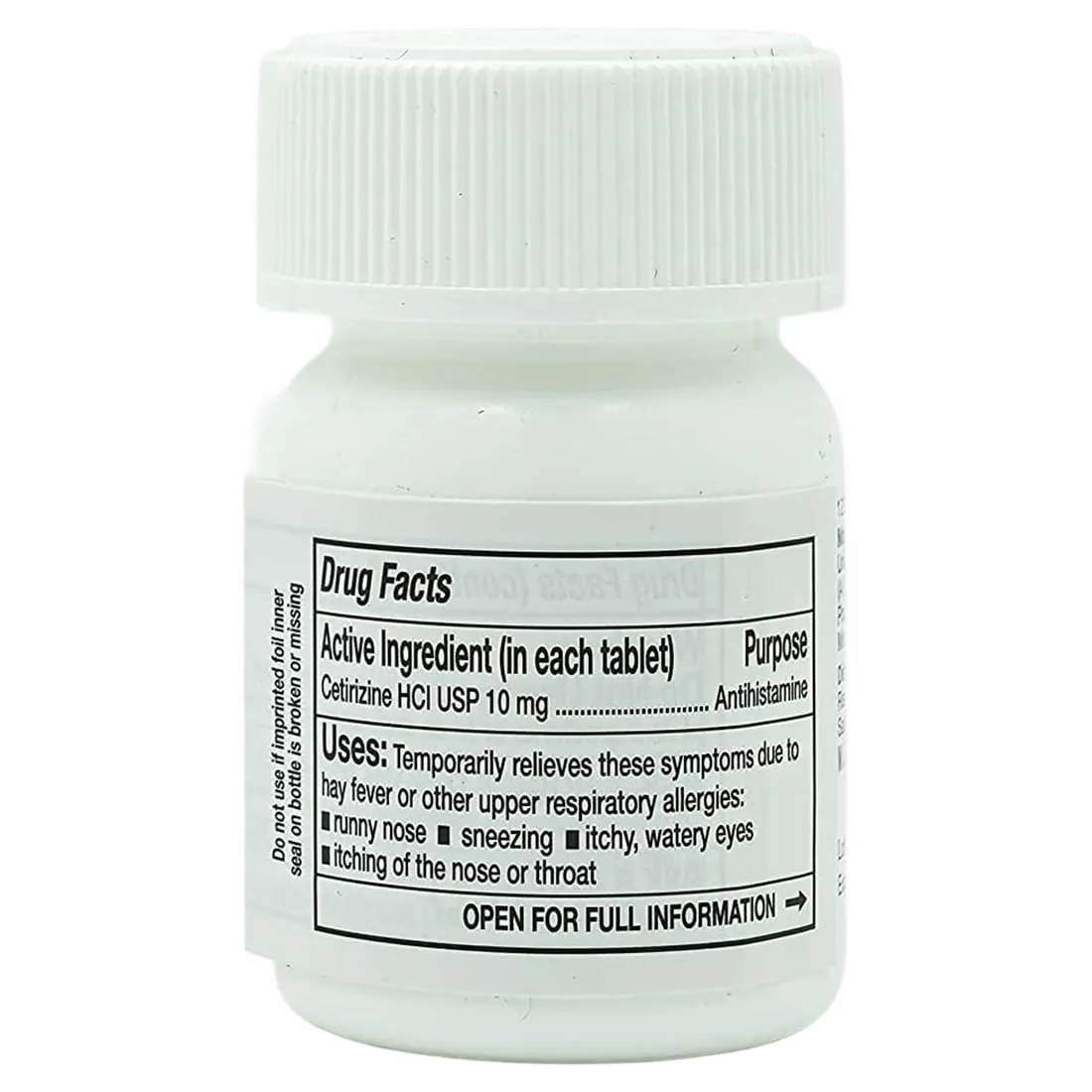
If the bottle does match, do not keep giving tablets from that lot while you sort it out. Set the bottle aside where it will not be used by mistake, keep the label available, and contact the pharmacy, prescriber, or the recall contact listed in the FDA notice for instructions. If the person has already taken it and develops signs of an allergic or hypersensitivity reaction, that is a medical problem, not a wait-and-see paperwork problem.
What the Recall Does Not Answer
A non-recalled bottle clears one question. It does not answer the more common senior-safety question: is cetirizine making this older adult sleepy, slower, or less steady?
Cetirizine is a second-generation antihistamine, so it is usually less sedating than older allergy medicines such as diphenhydramine. “Less sedating,” however, is not the same thing as “non-sedating.” Clinical-trial data summarized by SingleCare report drowsiness in about 14% of Zyrtec users.[2]
That number lands differently in a 35-year-old than it does in an 82-year-old who wakes twice at night, takes blood-pressure medication, has a little neuropathy in both feet, and already steadies herself on the hallway wall. In older adults, a small amount of medication-related sleepiness can show up as slower reaction time, a missed step, or a trip to the bathroom that becomes a fall.
The baseline risk is already high. More than one in four adults age 65 and older report falling each year, according to CDC fall-prevention materials.[3] That does not mean cetirizine causes most falls. It means the margin for adding drowsiness is thin.
Why a Less-Sedating Allergy Pill Can Still Matter for Falls
The strongest fall-risk warning belongs to first-generation antihistamines, the older drugs many families know by brand names such as Benadryl. A systematic review and meta-analysis found that first-generation antihistamine use was associated with about double the odds of injurious falls or fracture among elderly patients, with an odds ratio of 2.03 and a 95% confidence interval of 1.49 to 2.76.[4]
That finding should not be carelessly pasted onto cetirizine. The meta-analysis was about first-generation antihistamines, not Zyrtec or generic cetirizine. But it does show why sedation is not a minor side effect in older adults. A drug that reaches the brain and causes sleepiness can change balance, alertness, and the ability to recover from a stumble.
Cetirizine sits in a more moderate place. It is not in the same category as diphenhydramine, and it is not flagged the same way in older-adult prescribing lists. Still, several everyday factors can make its drowsiness more important for seniors:
- Kidney function often declines with age, and cetirizine is cleared partly through the kidneys.
- Multiple medications can stack sedating effects, even when each one looks mild by itself.
- Nighttime dosing can still matter the next morning if the person feels groggy or slow.
- A history of falls, dizziness, neuropathy, poor vision, or use of a cane or walker lowers the tolerance for any extra sleepiness.
- A person may not call it “drowsiness”; they may say they feel foggy, heavy, off balance, or “not quite right.”
This is the part that gets missed when the only question is “Was my bottle recalled?” A clean lot can still be the wrong allergy plan for a person who becomes unsteady after taking it.
The Beers Criteria Point Is Important but Narrow
Families sometimes look for a single official list to settle the question. The Beers Criteria are a major tool for identifying medications that may be inappropriate for older adults, and first-generation antihistamines are the antihistamines most clearly flagged in that kind of older-adult safety guidance.[7]
Cetirizine is not the same as Benadryl-style diphenhydramine, and it should not be described as if it were. The practical conclusion is more conditional: cetirizine may be reasonable for some older adults, but it deserves a closer look when there is sleepiness, kidney disease, multiple medications, heart or blood-pressure problems, or any fall history.
Allergy Options to Discuss Before Accepting Drowsiness as Normal
If an older adult takes cetirizine and seems sleepy or less steady, the next step is not to quietly tolerate it for allergy season. Ask a pharmacist or clinician whether a less-sedating plan would control symptoms with less fall risk. That conversation is especially important for anyone with kidney disease, heart disease, high blood pressure, several daily medications, or a previous fall.
| Option to ask about | Why it may matter for seniors | What to watch |
|---|---|---|
| Fexofenadine, sold as Allegra | Often described as the least sedating oral antihistamine because it is less likely to cross the blood-brain barrier. | Still review the full medication list and kidney function with a pharmacist or clinician. |
| Nasal steroid sprays such as fluticasone or triamcinolone, sold as Flonase or Nasacort | Allergists often use these as first-line nasal-allergy options because they work locally in the nose with minimal systemic absorption. | They are not instant; technique and consistent use matter. |
| Azelastine nasal spray, sold as Astepro | A nasal antihistamine option that can work faster, often within 15 to 30 minutes. | It can still have side effects, so review fit for the individual. |
| Products ending in “-D” | These add a decongestant rather than simply changing the antihistamine. | Avoid unless specifically cleared, because decongestants can raise blood pressure and heart rate. |
AARP guidance for older adults highlights caution with allergy medicines, including products with decongestants, while GoodRx describes allergy options for seniors and identifies fexofenadine and nasal sprays as lower-sedation choices to consider.[5][6] These are not instructions to self-switch a frail parent’s medication at midnight. They are better questions to bring to the person who can see the whole medication list.
For many seniors, a nasal steroid spray may be a cleaner solution when symptoms are mostly nasal congestion, sneezing, and runny nose. It treats the nose instead of bathing the whole body in an oral antihistamine effect. For someone who needs an oral option, fexofenadine is often the first alternative worth asking about when sedation is the concern.
The “-D” products deserve their own warning because they are easy to grab by mistake. Zyrtec-D, Allegra-D, and Claritin-D are not just stronger versions of the same allergy pills. They contain decongestants, and those can be a poor fit for older adults with high blood pressure, heart rhythm issues, or other cardiovascular risks.
A Caregiver Action Plan for Tonight
If you are trying to decide what to do before the next dose, keep the task concrete.
- Check the bottle for cetirizine HCl 5 mg, NDC 16571-401-10, and lot numbers GY825029 through GY825032.
- If it matches the recalled product, stop using that bottle, set it aside, and contact the pharmacy, prescriber, or recall contact for instructions.
- If it does not match, do not treat the recall headline as proof that the bottle is contaminated.
- Watch the person, not just the label: new sleepiness, morning grogginess, dizziness, slower walking, or “near falls” after cetirizine are safety signals.
- Bring the medication list to a pharmacist or clinician and ask whether fexofenadine, a nasal steroid spray, or azelastine nasal spray would be safer for this person.
- Avoid switching to an allergy product with “-D” in the name unless a clinician has cleared it for the person’s blood pressure and heart history.
The 2026 recall is narrow and checkable. For seniors, the larger medication-safety question is whether any cetirizine product, recalled or not, is adding enough drowsiness to make a fall more likely—and whether a less-sedating allergy plan would do the job with less risk.
References
- Unique Pharmaceutical Laboratories, a Div. of J. B. Chemicals & Pharmaceuticals Ltd. Issues Voluntary Nationwide Recall of Cetirizine Hydrochloride Tablets 5 mg Due to Potential Cross Contamination With Ranitidine, FDA, July 18, 2026
- Zyrtec side effects in elderly users, SingleCare
- STEADI-Rx, CDC
- Antihistamine use and risk of injurious falls/fracture in elderly, PubMed
- What Older Adults Should Know Before Taking Allergy Medication, AARP, April 2026
- Allergy Medicines for Seniors, GoodRx
- Beers Criteria, Cleveland Clinic
Continue from here
Suggest a correction
We keep this content strictly product-neutral and reviewed against CDC STEADI, NIA, and AARP HomeFit guidance. If something here looks outdated, unclear, or inaccurate, tell us — this page does not carry open public comments, because it touches medical urgency, cost, or capacity-adjacent decisions where a discussion thread is a trust liability rather than a trust asset.
See the correction process on our editorial standards page →