
Glossary entry
What Does 'Aging in Place' Mean? A Clear Definition and Reality Check
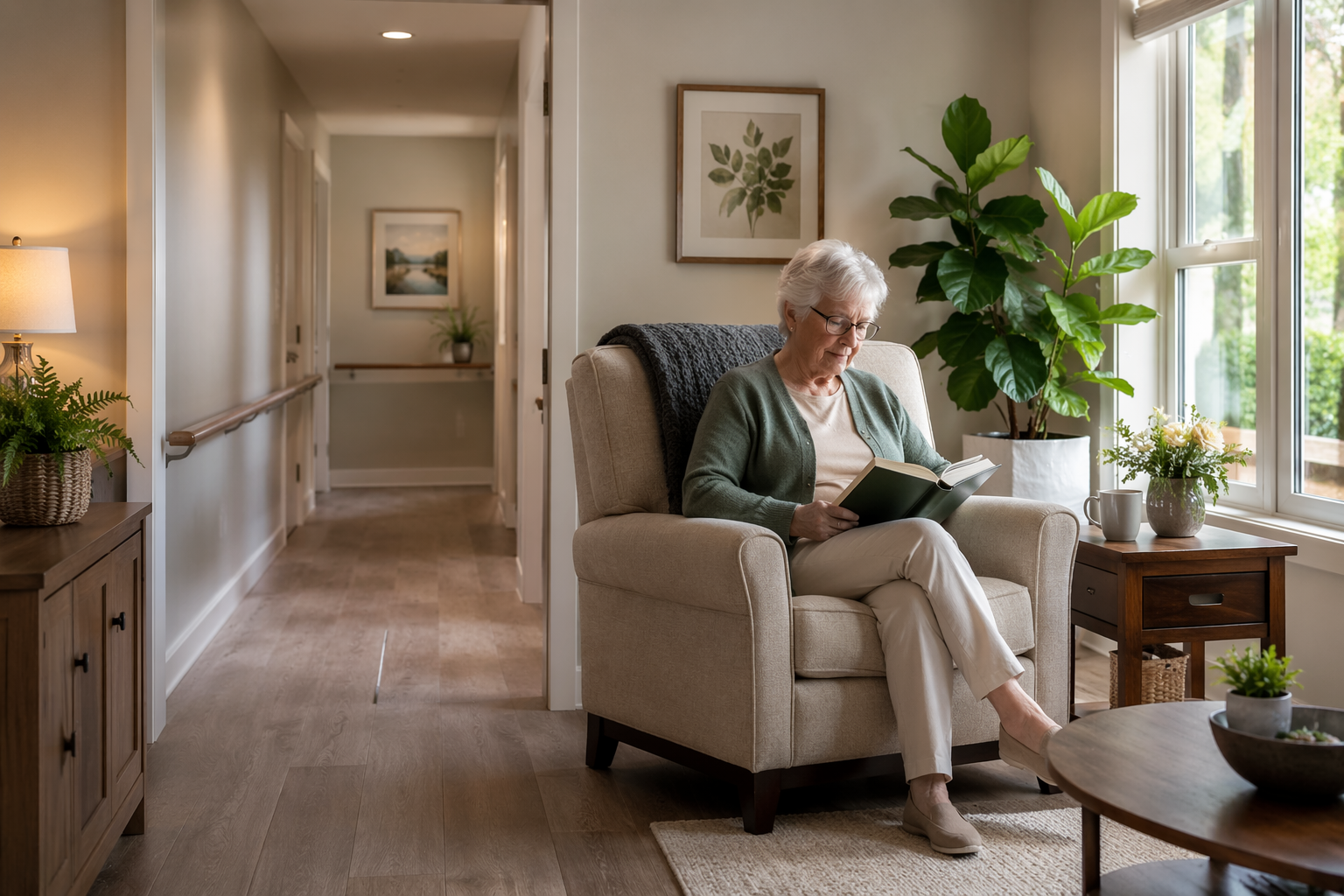
Aging in place means having “the ability to live in one's own home and community safely, independently, and comfortably, regardless of age, income, or ability level.” That definition is often attributed to the CDC and is widely used in health and aging guidance because it keeps the focus where it belongs: not just on staying in a familiar house, but on whether daily life there can still work safely and with dignity as needs change.[1]
The plain answer to “what does aging in place mean” is this: an older adult continues living at home or in the community rather than moving automatically to assisted living, memory care, or a nursing home. But the practical answer is more demanding. Aging in place is not doing nothing. It is not leaving the bathroom as it is, hoping the front steps stay manageable, and assuming a daughter, son, spouse, or neighbor will somehow absorb every new task.
Most older adults are already outside institutional care. Less than 5% of older Americans live in nursing homes, which means the real question for many families is not whether a parent is “at home” today, but whether that home arrangement is safe, supported, and financially sustainable tomorrow.[2]
The Definition Has Four Tests
The official wording sounds gentle, but every word in it carries work for the family.
| Part of the definition | What it asks in real life |
|---|---|
| Safely | Can the person bathe, use the toilet, move through rooms, enter the home, prepare food, manage medications, and respond to emergencies without unacceptable risk? |
| Independently | Which tasks can the person still do alone, which require tools or modifications, and which now require another person? |
| Comfortably | Is the home usable without constant strain, fear, confusion, pain, or exhaustion? |
| In one's own home and community | Can the person still reach medical care, groceries, social contact, worship, errands, and ordinary routines? |
That last phrase matters. Home is not only a roof and a bedroom. It can be the neighbor who notices the newspaper has not been picked up, the pharmacy route someone knows by heart, the kitchen table where bills are sorted, the church member who gives rides, or the garden that still gives a person a reason to go outside. A move can solve one set of risks while creating another kind of loss.
Still, affection for home cannot substitute for a plan. If an older adult can no longer get out of the tub safely, “comfortably” has already failed. If the only caregiver is skipping work, losing sleep, and fielding confused calls at midnight, “independently” may be a word the family is using to avoid naming the labor.
Wanting to Age in Place Is Common. Being Ready Is Not.
The desire is real. A 2024 U.S. News survey reported that 95% of adults age 55 and older wanted to age in place.[2] That number should not be dismissed as sentimentality. People want to keep their routines, their privacy, their pets, their neighbors, and some authority over the shape of the day.
The home-readiness numbers tell a harder story. The U.S. Census Bureau reported in 2020 that only about 10% of U.S. homes had basic aging-ready features, such as a step-free entry, a bedroom and full bathroom on the entry level, and at least one bathroom accessibility feature.[3] A later University of Michigan National Poll on Healthy Aging found that 18% of adults age 50 to 80 had made modifications to help them remain at home as they age.[4]
Those findings are not identical measures. The Census figure is about homes that meet a defined set of basic accessibility criteria. The Michigan poll is about whether adults reported making modifications. Other 2023 reporting suggests a larger share of homes may have some useful features, such as a step-free entry or a first-floor bedroom or bath, without being fully aging-ready.[2] That distinction matters at the kitchen table. One useful feature is good. It is not the same as a home that works when balance, vision, stamina, memory, or mobility changes.
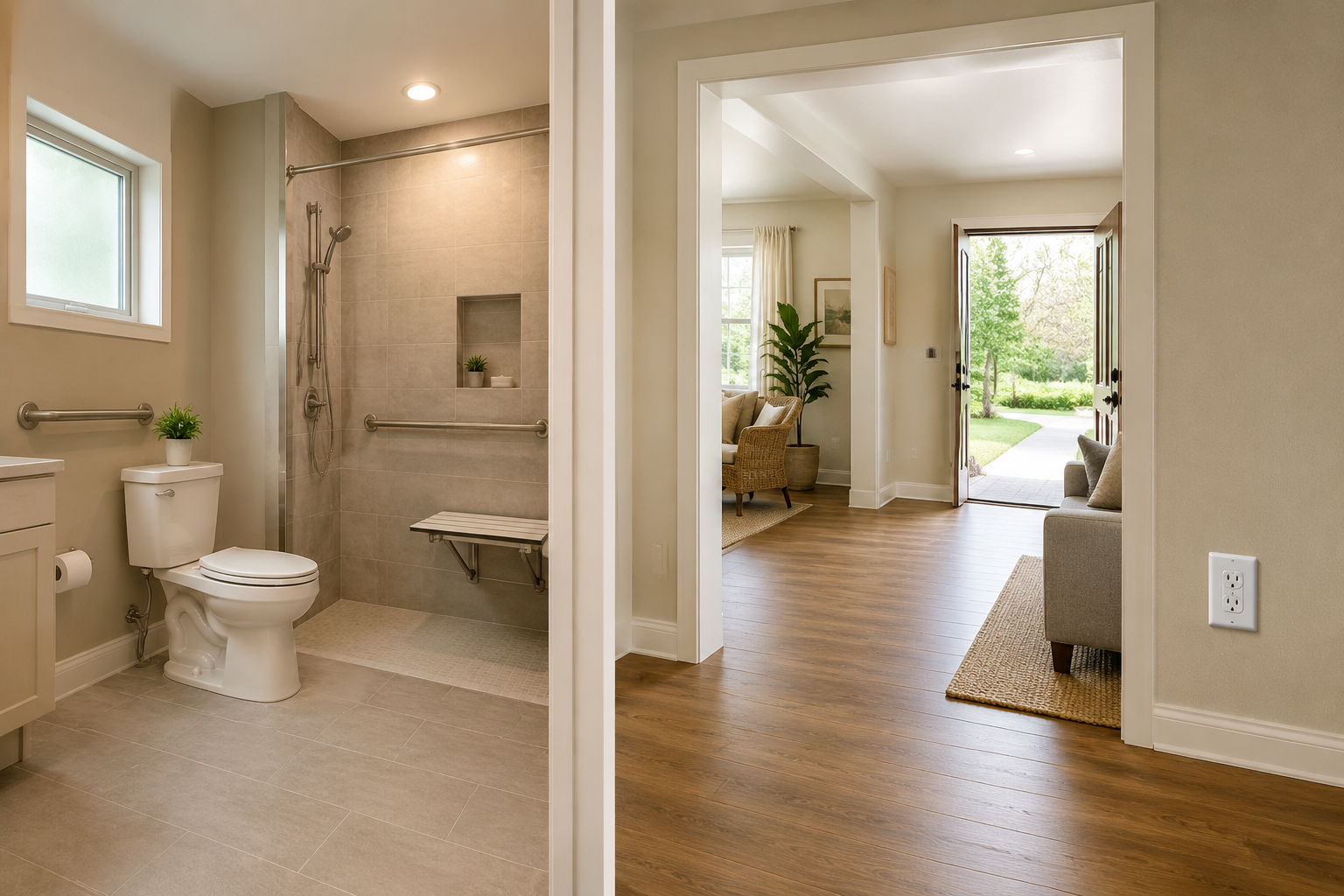
The bathroom often reveals the gap first. A JAMA Internal Medicine study reported that 42% of adults age 65 and older who could benefit from grab bars did not have them.[2] That is not an abstract design preference. It is the difference between a person having a steady handhold beside the toilet or shower and a family waiting for the next fall to force the issue.
What Aging in Place Requires
Aging in place usually works best when families assess the arrangement in layers. The home is one layer. The person’s health and daily function are another. Then come transportation, social connection, money, technology, and the care team. Leaving out any one of them can make a plan look better on paper than it feels at 7 p.m. on a wet Tuesday.
The Home Has to Match the Body Using It
The first pass through the house should be blunt and specific. Can the person enter without steps or with a safe ramp? Are the doorways wide enough for a walker if one becomes necessary? Is there a bedroom and full bathroom on the main level? Can the person get on and off the toilet? Is the shower walk-in, or does it require stepping over a tub wall? Are rugs, cords, low furniture, poor lighting, and clutter turning normal movement into a daily obstacle course?
Common modifications include grab bars, railings on both sides of stairs, better lighting, lever-style door handles, non-slip flooring, raised toilet seats, shower benches, handheld showerheads, ramps, widened doorways, and safer kitchen storage. Some are inexpensive. Others involve contractors, permits, and tradeoffs. A grab bar is not the same project as reworking a bathroom, and a family should not let the smaller fix become an excuse to ignore the larger barrier.
Daily Support Usually Changes Before the Address Does
Aging in place does not require doing every task alone. It may include paid home care, family caregiving, meal delivery, medication packaging, physical therapy, housekeeping, adult day programs, transportation services, and help with bathing or dressing. The useful question is not “Can Mom stay home?” It is “What has to happen each morning, afternoon, evening, and overnight for home to remain safe?”
Look for the tasks that have quietly shifted. Someone else may now be filling the pillbox, carrying laundry downstairs, sorting mail, checking the refrigerator, scheduling rides, or standing nearby during showers. Those tasks count. They are part of the aging-in-place plan whether or not anyone has called them that.
Technology Can Help, but It Does Not Provide Care
Medical alert systems, fall-detection devices, medication reminders, stove shutoff tools, motion sensors, video doorbells, smart locks, and remote monitoring can make a home safer. They are especially useful when they shorten the time between a problem and a response.
But technology should not be assigned a job it cannot do. A sensor can show that no one has opened the refrigerator. It cannot persuade a person with poor appetite to eat. A medication dispenser can alarm. It cannot always resolve confusion, refusal, or a new side effect. Every device needs a responder: someone who gets the alert, understands it, and is able to act.
Community Is Part of the Safety Plan
A house can be beautifully modified and still leave someone isolated. The National Institute on Aging notes that social isolation and loneliness are linked with higher risks for health problems in older adults, and federal aging materials commonly estimate that about one in four older adults experience social isolation.[5]
This is where families sometimes under-plan. They price the shower renovation and install the alert button, but nobody asks who will visit, who will notice mood changes, who will drive after cataract surgery, or how the person will keep seeing friends once night driving ends. Aging in place without social contact can become a smaller, lonelier world.
Transportation Can Decide Whether Home Still Works
Driving often sits at the center of independence until it does not. If an older adult stops driving, the family has to replace more than medical rides. Groceries, haircuts, banking, worship, social visits, pharmacy pickups, and spontaneous errands all need a plan.
A workable transportation plan may combine family rides, paratransit, senior center shuttles, volunteer driver programs, rideshare, delivery services, and medical transportation. The right mix depends heavily on where the person lives. Aging in place in a walkable neighborhood with nearby services is a different proposition from aging in place on a rural road after dark.
The Budget Has to Include More Than the House Project
Cost comparisons can be useful, but they need care. One-time home modifications are often less expensive than multiple years in assisted living. Retirement Living reports that home modifications can range from $10,000 to $100,000, while assisted living may cost roughly $64,000 to $76,000 per year, depending on the source and methodology used.[2] In some situations, modifications may pay for themselves within one or two years compared with facility costs.[2]
That does not mean every family can easily afford the work, or that home will always be cheaper. The budget also has to include paid caregivers, respite care, transportation, home maintenance, utilities, equipment, medication systems, emergency repairs, and time away from work for family members. In 2024, 67% of seniors reported that rising costs made aging in place harder.[2]
Medicare is another place families get surprised. Traditional Medicare may cover certain medical services, skilled care after qualifying events, durable medical equipment, or limited home health services when criteria are met. It generally does not function as a broad aging-in-place budget for long-term custodial help, home remodeling, meal preparation, or ongoing supervision. Families should verify coverage before they commit to a plan that depends on benefits they may not have.
Caregiver Capacity Is Not an Afterthought
Aging in place often rests on one person who becomes the default coordinator. That person may be the spouse in the home, the adult child nearby, or the sibling who lives far away but handles insurance, bills, appointments, and calls from the hospital. If the plan depends on that person always being available, then that person’s capacity is part of the safety assessment.
A realistic care plan names who does what. Who handles medication refills? Who can arrive within 30 minutes after a fall alert? Who schedules contractors? Who pays invoices? Who covers weekends? Who notices when the older adult has stopped bathing or eating well? If the answer to most of those questions is the same exhausted person, the plan is already fragile.
When Aging in Place May Not Be the Safer Choice
Staying home is not a moral victory, and moving to a care setting is not a family failure. Aging in place becomes harder to defend when serious risks cannot be reduced enough at home, or when the care required exceeds what the household and support network can actually provide.
Warning signs include repeated falls, unsafe wandering, advanced dementia with supervision needs that cannot be met, medication errors with serious consequences, inability to transfer safely, frequent emergency calls, unsafe cooking, untreated isolation, or caregiver burnout. Cleveland Clinic guidance on aging in place similarly emphasizes that suitability depends on health needs, home safety, available support, and the ability to manage daily life.[6]
Sometimes the next right step is more help at home. Sometimes it is adult day care, respite care, or a move closer to family. Sometimes it is assisted living, memory care, or a nursing facility. The better question is not “How do we avoid a move?” It is “Where can this person live with the most safety, dignity, continuity, and appropriate care?”
A Practical Way to Decide
For a family trying to decide whether aging in place is realistic, start with three assessments.
- Assess the home: entrances, stairs, bathroom safety, bedroom location, lighting, flooring, kitchen access, emergency exits, heating and cooling, and whether modifications are affordable and feasible.
- Assess the person’s daily needs: bathing, dressing, toileting, meals, medications, mobility, memory, mood, sleep, appointments, transportation, finances, and emergency response.
- Assess the care team: family availability, paid help, backup coverage, transportation, social contact, medical coordination, respite options, and the caregiver’s health and limits.
If those three assessments can be brought into alignment, aging in place can be a strong and humane goal. If the home cannot be made safe, the daily needs exceed available help, or the plan depends on unpaid labor that is already breaking down, then the family is not choosing between independence and failure. It is choosing which setting can actually support the person’s life now.
References
- Aging in place: Assessing your community, Harvard Health
- Aging in Place Statistics (2026), Retirement Living
- Old Housing, New Needs, U.S. Census Bureau, 2020
- Older Adults' Preparedness to Age in Place, University of Michigan / National Poll on Healthy Aging
- Aging in Place: Growing Older at Home, National Institute on Aging
- Aging in Place: What To Know, Cleveland Clinic
Browse more in the Glossary.