
Clinical term
What the 2025 Research Says About Medical Cannabis for Seniors
Last verified 2026-07-24
Last verified: July 24, 2026. This article is for education, not personal medical advice. Older adults should not start, stop, or change cannabis, prescription drugs, sleep aids, pain medicines, or blood thinners without a clinician who knows their full medication list.
The most important number in the current research may not be a pain score or a laboratory finding. It is the silence around use. In 2023, 7% of adults 65 and older reported past-month cannabis use, up from about 3% in 2015–2016 and 4.8% in 2021; among older adults who use cannabis at least monthly, 44% had never discussed it with a healthcare provider.[1]
That gap changes the whole question. Medical cannabis for seniors is not just a debate about whether a gummy helps someone sleep or whether a tincture takes the edge off arthritis pain. It is also a medication-safety problem. If the primary care doctor does not know about cannabis use, she may be judging dizziness, confusion, blood pressure changes, sleepiness, falls, or drug side effects with one piece of the chart missing.
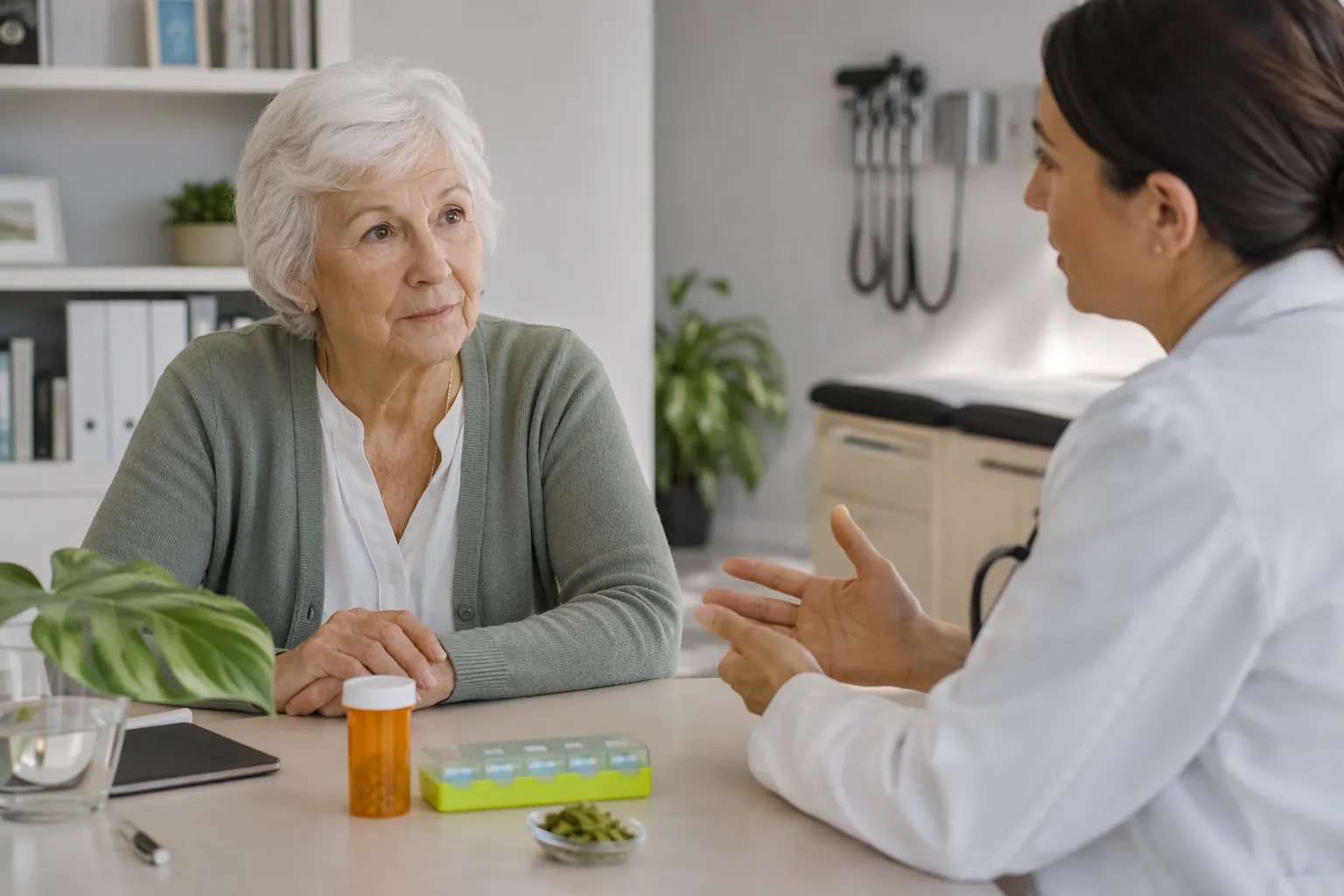
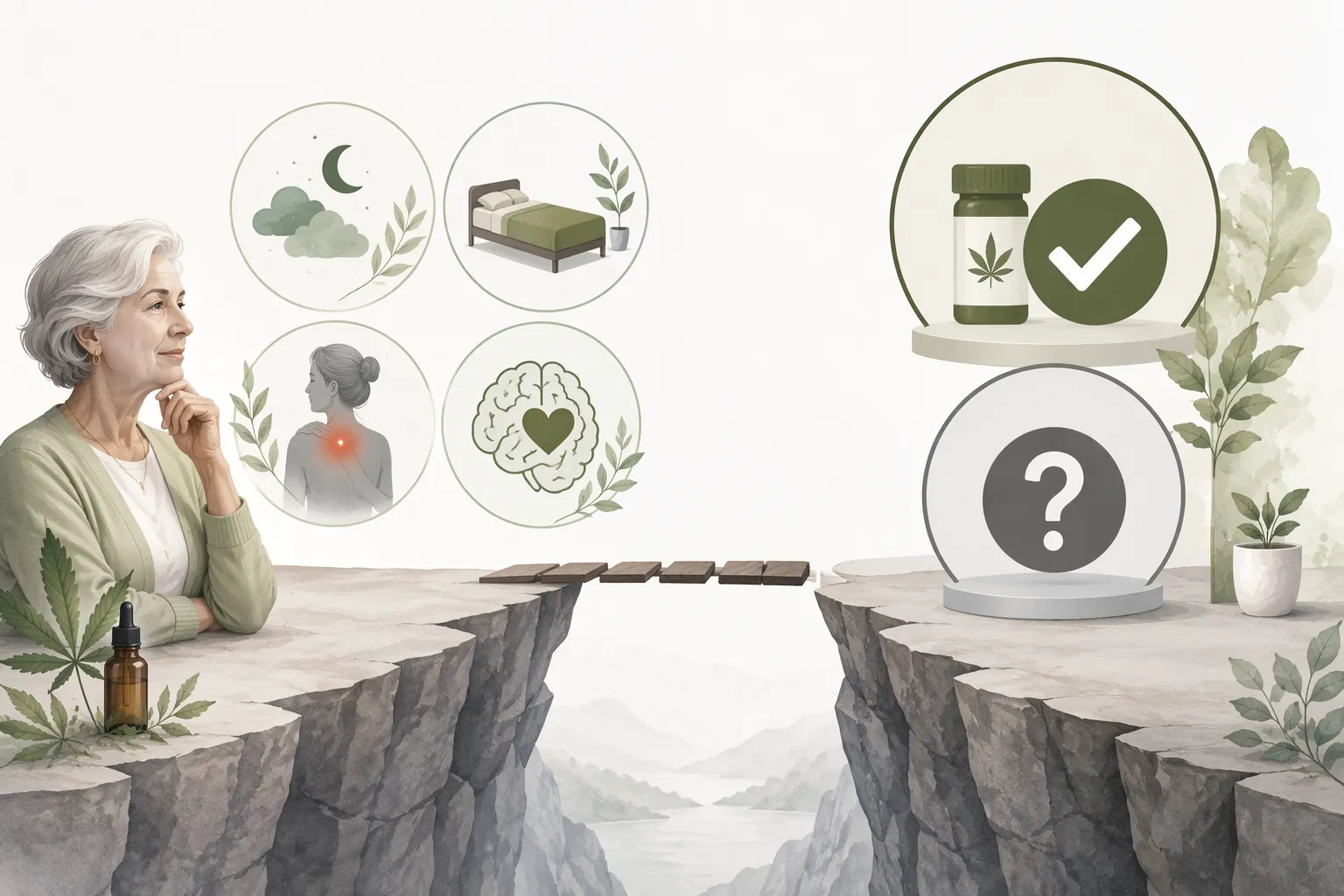
The reasons older adults give for using cannabis are ordinary and understandable: relaxation, sleep, pain, and mental health. In a 2024 AARP/University of Michigan poll of adults 50 and older, 81% of cannabis users cited relaxation, 68% sleep, 63% pain relief, and 53% mental health.[1] Those are exactly the complaints that show up at kitchen tables and follow-up visits: pain that has outlasted physical therapy, sleep broken into pieces, anxiety after illness or loss, and the desire to take fewer pills.
The evidence, though, does not line up neatly with popularity. The strongest medical evidence for cannabinoids is not for most of the reasons seniors commonly use them. A major UCLA/JAMA review reported in December 2025 examined more than 2,500 studies and found strong evidence mainly for FDA-approved pharmaceutical cannabinoids in specific conditions: HIV/AIDS-related appetite loss, chemotherapy-related nausea, and severe pediatric seizure disorders. The review rated evidence for chronic pain, anxiety, and insomnia as weak.[2]
| Question seniors and caregivers usually ask | What the 2025–2026 evidence supports | How to read it |
|---|---|---|
| Can cannabis help chronic pain? | Possibly for some people, but the broad evidence remains mixed and often rated weak. | Worth discussing when pain is persistent, but not a guaranteed substitute for other treatment. |
| Can it reduce opioid or benzodiazepine use? | Some real-world data show reductions after starting medical cannabis. | Promising, but medication tapering needs clinician supervision. |
| Can it help sleep? | Some users report benefit, but insomnia evidence is not strong overall. | Separate pain-related sleep improvement from treating insomnia itself. |
| Can it treat anxiety or mental health symptoms? | Public use is common, but evidence is weaker than enthusiasm suggests. | Extra caution is needed with THC, sedation, panic, and existing psychiatric medications. |
| Is it safe because it is natural? | No. Older adults face specific fall, cardiovascular, potency, and drug-interaction concerns. | Safety depends on product, dose, health history, medications, and home fall risk. |
Where the benefit looks most plausible
Pain is where the conversation deserves the most room. Not because the evidence is clean, but because the need is real and the alternatives can be rough. Chronic pain in later life often comes with arthritis, neuropathy, spinal disease, old injuries, cancer treatment aftereffects, or several of these at once. The usual medication choices can bring constipation, confusion, sleepiness, stomach bleeding risk, kidney concerns, or dependence. A senior asking whether cannabis might reduce pain is not asking a frivolous question.
Still, the broad research base does not justify treating cannabis as a proven pain solution for all older adults. The UCLA/JAMA review’s weak rating for chronic pain means the studies, taken together, do not give clinicians a simple answer about who benefits, which product works, what dose is safest, or how long improvement lasts.[2] That matters. A testimonial from a neighbor may be sincere and still not tell an 82-year-old on blood pressure medicine whether a THC gummy is a safe choice.
The more practical signal comes from real-world studies that track what happens after patients enter medical cannabis programs. In one 2025 study of patients over 50, 35.6% reduced opioid use and 19.9% reduced benzodiazepine use after starting medical cannabis.[3] Those numbers do not prove cannabis caused every reduction, and they do not mean everyone can taper safely. They do show why pain clinicians, primary care doctors, and caregivers should be willing to have the conversation instead of pretending older adults are not already experimenting.
Opioid reduction is especially important because less opioid exposure can mean less constipation, less daytime sedation, and potentially less risk of medication-related unsteadiness. Benzodiazepine reduction can matter just as much. Drugs in that family are commonly tied to sleepiness, slowed reaction time, confusion, and falls in older adults. But the word “reduced” is doing a lot of work. It should mean a planned taper, not a senior quietly skipping prescribed pills because a cannabis product seemed to help for two nights.
Sleep is trickier. Many older adults use cannabis because pain keeps waking them, and if pain eases, sleep may improve. That is different from saying cannabis is well proven as a general insomnia treatment. The 2025 review rated insomnia evidence as weak, so a caregiver should listen carefully to what the older adult means by “it helps me sleep.” Is the person falling asleep more easily, waking less from pain, feeling hung over in the morning, getting up to use the bathroom while sedated, or sleeping longer but moving less safely?[2]
The popular uses are not always the best-supported uses
Relaxation and mental health are among the most common reasons older adults report cannabis use, but they are also areas where broad claims can get ahead of the evidence. The AARP/University of Michigan poll found that 81% of adults 50 and older who used cannabis cited relaxation and 53% cited mental health.[1] Those numbers measure reasons for use, not proof that cannabis treats anxiety, depression, grief, loneliness, or chronic stress.
That distinction is not academic. An older adult who takes a low-dose product occasionally for relaxation is not the same as someone using high-THC products every evening to manage panic, insomnia, and pain while also taking antidepressants, benzodiazepines, or alcohol. The second situation needs a medication review and a mental health conversation, not just reassurance that cannabis is plant-based.
Cognitive-benefit headlines also need a careful hand. A CU Anschutz report on a UK Biobank study found cannabis use in middle-aged and older adults was associated with larger brain volume and better cognitive function, but the study did not distinguish THC from CBD and involved products that predated today’s high-potency cannabis market.[6] Association is not proof that cannabis improved cognition, and older products are not a dependable guide to concentrates or stronger flower now sold in many states.
Why the risk calculation changes after 65
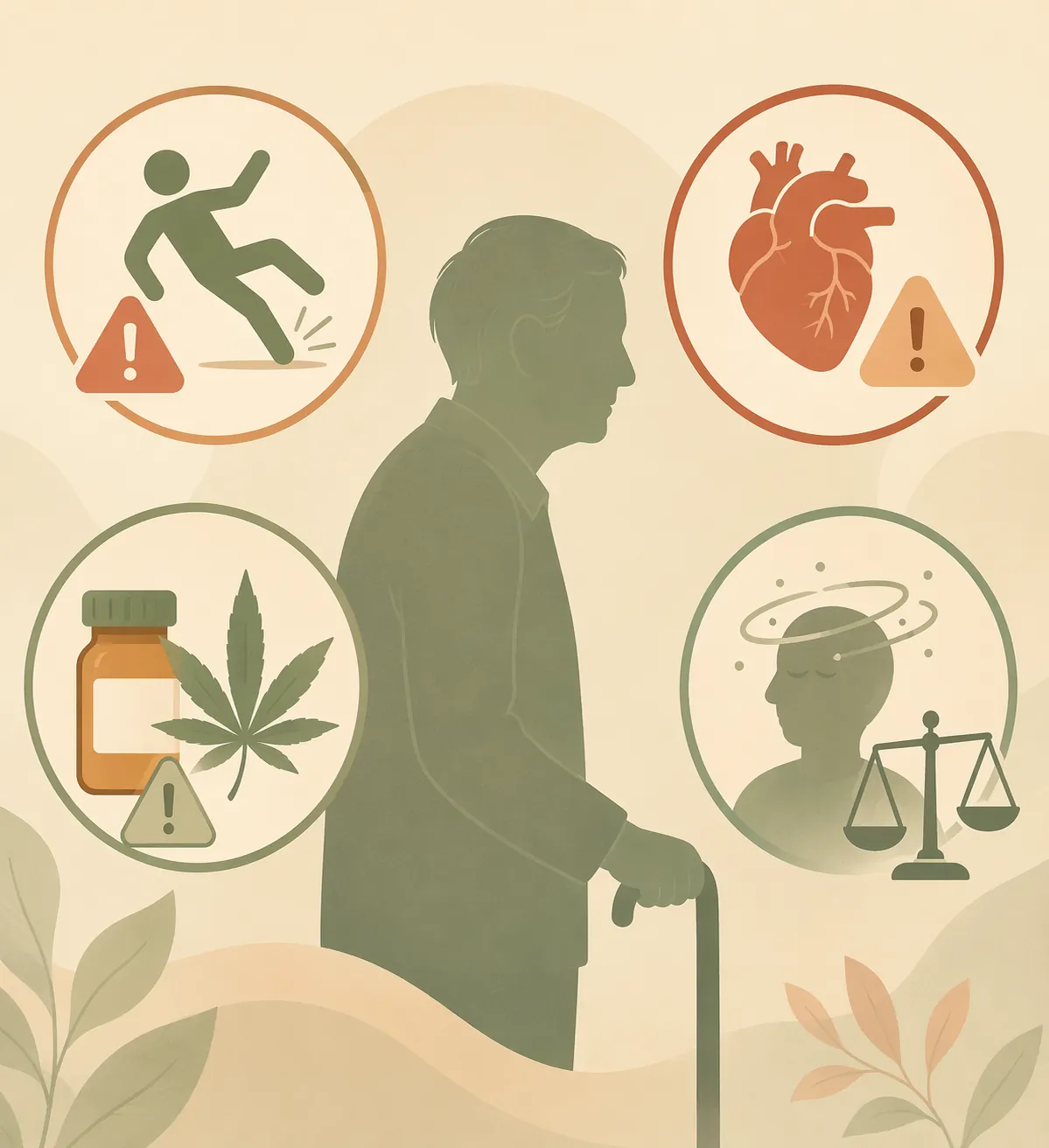
A younger adult may judge cannabis mainly by whether it causes anxiety, sleepiness, or impairment. For an older adult, the same side effect can carry a higher price. Dizziness can become a hip fracture. Sedation can turn a nighttime bathroom trip into an emergency call. A drug interaction can look like sudden confusion or weakness. Living alone can turn a bad reaction from an unpleasant evening into a long wait on the floor.
The fall signal deserves more attention than it usually gets. Conference data presented at the 2026 American Academy of Pain Medicine meeting found that 43% of 121 patients aged 65 and older experienced a fall in the first year of medical cannabis certification.[5] That figure should be treated cautiously because it comes from a conference presentation, not a full peer-reviewed journal article. It also does not prove cannabis caused every fall. But it is large enough that no one caring for older adults should shrug it off.
Falls rarely have one cause. A senior may already have neuropathy, weak leg strength, poor lighting, loose rugs, dehydration, vision changes, or blood pressure drops on standing. Add a THC product that causes sedation or delayed reaction time, then add a middle-of-the-night trip to the bathroom, and the risk picture changes. This is why cannabis belongs in the same home-safety conversation as walkers, shower chairs, footwear, and medication timing.
Caregivers who are already thinking about fall prevention can use the same practical lens here: What time is the product taken? Does it overlap with sleep medicine, alcohol, opioids, or benzodiazepines? Does the person get dizzy when standing? Are they more likely to walk without turning on lights? CareWise Guide’s fall-prevention resources, including why heat advisories raise fall risk in older adults and how to help an elderly parent evacuate without falling, are useful companions because the hazards overlap: balance, alertness, lighting, hydration, and urgency.
Heart and stroke risk cannot stay in the fine print
Cardiovascular risk is another reason the decision is different for seniors. Stanford Medicine cautions that regular cannabis use has been correlated with a 29% increase in heart attacks and a 20% increase in stroke in epidemiological data.[4] Correlation does not prove cannabis caused those events in every user. It does mean an older adult with coronary artery disease, prior stroke, rhythm problems, uncontrolled blood pressure, or multiple vascular risk factors should not treat cannabis as a casual supplement.
This is especially important with THC-containing products that can affect heart rate, blood pressure, anxiety, and perception of symptoms. Chest discomfort, palpitations, faintness, or new neurologic symptoms after cannabis use should not be explained away as “just being high,” particularly in someone with known heart or stroke risk.
Medication interactions are not theoretical
The medication list is where many cannabis conversations either become useful or fall apart. Stanford Medicine’s caution article specifically flags concern around interactions, including with warfarin and benzodiazepines.[4] For an older adult on warfarin, an interaction can mean a changed bleeding risk. For someone taking benzodiazepines, opioids, sleep medicines, certain antidepressants, or alcohol, the concern is often additive sedation, confusion, and unsteadiness.
A clinician does not need to approve of cannabis culturally to ask the right safety questions. What product is being used? Does it contain THC, CBD, or both? How much is taken? How often? What time of day? Was the product bought from a regulated dispensary, ordered online, or given by a friend? Has the person had new dizziness, falls, confusion, appetite change, blood pressure changes, or morning grogginess since starting it?
Caregivers can prepare for that visit the same way they would prepare after a recalled medication or a new side effect: bring the container, the dose, the schedule, and the full prescription and supplement list. If you need a structure for medication conversations, CareWise Guide’s steps for handling a senior’s recalled allergy medication use the same basic habit: identify the exact product before making decisions.
Today’s products are stronger than many seniors remember
One common mistake is assuming today’s cannabis resembles what someone tried decades ago. Stanford Medicine notes that average cannabis flower is about 20% THC today compared with 1–4% in the 1970s, and concentrates can reach 90% THC.[4] That difference changes the safety conversation. A person who tolerated cannabis in youth may react very differently to a modern edible, vape, tincture, or concentrate in older age.
Edibles deserve particular caution because the effect can be delayed. A senior may take one dose, feel nothing, take more, and then become heavily sedated later. That delayed effect is not just uncomfortable; it can collide with bedtime routines, bathroom trips, nighttime confusion, or morning medications.
What to bring to the medical conversation
The safest next step is not a blanket yes or no. It is a specific conversation with a clinician who can see the whole picture. That includes the reason for use, the product, the dose, the medication list, the fall history, the heart history, and whether the older adult lives alone.
- The exact cannabis product, including THC and CBD amounts if listed.
- How often it is used, what time it is taken, and whether it is taken with alcohol, sleep medicine, opioids, or benzodiazepines.
- The symptom being treated, such as pain, sleep disruption from pain, anxiety, appetite, or nausea.
- Any changes since starting: dizziness, falls, confusion, palpitations, morning grogginess, appetite change, or reduced use of other medicines.
- A complete medication and supplement list, especially blood thinners, sedatives, pain medicines, psychiatric medications, and blood pressure drugs.
If cannabis is being considered to reduce opioids or benzodiazepines, the tapering plan matters as much as the cannabis product. Stopping or cutting back too quickly can cause withdrawal, rebound pain, rebound anxiety, poor sleep, or unsafe self-adjusting. The research showing reductions after cannabis initiation is encouraging, but it is not permission to manage high-risk medications privately.[3]
If cannabis is being used mainly for anxiety or insomnia, the evidence gap should stay visible. The right question is not only “does it feel like it helps tonight?” but also “what happens to balance, memory, morning alertness, mood, and medication safety over time?” That is the part that often gets missed when cannabis is treated like an over-the-counter sleep supplement.
For select older adults, medical cannabis may be worth discussing for chronic pain or as part of a supervised effort to reduce higher-risk medications. The 2025 research does not support treating it as a cure-all for sleep, anxiety, or aging, and it certainly does not support keeping it off the medication list. If an older adult is using cannabis, the doctor needs to know. So does the caregiver who may be the one answering the phone after a fall.
References
- Cannabis Use in Older Adults. AARP/University of Michigan National Poll on Healthy Aging, 2024.
- UCLA-led analysis finds evidence lacking to support broad use of cannabis for medical purposes. ScienceDaily, December 2025.
- Medical cannabis use reduces opioid and benzodiazepine use in patients over 50. PMC, 2025.
- Five things medical experts want seniors to know about cannabis. Stanford Medicine, October 2025.
- Medical Cannabis May Be Effective for Chronic Pain and Function in Older Adults. Clinical Pain Advisor, 2026.
- Study finds cannabis usage in middle-aged and older adults associated with larger brain volume, better cognitive function. CU Anschutz.
Browse more in the Glossary.