
Caregiver decision guide
What to Do If Your Senior's Allergy Medication Is Recalled
The July 2026 cetirizine recall has left many caregivers worried. This guide provides immediate, step-by-step instructions on verifying affected lot numbers, safely stopping the medication, and choosing a senior-appropriate alternative allergy medicine.
If your senior takes cetirizine, generic Zyrtec, do not sweep every allergy bottle into the trash. The July 2026 recall is specific: cetirizine hydrochloride 5 mg tablets, NDC 16571-401-10, lots GY825029 through GY825032, distributed by Rising Pharma Holdings Inc. and recalled because of possible ranitidine cross-contamination. The FDA notice says no adverse events had been reported as of the notice date.[1]
The first safe move is boring and important: turn the bottle, carton, or blister pack until you find the NDC and lot number. Stop the medicine only if both the product and lot match the recall. Do not replace it with Benadryl, a nighttime allergy pill, or anything with “-D” on the label while you are trying to make a quick decision for an older adult.

The Short Version for Tonight
- Check the NDC first. The recalled product is NDC 16571-401-10.[1]
- Check the lot number next. The recalled lots are GY825029, GY825030, GY825031, and GY825032.[1]
- If the bottle does not match, do not stop it just because the word “cetirizine” appears in a headline.
- If it does match, stop using that OTC bottle and set it aside for proper disposal.
- For replacement, think nasal steroid spray first for many seniors, then loratadine or fexofenadine if an oral antihistamine is needed.
- Avoid diphenhydramine, sold as Benadryl, and avoid decongestant “-D” products unless a clinician has specifically cleared them for this senior.
This recall is classified as Class I. FDA defines a Class I recall as a situation in which there is a reasonable probability that use of or exposure to the product will cause serious adverse health consequences or death.[2] That does not mean every bottle of cetirizine in the medicine cabinet is dangerous. It means that if the bottle matches the affected product and lot, the response should be prompt and tidy, not casual.
Step 1: Find the NDC and Lot Number Before You Decide Anything
For an OTC allergy medicine, the NDC and lot number may be on the outside carton, the bottle label, the crimped end of a box, or the foil side of a blister pack. If the carton was thrown away, check the bottle itself. If the pills were poured into a weekly organizer, do not guess from tablet color or shape. Go back to the original package if you still have it, or call the pharmacy or store where it was purchased.
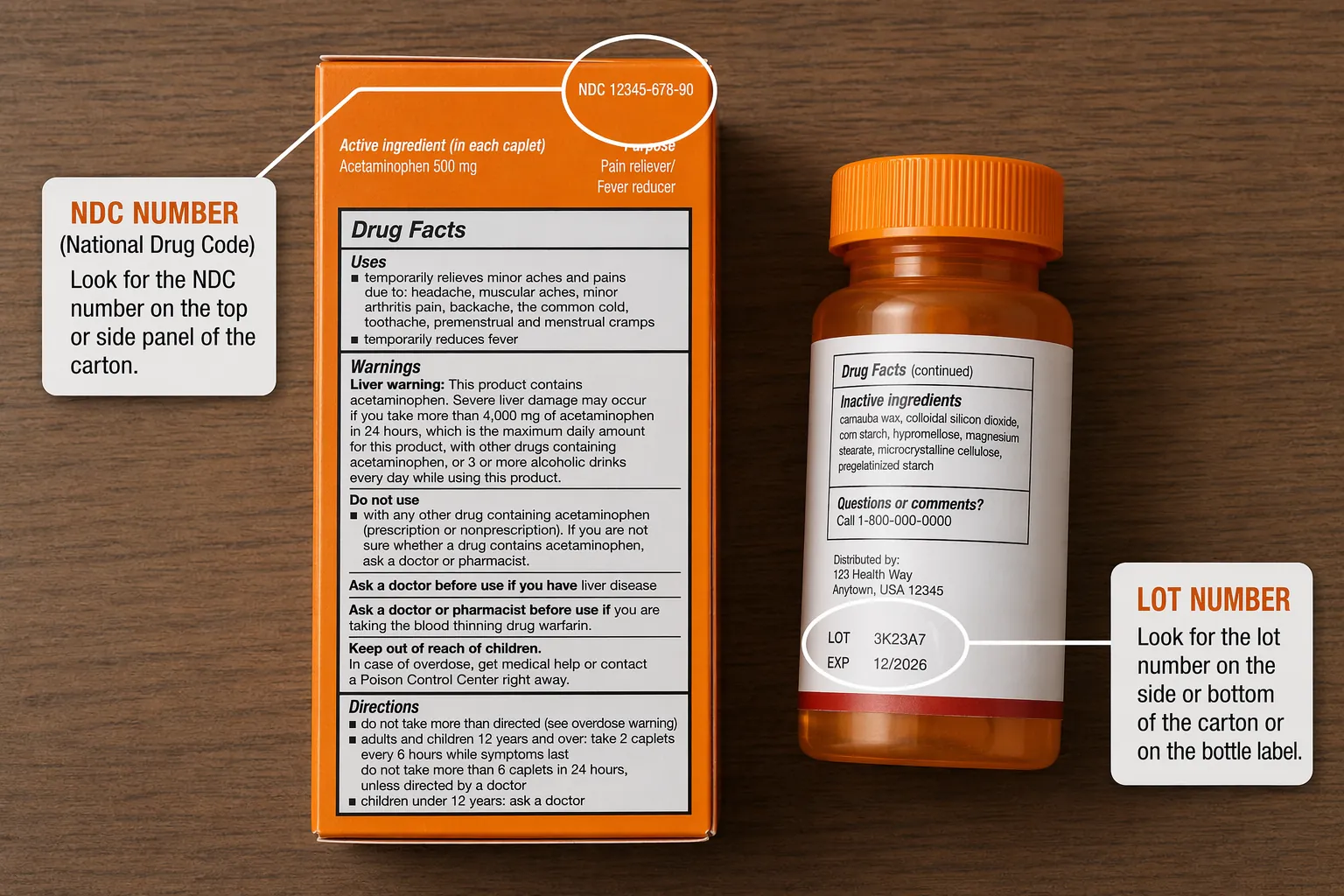
The NDC is the product identifier. The lot number is the batch identifier. A recall can apply to one product strength and only a few lots, which is exactly why checking both matters. Drug recall guidance commonly tells consumers to compare the product name, NDC, strength, and lot number against the recall notice rather than relying on the drug name alone.[3]
| What you are checking | What should match the July 2026 recall |
|---|---|
| Drug | Cetirizine hydrochloride tablets USP |
| Strength | 5 mg |
| NDC | 16571-401-10 |
| Lot numbers | GY825029, GY825030, GY825031, GY825032 |
| Company named in FDA notice | Unique Pharmaceutical Laboratories / Rising Pharma Holdings Inc. |
| Reason listed | Potential ranitidine cross-contamination |
If the NDC is different, the bottle is not the recalled product described in the FDA notice. If the NDC matches but the lot number is outside GY825029 through GY825032, it is not one of the four recalled lots in the notice. Keep the FDA page handy anyway, because recalls can be updated, but do not create a new medication problem by stopping an unaffected product in a panic.[1]
Step 2: If It Matches, Stop That OTC Bottle and Separate It
If the senior’s bottle matches the recalled NDC and one of the four recalled lots, stop giving tablets from that bottle. Put the bottle in a zip bag or set it in a clearly marked place away from the active medications. Do not leave it beside the pill organizer where someone may take it by habit.
This advice is for the recalled OTC allergy medication. It should not be stretched into a rule for prescriptions. General medication recall guidance distinguishes OTC products from prescription drugs: an OTC medicine recalled for a quality or contamination problem can usually be stopped, while prescription medications should not be stopped without help from a pharmacist or prescriber because the untreated condition may create its own danger.[4]
If the cetirizine was part of a daily routine, mark the pill organizer right away. Remove any loose tablets you can identify with certainty only if you know they came from the affected bottle. If you cannot identify loose tablets, call the pharmacy. This is one of those moments when guessing feels faster and can make the mess bigger.
Step 3: Choose a Senior-Safer Replacement
The replacement decision is where caregivers can accidentally trade one problem for another. Older adults are more vulnerable to sleepiness, confusion, dizziness, urinary trouble, blood pressure changes, and falls from medications that younger people may tolerate casually. A fast swap is not always a safe swap.
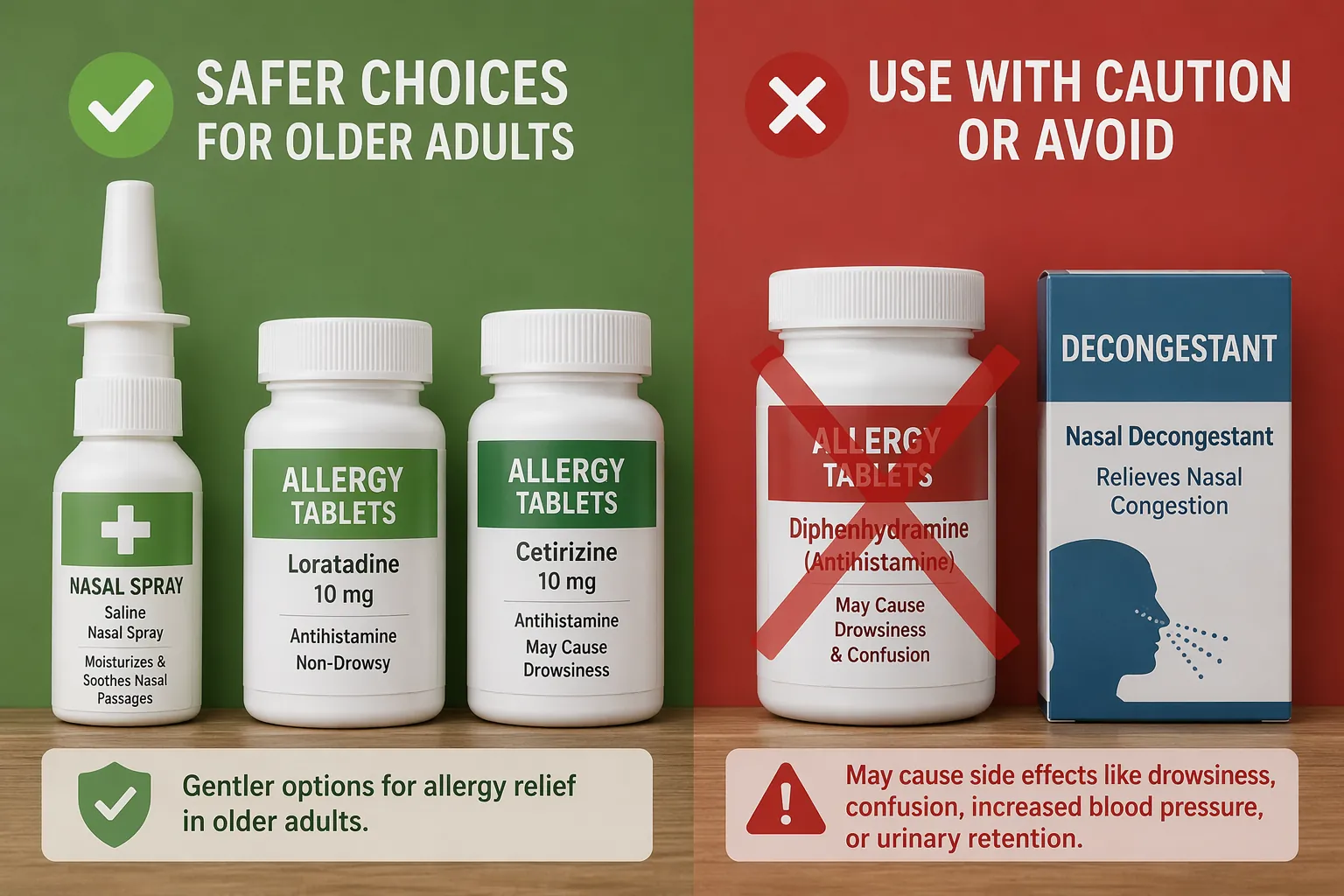
| Replacement choice | How to think about it for an older adult |
|---|---|
| Steroid nasal sprays such as fluticasone, triamcinolone, or mometasone | Often the best first place to look for ongoing nasal allergy symptoms; low whole-body exposure and no anticholinergic burden are why these are commonly favored for seniors. |
| Fexofenadine or loratadine | Reasonable non-sedating oral antihistamine options when a pill is needed, especially after a pharmacist checks the senior’s medication list. |
| Cetirizine from an unaffected lot | Not automatically unsafe, but less attractive as the quick replacement during this recall and more likely than some alternatives to cause sedation in older adults. |
| Diphenhydramine, including Benadryl | Avoid for routine allergy replacement in seniors because of anticholinergic effects, sedation, confusion, and fall risk. |
| Products ending in “-D,” often containing pseudoephedrine | Avoid as a quick substitute for seniors with blood pressure, heart rhythm, prostate, sleep, or interaction concerns unless specifically cleared. |
For many older adults with nasal allergy symptoms, a nasal steroid spray such as fluticasone, triamcinolone, or mometasone is a more sensible first-line replacement than reaching for another sedating pill. AARP and GoodRx both point caregivers toward nasal steroid sprays and newer, less-sedating antihistamines while warning about the older first-generation antihistamines that can cause more trouble after 50.[5][6]
Some nasal sprays are sold over the counter, and some forms or brands may require a prescription. That matters less than this principle: choose the route and drug class that relieves symptoms without adding avoidable brain, bladder, blood pressure, or fall-risk effects. If the senior mainly has sneezing, runny nose, or itchy eyes, ask the pharmacist which OTC nasal steroid or non-sedating antihistamine fits the person’s health history and current medications.
If a pill is needed, fexofenadine or loratadine is often a cleaner place to start than diphenhydramine. GoodRx lists fexofenadine and loratadine among allergy medicine options for seniors and warns that some allergy medicines can worsen dizziness, drowsiness, urinary retention, and other problems in older adults.[6]
Benadryl deserves a hard stop here. Diphenhydramine is not a harmless “just for tonight” choice for many seniors. AARP describes concerns about older allergy medicines after 50, including cognitive and anticholinergic effects; it also cites research associating longer-term use of strong anticholinergic drugs with about a 50% greater dementia risk.[5] For a deeper look at why these medicines matter around falls, see A Caregiver's Guide to Medications That Increase Fall Risk in Older Adults.
The “-D” products are a different kind of trap. They may look like the same allergy medicine with extra strength, but they usually add a decongestant such as pseudoephedrine. GoodRx notes that pseudoephedrine can be risky for some seniors because it may increase blood pressure and heart rate, and AARP notes that one in three older adults has hypertension.[5][6] That is not a substitute to grab from the shelf while the pharmacist is closed.
When to Ask the Pharmacist Before Switching
A pharmacist review is worth the extra phone call if the older adult has kidney or liver impairment, cardiovascular disease, high blood pressure, glaucoma, prostate or urinary retention problems, memory issues, a recent fall, or a long medication list. It is also worth asking before switching if the senior takes sedatives, sleep medicines, antidepressants, blood pressure medications, or other drugs with anticholinergic effects. Antihistamine safety guidance for adults over 65 highlights interaction and side-effect concerns, and FDA patient guidance explains that drug interactions can change how medicines work or increase side effects.[7][8]
The call does not need to be dramatic. Have the recalled bottle, the senior’s medication list, and the allergy symptoms in front of you. Ask: “This cetirizine bottle is in the recalled lot. For an older adult taking these medicines, would you recommend a nasal steroid spray, loratadine, fexofenadine, or something else?” That question gives the pharmacist enough to work with.
Step 4: Dispose of the Recalled Bottle Without Leaving It in Circulation
Once you have confirmed the bottle is affected, do not put it back in the cabinet “for now.” Recalled medicine has a way of being rediscovered by someone who missed the conversation.
FDA’s preferred disposal method is a drug take-back option, such as a DEA-authorized collector or a pharmacy drop box. If no take-back option is available, FDA says many medicines can be mixed with an unpalatable substance such as used coffee grounds, dirt, or cat litter, placed in a sealed container, and thrown in household trash. FDA says not to flush medicines unless they are on the FDA flush list.[9]
- Best option: take the recalled bottle to a pharmacy drop box or local drug take-back site.
- Backup option: mix the tablets with used coffee grounds, dirt, or cat litter in a sealed container before placing it in household trash.
- Do not flush the tablets unless FDA specifically lists that medicine for flushing.
- Remove or scratch out personal information on the label before disposal.
Step 5: Watch for Symptoms and Report Anything Concerning
The FDA recall notice said no adverse events had been reported as of the notice.[1] That is reassuring, but it is not a reason to ignore a change that happened after taking tablets from an affected bottle. If your senior had an unusual reaction, new confusion, severe dizziness, a fall, breathing trouble, chest symptoms, or anything else that feels medically urgent, seek medical help first.
After urgent care needs are handled, adverse events related to a recalled medicine can be reported through FDA’s MedWatch program.[10] Reporting is not about proving what caused the symptom at the kitchen table. It is how FDA gathers safety signals when recalled products have already reached homes.
What If the Bottle Does Not Match?
If the NDC and lot number do not match the FDA recall notice, you have not found an affected bottle from this recall. Keep giving the medicine only if it was already appropriate for that senior. The recall does not turn every cetirizine product into a recalled product.
That said, a non-recalled bottle can still be the wrong fit for a particular older adult. Cetirizine can cause sleepiness in some people, and seniors with multiple medications deserve more caution than the average allergy aisle shopper. If you want the broader senior-medication safety discussion, read Why the Cetirizine Recall Matters for Senior Medication Safety. For this recall, though, the bottle check is still the dividing line.
Because this recall is recent, keep the FDA recall page as the source to recheck if new lots or instructions are added. As of this article’s current review date, July 23, 2026, the caregiver’s job is narrow: verify the NDC and lot, remove the affected bottle if it matches, choose a senior-appropriate replacement, and use the pharmacist when the medication list or health history makes the swap anything less than simple.
References
- Unique Pharmaceutical Laboratories (Div. J. B. Chemicals & Pharmaceuticals Ltd.) Issues Voluntary Nationwide Recall of Cetirizine Hydrochloride Tablets USP 5 mg, FDA, July 2026
- Understanding Drug Recalls: What to Know and What to Do, FDA
- Drug Recalls: What to Do and How to Find Your Medication Lot Number, GoodRx
- What to Do When Medication is Recalled, Cleveland Clinic
- Allergy Medicine Side Effects to Know After 50, AARP
- Allergy Medicines for Seniors, GoodRx
- Antihistamine Safety After 65, Ubie
- Drug Interactions: What You Should Know, FDA
- Disposal of Unused Medicines: What You Should Know, FDA
- MedWatch: The FDA Safety Information and Adverse Event Reporting Program, FDA
Questions to bring to a clinician or OT
This is not medical, legal, or a family's final decision — only a framework. Bring these questions to a clinician, occupational therapist, or your local Area Agency on Aging.
Find Local HelpRelated reading
Noticed something outdated or inaccurate on this page? Flag a correction. We review every report against CDC, NIA, and AARP HomeFit guidance before updating a page.