
Clinical term
A Room-by-Room Safety Checklist for Alzheimer's Caregivers
Last verified 2026-07-28
Stand in the doorway before you start the checklist. A standard aging-in-place pass asks, “Could someone trip here?” An Alzheimer’s home safety pass has to ask more: “Will my parent recognize this as dangerous? Will they know what this object is for? Can they find the safe route when they are tired, frightened, or disoriented?”
That difference changes the work. A loose rug matters because of fall risk, but a stove knob, a bathroom mirror, a bottle of cleaner, and a familiar front door also become safety issues when judgment, depth perception, balance, wayfinding, and temperature awareness begin to change. The most useful caregiver support is not abstract reassurance; it is the small home changes that keep a parent able to make coffee, bathe, rest, and move through the house with fewer chances for a frightening mistake.
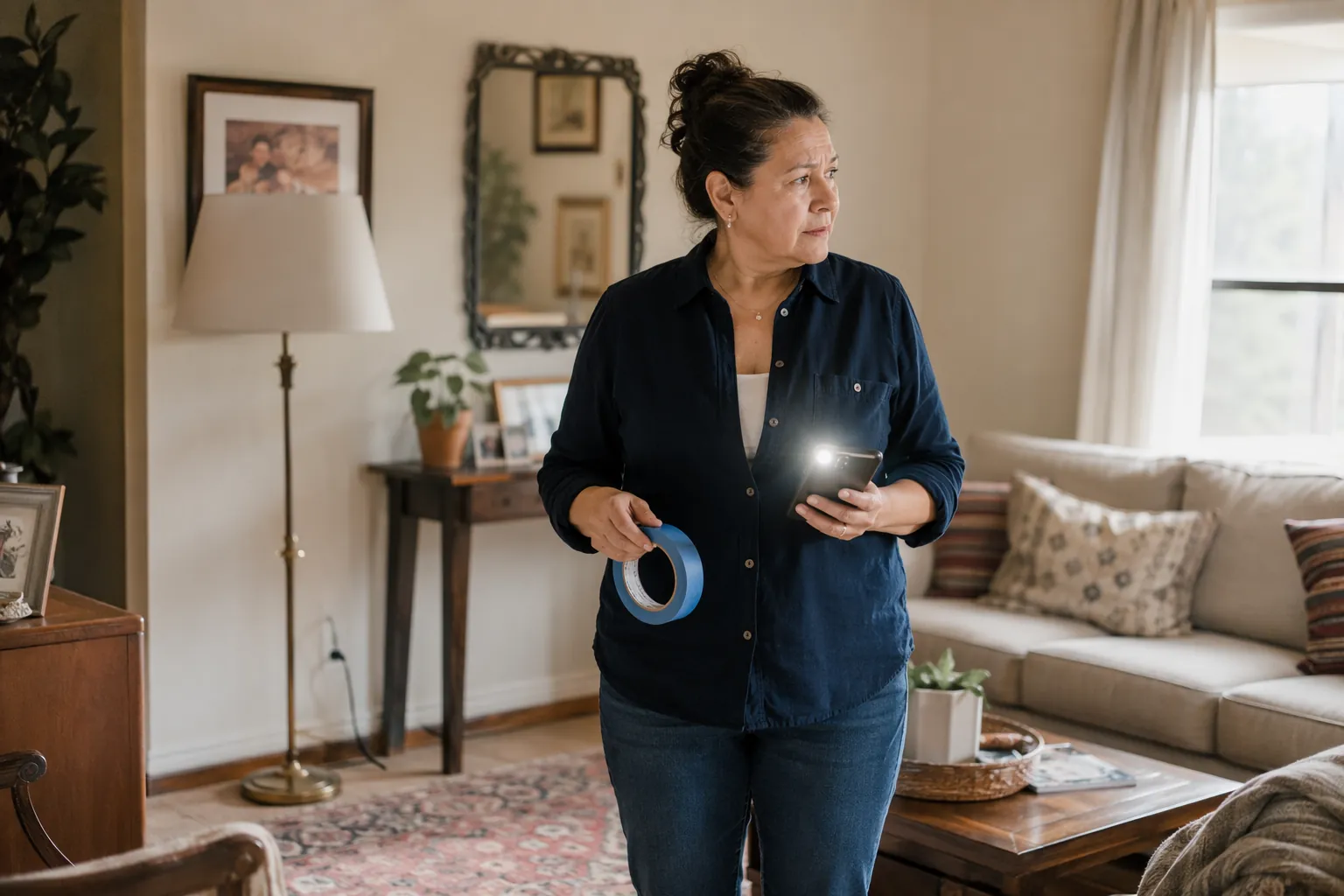
Use this as a walkthrough, not as a one-day remodeling order. The Alzheimer’s Association’s home safety guidance is the backbone here because it names hazards ordinary checklists often miss: appliance shutoffs, stove knob covers, toxic plants, water temperature checks, secured chemicals, electric blanket cautions, and room-by-room changes that fit dementia care at home.[1]
Start with the hazards that can go wrong fastest
If the house feels overwhelming, do not begin by alphabetizing every cabinet. Begin where the consequences are largest: exits and wandering, bathroom scalds and falls, kitchen fire and poisoning risks, then the bedroom, living areas, stairs, laundry, garage, and sensory environment.
| First pass priority | What you are trying to prevent | What to look for first |
|---|---|---|
| Exits and wandering | A parent leaving unnoticed or being unable to give identifying information | Door locks, alarms, ID bracelet, GPS option, emergency plan |
| Bathroom | Falls, scalds, confusion during bathing or toileting | Water temperature, grab bars, non-slip surfaces, shower entry, mirror reactions |
| Kitchen | Fire, burns, poisoning, cuts | Stove access, auto-shutoff appliances, knives, cleaners, toxic plants |
| Bedroom and nighttime path | Night falls, unsafe bedding heat, disorientation after waking | Lighting, bed height, stable chair, clear route to bathroom |
| Living areas and stairs | Trips, tipping furniture, visual misreads | Rugs, cords, clutter, contrast, handrails, gates where appropriate |
| Laundry, garage, and storage | Chemical exposure, tools, vehicle access, hidden hazards | Locked products, secured tools, clear boundaries |
Some changes will feel like taking something away. It helps to frame the question differently: which changes let your parent keep doing the safest version of what they can still do? A stove may need to be disabled before a serious burn. A bathroom door may need a label before nighttime confusion becomes a fall. A bracelet may need to go on before the first time someone gets lost.
Front door, back door, and wandering prevention
Wandering is not a late, rare problem to put off until the family is “sure.” The Alzheimer’s Association reports that about 6 in 10 people living with dementia will wander at least once.[2] That figure changes the doorway from a normal entry point into one of the main safety zones in the house.
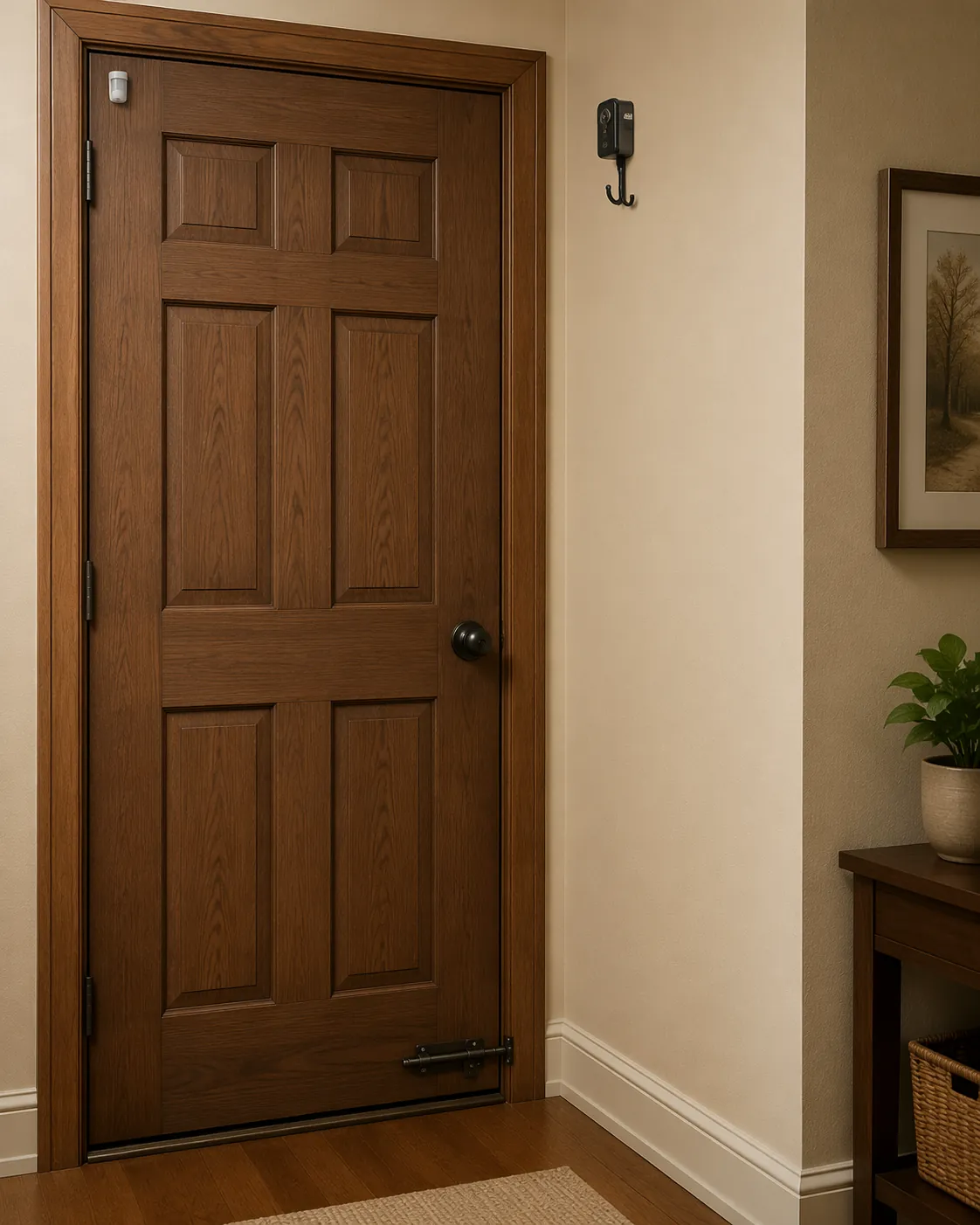
Walk every exit: front door, back door, garage door, basement door, patio slider, and any gate from the yard. A dementia-specific check asks whether a parent might leave because they are looking for work, trying to “go home,” following an old routine, responding to anxiety, or simply misreading the time of day.
- Install locks above or below typical eye level where legally and safely appropriate, so the lock is not in the automatic line of sight. Do not create a fire-trap; every household still needs an emergency exit plan.
- Add door alarms, chimes, or motion sensors so someone knows when an exterior door opens, especially overnight.
- Use a medical ID bracelet or other wearable identification before wandering happens, not after the first frightening incident.
- Consider GPS tracking or location-sharing technology if your parent is still walking outside, taking out trash, checking mail, or trying to maintain familiar outdoor routines.
- Keep a current photo, medication list, diagnosis information, and emergency contacts ready for responders.
- Enroll in the MedicAlert and Alzheimer’s Association wandering response program if it fits your family’s situation; the home safety checklist specifically points caregivers toward identification and emergency-response planning for wandering risk.[1]
This is also the place to make a written plan for neighbors and local responders. If you need a deeper prevention plan, use a Silver Alert and dementia planning guide as the next step rather than waiting until a search is already underway.
Bathroom: water, balance, mirrors, and the hard parts of dignity
The bathroom is often where families first notice that ordinary safety advice is too thin. A person with Alzheimer’s may misjudge a wet floor, forget the tub edge is there, resist help because bathing feels exposed, or fail to notice that water is too hot. The Alzheimer’s Association specifically recommends bathroom measures such as grab bars, non-skid surfaces, walk-in shower consideration, and use of a water thermometer.[1]
Control the water before you worry about finishes
- Set the home’s water heater to a safer temperature or use anti-scald devices where appropriate.
- Keep a simple water thermometer in the bathroom if someone else prepares the bath or shower.
- Mark hot and cold handles clearly if the fixtures are confusing, or replace them with simpler controls during a larger bathroom update.
- Stay alert to changing temperature awareness. A parent who used to test water reliably may stop doing so consistently.
Scald prevention can feel oddly invasive because it touches a private routine. It is still one of the clearer safety decisions: the parent does not have to “agree” that Alzheimer’s has changed anything for the water temperature to be made safer.
Make standing and turning less dangerous
- Install grab bars at the toilet and shower; towel bars are not substitutes.
- Use non-slip strips or mats that lie flat and do not curl at the edges.
- Consider a shower chair if standing long enough to bathe is becoming risky.
- Consider a walk-in shower or lower-threshold entry if stepping over a tub wall has become uncertain.
- Keep the floor dry and remove small rugs that slide underfoot.
- Put night lighting on the path from bed to toilet, but avoid glare that throws hard shadows across the floor.
If the parent is beginning to refuse bathing, the safety problem may not be the shower alone. It may be fear, cold, embarrassment, noise, the sensation of water, or confusion about what is being asked. For that specific struggle, a separate guide on why an elderly parent refuses to bathe can help you adjust the routine without turning every bath into an argument.
Check whether the mirror is helping or frightening
A bathroom mirror can be harmless for one person and upsetting for another. If your parent reacts to the reflection as if another person is in the room, becomes startled at night, or avoids the bathroom, cover or remove the mirror. This is not decoration; it is wayfinding and distress prevention.
For families planning upgrades in stages, a phased bathroom safety guide can help separate quick fixes from bigger remodeling decisions.
Kitchen: fire, poisoning, cuts, and familiar routines that may no longer be safe
The kitchen is emotionally difficult because it holds so much independence. Making toast, warming soup, pouring coffee, or feeding a pet can be part of a parent’s identity. The question is not whether to shut the room down on day one. The question is which tasks can stay safe, and which hazards need to be removed before one distracted moment turns into a burn, fire, or poisoning.
- Use auto-shutoff appliances where possible, especially for small appliances that heat.
- Install stove knob covers or remove stove knobs if the stove is no longer safe without supervision.
- Consider disabling the stove or switching off access when no one is present if your parent turns burners on and forgets them.
- Store knives, scissors, matches, lighters, and sharp tools out of easy reach if judgment or object recognition has changed.
- Lock cleaning products, detergents, alcohol, medications, and chemicals rather than relying on labels.
- Remove toxic plants from the kitchen and eating areas.
- Clear expired food and simplify the refrigerator so unsafe food is not mistaken for a safe meal.
- Keep the floor free of pet bowls, loose mats, and extension cords.
Those recommendations match the Alzheimer’s Association’s kitchen guidance, which includes auto-shutoff appliances, stove knob covers, securing dangerous objects, and removing toxic plants.[1] The dementia-specific reason is that a parent may still remember the old sequence of cooking but lose one safety step inside it: turn the burner off, check whether plastic is near heat, recognize a cleaning product, or notice smoke early enough.
A compromise can preserve routine. Leave a safe coffee setup with an auto-off machine. Keep familiar mugs in one visible place. Put snacks at eye level. If cooking is now supervised only, make that true without pretending the stove is still an independent option.
Bedroom and nighttime path
Night changes the house. Shadows look like objects. A hallway that was easy at 3 p.m. becomes confusing at 2 a.m. A parent may wake up needing the bathroom and move before they are fully oriented.
- Clear the route from bed to bathroom completely: no baskets, shoes, cords, fans, or small tables.
- Use night lights that show the path without creating glare or strong shadows.
- Check bed height. Feet should reach the floor safely before standing.
- Place a stable chair with arms where dressing happens; avoid lightweight chairs that tip when used for support.
- Secure furniture that could shift if leaned on.
- Use caution with electric blankets and heating pads; the Alzheimer’s Association flags electric blanket safety because heat awareness and safe use may change.[1]
- Label the bathroom door with a simple word or picture if your parent has begun opening closets or other doors at night.
If nighttime movement is increasing, this is also where monitoring technology may be useful: bed sensors, door sensors, motion lights, or caregiver alerts. A separate guide to dementia monitoring systems can help sort practical tools from gadgets that only add noise.
Living room and everyday sitting areas
The living room usually looks safe because it is familiar. Look lower. Look at what catches a foot, what slides, what tips, and what creates visual confusion.
- Remove throw rugs or secure them so edges cannot curl.
- Route lamp cords and charging cables away from walking paths.
- Secure bookcases, televisions, and unstable furniture.
- Choose chairs with arms and firm seats; very low, soft chairs can make standing harder.
- Reduce clutter on tables and floors so the walking path is obvious.
- Avoid busy floor patterns that can look like holes, steps, or objects to someone with contrast and depth-perception changes.
- Improve lighting, but test it at night. Bright glare on polished floors can be as confusing as dimness.
- Remove or cover mirrors if reflections cause fear, searching, or misidentification.
If your parent does not have a dementia diagnosis and you are doing a broader assessment, a general room-by-room home safety checklist may be enough for now. Once Alzheimer’s is part of the picture, the same room needs a second pass for judgment, wayfinding, and visual misinterpretation.
Stairs, hallways, and transitions between rooms
Stairs are not just a balance problem. They are a perception problem. A parent may not see the edge clearly, may misread patterned carpet, or may start down while carrying something that blocks their view.
- Install secure handrails on both sides where possible.
- Keep stairways free of laundry, shoes, boxes, and decorative objects.
- Use lighting at the top and bottom of stairs, with switches that are easy to find.
- Increase contrast at step edges if the stairs blend together visually.
- Use gates or barriers only when they do not create a new climbing or emergency-exit hazard.
- Place simple signs or visual cues for the bathroom, bedroom, and kitchen if your parent gets turned around inside the house.
Hallways deserve the same attention. Remove narrow tables, decorative stands, and anything someone might grab that cannot hold weight. A clear path is not bare or institutional; it is a path your parent can understand quickly.
Laundry room, garage, basement, and storage spaces
These rooms are easy to postpone because a parent may not spend much time there. They also hold concentrated hazards: bleach, detergent pods, paint, pesticides, tools, ladders, car keys, and sharp equipment. The Alzheimer’s Association checklist includes securing chemicals in laundry and garage areas because labels and past habits may no longer protect someone reliably.[1]
- Lock laundry detergent, bleach, cleaning sprays, solvents, paint, automotive fluids, and garden chemicals.
- Store tools, blades, power equipment, and ladders out of reach or behind a locked door.
- Remove access to car keys if driving is no longer safe or is under review.
- Keep floors dry and uncluttered; laundry baskets and storage bins become trip points quickly.
- Check basement stairs with the same seriousness as main stairs, especially if lighting is poor.
- Consider a simple door alarm on the garage or basement door if your parent wanders into storage areas.
Sensory environment: reduce what the brain has to sort through
A dementia-friendly home is not only about removing hazards. It is also about reducing the number of confusing signals competing for attention: television noise, harsh lighting, cluttered counters, patterned floors, reflections, and rooms that all look the same.
- Keep daily-use items visible and consistent: toothbrush, cup, favorite chair, shoes, coat, and bathroom supplies.
- Use contrast where it helps: a toilet seat that does not blend into the floor, a plate that stands out from the table, tape on step edges if appropriate.
- Avoid glare, especially from uncovered bulbs, shiny floors, and bright windows at the end of hallways.
- Lower background noise during meals, bathing, dressing, and evening transitions.
- Use familiar music as a calming cue if it helps your parent settle during a difficult time of day, but treat it as one environmental support rather than a cure.
- Watch air quality, temperature, and ventilation; discomfort can show up as agitation, pacing, or refusal before a parent can explain what feels wrong.
For broader environmental planning, including how the home may need to change by stage, see the dementia-friendly home modifications guide. If outdoor air quality or indoor ventilation is becoming part of the concern, the guide on air quality and the aging brain is a useful next read.
How to make changes without turning the house into a warning label
The goal is not to make the home look medical. A parent’s house can still feel like their house. Blue painter’s tape on a step edge can be temporary. A locked cabinet can look like an ordinary cabinet. A safer coffee station can preserve a morning ritual. A chair with arms can still be the chair they like.
When a change is likely to feel insulting, start with the least humiliating explanation that is still honest: “This makes the bathroom easier at night,” “I’m fixing the loose rug,” or “This appliance shuts itself off, so none of us has to worry.” Not every safety measure needs a debate about the diagnosis. Some simply need to be done calmly.
If siblings or other relatives are arguing about priorities, write down the risk you are trying to prevent in plain language: “leaving the house unnoticed,” “turning on the stove alone,” “falling between bed and bathroom,” “drinking or touching chemicals.” It is harder to dismiss a modification as overreacting when the consequence is named.
For budgeting, separate low-cost urgent fixes from larger projects. Locks, alarms, labels, rug removal, chemical storage, lighting changes, and stove knob covers may happen quickly. A walk-in shower, stair work, or broader remodeling may need planning. A prioritization guide for aging-in-place modifications by cost and fall risk can help if the family cannot do everything at once.
Reassess as early-stage safety becomes middle-stage safety
A checklist is not finished just because you walked the house once. Alzheimer’s changes the meaning of familiar rooms over time. Early on, removing throw rugs, improving lighting, labeling doors, and simplifying routines may be enough. Later, the same home may need door alarms, stove disablement, closer bathroom supervision, monitoring systems, and more restricted access to tools or chemicals.
Do one full room-by-room pass now. Prioritize the changes that prevent the worst outcomes: wandering, scalds, falls, fire, poisoning, and nighttime disorientation. Then put a date on the calendar to walk the house again, because the safest setup is the one that changes before the next ability is lost.
References
- Home Safety. Alzheimer’s Association.
- 2026 Alzheimer’s Disease Facts and Figures. Alzheimer’s Association. 2026.
Browse more in the Glossary.