
Clinical term
How to Prevent Salmonella When Cooking for Older Adults
Last verified 2026-08-25
Salmonella prevention for adults 65 and older is a checklist you can measure, not a general promise to “be careful.” The numbers matter: CDC says nearly half of adults 65 and older with a lab-confirmed foodborne illness are hospitalized, which is why a parent’s kitchen deserves stricter habits than a rushed weeknight dinner for a healthy younger adult. [1]
Before the chicken goes in the oven or the leftovers go into containers, keep these numbers in reach: wash hands for 20 seconds; cook poultry, leftovers, and reheated deli items to 165°F; cook ground meats and egg dishes without meat to 160°F; cook fish and whole cuts of beef, veal, lamb, and pork to 145°F, with a 3-minute rest for those whole cuts; chill food within 2 hours, or within 1 hour if the room or outdoor temperature is above 90°F; keep the refrigerator at 40°F or colder. [2]
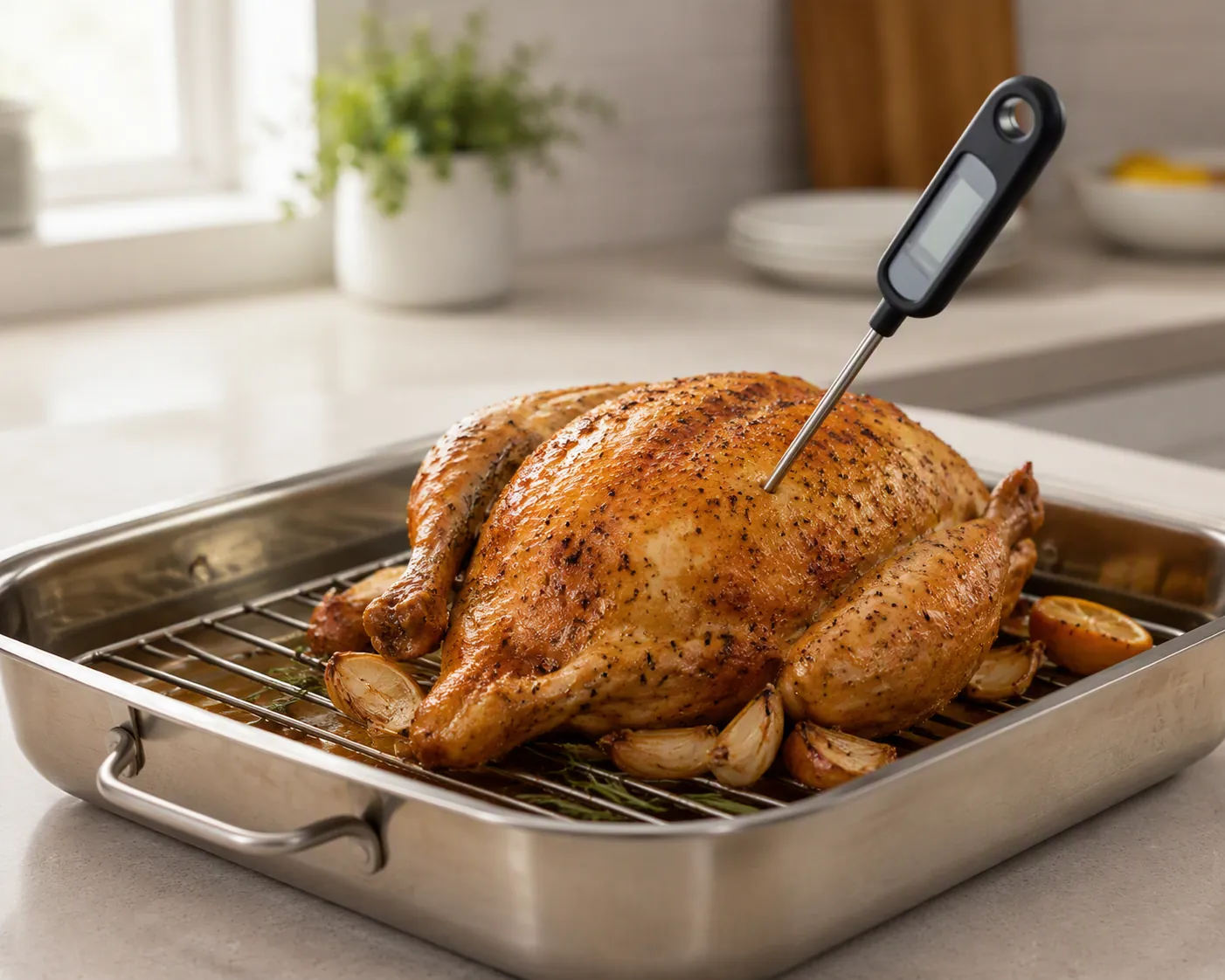
The counter-side checklist
If you are cooking for a parent after work, this is the part to use while the groceries are still on the counter. It follows the CDC and FDA clean-separate-cook-chill framework, but trims it down to actions you can check with a clock, a thermometer, and a refrigerator setting.
| When you are doing this | Use this rule | What changes in the kitchen |
|---|---|---|
| Before touching food | Wash hands with soap and water for 20 seconds. [2] | Do it before cooking, after handling raw meat, poultry, seafood, or eggs, and after wiping counters or taking out trash. |
| Unpacking and prepping | Keep raw meat, poultry, seafood, and eggs away from ready-to-eat foods. [2] | Use separate cutting boards, plates, utensils, and storage spots for raw foods and foods that will not be cooked again. |
| Cooking | Use a food thermometer and cook to the correct internal temperature. [2] | Color, firmness, and “the juices run clear” do not count. |
| Cooling and storing | Chill food within 2 hours, or within 1 hour above 90°F; keep the refrigerator at 40°F or colder. [2] | Put leftovers into shallow covered containers and refrigerate promptly instead of letting food sit while the kitchen gets cleaned. |
| Serving leftovers or deli foods | Reheat leftovers and deli meats to 165°F. [2] | If the food is being brought to a parent’s home, the reheat step happens there, not just in your kitchen. |
Why the same mistake can hit harder after 65
The food-safety rules are not different because older adults are fragile in some vague way. They are different because the body handles infection differently with age. FoodSafety.gov and FDA identify several reasons older adults are at higher risk from foodborne illness, including a weaker immune response, changes in digestion, reduced stomach acid, liver and kidney changes, chronic conditions such as diabetes, and medications that can affect stomach acid or immune defenses. [3][4]
USDA’s food-safety guidance for adults 65 and older also points to longer gastrointestinal transit time as one reason bacteria can have more time to grow in the digestive tract. [5] That is the practical reason a caregiver cannot treat “a little underdone,” “sat out for a while,” or “probably fine” as harmless when the meal is for a parent 65 or older.
Clean and separate: the towel and cutting board rules
Start with hands, because hands move bacteria faster than almost anything else in a home kitchen. Wash with soap and water for 20 seconds before preparing food, after handling raw poultry or eggs, after touching packaging, and after using the bathroom or helping a parent with personal care. [2]
Then separate raw foods from ready-to-eat foods. Raw chicken on a cutting board is not the only problem. The problem is the knife that moves from raw chicken to lettuce, the plate that held raw burgers and later holds cooked burgers, or the damp towel used to wipe up raw juices and then used again near a sandwich.
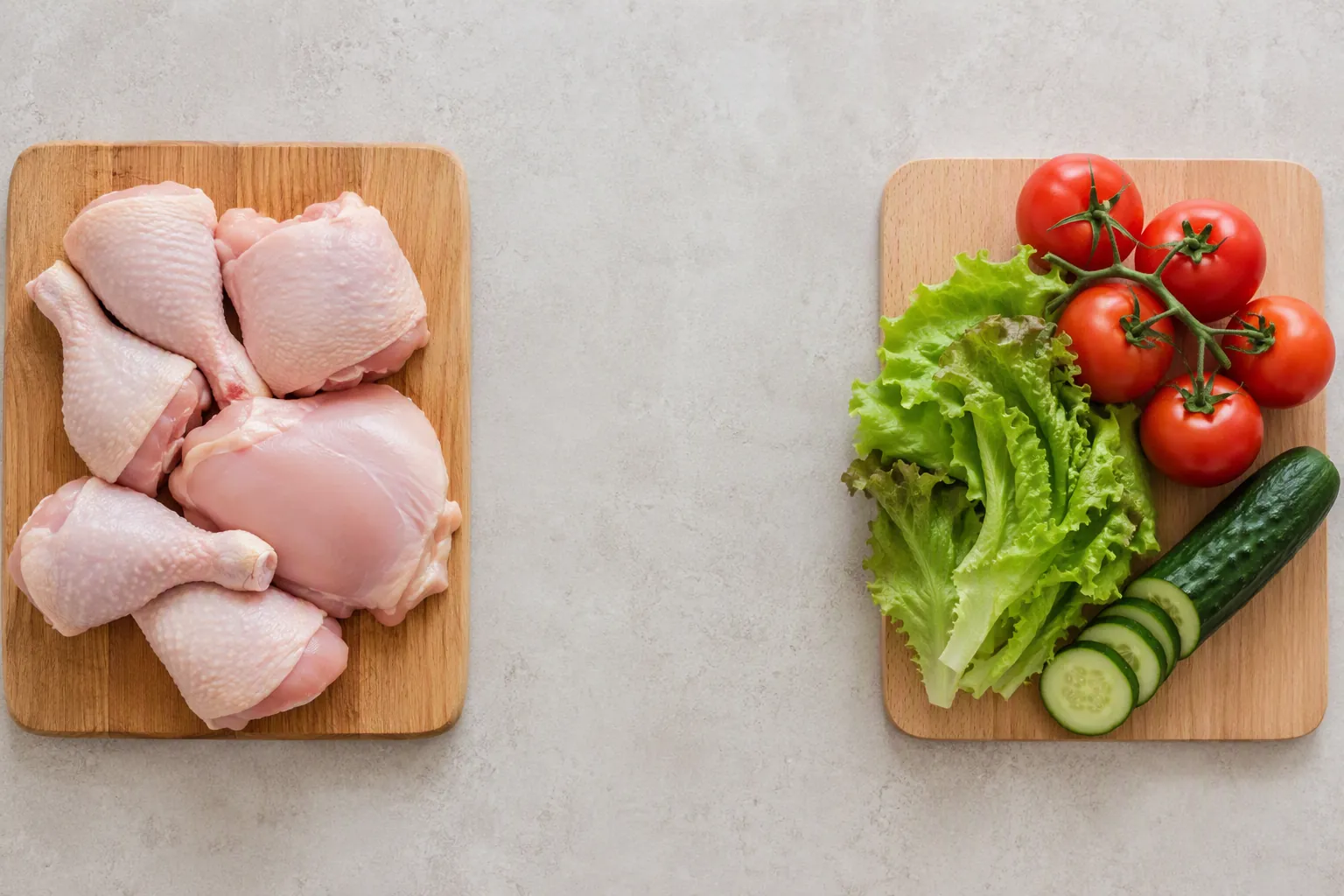
- Use one board or plate for raw meat, poultry, seafood, and eggs, and a different one for produce, bread, cooked foods, or anything ready to eat.
- Put raw meat and poultry in bags at the store and store them where juices cannot drip onto fruit, salad greens, or cooked leftovers.
- Wash cutting boards, knives, plates, and counters with hot soapy water after contact with raw animal foods.
- Retire the damp dish towel while handling raw poultry or eggs. Use paper towels for raw-juice cleanup, or put cloth towels straight into the laundry.
Chicken deserves special attention because CDC notes that more than 1 in 25 packages of chicken at the grocery store are contaminated with Salmonella. [6] If chicken is a regular part of your parent’s meals, the food thermometer is as important as the recipe. For recipe ideas that already fit an older adult’s meal routine, see easy chicken recipes for older parents, then keep the 165°F rule attached to every version.
Cook: use internal temperature, not color
A food thermometer does not need to be fancy. It needs to be used. Insert it into the thickest part of the food, away from bone, fat, or the pan surface. For thin foods, slide the probe in from the side so the sensing area reaches the center. Check more than one spot when the food is uneven, stuffed, or cooked in pieces.
For casseroles, egg bakes, poultry pieces, and reheated containers of leftovers, the middle is where the mistake usually hides. Steam at the edge of a dish does not prove the center is hot enough.
| Food | Minimum internal temperature | Caregiver note |
|---|---|---|
| Chicken, turkey, duck, and other poultry, including ground poultry | 165°F [2] | Check the thickest part of the breast or thigh and the center of ground-poultry patties or meatballs. |
| Leftovers | 165°F [2] | Reheat the portion being served, not just the container edge. |
| Deli meats, hot dogs, and cold cuts when served to adults 65+ | Reheat to 165°F before serving [2] | This matters when you bring sandwiches or deli containers to a parent’s home. |
| Egg dishes with meat | 165°F [2] | This includes breakfast casseroles, quiches with meat, and stuffing-like mixtures that contain eggs and meat. |
| Ground beef, pork, veal, and lamb | 160°F [2] | Brown color is not a reliable safety check. |
| Egg dishes without meat | 160°F [2] | Scrambles, frittatas, and casseroles should be cooked until the thermometer confirms the center. |
| Fish | 145°F [2] | Check the thickest part. |
| Whole cuts of beef, veal, lamb, and pork | 145°F plus a 3-minute rest [2] | The rest time is part of the safety instruction, not optional garnish time. |
If you are cooking several foods at once, set the thermometer where you can see it before you start. A thermometer buried in a drawer is how chicken gets judged by color and leftovers get judged by steam.
Chill: the two-hour rule is where batch cooking often goes wrong
Cooking ahead for a parent is sensible. Letting a pot of soup cool on the stove while you wash dishes, label containers, take a phone call, and drive home is not. Per CDC guidance for adults 65 and older, food should be refrigerated within 2 hours, or within 1 hour if the temperature is above 90°F, and the refrigerator should be set to 40°F or colder. [2]
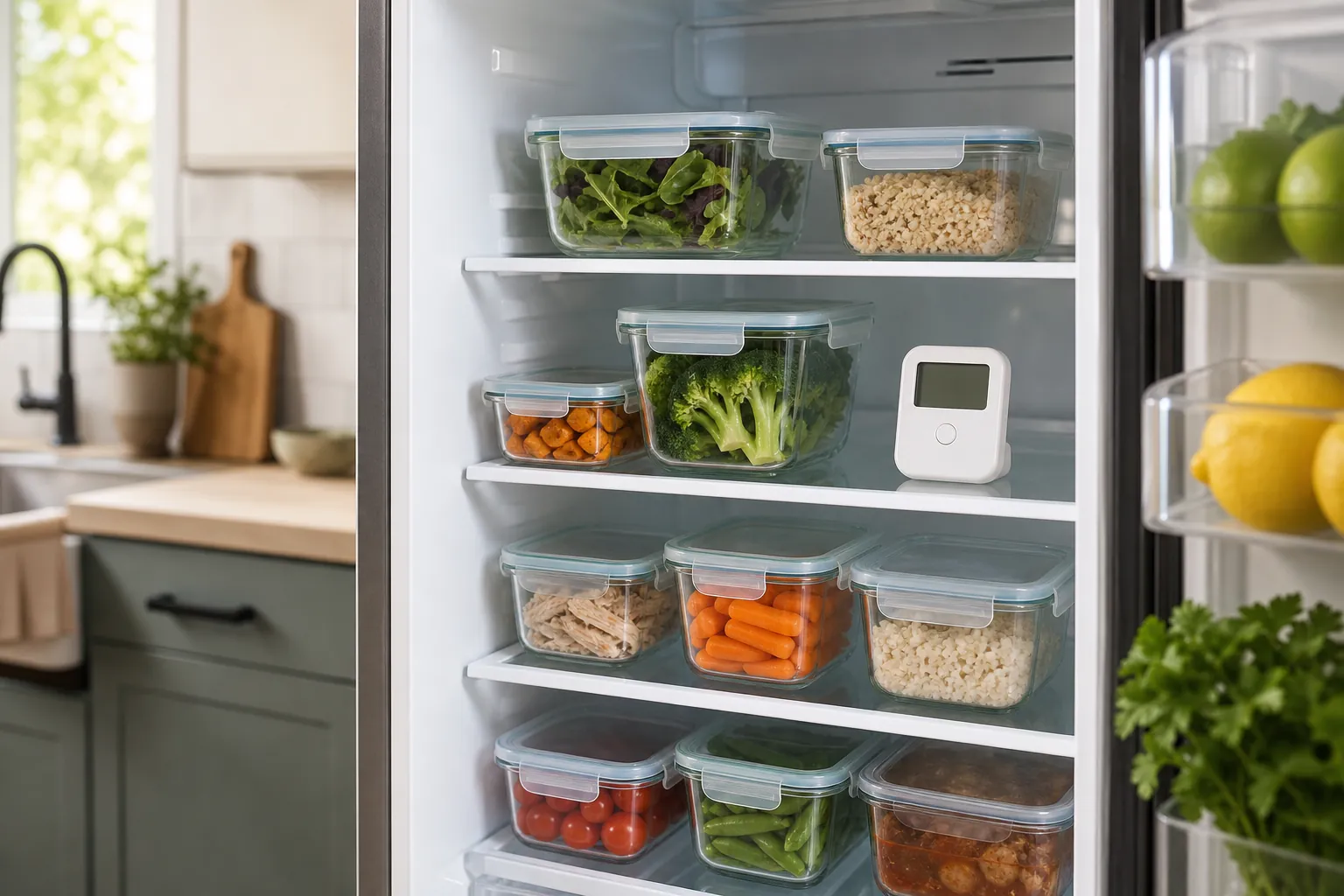
The simplest way to make that rule work is to portion hot food into shallow containers before refrigerating. A deep container keeps the center warm for too long. Shallow containers cool faster, stack better, and make it easier for a parent to reheat one meal without opening and closing a large batch all week.
- Start the clock when food finishes cooking or leaves safe hot holding, not when you remember to clean the kitchen.
- Use shallow covered containers for cooked meats, casseroles, rice dishes, soups, and stews.
- Label the container with the date if your parent may forget when it was cooked.
- Keep an appliance thermometer in the refrigerator and check that it reads 40°F or colder.
- Reheat leftovers to 165°F before serving.
If you are building a weekly cooking routine, keep the food-safety numbers here and use easy meal prep for older adults living alone for the planning routine. If your parent’s refrigerator loses power, the 40°F refrigerator rule becomes the first thing to check; this power restoration food-safety guide covers that scenario.
Recall checks also belong in the storage routine, especially for deli items, packaged salads, eggs, nut butters, and other foods a parent may keep for several days. The habit does not need to be dramatic: check the refrigerator, check the product, then check the recall list. This FDA food recall checklist for older parents can sit next to the meal-prep routine.
Riskier foods and safer swaps for adults 65+
“Avoid risky foods” is not useful unless the caregiver knows what to buy instead. CDC’s safer-food guidance for adults 65 and older gives practical substitutions for foods more likely to carry Salmonella or other foodborne germs. [2]
| Food decision | Riskier choice | Safer choice for a parent 65+ |
|---|---|---|
| Poultry | Undercooked chicken or turkey; raw poultry juices touching vegetables, bread, or cooked food | Cook poultry to 165°F and keep raw poultry separate from ready-to-eat foods. [2] |
| Eggs | Raw or undercooked eggs; foods made with raw eggs, such as some homemade mayonnaise, dressings, sauces, or desserts | Use pasteurized eggs or egg products when a recipe will not be fully cooked; cook egg dishes without meat to 160°F and egg dishes with meat to 165°F. [2] |
| Deli meats and hot dogs | Cold deli meats or hot dogs served straight from the package | Reheat deli meats, cold cuts, and hot dogs to 165°F before serving. [2] |
| Milk, juice, and cider | Unpasteurized milk, juice, or cider | Choose pasteurized products. [2] |
| Cheese | Soft cheeses made from unpasteurized milk | Choose cheeses labeled as made with pasteurized milk. [2] |
| Sprouts | Raw or lightly cooked sprouts | Cook sprouts thoroughly, or choose another crunchy vegetable if the recipe depends on raw texture. [2] |
| Seafood | Raw or undercooked fish or shellfish | Cook fish to 145°F and avoid raw seafood preparations for adults 65+. [2] |
Some of these foods are tied to family habits: soft eggs, deli sandwiches, homemade dressings, a favorite cheese. The point is not to make meals joyless. It is to move the risk out of the meal by choosing pasteurized products, reheating deli foods, and using a thermometer where guessing used to happen.
A short doctor note if prevention fails
This section is general education, not medical advice, and it cannot replace care from your parent’s clinician.
CDC identifies adults 65 and older as a group at higher risk for severe Salmonella illness. [7] CDC food-safety guidance says to contact a doctor if diarrhea or vomiting lasts more than 2 days, or if fever is higher than 102°F. [1] Harvard Health and Mayo Clinic use different “not improving after several days” wording in patient-facing guidance, so do not blend those into one invented household rule; use your parent’s clinician’s instructions when they are more specific.
If symptoms are already present, especially diarrhea, vomiting, weakness, dizziness, confusion, or poor fluid intake, move to the act-now path in Why Salmonella Symptoms in Seniors Become a Fall Risk. Prevention is the kitchen job; symptom triage is a medical job.
For adults 65 and older, salmonella prevention is not about being extra clean in a general way. It is buying safer foods, separating raw foods, cooking to the right internal temperature, cooling within the time limit, storing at 40°F or colder, and reheating to 165°F when the meal comes back out.
References
- People at Increased Risk for Food Poisoning, CDC, Jan 2025
- Safer Food Choices for Adults 65 and Older, CDC, May 2024
- People at Risk: Older Adults, FoodSafety.gov
- Food Safety for Older Adults and People with Cancer, Diabetes, HIV/AIDS, Organ Transplants, and Autoimmune Diseases, FDA
- Adults 65 and Older: An At-Risk Population, but Why?, USDA FSIS
- Preventing Salmonella Infection, CDC
- About Salmonella Infection, CDC
Browse more in the Glossary.