
STEADI: intervene
How to Check FDA Food Recalls for an Elderly Parent
Most households never receive a direct warning when food is recalled, and the stakes are higher for adults 65+. This guide gives caregivers a single repeatable routine for finding FDA and USDA recalls, confirming a recalled product is actually in the parent's kitchen, and acting calmly on a confirmed match.
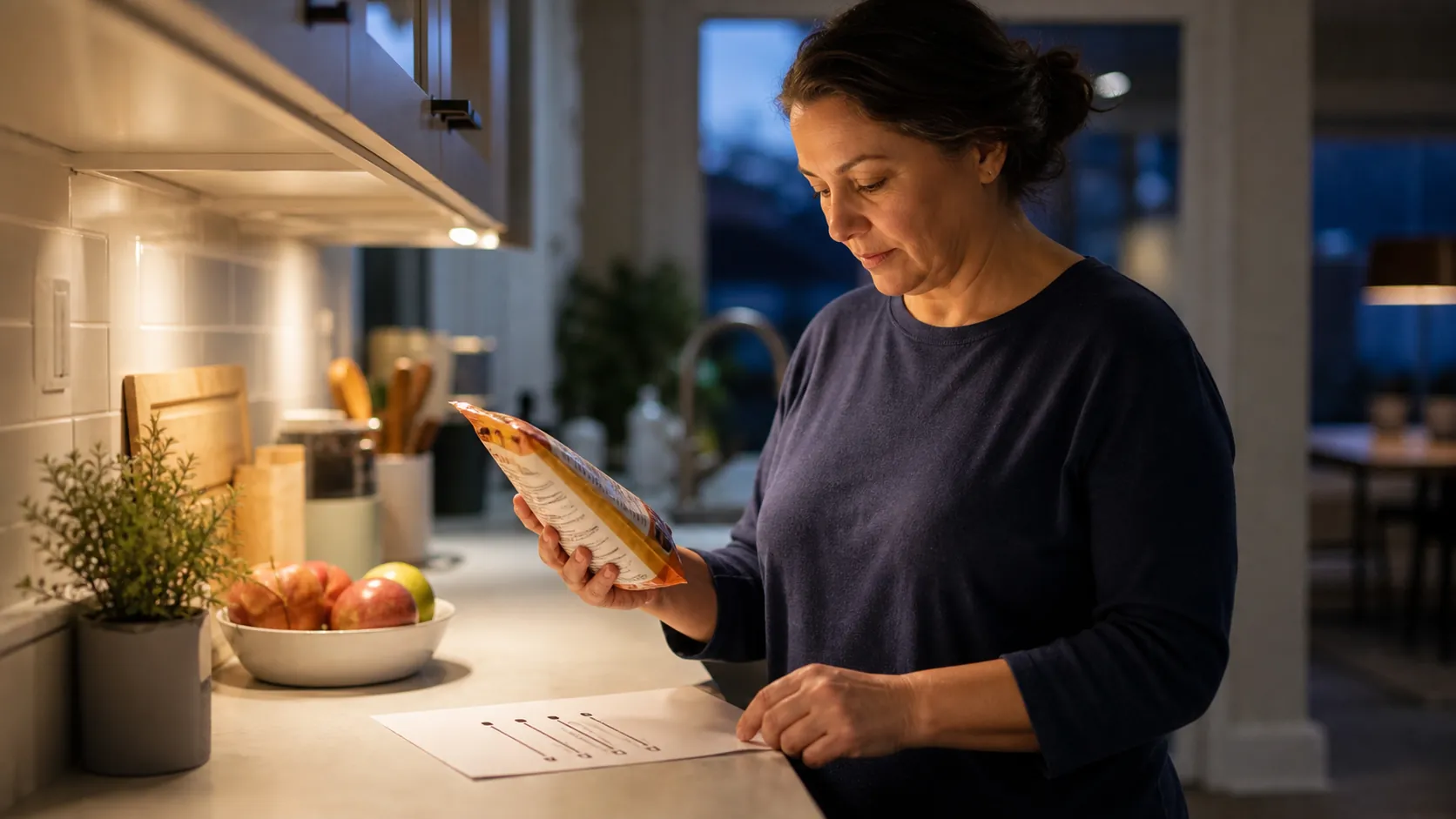
Most families will not get a neat, direct warning for every recalled food sitting in a parent’s refrigerator. A store may not have current contact information. A parent may have paid cash. The product may have come from a third-party seller, a neighbor, a meal helper, or the back of a freezer. Meanwhile, the stakes are not theoretical: among adults 65 and older with lab-confirmed Salmonella, Campylobacter, or Listeria infections, the CDC says nearly half are hospitalized. [1]
So if you are trying to figure out how to check FDA food recalls for an elderly parent, the first correction is this: FDA is important, but FDA alone is not the whole kitchen. A useful routine has to cover FDA foods, USDA-regulated foods, grocery alerts that may or may not arrive, and the package-matching work that happens under a kitchen light with the actual container in your hand.
Last verified: August 25, 2026. Recall pages and subscription flows can change, so use this as a repeatable household routine, not as a current recall list.
Start with the agency split
FDA regulates most foods, but not all foods. USDA’s Food Safety and Inspection Service handles meat, poultry, and processed egg products. That means a pantry check that only searches FDA notices can miss items such as recalled chicken, ground beef, deli meat, or certain egg products. [2]
For a caregiver, the simplest starting point is FoodSafety.gov’s recalls and outbreaks page because it pulls together recall information from FDA and USDA FSIS in one place. [3] Use it as the combined front door. Then, when a notice looks relevant, open the live FDA recall page or the USDA FSIS recall page for the original notice and package details. [4][5]
That extra click matters. Headlines often compress a recall into a brand name and a scary phrase. The official notice is where you usually find the part that decides the next step: the package size, UPC, lot code, date range, establishment number, and instructions for return or disposal.
A routine that does not depend on your parent seeing an alert
The routine does not need to be dramatic. It needs to be repeatable. I would put it with the other small household checks that keep a parent’s kitchen from becoming a guessing game: look at the recall feed, scan the refrigerator and pantry if something is relevant, and keep enough packaging information to verify a match later.
| When | What the caregiver does | Why it matters |
|---|---|---|
| Once a week | Check FoodSafety.gov, then open FDA or USDA FSIS notices that look relevant. | Most families cannot rely on receiving direct recall warnings. |
| After a larger grocery trip | Keep receipts when possible and avoid throwing away outer packaging before checking the UPC, lot code, and date area. | Many recalls are batch-specific, not brand-wide. |
| When stocking a parent’s kitchen | Put newer items behind older ones only after you can still see or photograph identifying codes. | A recall notice is only useful if the package can still be identified. |
| When an alert arrives | Do not act on the headline alone. Match the notice against the package field by field. | Similar-looking products are often not part of the recall. |
If checking shelves and refrigerator areas is already part of your caregiving routine, fold the recall check into the same kitchen pass. The physical movement around the kitchen matters too; if you are reorganizing lower cabinets, freezer shelves, or floor-level storage, it is worth pairing this food-safety habit with a kitchen fall-prevention checklist for older adults so the recall search does not create a new tripping or reaching problem.
Set official alerts, then assume they are helpful but incomplete
FDA offers free email subscriptions, including food-related recall and safety alert topics, with delivery options such as daily or weekly updates. [2] USDA FSIS also offers email updates and SMS/text options through its subscription page; the sign-up page notes that wireless carrier rates may apply. [6]
For a parent who does not reliably use email, subscribe yourself. If siblings or paid helpers shop for the household, have at least one other person receive the same official alerts. This is not about building a perfect command center; it is about making sure the warning does not live in one inbox nobody checks.
Third-party recall apps can be a convenience layer, especially if you like scanning or saving products, but they are not government-run recall sources. Treat them as a reminder system, not as the authority. The authority is still the FDA or USDA FSIS notice.
Grocery-store loyalty alerts are also useful, but they are not guaranteed. Consumer guidance has pointed out ordinary failure points: cash purchases, outdated loyalty-account contact information, products bought through third-party sellers, or foods passed along by someone else can all keep a household from being notified. [7][8]
The package-matching step is where the decision is made
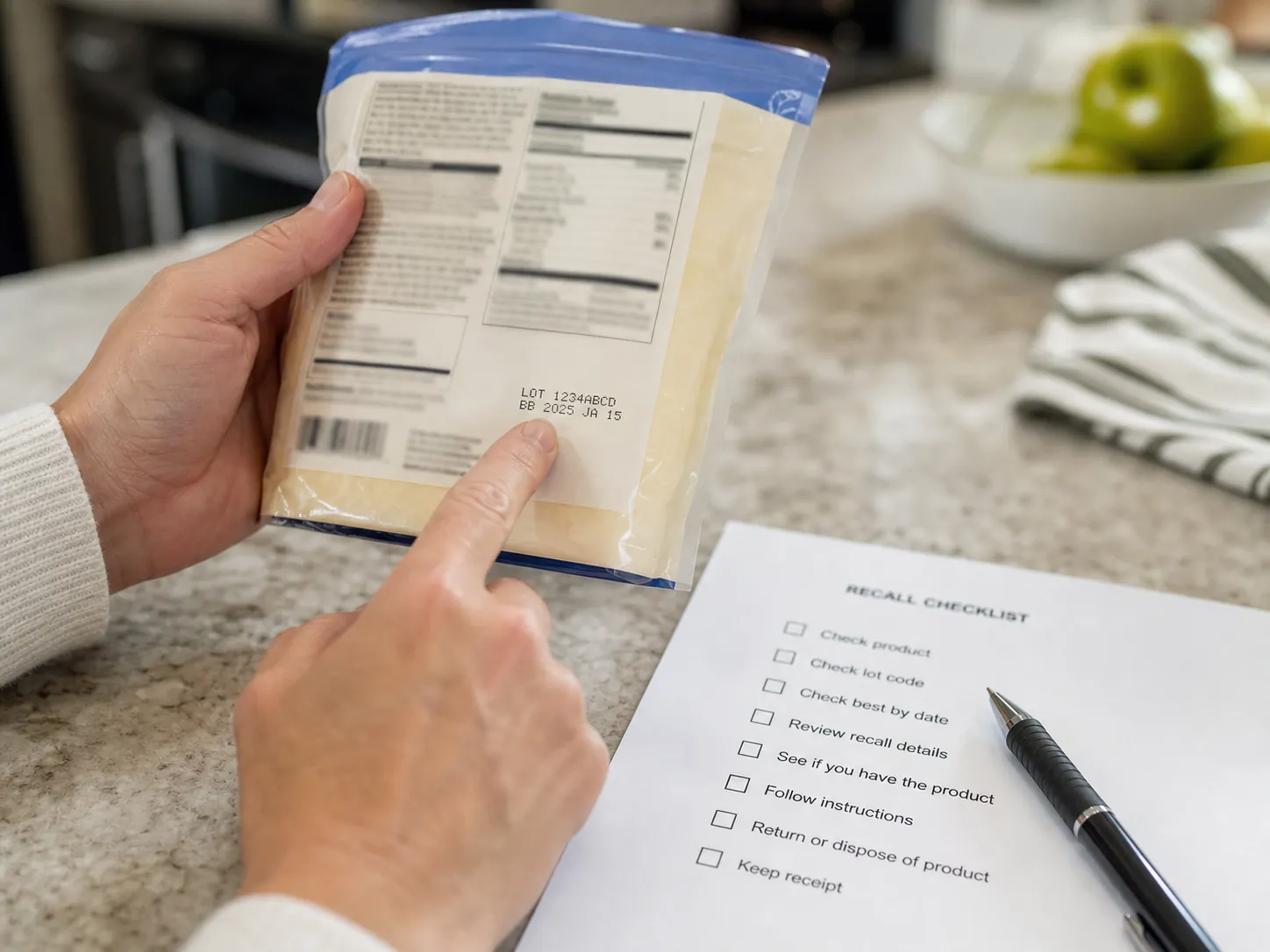
A recall notice is not a command to throw away every product that looks similar. It is a set of identifiers. FoodSafety.gov states the practical rule plainly: a product is included in a recall only if all the details in the recall notice match the package. [3]
Slow down here. This is the part that prevents both mistakes: tossing safe food because the brand sounds familiar, or missing a recalled package because the front label looks ordinary.
- Brand: Match the brand exactly. Store brands, co-packed products, and similar logos can confuse this step.
- Product name: Match the full product description, including flavor, variety, cut, preparation style, or form.
- Package size: A 12-ounce package and a larger family-size package may not be treated the same in a recall.
- UPC or barcode number: Match the number, not just the picture of the package.
- Lot, batch, or production code: This is often the deciding field for batch-specific recalls.
- Best-by, use-by, sell-by, or freeze-by dates: Match the date wording and the date range in the notice.
- For USDA-regulated products: Check for the establishment number, often shown as “EST” inside or near the USDA mark of inspection, and compare the distribution information or states listed in the notice.
USDA FSIS recall notices commonly include the establishment number and distribution details that help separate one plant’s product from a similar one. [5] Do not use the state list as your only screen, though. A parent may bring food home from travel, receive groceries from a relative, or keep something in a freezer long after the original shopping trip.
A small habit helps later: before decanting cereal, flour, snacks, or frozen foods into another container, photograph the part of the package that shows the UPC, lot code, and date. Consumer recall guidance has recommended keeping or photographing package information because the package is often what lets a household confirm whether a batch-specific recall applies. [8]
A simple matching order
- Match the agency first: FDA for most foods; USDA FSIS for meat, poultry, and processed egg products.
- Match the product identity: brand, product name, variety, and package size.
- Match the machine-readable and batch fields: UPC, lot code, batch code, production code, or establishment number.
- Match the date field exactly: best-by, use-by, sell-by, or another date wording named in the notice.
- Read the action instructions in the official notice before returning or disposing of the product.
If one field does not match, do not improvise a recall. Set the package aside if you are still unsure, take clear photos of the label, and use the agency contact path listed in the notice. Guessing is not a safety system.
What to do when the package is a confirmed match
Once every listed detail matches, stop treating the product like food. Do not open it to inspect it. Do not taste it. Do not serve it to your parent. Follow the recall notice’s instructions, which may say to return the product to the store for a refund or dispose of it safely. [2]
Do not donate a recalled product, leave it in a shared pantry, or feed it to pets. If the instruction is disposal, make it boring and final: bag it, seal it, and put it where another person or animal will not pull it back out. [2]
Then clean the places the product may have touched. FDA’s consumer recall guidance says to wash surfaces and containers with hot, soapy water and then sanitize them with a solution of 1 tablespoon unscented liquid chlorine bleach per 1 gallon of water. [2]
For a sealed pantry item, that may mean a shelf and your hands. For a leaking meat package, opened deli container, or spilled frozen item, it may mean a refrigerator drawer, cutting board, sink area, and any reusable bags or bins involved. If the food was already spoiled because of a power outage or temperature problem, use a separate spoiled-food process; our power-outage safety guide for seniors covers that adjacent situation.
This is also the moment to write down what happened: product name, code, date, where it was found, whether it was opened, and whether your parent ate any of it. A phone photo of the label and recall notice is usually enough. If symptoms appear later, you will not be trying to reconstruct the package from memory.
Why older adults deserve the tighter version of the routine
The routine is not about panic over every food headline. It is about giving a higher-risk household a narrower, more reliable path from notice to action. The CDC’s adult-65-and-older guidance says older adults are more likely to be hospitalized from certain foodborne infections, and it gives specific safer-food-choice advice for this age group. [1]
A closed 2024 Listeria outbreak linked to meats sliced at delis is a useful reminder of the severity older adults can face, not a current warning about today’s deli counter. CDC’s investigation update reported 61 illnesses, 60 hospitalizations, 10 deaths, and a median age of 78 among people with information available. [9]
That kind of past outbreak is not a reason to empty a refrigerator because a headline mentions deli meat. It is a reason to check the actual notice, match the actual package, and take a confirmed match seriously.
When symptoms or reporting enter the picture
This article is food-safety guidance, not medical advice. If your parent has eaten a recalled food and develops symptoms such as nausea, vomiting, diarrhea, fever, cramps, or signs of dehydration, contact a health care provider for guidance. Do not try to diagnose the illness from the recall notice. [1]
If you need to report a problem with an FDA-regulated food, FDA lists 1-866-300-4374 for its main emergency number. [2] For meat, poultry, or processed egg products, USDA’s Meat and Poultry Hotline is 1-888-674-6854. [5]
References
- Safer Food Choices for Adults 65 and Older — CDC.
- Food Recalls: What You Need to Know — FDA.
- Recalls and Outbreaks — FoodSafety.gov.
- Recalls, Market Withdrawals, & Safety Alerts — FDA.
- Recalls & Public Health Alerts — USDA FSIS.
- FSIS Email Updates Subscription (Email or SMS) — USDA FSIS.
- How to find out about food recalls — U.S. PIRG Education Fund.
- Food recalls are easy to miss. Here's how to protect your kitchen — KCRA.
- Investigation Update: Listeria Outbreak, Meats Sliced at Delis — CDC.
Related reading
Noticed something outdated or inaccurate on this page? Flag a correction. We review every report against CDC, NIA, and AARP HomeFit guidance before updating a page.
Part of the Fall Prevention section.