
Room checklist
10-Year Aging in Place Remodel Roadmap: What to Do Now vs. Later
A phased, forward-looking plan for home modifications that prioritizes high-risk areas today while reserving larger structural changes for later stages as mobility needs evolve — helping families plan safely and affordably.
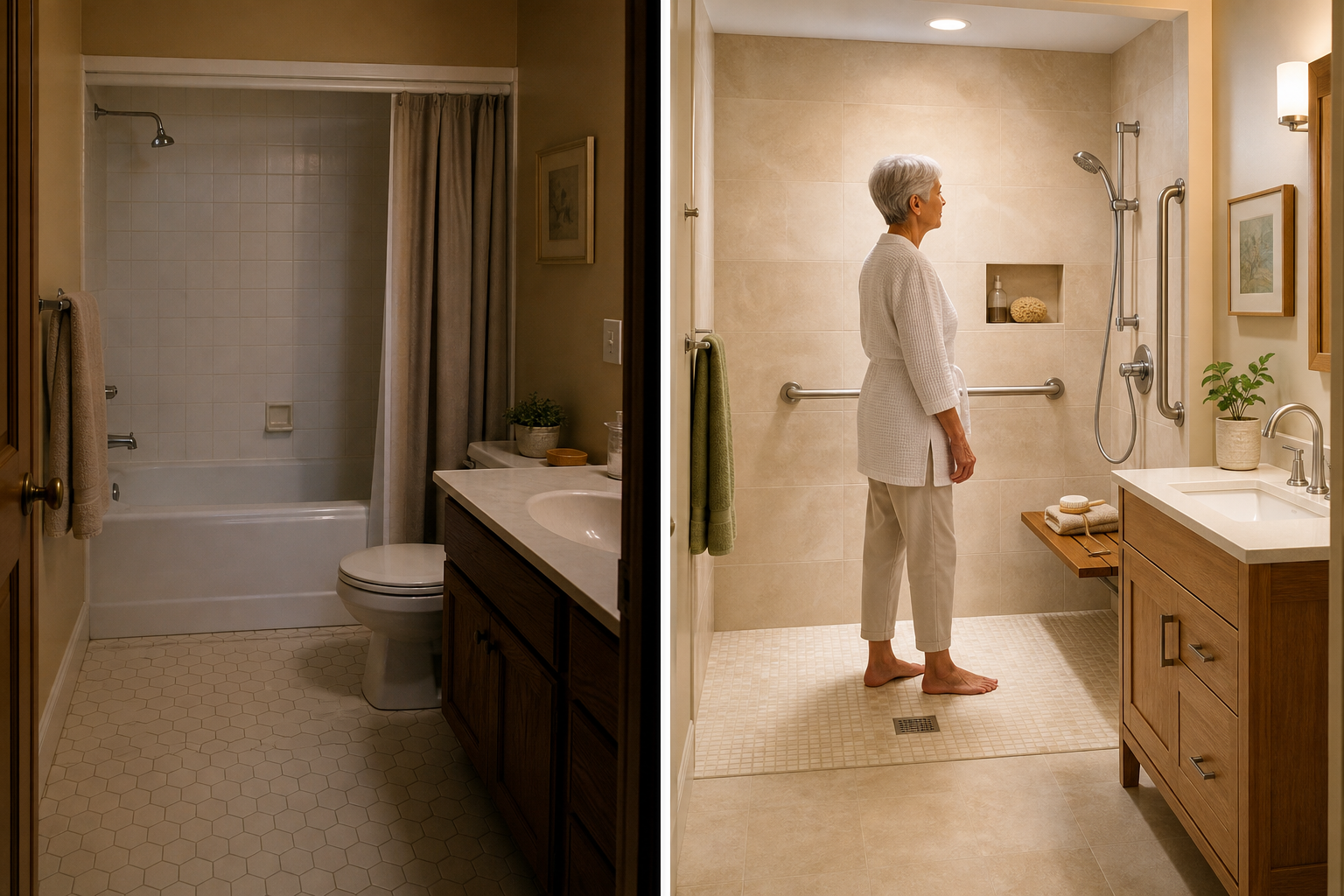
Why a Staged 10-Year Plan Beats a Single Renovation
Most families approach home modifications the wrong way. They wait until a crisis — a fall, a hip fracture, a sudden mobility decline — and then rush through an expensive, stressful renovation while the older adult is recovering in a hospital bed. The result is often a compromised design, blown budgets, and a lingering sense that the older adult lost control over their own home.
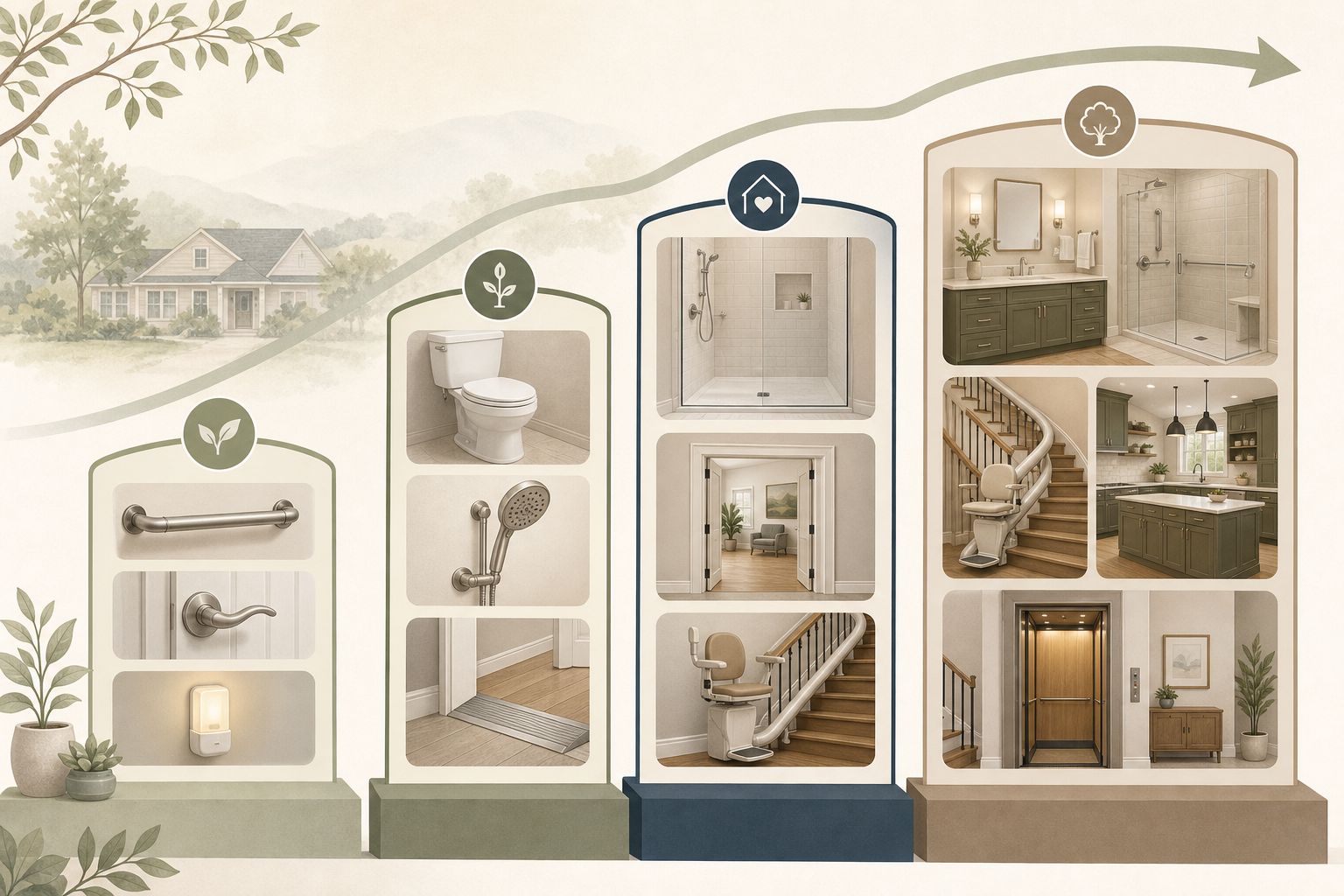
A staged, forward-looking plan flips that script. Instead of one massive project, you break the work into four phases that match the older adult's changing functional needs over a 10-year horizon. You start with the highest-risk areas today — bathrooms, lighting, entryways — and reserve the big structural changes (stair lifts, full bathroom gut remodels, kitchen overhauls) for later stages when they are actually needed.
This approach is safer, more affordable, and gives the older adult more agency. Yet a dangerous gap exists: according to a 2021 AARP survey, more than 85% of seniors planning to stay in their homes do not believe they will need modifications. That belief collides with reality when the first fall happens. A staged roadmap closes that gap by making the future visible and the first steps small.
Stage 1: Immediate Low-Cost Fixes (Under $1,000)
Stage 1 is for right now. Regardless of the older adult's current functional status, these modifications should be completed within the first month. They cost under $1,000 in total, require no contractor, and address the most common fall hazards immediately.
The bathroom is the top priority. Nearly 80% of older adults say they need bathroom modifications like grab bars, yet most homes have none. A single grab bar installed near the toilet and another in the shower or tub area can prevent the most common type of fall — slipping on a wet, hard surface. Other Stage 1 fixes include:
- Lever-style door handles: Replace round knobs on the bathroom and exterior doors. Lever handles require less grip strength and are easier to operate with arthritis or reduced hand function.
- Raised electrical outlets: If you are replacing baseboards or doing minor electrical work, move outlets from the standard 12 inches to 18–24 inches above the floor. This reduces bending for anyone who later uses a walker or wheelchair.
- Night lights along pathways: Plug-in LED night lights in the bathroom, hallway, and bedroom create a lit path for nighttime trips to the toilet. This is one of the cheapest and most effective fall prevention measures available.
- Non-slip mats: Place non-slip bath mats inside and immediately outside the shower or tub. Also add non-slip treads on any interior stairs.
Stage 2: Preparing for Changing Mobility (1–3 Years, $1,000–$5,000)
Stage 2 is for when balance begins to waver or the older adult starts using furniture for support while walking. These modifications support continued independence without requiring major construction. Most can be completed in a weekend or with a single contractor visit.
- Raised toilet seat: A 2–4 inch riser reduces the distance of the sit-to-stand transfer, which is one of the most physically demanding movements for older adults. Models with built-in grab bars add even more stability.
- Handheld showerhead: Replacing a fixed showerhead with a handheld model allows the older adult to bathe while seated on a shower chair or bench. This is a $30–$80 change that dramatically reduces fall risk in the shower.
- Threshold ramps: Small rubber or aluminum ramps at exterior doorways eliminate the trip hazard of raised thresholds. For doors with a step of 2 inches or less, a portable ramp is sufficient. For higher steps, a custom ramp may be needed.
- Improved task lighting: Add under-cabinet lighting in the kitchen, brighter bulbs in the bathroom vanity, and motion-sensor lights in hallways and the garage. Good lighting reduces fall risk by improving depth perception and visibility of obstacles.
- Anti-slip flooring: In bathrooms and kitchens, replace glossy tile or polished stone with textured porcelain tile, luxury vinyl plank with a slip-resistant rating, or sheet vinyl with a textured surface. This is the most impactful Stage 2 investment for fall prevention.
| Modification | Typical Cost | DIY or Contractor | Fall Risk Reduction |
|---|---|---|---|
| Raised toilet seat | $40–$150 | DIY | High |
| Handheld showerhead | $30–$80 | DIY | Moderate |
| Threshold ramp | $50–$300 | DIY | High |
| Task lighting upgrade | $100–$500 | DIY or electrician | Moderate |
| Anti-slip flooring (per room) | $500–$2,000 | Contractor | Very High |
Stage 3: Major Structural Changes (3–5 Years, $5,000–$15,000)
Stage 3 is triggered when the older adult begins using a cane or walker regularly, or when stair negotiation becomes noticeably difficult. These are structural changes that require a licensed contractor and often a building permit. They are not DIY projects.
The decision to move from Stage 2 to Stage 3 should be guided by functional indicators, not calendar dates. If the older adult has difficulty with any of the following, Stage 3 modifications should begin:
- Shopping: Difficulty carrying groceries or navigating store aisles without support.
- Meal preparation: Trouble standing at the stove or reaching upper cabinets.
- Housekeeping: Inability to vacuum, mop, or make the bed without resting.
- Transportation: Difficulty getting in and out of a car or using public transit.
These indicators map to the Lawton Instrumental Activities of Daily Living (IADL) scale, a validated assessment tool used by occupational therapists. You do not need a formal assessment to recognize the pattern — if two or more of these tasks have become difficult, it is time to plan for Stage 3.
Key Stage 3 modifications include:
- Curbless shower conversion: Removing the shower curb and sloping the floor to a linear drain creates a barrier-free entry. This is the single most important bathroom modification for walker and wheelchair users. Cost: $3,000–$7,000 depending on plumbing relocation.
- Straight stair lift installation: For homes with a straight staircase, a stair lift eliminates the most dangerous fall zone in the house. Cost: $3,000–$5,000 installed.
- Widened doorways: Standard 30-inch interior doors are too narrow for most walkers and wheelchairs. Widening to 34–36 inches requires removing and reframing the door, but it is a one-time cost that future-proofs the home. Cost: $500–$1,500 per doorway.
| Modification | Typical Cost | Permit Required | Lead Time |
|---|---|---|---|
| Curbless shower conversion | $3,000–$7,000 | Yes | 2–4 weeks |
| Straight stair lift | $3,000–$5,000 | No | 1–2 weeks |
| Widened doorway (per door) | $500–$1,500 | Varies | 1–2 weeks |
Stage 4: Full Accessibility Overhauls (5–10 Years, $15,000–$60,000+)
Stage 4 is for when significant mobility limitations are present or when wheelchair use is anticipated. These are large investments that should be planned years in advance, not rushed after a crisis. The good news: if you have completed Stages 1 through 3, the foundation is already in place, and Stage 4 becomes a matter of upgrading rather than starting from scratch.
- Full bathroom remodel with roll-in shower: A complete gut remodel that includes a roll-in shower with a built-in bench, handheld and overhead showerheads, a comfort-height toilet with grab bars on both sides, and a vanity with knee space for a wheelchair user. Cost: $15,000–$30,000.
- Curved stair lift or vertical platform lift: For curved or multi-landing staircases, a custom curved stair lift is needed. For homes where a stair lift is not feasible (narrow stairs, no landing space), a vertical platform lift installed on an exterior wall provides wheelchair access to the main floor. Cost: $5,000–$15,000.
- Kitchen overhaul: Accessible kitchen modifications include pull-out shelves, lowered countertops (34 inches for seated users), side-opening ovens, touch-activated faucets, and drawer-style dishwashers. Cost: $10,000–$25,000 depending on cabinetry and appliance changes.
- Home elevator installation: A residential elevator is the most expensive single modification, but it provides full multi-level access for a wheelchair user. Pneumatic vacuum elevators require less structural modification than cable-driven models. Cost: $20,000–$60,000.
| Modification | Typical Cost | Best For | Planning Horizon |
|---|---|---|---|
| Full bathroom remodel | $15,000–$30,000 | Wheelchair users | 6–12 months |
| Curved stair lift | $5,000–$15,000 | Curved stairs | 4–8 weeks |
| Vertical platform lift | $10,000–$20,000 | Exterior wheelchair access | 8–16 weeks |
| Kitchen overhaul | $10,000–$25,000 | Seated cooking and cleaning | 3–6 months |
| Home elevator | $20,000–$60,000 | Full multi-level access | 4–12 months |
How to Prioritize Based on Current Functional Status
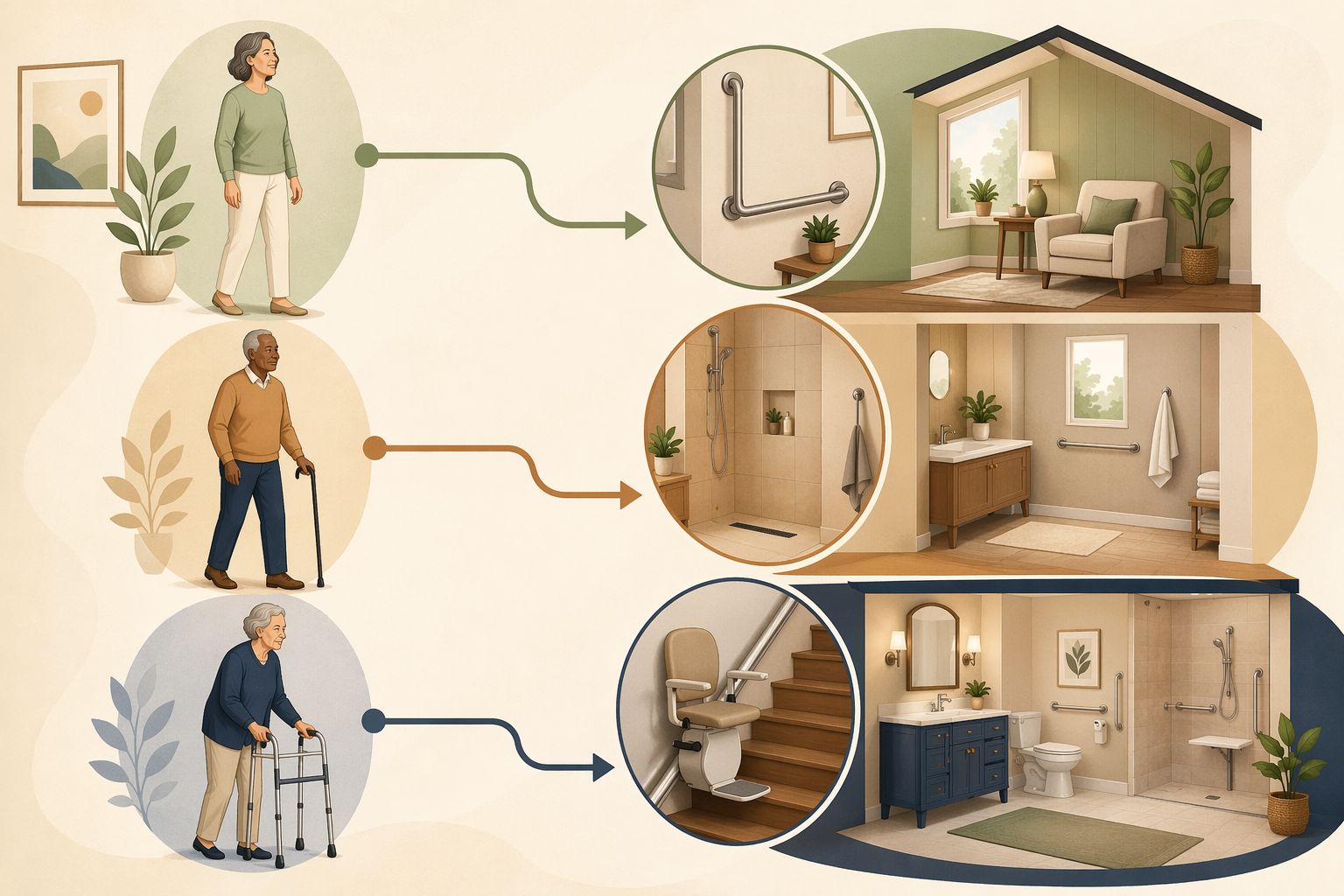
The 10-year timeline is a framework, not a prescription. The right starting stage depends on the older adult's current functional status. Use the following decision table to identify where to begin.
| Current Functional Status | Start at Stage | Key Modifications to Prioritize |
|---|---|---|
| Fully independent, no balance issues | Stage 1 | Grab bars, night lights, non-slip mats |
| Minor balance issues, uses furniture for support | Stage 2 | Raised toilet, handheld shower, threshold ramps, task lighting |
| Uses cane or walker regularly, difficulty with stairs | Stage 3 | Curbless shower, stair lift, widened doorways |
| Uses wheelchair or has significant mobility limitations | Stage 4 | Full bathroom remodel, kitchen overhaul, home elevator |
If the older adult is currently independent but you want to plan ahead, start with Stage 1 and complete Stage 2 within the next 1–2 years. If the older adult already uses a walker, skip Stage 1 and 2 and begin planning Stage 3 immediately — the low-cost fixes can be done concurrently with the structural work.
Funding Your Multi-Year Remodel Plan
One of the strongest arguments for a staged plan is that it aligns with the timelines of major funding sources. Many grant programs have long application and approval cycles — sometimes 6 to 12 months. If you wait until a crisis to apply, the money will not arrive in time.
The most common funding sources for each stage include:
- VA grants: The VA Special Housing Adaptation (SHA) grant and Home Improvements and Structural Alterations (HISA) grant provide up to $20,000 for eligible veterans. Application timelines: 2–6 months.
- Medicaid waivers: Home and Community-Based Services (HCBS) waivers may cover home modifications in some states. Coverage varies dramatically by state and plan. Application timelines: 3–12 months.
- USDA Rural Development: The Section 504 Home Repair program offers grants up to $10,000 and loans up to $40,000 for low-income homeowners in rural areas. Application timelines: 2–4 months.
- Habitat for Humanity: Some local Habitat affiliates offer Aging in Place programs that provide low-cost modifications like grab bars, ramps, and bathroom safety equipment. Availability and timelines vary by affiliate.
Stage 1 modifications are almost always out-of-pocket because the amounts are small. Stage 2 and 3 modifications are where funding sources become most useful. Stage 4 modifications often require a combination of grants, savings, and possibly a home equity loan.
The Evidence Behind Staged Modifications
The case for early, staged modifications is not just common sense — it is supported by research. A 2025 systematic review published in PMC (Cha et al.) examined the impact of home modifications across multiple studies and found two compelling outcomes:
- 42% reduction in caregiver burden, measured in weekly care hours. When the home environment is safer and more accessible, caregivers spend significantly less time on physical assistance and supervision.
- 3% reduction in fall-related emergency admissions per quarter. This may sound modest, but it compounds over time — a 12% annual reduction in hospital visits for falls.
The review also noted that home modifications are most effective when implemented before a decline in functional status becomes severe. That is the core logic of the staged roadmap: each stage prepares the home for the next level of need, so the environment never becomes a barrier to independence.
Related reading
Need a professional assessment?
Find a CAPS-credentialed professional or local aging services through our outbound resource list — we never name or rank individual contractors.
Find Local HelpNoticed something outdated or inaccurate on this page? Flag a correction. We review every report against CDC, NIA, and AARP HomeFit guidance before updating a page.