
Room checklist
Aging in Place Remodel: A Room-by-Room Priority Guide for Families After a Fall
Not all home modifications reduce fall risk equally. This evidence-based guide ranks rooms by impact — from bathroom grab bars to smart home upgrades — and provides a phased plan to help families prioritize spending after a parent's fall or functional decline.
Why Room Priority Matters: The Evidence Behind This Guide
When an older parent falls, the instinct is to fix everything at once. But not all home modifications reduce fall risk equally, and budgets are rarely unlimited. A 2025 systematic review of 20 studies published in the PMC found that 65% confirmed the effectiveness of home modifications for fall prevention, functional independence, and cost savings. Yet the same review showed that the impact varies dramatically by room and intervention type. Bathroom grab bars and stair railings consistently produced the strongest results, while other popular upgrades showed weaker evidence.
The numbers behind the urgency are stark. According to U.S. Census Bureau data cited by Choice Mutual, 90% of U.S. homes are not ready to accommodate aging adults, and only 10% qualify as "aging ready." Meanwhile, 1 in 4 adults aged 65 and older falls each year. A Welsh national study of 657,536 older adults (Hollinghurst et al., 2022) found that home adaptations reduced fall-related emergency admissions by 3% per quarter. More dramatically, a randomized controlled trial by Stark et al. (2017) involving 300 older adults at risk of falls found that home modifications reduced falls by 39% in the intervention group compared to usual care.
This guide ranks rooms by fall-reduction evidence strength, not by cost or popularity. The goal is to help families spend their first dollars where they will have the greatest safety impact, then layer on quality-of-life improvements as the budget allows.
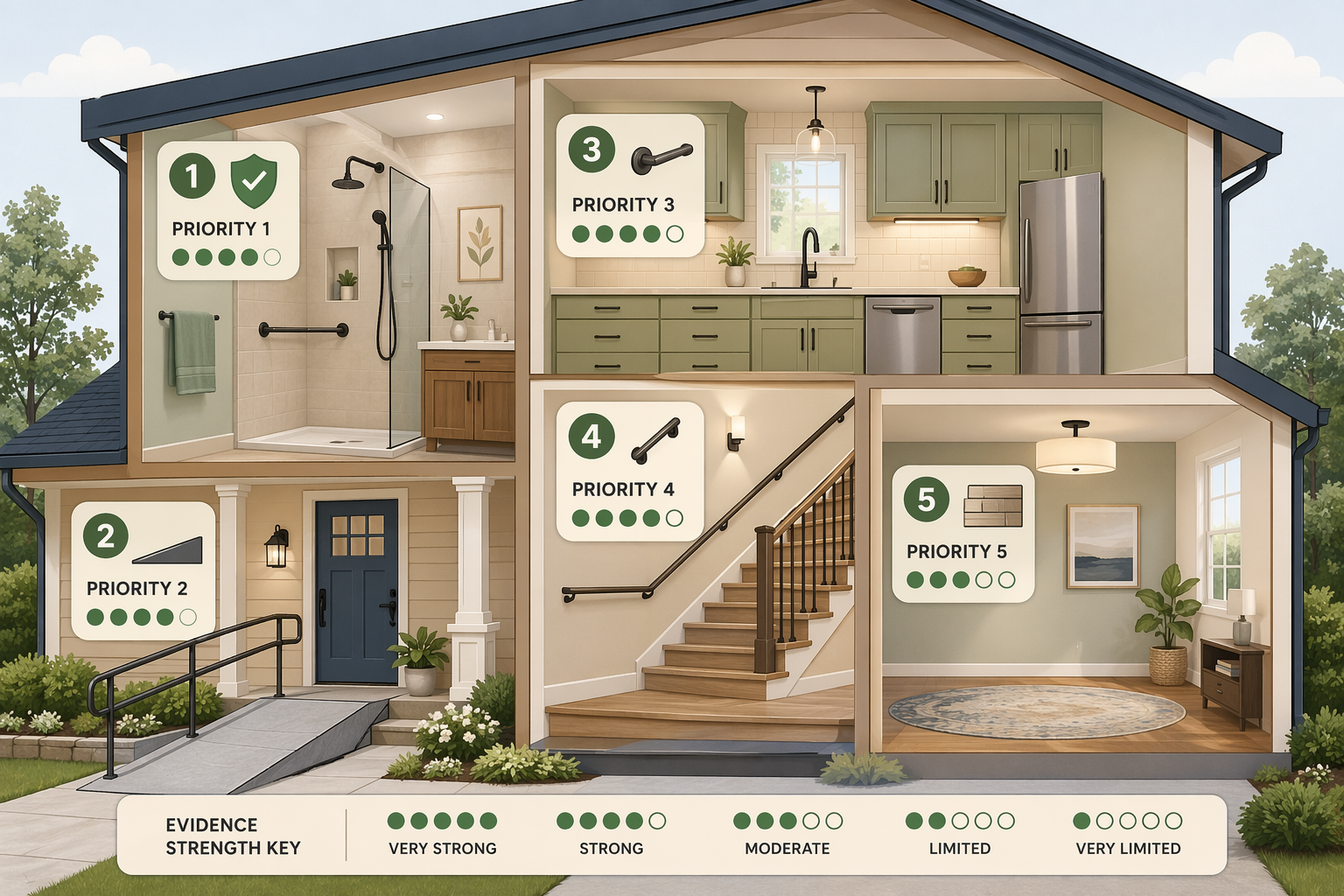
Priority 1: The Bathroom — Highest Fall Risk, Highest Impact
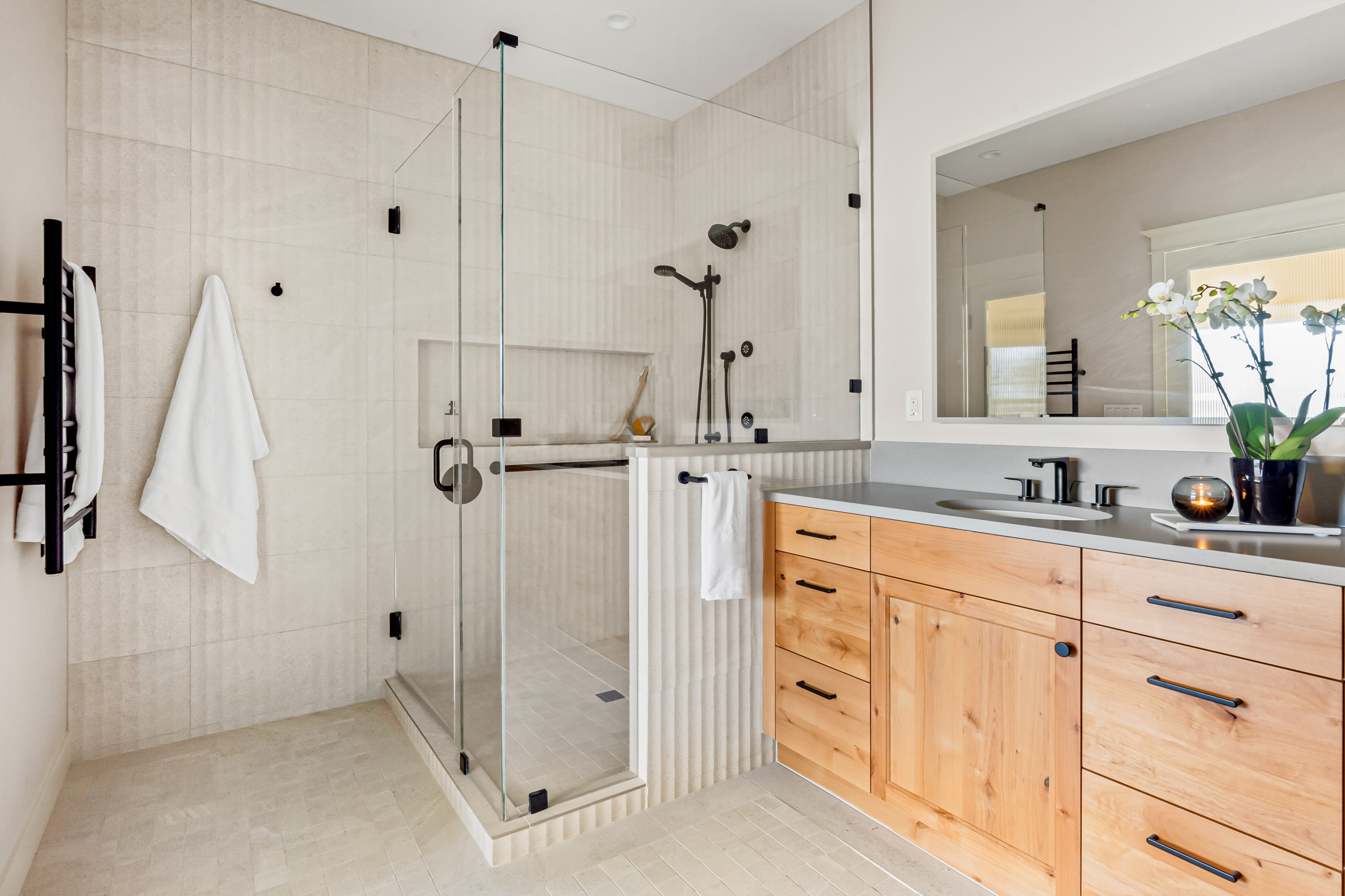
The bathroom is consistently identified as the highest-risk area for falls. Nearly 80% of older adults say they would need bathroom modifications such as grab bars and walk-in showers to age in place safely, according to Choice Mutual. The evidence supports this concern: bathroom modifications, grab bars, and stair railings were identified as the most impactful interventions in the 2025 systematic review. Mobility and accessibility improvements and bathroom safety enhancements were implemented in all 20 studies reviewed.
A study by Levine et al. (2021), cited by Forbes Health, found that people with a grab bar in the shower were 75% more likely to keep their balance while stepping from a slippery shower to a dry floor. That single piece of hardware — costing as little as $15 for a standard model — can be the difference between a safe exit and a fall.
| Modification | Cost Range | Evidence Strength | Installation Complexity |
|---|---|---|---|
| Grab bars (standard) | $15 – $80 each | Strong — 75% more likely to keep balance (Levine et al.) | Low — requires wall bracing for 250-300 lbs |
| Floor-to-ceiling tension bars | $140 – $300 | Moderate — no drilling needed, less secure | Very low — no tools required |
| Curbless (barrier-free) shower | $2,500 – $18,000 | Strong — eliminates step-over hazard | High — requires structural work |
| Raised toilet seat (17-19 inches) | $27 – $85 | Moderate — reduces squat-to-stand fall risk | Very low — attaches to existing toilet |
| Non-slip flooring | $4,500 – $8,000 | Strong — part of all 20 studies in systematic review | Moderate — requires floor replacement |
| Handheld showerhead | $20 – $100 | Moderate — reduces reaching and twisting | Low — replaces existing showerhead |
| Fold-down shower seat | $100 – $400 | Moderate — allows seated bathing | Low — mounts to wall studs |
The NAHB CAPS checklist recommends installing grab bar bracing in walls around the tub, shower, shower seat, and toilet to support 250-300 lbs. This is critical: a grab bar that pulls out of drywall during a fall is worse than no grab bar at all. For curbless showers, the NAHB recommends a minimum width of 36 inches, and toilets should be 17-19 inches high — about 2.5 inches higher than standard toilets.
Priority 2: Entry and Access — Making the Home Reachable
Entry modifications enable all other modifications. If a parent cannot get into the home safely, nothing else matters. The NAHB CAPS checklist recommends at least one no-step entry and hallways a minimum of 36 inches wide. Doors should have at least 32 inches of clear width, which requires a 36-inch door. Levered door hardware is also recommended over round knobs, which can be difficult for arthritic hands to grip.
- Zero-step entry: Creating a single no-step entry is often the most cost-effective access improvement. This may involve regrading a walkway, building a small concrete pad, or installing a threshold ramp. Cost varies widely by site conditions.
- Wheelchair ramps: Forbes Health reports costs of $100 to $250 per square foot. A typical 30-foot ramp runs $3,000 to $7,500. Fixr.com estimates ramp installation at $1,400 to $3,000. The NAHB recommends a slope of no more than 1:12 (one inch of rise per foot of ramp length).
- Wider doorways: Fixr.com reports costs of $300 to $2,500 per doorway. 3 Birds Accessibility estimates $700 to $2,000. This is a structural modification that may require moving wall studs, but it is essential for wheelchair and walker access.
- Clear turn spaces: The NAHB CAPS checklist recommends clear turn spaces of at least 5 feet by 5 feet in entryways and main living areas to accommodate wheelchair maneuverability.
Entry modifications have moderate direct fall-reduction evidence, but they are foundational. A 2022 Welsh national study found that home adaptations reduced fall-related emergency admissions by 3% per quarter — and access improvements were a core component of those adaptations. Without safe entry, even the best bathroom modifications are irrelevant.
Priority 3: Kitchen — Daily Independence and Safety
Kitchen modifications have moderate fall-reduction evidence but high quality-of-life impact. The kitchen is where older adults prepare meals, manage medications, and often spend a significant portion of their day. Reducing reaching, bending, and carrying in the kitchen can prevent falls and improve daily independence.
- Lever-handle faucets: Replace twist-knob faucets with lever handles that require less grip strength. Cost: $50 to $200 per faucet. The NAHB CAPS checklist recommends levered hardware throughout the home.
- Pull-out shelves and drawers: Replace deep cabinets with pull-out shelves to eliminate the need to reach into the back of cabinets. Cost: $100 to $500 per cabinet modification.
- Front-control appliances: Stoves and ovens with front-mounted controls eliminate the need to reach across hot burners. Cost: $800 to $3,000 per appliance.
- Accessible counter heights: Consider a section of counter at 30-32 inches high for seated food preparation. Cost: $500 to $2,000 depending on counter material and configuration.
- Full kitchen remodel: Fixr.com reports a full kitchen remodel for aging in place costs $8,000 to $50,000. This is a Phase 3 investment for most families.
While kitchen modifications were not the primary focus of the fall-reduction studies in the systematic review, they appear consistently in the broader home modification literature as contributors to functional independence. Carnemolla and Bridge (2019) found that weekly care hours decreased by 42% after home modifications, and kitchen improvements were a significant factor in that reduction.
Priority 4: Stairs and Multi-Level Homes
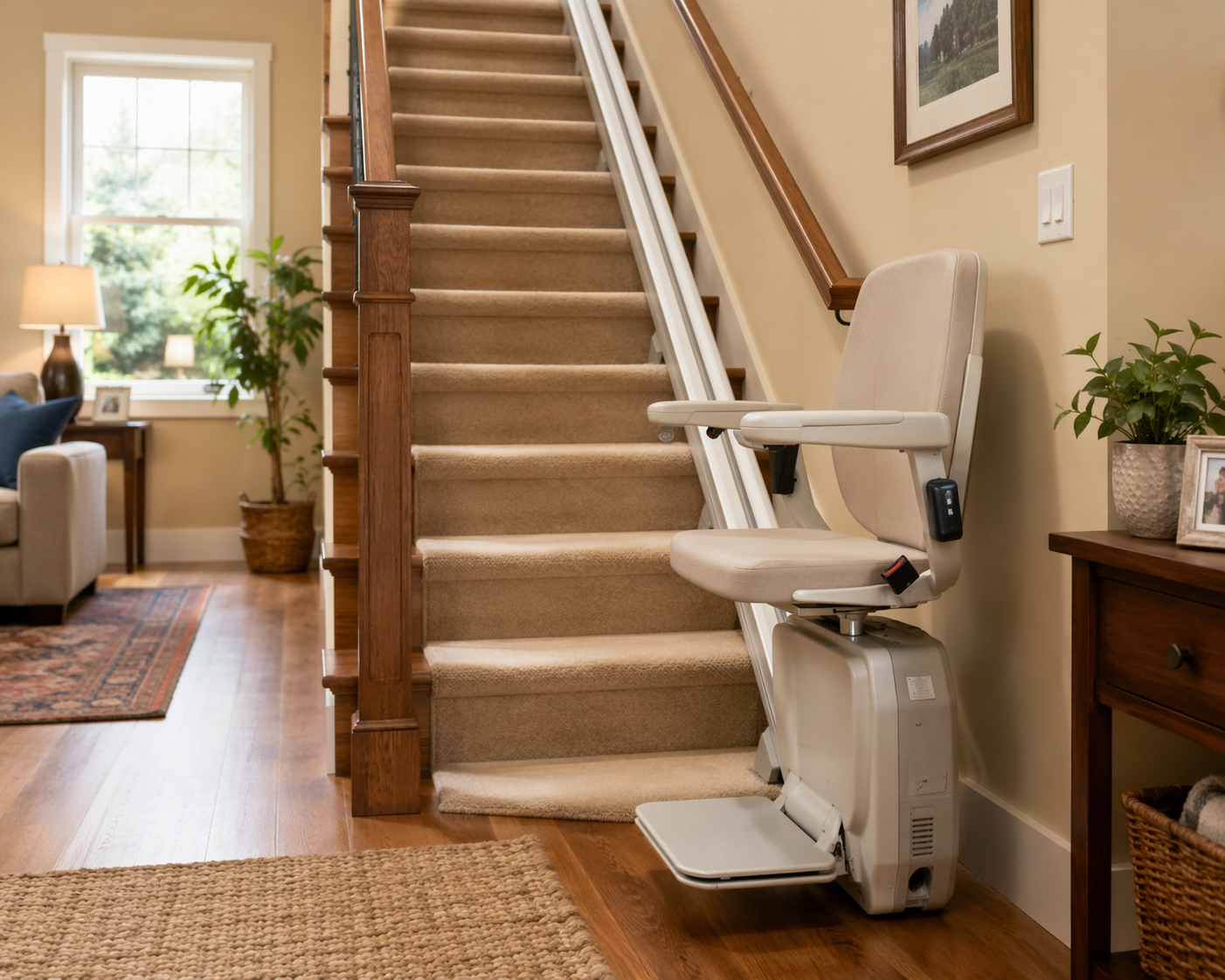
Stairs are a persistent fall hazard in multi-level homes. The NAHB CAPS checklist recommends handrails on both sides of stairways — a simple, low-cost modification that provides stability during ascent and descent. For older adults who cannot safely navigate stairs, a stair lift or main-floor living arrangement becomes essential.
| Modification | Cost Range | Best For | Key Consideration |
|---|---|---|---|
| Handrails (both sides) | $100 – $500 per stairway | All multi-level homes | Must be securely anchored to studs |
| Straight stair lift | $2,000 – $5,000 | Straight staircases with no curves or landings | Requires professional installation; supports 250-300 lbs |
| Curved stair lift | $10,000 – $18,000+ | Staircases with curves, bends, or intermediate landings | Custom-fabricated; longer lead time |
| Home elevator | $20,000 – $50,000 | Homes with space for a shaft | Major structural project; requires permits |
Forbes Health reports stair lift costs of $2,000 to $5,000 for straight models and $10,000 or more for curved models. 3 Birds Accessibility estimates $2,500 to $18,000 or more. The NAHB CAPS checklist emphasizes that grab bar bracing and stair lift mounting must support 250-300 lbs. Professional installation is non-negotiable for stair lifts — improper mounting can lead to catastrophic failure.
The NAHB also recommends that main living areas — bedroom, bathroom, kitchen, and laundry — be on a single story. For families planning long-term aging in place, relocating the primary bedroom and laundry to the main floor is often more practical and cost-effective than installing a stair lift or elevator.
Priority 5: Lighting and Flooring — The Overlooked Foundation
Lighting and flooring modifications have strong supporting evidence — they were part of all 20 studies in the 2025 systematic review — and are relatively low-cost compared to structural changes. Yet they are often overlooked in favor of more visible upgrades like walk-in tubs or smart home devices.
- Motion-sensor lights: Install in hallways, bathrooms, and stairways so lights turn on automatically when someone enters. Cost: $15 to $50 per fixture. This eliminates the need to fumble for a switch in the dark.
- LED anti-glare bulbs: Replace standard bulbs with LED bulbs that produce even, glare-free light. Cost: $5 to $20 per bulb. Glare can disorient older adults and increase fall risk.
- Slip-resistant vinyl flooring: Fixr.com reports costs of $4,500 to $8,000 for non-slip flooring installation. Luxury vinyl plank (LVP) with a textured surface provides excellent slip resistance and is softer underfoot than tile or hardwood.
- Eliminate loose rugs and runners: Loose rugs are a leading cause of trips and falls. Remove them entirely or secure them with double-sided carpet tape. Cost: $0 to $50.
- Nightlights: Plug-in nightlights in bathrooms, hallways, and bedrooms provide low-level illumination for nighttime trips to the bathroom. Cost: $5 to $20 each.
The NAHB CAPS checklist specifically recommends slip-resistant flooring throughout the home and outlets placed 15 inches on center from the floor to reduce bending. These are low-cost, high-impact changes that should be implemented in Phase 1 alongside bathroom grab bars.
Smart Home Additions: Lower Evidence, Real Quality-of-Life Gains
Smart home devices have less fall-reduction evidence than structural modifications, but they improve daily quality of life and caregiver peace of mind. According to Choice Mutual, 49% of older adults own at least one smart home device. For families who have already addressed the high-priority structural modifications, smart home additions can provide meaningful safety and convenience benefits.
- Voice assistants (Amazon Echo, Google Nest, Apple HomePod): Allow hands-free control of lights, thermostats, and locks. Cost: $30 to $200. Particularly useful for older adults with limited mobility or arthritis.
- Smart locks: Keyless entry systems that can be operated via smartphone or keypad. Cost: $100 to $300. Eliminates the risk of lost keys and allows caregivers to grant remote access.
- Video doorbells: Allow older adults to see and speak to visitors without opening the door. Cost: $100 to $250. Reduces fall risk from rushing to answer the door.
- Smart lighting: Programmable lights that can be set to turn on at specific times or in response to motion. Cost: $15 to $50 per bulb. Complements motion-sensor lights for comprehensive nighttime safety.
- Full smart home upgrade: 3 Birds Accessibility estimates $200 to $2,500 or more for a comprehensive smart home package including multiple devices and hub integration.
Your Phased Implementation Plan: Now vs. Next Year vs. Within 5 Years
The following phased plan helps families prioritize spending based on fall-reduction evidence strength and urgency. Phase 1 focuses on immediate safety. Phase 2 addresses moderate-cost structural changes. Phase 3 covers major renovations and quality-of-life upgrades.
| Phase | Timeline | Modifications | Estimated Cost Range | Evidence Strength |
|---|---|---|---|---|
| Phase 1: Immediate Safety | Now (within 1 month) | Grab bars in shower and toilet area, raised toilet seat, non-slip mats, motion-sensor lights, remove loose rugs, nightlights, handrails on both sides of stairs | $200 – $1,500 | Strong — grab bars and handrails are the most evidence-backed interventions |
| Phase 2: Structural Improvements | Next year (within 12 months) | Curbless shower, stair lift (if needed), lever-handle faucets, pull-out shelves, wider doorways, non-slip flooring in bathroom and kitchen | $5,000 – $25,000 | Moderate to strong — curbless shower eliminates step-over hazard; wider doorways enable mobility aid access |
| Phase 3: Major Renovations | Within 5 years | Full kitchen remodel with accessible counters and front-control appliances, ramp installation, smart home integration, main-floor bedroom conversion | $15,000 – $60,000+ | Moderate — kitchen and smart home have less fall-reduction evidence but high quality-of-life impact |
This phased approach is supported by the evidence hierarchy. The 2025 systematic review found that bathroom modifications, grab bars, and stair railings had the strongest evidence for fall reduction. These are all Phase 1 interventions. The Stark et al. (2017) RCT, which showed a 39% reduction in falls, included a comprehensive package of home modifications — but the individual components with the highest impact were bathroom safety enhancements and mobility improvements.
For families working with a limited budget, the message is clear: start with the bathroom. Install grab bars with proper wall bracing, add a raised toilet seat, and improve lighting. These low-cost changes have the strongest evidence for preventing falls. From there, move to entry access, kitchen improvements, and stair modifications as the budget allows. Smart home devices and major renovations can wait until the foundational safety improvements are in place.
Related reading
Need a professional assessment?
Find a CAPS-credentialed professional or local aging services through our outbound resource list — we never name or rank individual contractors.
Find Local HelpNoticed something outdated or inaccurate on this page? Flag a correction. We review every report against CDC, NIA, and AARP HomeFit guidance before updating a page.