
Room checklist
CAPS Home Modifications vs. Assisted Living: The $64,000 Annual Cost Comparison
For financially-conscious family caregivers and older adults, this article compares the one-time cost of a CAPS-guided home modification to the recurring annual expense of assisted living, demonstrating how a specialist's assessment prevents wasted spend and why the upfront investment is a fraction of the alternative.
The Headline Numbers: $64,200 per Year vs. a One-Time Investment
The most direct financial argument for aging-in-place modifications begins with two numbers. According to data from the American Health Care Association and National Center for Assisted Living (AHCA/NCAL), the national average cost of assisted living is approximately $64,200 per year, or $5,350 per month. That is a recurring expense — one that typically increases 3% to 5% annually — with no asset building or equity return.
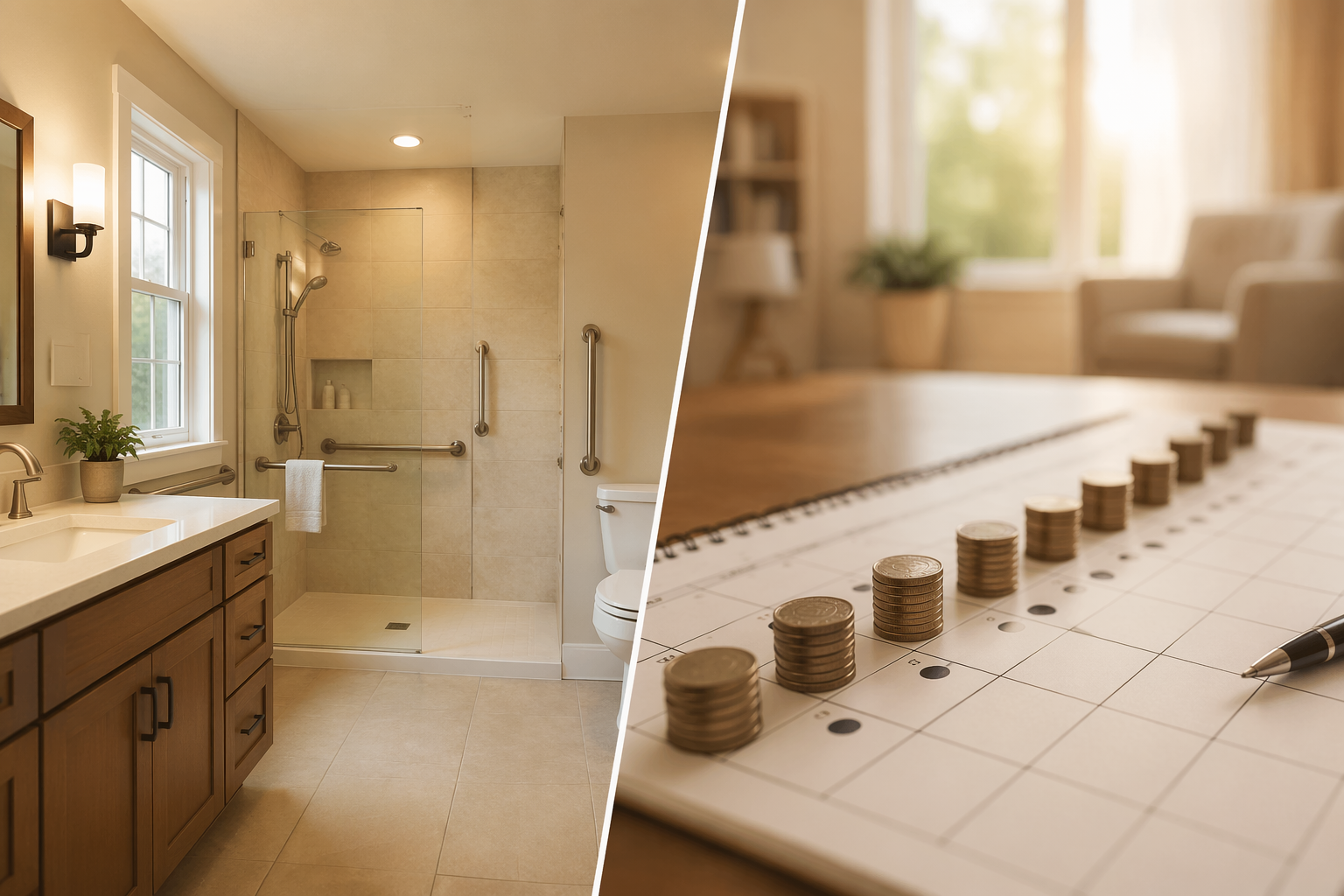
Now consider the alternative. The National Association of Home Builders (NAHB) estimates that a comprehensive bathroom accessibility remodel — widening the door, installing a roll-in shower, adding grab bars, and upgrading the flooring — costs roughly $8,000 as a one-time expense. Even a full-home modification package, including a stair lift, ramp, and kitchen adjustments, typically falls between $30,000 and $50,000. That is less than one year of assisted living for a set of improvements that can last 15 to 20 years.
This comparison is not theoretical. An estimated 93% of adults aged 55 and older view aging in place as an important goal, according to research cited by AARP. Yet only about 10% of U.S. homes are considered "aging ready" — meaning they lack a step-free entry, a first-floor bedroom and bathroom, or at least one bathroom accessibility feature. The gap between preference and reality is where the financial decision lives.
What Common CAPS-Guided Modifications Actually Cost
To make an informed comparison, it helps to understand the realistic price range for the most common aging-in-place modifications. The table below compiles national averages from contractor data and home safety industry sources. These are estimates — actual costs depend on your region, home layout, and the specific contractor you hire.
| Modification | Typical Cost Range | Notes |
|---|---|---|
| Grab bars (3 bars, installed) | $150 – $400 | Stainless steel, weight-rated; installation adds labor |
| Walk-in shower (curbless) | $1,500 – $7,000 | Includes demolition, waterproofing, and tiling |
| Walk-in tub | $5,000 – $7,000 | Includes door, seat, and hydrotherapy jets |
| Stair lift (straight rail) | $2,500 – $5,000 | Curved rail systems cost $10,000 – $18,000 |
| Outdoor ramp (per linear foot) | $100 – $250 | Wood or aluminum; longer ramps cost more per foot |
| Widened doorways (per door) | $200 – $2,000+ | Cost depends on wall construction and door type |
| Automatic door opener | $200 – $2,000+ | Includes sensor and motor mechanism |
| Full kitchen modification | $15,000+ | Pull-out shelves, lowered counters, touchless faucets |
| Non-slip flooring (per sq ft) | $1 – $12 | Sheet vinyl at low end; slip-resistant tile at high end |
| Full bathroom accessibility remodel | ~$8,000 | Door widening, roll-in shower, grab bars, non-slip floor |
Related reading
- What Is a CAPS-Certified Aging-in-Place Specialist? A Complete Guide for Families
- OT vs. CAPS First for Home Modifications: Why the Clinical Evaluation Should Come Before the Construction Plan
- CAPS vs. Other Aging-in-Place Certifications: Which Credential Should You Trust for Your Parent’s Home Modifications?
Need a professional assessment?
Find a CAPS-credentialed professional or local aging services through our outbound resource list — we never name or rank individual contractors.
Find Local HelpNoticed something outdated or inaccurate on this page? Flag a correction. We review every report against CDC, NIA, and AARP HomeFit guidance before updating a page.