
Room checklist
What the Research Actually Says About Aging-in-Place Home Modifications
This evidence-anchored guide critically evaluates what home modification research shows about fall prevention, functional independence, and cost-effectiveness — helping family caregivers and older adults make informed decisions based on proven outcomes rather than product recommendations.
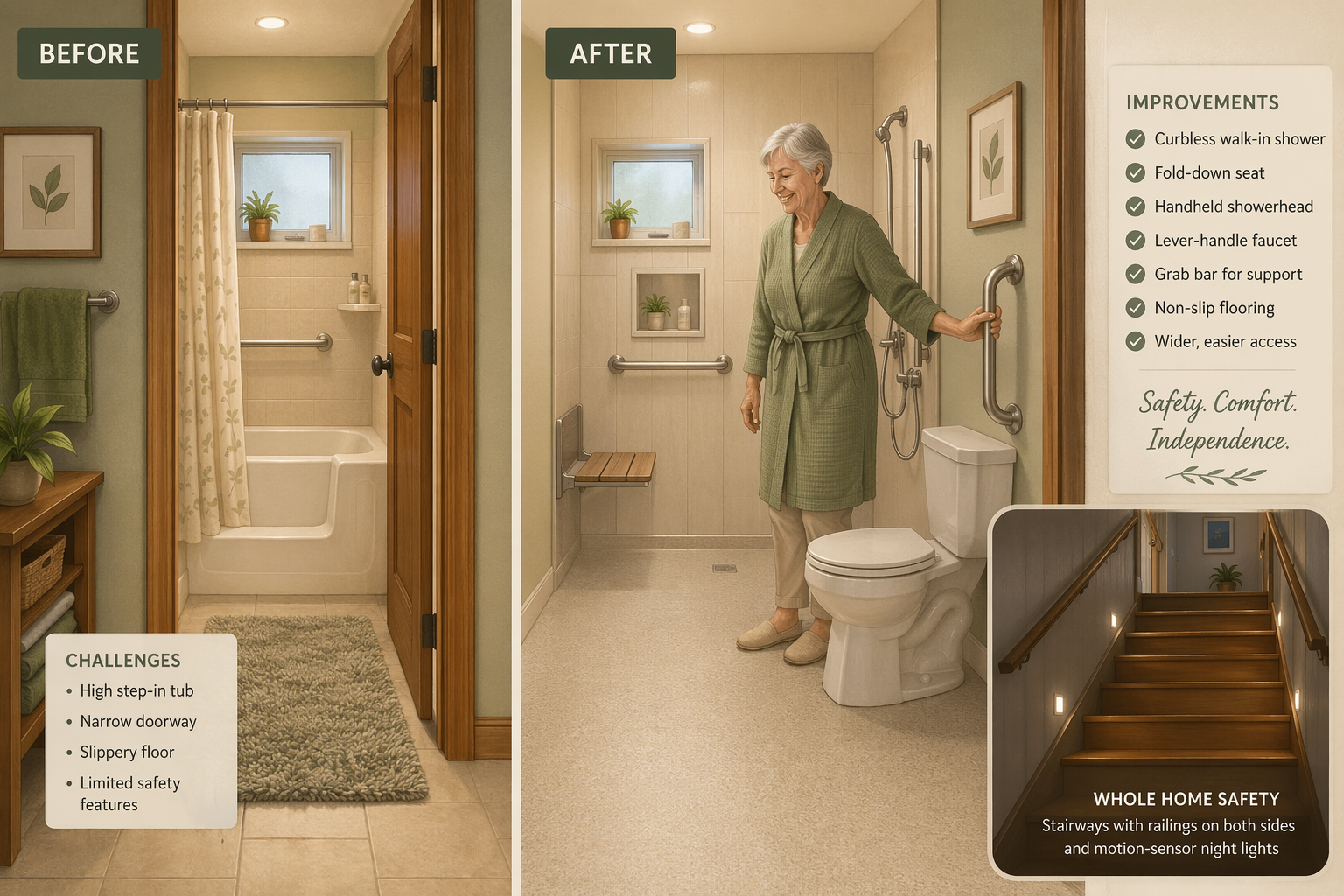
The Evidence Gap: Why Most Homes Aren't Ready for Aging in Place
The desire to remain at home as we age is nearly universal. Surveys consistently find that more than 87% of adults aged 65 and older want to age in place. Yet the physical reality of the American housing stock tells a different story: only about 10% of U.S. homes are designed with the basic accessibility features that make this possible. This gap between aspiration and readiness is not a minor inconvenience — it is a structural problem that affects millions of families every year.
For family caregivers — particularly adult children in their 40s and 50s who are often managing this transition alongside their own careers and households — the challenge is compounded by a lack of clear, evidence-based guidance. The home modification landscape is crowded with product recommendations, contractor pitches, and well-meaning but generic advice. What is often missing is a critical look at the research: which modifications actually reduce falls? Which ones deliver the best return on investment for safety and independence? And who benefits most?
A 2025 systematic review published in PMC provides the most current synthesis of this evidence. Following PRISMA 2020 guidelines, the review analyzed 20 studies on home modifications for aging in place. The findings are clear: the evidence for home modifications is strong, but it is also uneven. Some interventions have robust support; others are surprisingly under-researched. Understanding this landscape is the first step toward making smart, cost-effective decisions for your family.
What the 2025 Systematic Review Found: Which Modifications Work Best
The core finding of the 2025 review is that home modifications are effective — but not all modifications are equally supported by evidence. Of the 20 studies reviewed, 13 (65%) confirmed that home modifications were effective in reducing falls, improving functional independence, and generating cost savings. The remaining 35% of studies showed more variable results, often linked to differences in socioeconomic status and living environment.
Three types of interventions emerged as the most consistently impactful:
- Bathroom modifications: Including grab bars, non-slip flooring, and walk-in or curbless showers. Bathrooms are the most hazardous room in the home for older adults, and targeted modifications here produce the clearest safety gains.
- Grab bars: A specific study cited in the review found that people using grab bars in bathrooms were 76% more likely to recover their balance during a slip or loss of footing. This is one of the highest single-intervention effect sizes in the literature.
- Stair railings: Handrails on both sides of stairways, combined with adequate lighting and non-slip treads, significantly reduce the risk of falls on stairs — a common site of serious injury.
The review also highlighted the HARP study (Stark et al., 2017), which found that an occupational therapist-led home modification program reduced falls by 39% in the intervention group compared to the control group. This is a substantial effect size, particularly given that the intervention was delivered by trained professionals who assessed each home individually rather than applying a one-size-fits-all approach.
| Intervention | Evidence Strength | Key Finding |
|---|---|---|
| Grab bars (bathroom) | Strong | 76% improved balance recovery during a slip |
| Bathroom modifications (general) | Strong | Consistently associated with fall reduction across multiple studies |
| Stair railings (both sides) | Strong | Significant reduction in stair-related falls |
| Non-slip flooring | Moderate | Effective when combined with other modifications; limited standalone data |
| OT-led comprehensive program (HARP) | Strong | 39% reduction in falls vs. control group |
| Lighting upgrades | Moderate | Improves visibility and reduces trip hazards; often studied in combination |
The Combined Effect: Why Modifications Plus Exercise Outperform Either Alone
One of the most important insights from the research is that home modifications and exercise programs are not competing strategies — they are complementary. The 2025 review, drawing on studies like Stasi (2021) and Tsekoura (2021), found that combining home modifications with structured balance and strength training produces the best functional outcomes for older adults.
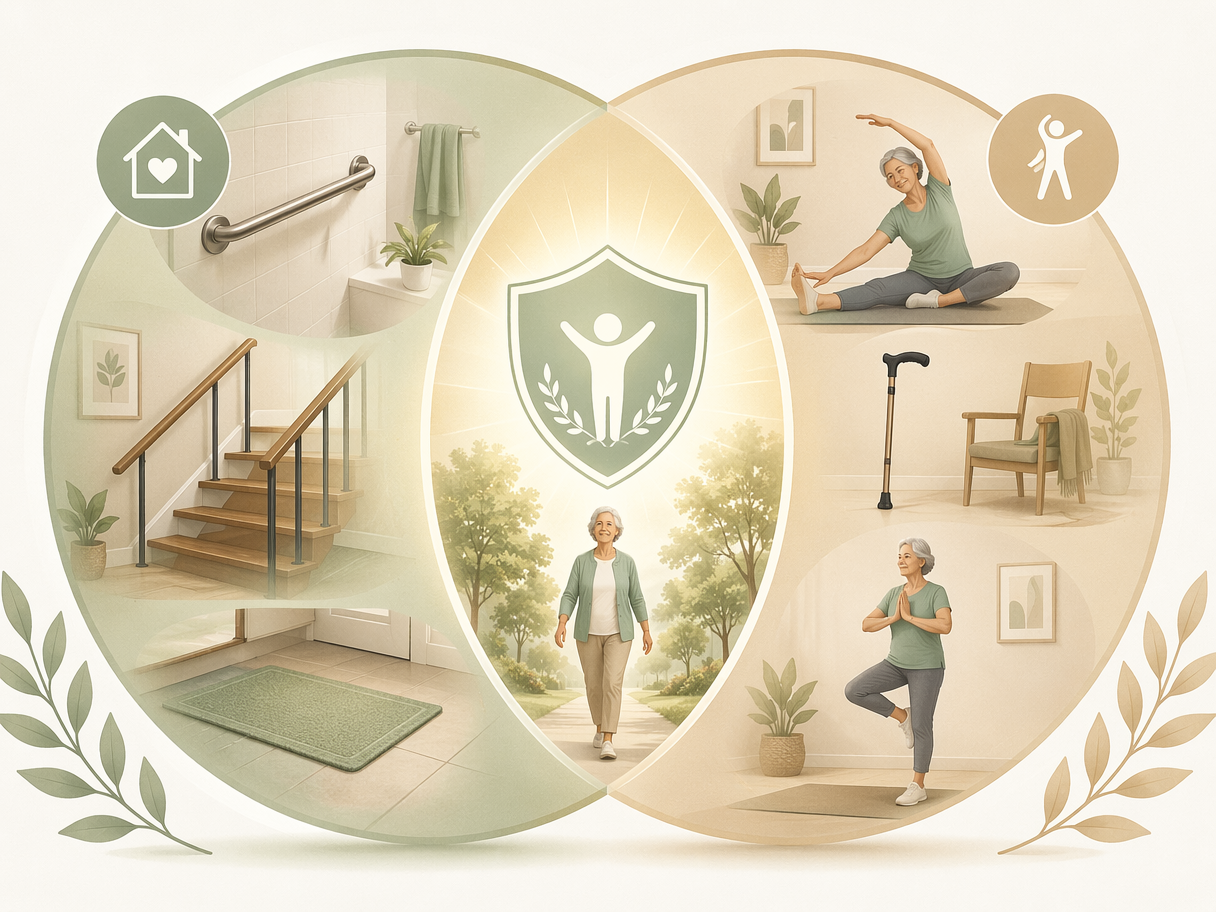
The logic is straightforward. Home modifications reduce environmental fall risks — a slippery floor, a missing handrail, a cluttered pathway. Exercise programs improve the individual's physical capacity — balance, leg strength, reaction time. When you address only the environment, a person with poor balance may still fall. When you address only the person, a hazardous environment can still cause a fall. Addressing both creates a safety net that is greater than the sum of its parts.
For families planning home modifications, this has a practical implication: do not stop at the physical changes. If your parent or older relative is willing and able, incorporating a simple balance exercise routine — even 10–15 minutes a day — can significantly amplify the benefit of the modifications you are investing in. The CDC's STEADI program offers free, evidence-based balance exercise materials that can be done at home.
Cost-Effectiveness: Who Benefits Most and What the Data Shows
Home modifications require an upfront investment, and families understandably want to know whether that investment pays off. The cost-effectiveness evidence, while largely from non-U.S. healthcare systems, is encouraging.
The largest study cited in the 2025 review is Hollinghurst et al. (2022), a national longitudinal data-linkage study of 657,536 older adults in Wales. The study found that home adaptation interventions reduced fall-related emergency admissions by 3% per quarter (odds ratio 0.97, p < 0.001). While a 3% quarterly reduction may sound modest, at a population level this translates to thousands of avoided hospital visits and significant healthcare cost savings.
A separate modeling study from New Zealand (Wilson et al., 2017) calculated an incremental cost-effectiveness ratio (ICER) of NZD 5,480 per quality-adjusted life year (QALY) for home modifications. This is well below typical willingness-to-pay thresholds, meaning home modifications are considered cost-effective by standard health economic criteria. Importantly, the modeling found that cost-effectiveness was highest for individuals aged 75 and older who had a prior history of falls — precisely the population most caregivers are concerned about.
| Study | Population | Key Finding |
|---|---|---|
| Hollinghurst et al. (2022) | 657,536 older adults in Wales | 3% quarterly reduction in fall-related emergency admissions (OR 0.97, p < 0.001) |
| Wilson et al. (2017) | Modeling study, New Zealand | ICER of NZD 5,480 per QALY; most cost-effective for adults 75+ with prior falls |
The Caregiver Impact: How Home Modifications Reduce Care Hours
For family caregivers, the most compelling evidence may not be about falls or cost savings — it may be about time. The 2025 review cites a landmark study by Carnemolla and Bridge (2019) that examined the impact of home modifications on caregiving hours. The findings are striking: home modifications reduced weekly care hours by an average of 42%. Informal care (provided by family members) dropped by 46%, and formal care (paid aides) dropped by 16%.
For the site's primary audience — adult children in their 40s and 50s who are often balancing caregiving with full-time work and their own families — a 42% reduction in weekly care hours is transformative. It can mean the difference between being able to keep a parent at home and being forced to consider facility-based care. It can mean reclaiming evenings and weekends. It can mean reducing the physical and emotional strain that leads to caregiver burnout.
This finding also reframes the cost-benefit calculation. When families evaluate whether to spend $500 on grab bars or $5,000 on a bathroom remodel, they often focus on the upfront cost. But the research suggests that these investments pay for themselves many times over in reduced caregiving time — time that has real economic and emotional value.
Who's Left Out: Equity Gaps in Home Modification Access
The evidence for home modifications is strong, but it does not apply equally to everyone. The 2025 review noted that 35% of the studies it analyzed found that the effectiveness of modifications varied based on socioeconomic status and living environment. This is not a minor caveat — it points to a fundamental equity problem in how home modifications are accessed and delivered.
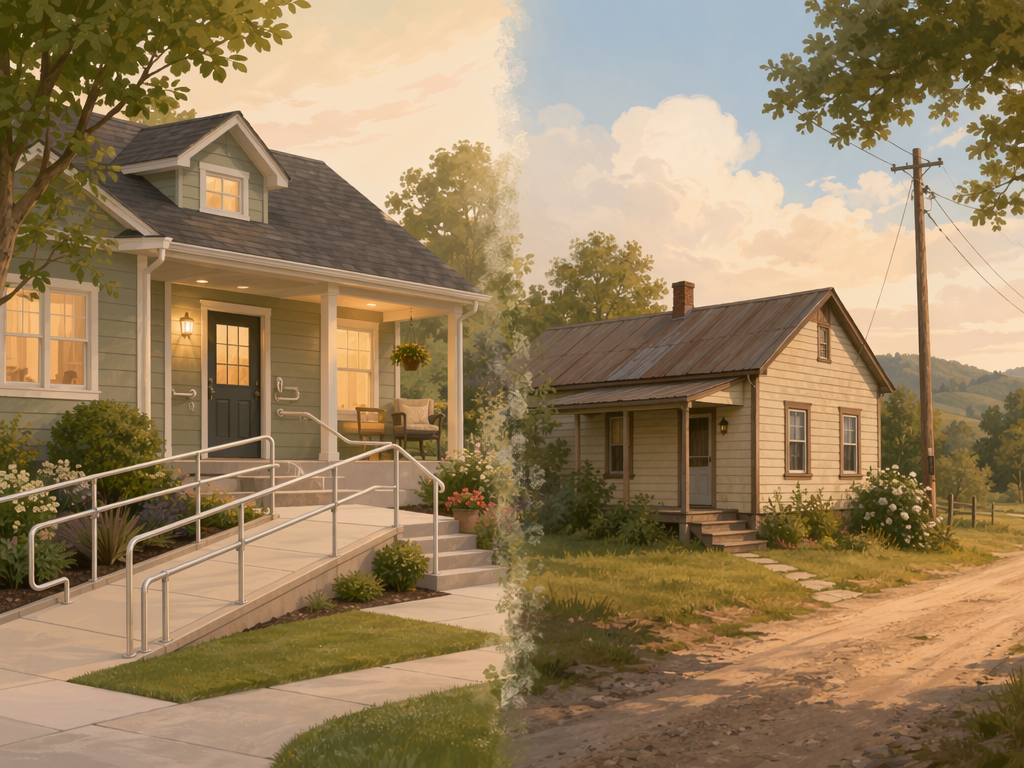
Key equity gaps identified in the research include:
- Rural older adults modify less and spend less on home modifications than their urban counterparts (Kim et al., 2024, using 2019 American Housing Survey data). This is likely due to a combination of lower income, less access to contractors, and less awareness of available programs.
- Approximately 77% of home modifications are self-funded. This means that families without significant savings or home equity are often unable to make even basic safety improvements.
- Renters face additional barriers: they cannot make structural changes without landlord permission, and there is no guarantee that a landlord will invest in accessibility features.
- The 2025 review found that 7 out of 20 studies (35%) highlighted that effectiveness varied based on socioeconomic status, meaning that the same modification may not produce the same benefit for a low-income renter as for a middle-class homeowner.
These equity gaps are not just academic. They mean that the people who could benefit most from home modifications — older adults with limited resources living in older, less safe homes — are often the least likely to receive them. For caregivers reading this, it is worth asking: does your parent own or rent? Do they have access to a CAPS-certified contractor? Are there local or state programs that could help with funding? The answers to these questions may matter as much as the evidence on which modifications work best.
What's Still Under-Researched: Smart Home Tech and Long-Term Adaptability
A responsible evidence review also acknowledges what it does not know. The 2025 systematic review identified two significant gaps in the research literature that are directly relevant to families planning for the future.
First, smart home technologies for aging in place — including passive sensors, voice-activated controls, automated lighting, and remote monitoring systems — remain under-researched in terms of their effectiveness for fall prevention and functional independence. While these technologies are widely marketed and increasingly popular, the evidence base has not kept pace with the product development cycle. Families considering smart home investments should be aware that the claims made by manufacturers often outstrip the available research.
Second, the long-term adaptability of home modifications is poorly understood. Most studies follow participants for 12 to 24 months. But aging in place is a multi-year, often multi-decade journey. A modification that works well at age 75 may be inadequate at age 85 as mobility and health needs change. The research has not yet established best practices for designing modifications that can evolve with the user's needs over time.
For families, this means that the most evidence-backed approach is to start with the modifications that have the strongest support — grab bars, bathroom modifications, stair railings — and to plan for future adaptability. Choosing a walk-in shower with a removable seat rather than a fixed bench, for example, allows for future adjustment. Installing blocking in bathroom walls during a remodel, even if grab bars are not needed immediately, makes future installation far easier and cheaper.
Making Evidence-Based Decisions: A Practical Summary for Families
The research on home modifications for aging in place tells a clear story: these interventions work, but they work best when they are targeted, combined with exercise, and delivered to the people who need them most. Here is what the evidence supports for families making decisions today:
- Start with grab bars, bathroom modifications, and stair railings. These three interventions have the strongest evidence for reducing falls and improving safety.
- Combine modifications with exercise. The best outcomes come from addressing both the environment and the person's physical capacity.
- Prioritize older adults aged 75+ with a history of falls. This group shows the highest cost-effectiveness and the greatest potential benefit.
- Consider the caregiver time savings. A 42% reduction in weekly care hours is a significant return on investment, both financially and emotionally.
- Be aware of equity gaps. If your parent is a renter, lives in a rural area, or has limited income, seek out specific programs that address these barriers.
- Plan for the long term. Choose modifications that can be adapted as needs change, and consider installing blocking or pre-wiring during initial renovations.
The evidence for home modifications is strong enough to act on — but it is also nuanced enough to demand thoughtful decision-making. By focusing on what the research actually shows, families can move beyond generic advice and product marketing to make choices that are grounded in proven outcomes. That is the difference between hoping a modification will help and knowing that it will.
Related reading
- The Evidence Behind Aging-in-Place Home Modifications: What the Research Says About Fall Reduction, Independence, and Cost-Effectiveness
- Home Modifications That Actually Prevent Falls: What the Research Says and What to Prioritize
- After a Fall: A Time-Based Triage Guide to Aging-in-Place Home Modifications
Need a professional assessment?
Find a CAPS-credentialed professional or local aging services through our outbound resource list — we never name or rank individual contractors.
Find Local HelpNoticed something outdated or inaccurate on this page? Flag a correction. We review every report against CDC, NIA, and AARP HomeFit guidance before updating a page.