
Room checklist
Rainy Day Home Safety Checklist for Elderly Parents
Older adults are about twice as likely to be injured in a fall indoors as outdoors, and rainy weather amplifies the hazards inside — water tracked in, damp floors, slick steps, and dim rooms. This room-by-room checklist helps caregivers spot and fix those wet-weather risks before a fall happens.
- Room
- Entryway, bathroom, kitchen, bedroom, stairs
- Modification type
- flooring, lighting, thresholds
- Reviewed by
- Editorial Team
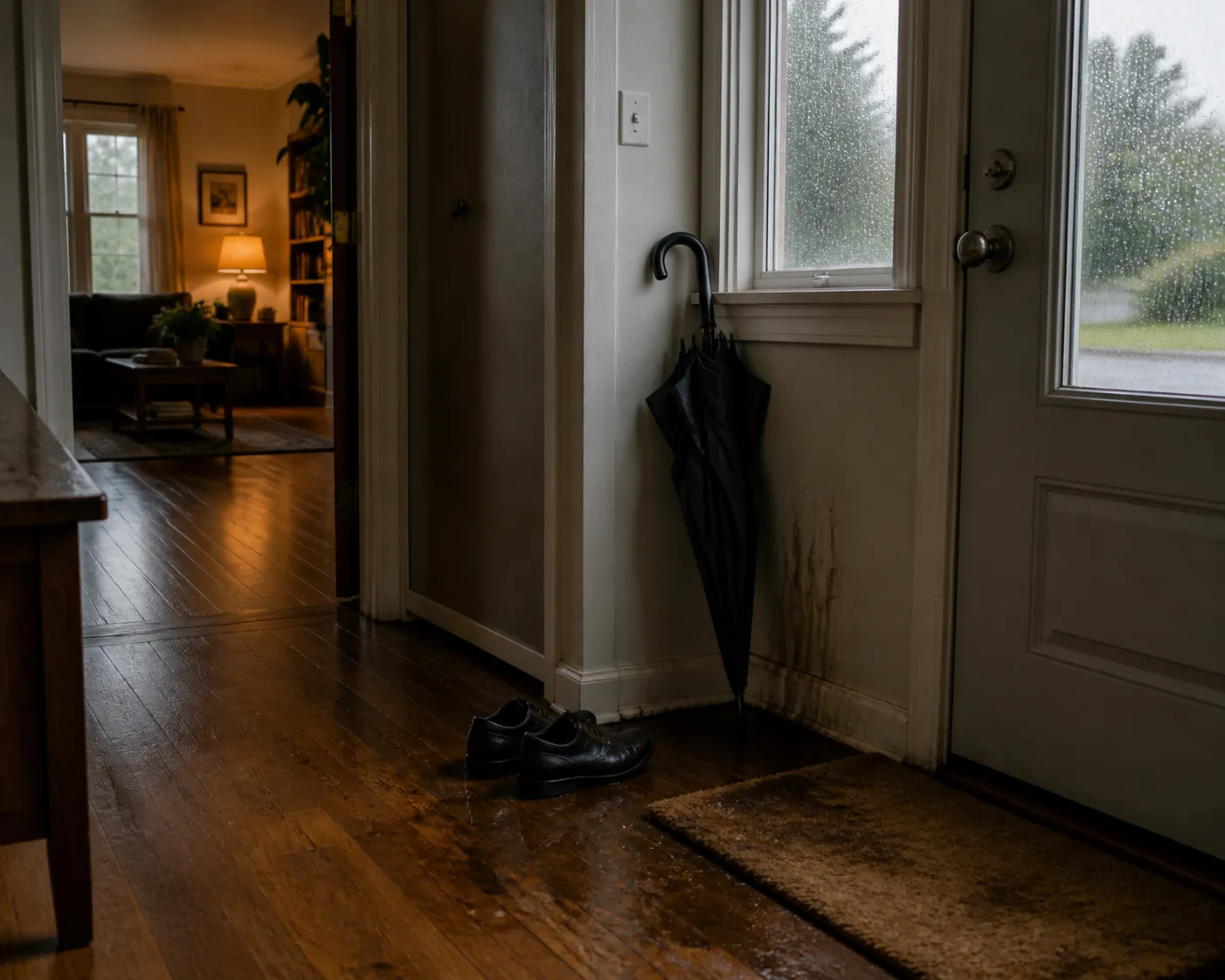
On a rainy day, the safety check should start before anyone worries about the sidewalk. Stand just inside the front door and look down: the damp mat, the umbrella leaning against the wall, the shoes left where someone will step around them, the thin puddle that does not look important until a sock or cane tip hits it.
That indoor-first habit is not just fussiness. A CDC-authored analysis of emergency department fall injuries among community-dwelling older adults found that fall injuries were about twice as common indoors as outdoors.[1] The broader fall picture is serious enough to justify a careful rainy-day walkthrough: more than 1 in 4 older adults falls each year, about 37% of those who fall report an injury that needs medical treatment or restricts activity for at least a day, and falls account for roughly 3 million emergency department visits and 1 million hospitalizations among older adults each year.[2]
Rain-specific fall statistics for older adults are limited, and the evidence should not be stretched into a claim that every wet day causes more falls. One cohort study found no seasonal difference in fall counts, while surveillance data show a winter emergency department peak, so the safer conclusion is narrower: wet weather brings water, dimness, and clutter into the home, and those are worth checking before they become a fall hazard.[1][3]
Start at the door: where rain gets carried inside
The entry is where a rainy day changes a familiar house fastest. A parent comes in with wet soles, a dripping coat, a folded umbrella, mail in one hand, maybe a cane or walker in the other. The goal is not to make the foyer look like a clinic. It is to give water a place to land that is not the walking path.
AARP’s aging-in-place checklist points to practical entry features such as a no-step or covered entrance when possible, a bench in the foyer for removing shoes, secured rugs, and ample indoor and outdoor lighting.[4] Those are not rainy-day gadgets; they are ordinary home details that become more valuable when the floor is wet.
- Use a flat, secure mat at the door. It should absorb water without bunching, sliding, curling at the corners, or becoming a new trip hazard.
- Create a shoe spot that does not block the route inside. A tray, low shelf, or bench area can work if it keeps damp shoes out of the walkway.
- Give umbrellas a stable home. An umbrella leaning against the wall can slide, drip, or land where a parent steps later.
- Hang wet coats away from the walking path. A dripping raincoat on a chair beside the hall can leave a quiet slick patch.
- Check the first few steps inside, not only the mat. Water often travels past the entry on soles, cane tips, walker feet, and pet paws.
Wet-weather guidance from the University of Washington’s Environmental Health & Safety office makes the same basic point for entrances: wipe feet on a mat, and store wet coats and umbrellas away from walkways so they do not create puddles.[5] In an older adult’s home, that advice needs one added test: can the person do it while carrying what they usually carry, moving at their usual speed, with their usual balance?
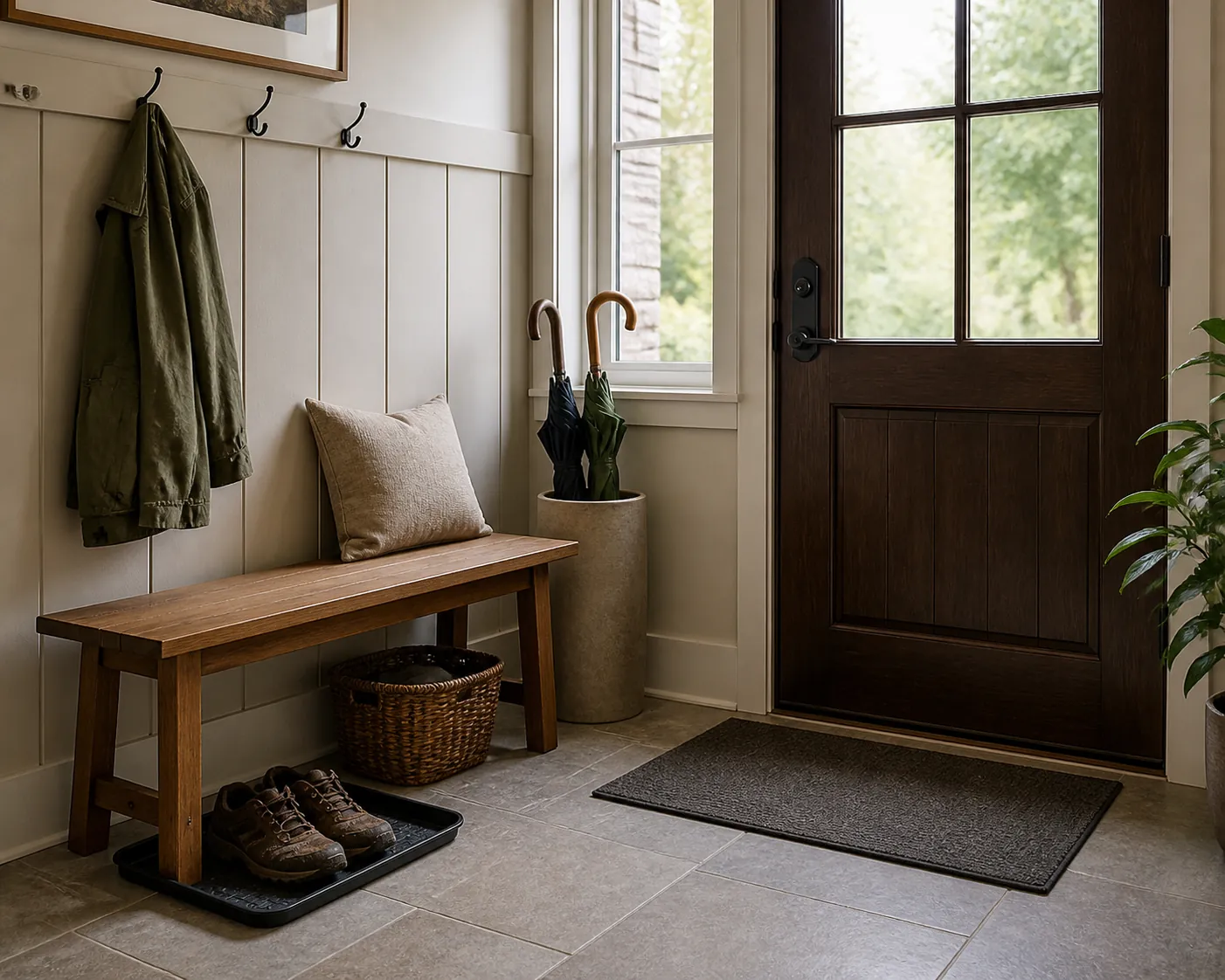
If there is room, a bench near the door can be more than a convenience. It lets someone sit to remove wet shoes instead of balancing on one foot. But the bench only helps if it does not narrow the path, force a sharp turn, or collect bags and mail until it becomes another obstacle.
Follow the floor, not the weather forecast
After the entry, follow the route a parent actually walks: from the door to the kitchen, the favorite chair, the bathroom, the bedroom, and any place they go to answer the phone or let out a pet. Rainy-day floor safety is less about one obvious spill and more about several small changes that stack up.
| What to check | What to look for | A practical fix |
|---|---|---|
| Entry mat | Curling edges, sliding backing, saturated fabric | Replace, dry, or reposition so it lies flat and does not move underfoot |
| Throw rugs | Rugs that shift when stepped on or hide damp spots underneath | Remove them during wet-weather periods or secure them so edges stay flat |
| Hard floors | Thin puddles, tracked-in streaks, glossy wet patches | Dry the walking path promptly and check again after people come in |
| Door-to-chair route | Shoes, bags, pet bowls, packages, and umbrellas in the path | Move storage to the side, not into the path |
| Thresholds | Raised strips or uneven transitions that are harder to see in dim light | Keep them clear, dry, and well lit; consider whether a repair is needed if they catch toes or walker feet |
AARP’s HomeFit guidance emphasizes secured rugs and clear, well-lit walking areas as part of an aging-in-place home.[4] On rainy days, that guidance becomes more immediate. A rug that was merely annoying in dry weather can become a sliding surface when wet shoes cross it. A small basket placed by the door can solve shoe clutter, but if it pushes someone into a narrower turn, it has traded one risk for another.
The best floor check is physical and unglamorous: press the mat with your foot, nudge the rug edge, look under the umbrella, and walk the route with the lights as they are normally used. If a parent uses a walker, cane, or rollator, watch where the tips or wheels land. A dry-looking path is not the same as a stable one.
Turn on lights earlier than pride says you should
Rain changes the light indoors. A hallway that is fine at noon in July can look flat and gray on a stormy afternoon. Shadows hide threshold edges, puddle shine, dark rugs, and the first stair tread. Good rainy-day lighting is not about making the house bright everywhere; it is about lighting the paths that feet actually use.
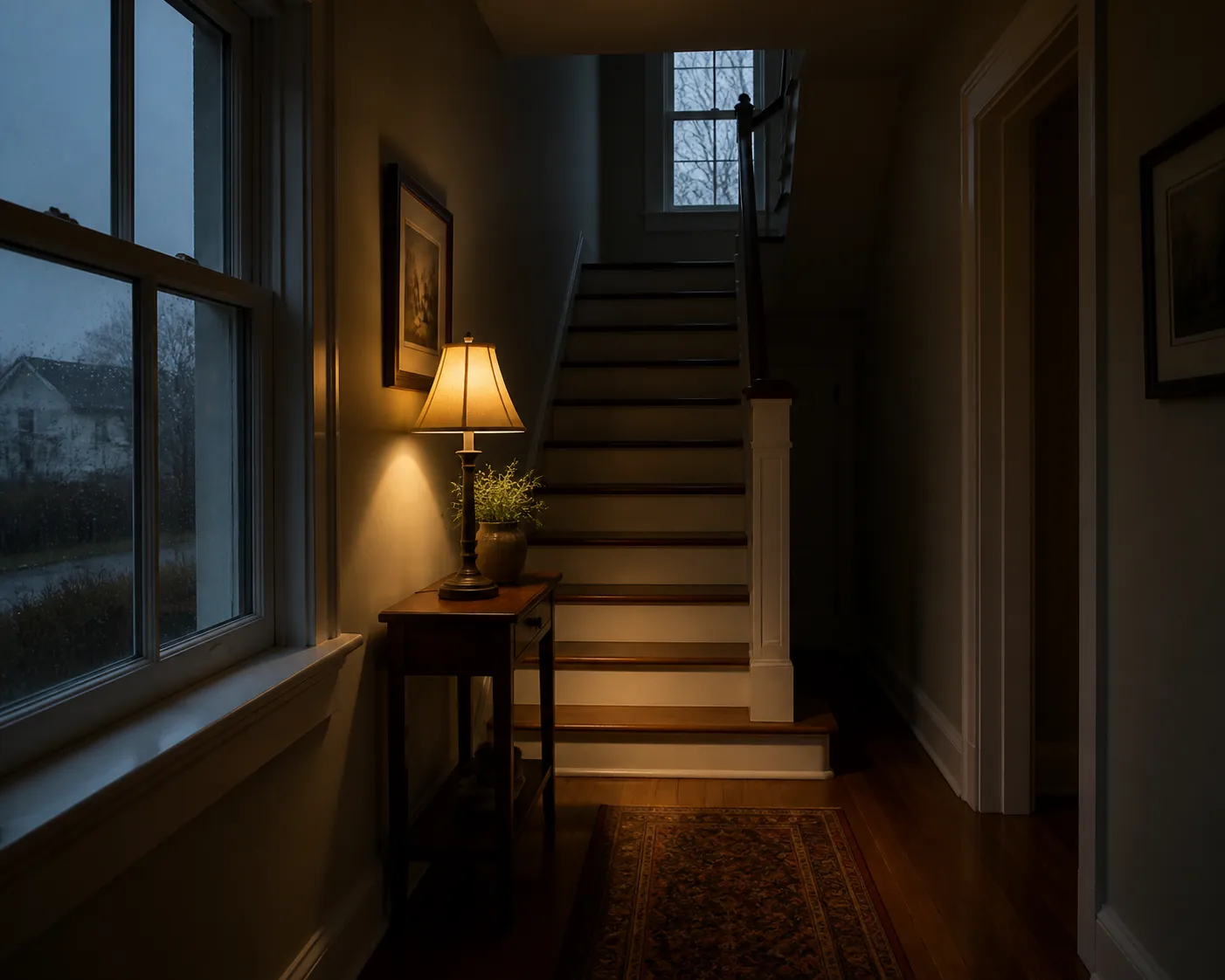
Check these routes in rainy-day light, not on a sunny morning:
- Front door to the main sitting area
- Front door to the bathroom
- Bedroom to bathroom
- Kitchen to dining table or favorite chair
- Top and bottom of stairs
- Doorways with thresholds or floor-height changes
AARP includes ample indoor and outdoor lighting in its aging-in-place checklist.[4] For wet weather, the useful version is specific: lamps should be reachable before someone crosses a dark room, stair lights should show the tread edges, and night lights should cover the bedroom-to-bathroom route when rain, early dusk, or an outage makes the house darker than expected.
This is one place where a small change often avoids an argument. Turning on a hall lamp earlier can feel less like “fall prevention” and more like making the house comfortable. If a switch is awkwardly placed, a plug-in night light or motion-activated light can help, but only if it does not add cords across the path.
Check bathrooms and kitchens where water already belongs
The bathroom does not need rain to be a wet-surface room. Rain simply adds more damp clothing, damp feet, and dimmer light to a space where balance is already tested. The National Institute on Aging advises using nonskid mats, strips, or carpet on surfaces that may get wet.[6]
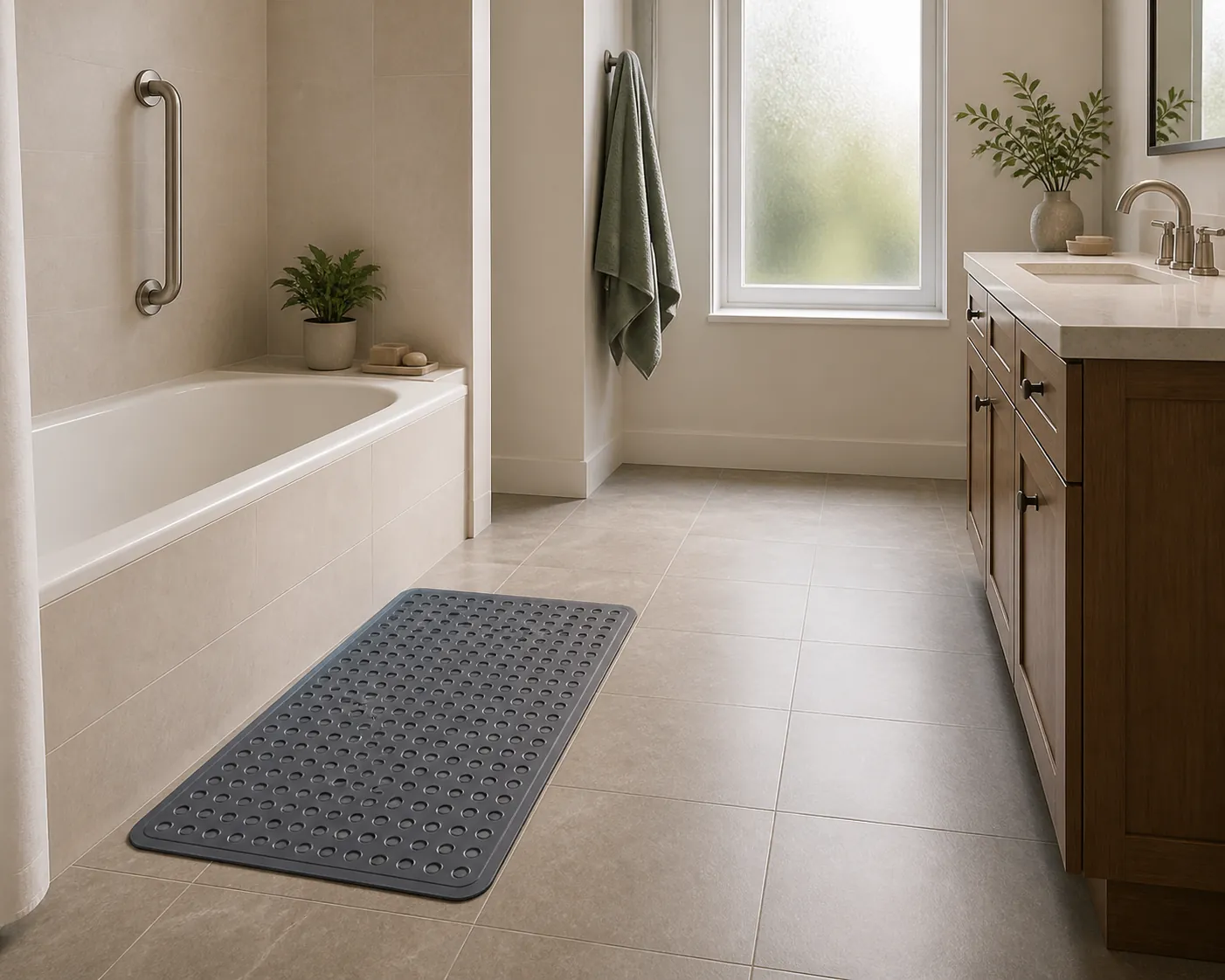
For a rainy-day bathroom check, do not stop at whether a bath mat exists. Look at whether it lies flat, whether it slides on tile, whether the edge catches a toe, and whether it stays damp for hours. A mat that is soft but loose may feel safer than bare tile while still creating a trip point. The walking route to the toilet and sink should stay clear even when towels, laundry, and wet shoes appear.
In the kitchen, the wet spots are often smaller and easier to miss: a drip trail from the back door, a dog bowl nudged into the path, a towel dropped near the sink, a slick patch in front of the refrigerator. The check is simple: stand where a parent cooks, turns, reaches for the sink, and carries a cup or plate. Anything that forces a sidestep on a damp floor deserves attention.
Stairs, thresholds, and the short outdoor stretch
The checklist starts indoors because that is where older-adult fall injuries are more commonly treated, but the outdoor transition still matters.[1] Wet porch boards, slick exterior steps, leaf buildup, moss, algae, and a poorly lit stoop can all affect the first few movements before the door opens.
Keep the outdoor check short and practical: confirm that railings are sturdy, the walking surface is clear, lighting reaches the step edges, and drainage is not leaving standing water where someone has to turn or unlock the door. NCOA’s winterization guidance also points to reducing outdoor slip risks by addressing ice, snow, and buildup on walkways; for rainy periods, the same maintenance mindset applies to wet leaves, moss, and algae without pretending they are the same hazard.[7]
Inside, thresholds deserve a second look. A raised strip between rooms may be manageable in bright dry conditions and harder to navigate when shoes are wet, a walker is damp, and the hall is gray. If a parent shuffles, uses a mobility aid, or carries laundry through that doorway, the threshold is part of the rainy-day route.
Mobility aids need a wet-weather once-over
Canes, walkers, rollators, and shoes carry rain inside just as surely as umbrellas do. Check rubber cane tips and walker feet for wear, wipe water from grips and brakes, and make sure wheels do not track a slick line through the entry. If a rollator is parked inside the door, it should not block the dry path or become the thing everyone has to step around.
This is also a good moment to notice whether the current aid still fits the way the person moves. If a parent has had a fall, a near-miss, new dizziness, or a sudden reluctance to walk when the house is damp or dim, that is not just a housekeeping note. CDC STEADI patient and caregiver materials encourage older adults to talk with a health care provider about falls and fall risk.[8]
Add a small power-outage check, then stop
Rainy weather can mean darker rooms even before the power goes out. A full storm plan is a different task, but the rainy-day home walkthrough should include one quick outage question: if the lights went off right now, could this parent get from the chair to the bathroom or bedroom without crossing a dark, wet, or cluttered path?
Place flashlights where they are reachable, check batteries, avoid candles as the default walking-light solution, and keep cords out of paths if backup lighting or charging devices are used. For a fuller room-by-room darkness plan, use the site’s power outage fall prevention checklist for seniors rather than trying to rebuild that plan in the middle of a wet-floor check.
A rainy day safety checklist for elderly parents
Use this as a walkthrough, not an inspection. It works best when the parent can see that the changes protect the house’s normal routines instead of taking the house over.
- Stand inside the front door and look for water: saturated mat, puddles, wet shoes, dripping umbrella, damp coat, and slick cane or walker tips.
- Make the entry usable: flat mat, clear walkway, shoe tray or bench if it does not narrow the path, umbrella storage away from feet.
- Walk the main routes: door to chair, door to bathroom, kitchen route, bedroom to bathroom, and any path used at night.
- Remove or secure floor hazards: curled rugs, loose mats, bags, packages, pet bowls, cords, and anything that forces a damp sidestep.
- Turn on rainy-day lighting: halls, stairs, bathrooms, bedrooms, thresholds, and the first few steps inside and outside the door.
- Check wet rooms: bathroom mats or strips, tub and shower area, sink area, kitchen sink path, back-door drip trails, and any mat that stays damp.
- Check stairs and thresholds: sturdy railings, visible step edges, dry landings, and no clutter where someone turns.
- Look just outside: wet leaves, moss or algae, slick steps, poor drainage, and lighting at the lock, rail, and first step.
- Wipe and park mobility aids safely: dry grips, brakes, wheels, cane tips, walker feet, and keep the aid out of the walking path when not in use.
- Do one outage check: reachable flashlight, clear route to bathroom and bedroom, no emergency lighting cords across paths.
If the walkthrough uncovers a recent fall, a near-miss, new fear of falling, or a change in walking, bring that into a clinician conversation. A Medicare wellness visit can be one place to raise fall risk; this site’s Medicare Annual Wellness Visit fall-prevention guide explains that next step without turning the rainy-day check into a benefits lesson.
During wet-weather periods, start at the door, follow the water, then follow the light. Rain matters most when it changes what is underfoot and what can be seen, so the most useful checklist begins with the entryway and the rooms an older parent actually walks through every day.
References
- Nonfatal falls in older adults: location and activity while falling—United States, 2018, Journal of Safety Research
- Facts About Falls, Centers for Disease Control and Prevention
- The Association Between Weather and Falls in Older Adults
- Your Home Checklist for Aging in Place, AARP
- Prevent slips, trips and falls in wet weather, University of Washington Environmental Health & Safety
- Preventing Falls at Home: Room by Room, National Institute on Aging
- Winterize to Prevent Falls, National Council on Aging
- STEADI Patient and Caregiver Resources, Centers for Disease Control and Prevention
Related reading
Need a professional assessment?
Find a CAPS-credentialed professional or local aging services through our outbound resource list — we never name or rank individual contractors.
Find Local HelpNoticed something outdated or inaccurate on this page? Flag a correction. We review every report against CDC, NIA, and AARP HomeFit guidance before updating a page.