
Room checklist
How to Pay for Aging in Place Home Modifications: A Complete Guide to Grants, Loans, and Assistance Programs
Many families assume home modifications are unaffordable, but federal grants, VA benefits, state Medicaid waivers, and nonprofit programs can significantly reduce or eliminate out-of-pocket costs. This guide walks family caregivers through every major funding source, eligibility requirements, and the step-by-step application process.
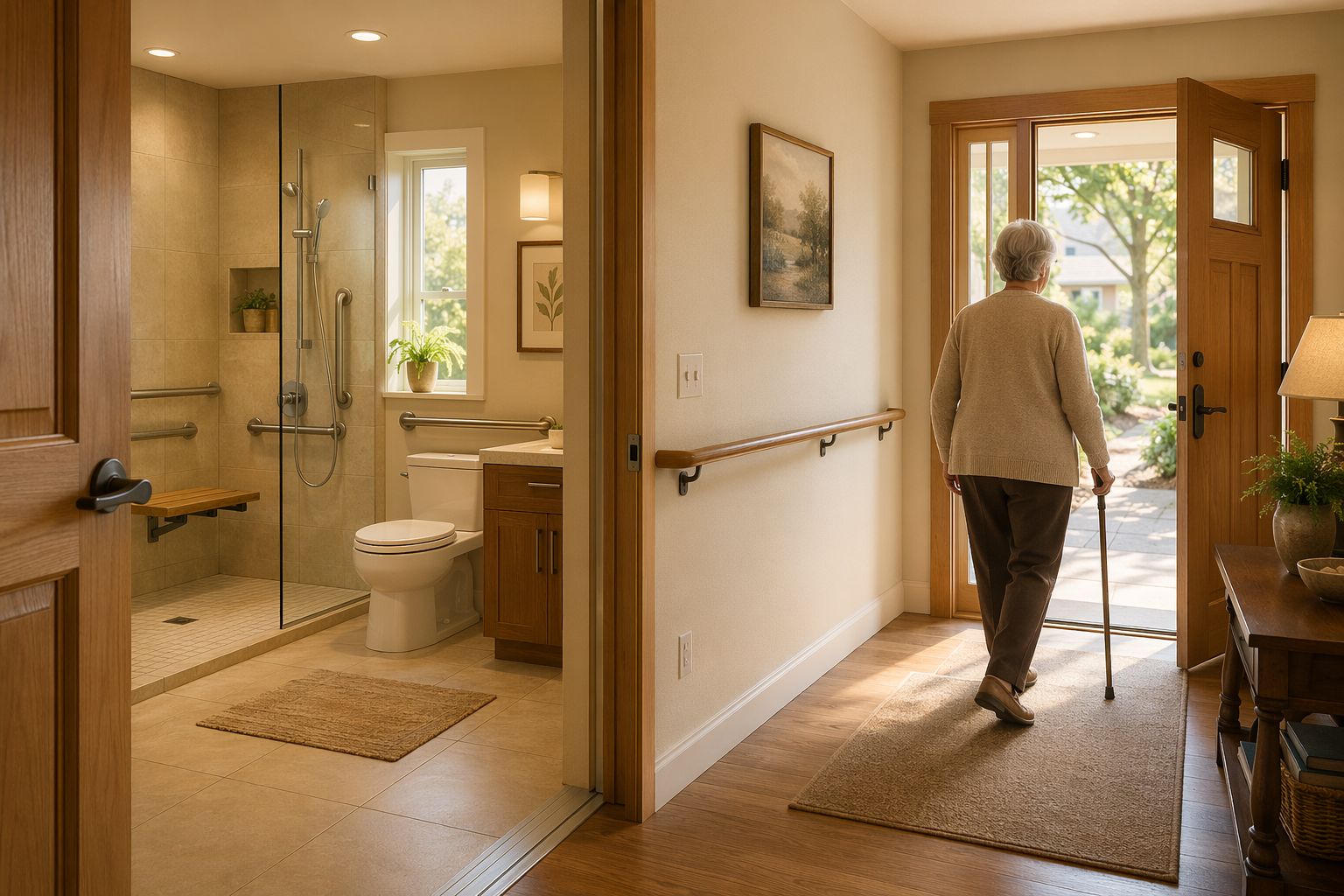
Why Funding Awareness Matters: The $60,000 vs. $8,000 Reality Check
When a family caregiver first hears the phrase "home modifications," the mind often jumps to a single, intimidating question: How much is this going to cost? It is a reasonable fear. The senior care industry does little to dispel the notion that safe, accessible housing requires a second mortgage. But the numbers tell a different story — one that most families never hear.
According to the National Association of Home Builders (NAHB), the average annual cost of assisted living exceeds $60,000 per year. That is a recurring expense that drains savings, equity, and retirement accounts year after year. In contrast, a comprehensive bathroom modification — widening the door, installing grab bars, and adding a roll-in shower — runs approximately $8,000 as a one-time expense. That is not a monthly payment. That is a single investment that can keep a person safe and independent at home for a decade or more.
The core problem is not that modifications are too expensive. It is that awareness of available financial assistance is dangerously low. Federal grants, VA benefits, state Medicaid waivers, and nonprofit programs exist to cover most or all of these costs for qualifying seniors. But families cannot use what they do not know exists. This guide exists to close that gap — to walk you through every major funding source, the eligibility requirements, and the step-by-step process for securing the money your family needs.
If you are reading this after a recent fall or a new diagnosis, you may also want to start with our 30-minute family safety walkthrough to address immediate hazards. But once the immediate crisis is managed, come back here. The financial path to a safe home is more accessible than you think.
Federal Programs: USDA, VA, and HUD Grants and Loans
The federal government operates several programs that directly fund home modifications for older adults and people with disabilities. These are not obscure pilot programs with limited funding — they are established, annually funded initiatives with clear eligibility criteria. Yet the vast majority of eligible families never apply.
USDA Section 504 Rural Housing Repair and Grants
The USDA Section 504 program is one of the most generous and least-known funding sources for home modifications. It is specifically designed for very-low-income homeowners in rural areas who need to remove health and safety hazards.
- Grants: Up to $10,000 for homeowners aged 62 or older. These grants do not need to be repaid.
- Loans: Up to $40,000 at a fixed 1% interest rate, repaid monthly over 20 years.
- Eligibility: The home must be located in a rural area as defined by the USDA, the homeowner must be unable to obtain affordable credit elsewhere, and the household income must fall below the very-low-income threshold for the county.
Funds can be used for a wide range of modifications: installing ramps, grab bars, handrails, walk-in showers, stair lifts, and even structural repairs like roof replacement or foundation work that affects safety. The combination of a grant and a loan can cover most or all of a significant modification project.
VA Housing Grants for Disabled Veterans
For veterans with a service-connected disability, the Department of Veterans Affairs offers several housing grant programs. These are not loans — they are direct financial awards that do not require repayment. The amounts for fiscal year 2026 are substantial.
| Grant Type | FY 2026 Maximum | Purpose |
|---|---|---|
| SAH (Specially Adapted Housing) | $126,526 | Build or modify a home to accommodate a severe service-connected disability |
| SHA (Special Home Adaptation) | $25,350 | Modify an existing home for a service-connected disability that requires accessibility features |
| HISA (Home Improvements and Structural Alterations) | $6,800 (service-connected) / $2,000 (non-service-connected) | Medically necessary home modifications prescribed by a VA physician |
The SAH and SHA grants are available to veterans with specific qualifying disabilities. The HISA grant is broader — it can be awarded for any medically necessary home modification prescribed by a VA physician, including grab bars, ramps, widened doorways, and bathroom modifications. Even veterans with non-service-connected disabilities may qualify for up to $2,000 through HISA.
HUD Loans: FHA Title I and 203(k)
The Department of Housing and Urban Development (HUD) offers two loan programs that can fund home modifications, though these are loans rather than grants.
- FHA Title I Property Improvement Loan: A fixed-rate loan of up to $25,000 for a single-family home (up to $60,000 for a multi-unit property). No home equity is required. Funds can be used for accessibility improvements, including ramps, grab bars, and bathroom modifications.
- FHA 203(k) Rehabilitation Loan: A mortgage that includes the cost of home improvements. If the senior is purchasing a home or refinancing, this loan can roll the cost of modifications into the mortgage itself. Useful for larger projects like adding a first-floor bedroom or bathroom.
Both programs require working with an FHA-approved lender. The interest rates are competitive, and the application process is similar to a standard mortgage application.
State-Level Assistance: Medicaid Waivers and Area Agencies on Aging
Federal programs are only part of the picture. Every state administers its own set of programs that can fund home modifications, often through Medicaid waivers and local aging services networks. These programs vary significantly by state, but they are worth investigating because they can cover modifications that federal programs do not.
Medicaid Money Follows the Person Program
The Medicaid Money Follows the Person (MFP) program is designed to help individuals transition from institutional settings — nursing homes or long-term care facilities — back into their own homes or community-based settings. For eligible individuals, the program can fund home modifications that make the transition safe and feasible.
Covered modifications under MFP may include:
- Wheelchair ramps and zero-step entryways
- Bathroom modifications (roll-in showers, grab bars, raised toilets)
- Stair lifts and platform lifts
- Doorway widening for wheelchair access
Eligibility for MFP requires that the individual currently resides in a qualifying institutional setting and meets the state's Medicaid criteria for nursing home level of care. Each state administers its own MFP program, so the specific list of covered modifications and the application process will vary.
Area Agencies on Aging (AAA)
Area Agencies on Aging are local offices that serve as the primary entry point for aging services in most communities. They can be found through the Eldercare Locator at eldercare.acl.gov. While their primary role is information and referral, many AAAs also administer grant programs or direct funding for minor home repairs and modifications.
For example, in Texas, 28 Area Agency on Aging offices assist with minor home repairs for eligible seniors. Other states may offer similar programs. The key is to contact your local AAA and ask specifically about home modification assistance — not just general aging services. The staff there are often aware of local grant programs that do not appear in any national database.
Nonprofit Programs: Rebuilding Together and Local Options
When government programs are not available or do not cover the full scope of needed modifications, nonprofit organizations can fill the gap. Several national and local nonprofits provide no-cost home repairs and modifications to qualifying seniors.
Rebuilding Together
Rebuilding Together is a national nonprofit with affiliates in communities across the United States. Its mission is to provide no-cost home repairs and modifications to low-income homeowners, with a particular focus on older adults, veterans, and people with disabilities. The organization uses volunteer labor and donated materials to complete projects, which means the cost to the homeowner is zero.
Typical projects include:
- Grab bar and handrail installation
- Ramp construction for wheelchair access
- Bathroom safety modifications (non-slip flooring, walk-in showers)
- Lighting upgrades to reduce fall risk
- Minor structural repairs that affect safety
Eligibility is determined at the local affiliate level, but generally focuses on low-income homeowners aged 60 and older. The application process typically involves a home assessment by a volunteer coordinator, followed by a project plan and a scheduled work day.
Local Community Action Agencies and Habitat for Humanity
Beyond Rebuilding Together, many communities have local organizations that provide similar services. Community Action Agencies (funded through the federal Community Services Block Grant) often administer home repair programs for low-income seniors. Habitat for Humanity's Aging in Place program in some locations offers critical home repairs and modifications for older adults, using volunteer labor and a sliding-scale fee structure based on income.
To find these programs, search for "home repair assistance for seniors" along with your county or city name. Also check with your local United Way — their 2-1-1 helpline can connect you to a wide range of local assistance programs, including home modification services.
Tax Deductions and Medicare Advantage: Overlooked Funding Paths
Two additional funding paths are frequently overlooked because they do not function like traditional grants or loans. They do not put cash in your hand upfront, but they can significantly reduce the net cost of modifications.
Home Modifications as Tax-Deductible Medical Expenses
Under IRS guidelines, home modifications can be deducted as medical expenses if they are medically necessary. This means the modification must be prescribed by a physician as being essential for the medical care of the individual. The IRS considers a modification medically necessary if it enables the person to function independently or safely in their home.
Examples of deductible modifications include:
- Grab bars and handrails installed for fall prevention
- Wheelchair ramps and lifts
- Walk-in showers and bathtubs with safety features
- Widened doorways for wheelchair access
- Lever-style door handles and faucets
The deduction is available only for expenses that exceed 7.5% of the individual's adjusted gross income (AGI). For a senior with a modest income, a significant modification project can easily exceed this threshold, making the entire cost of the modification deductible. Keep all receipts, the physician's prescription, and any documentation showing the medical necessity of the modification.
Medicare Advantage Plan Coverage
Original Medicare (Parts A and B) does not cover home modifications. However, some Medicare Advantage (Part C) plans may offer coverage for home accessibility improvements as a supplemental benefit. This is a relatively new development, and coverage varies widely by plan and by state.
Under current rules, Medicare Advantage plans may cover home modifications for enrollees who are chronically ill — defined as having a condition that is expected to last at least 12 months and that limits self-care or independent living. Covered modifications may include grab bars, ramps, and bathroom safety equipment.
How to Apply: A Step-by-Step Guide to Securing Funding
Knowing which programs exist is only half the battle. The application process can be daunting, especially for families already stretched thin by caregiving responsibilities. The following steps provide a clear roadmap for navigating the process from start to finish.
Step 1: Get a Professional Home Assessment
Before applying for any funding, you need a professional assessment that documents what modifications are needed and why. Two types of professionals can provide this:
- An occupational therapist (OT) can conduct a comprehensive home safety assessment and write a clinical justification for each recommended modification. This is the gold standard for medical necessity documentation.
- A CAPS-certified contractor (Certified Aging-in-Place Specialist) can provide a detailed scope of work and cost estimate. While not a clinical assessment, a CAPS evaluation is often sufficient for grant and loan applications.
Many families make the mistake of calling a general contractor first. Instead, start with an OT or a CAPS specialist. Their assessment will carry more weight with funding agencies and will ensure the modifications are appropriate for the senior's specific needs. Our guide on why you should call a professional first explains this in more detail.
Step 2: Gather Medical Documentation
Most funding programs require a physician's statement or prescription confirming the medical necessity of the modifications. This documentation should include:
- The senior's diagnosis and relevant medical history
- A description of the functional limitations that the modifications will address
- A clear statement that the modifications are medically necessary for safety and independence
- The physician's signature and license information
For VA grants, the documentation must come from a VA physician. For Medicaid waivers, the documentation must support the need for a nursing home level of care. For tax deductions, a physician's prescription is sufficient.
Step 3: Identify Which Programs the Senior Qualifies For
Use the following checklist to determine which programs are worth pursuing:
| Program | Key Eligibility Criteria | Best For |
|---|---|---|
| USDA Section 504 | Rural location, age 62+, very-low income | Rural homeowners with limited income |
| VA SAH/SHA/HISA | Service-connected disability, VA enrollment | Veterans with qualifying disabilities |
| Medicaid MFP | Currently in nursing home, Medicaid eligible | Transitioning from facility to home |
| Rebuilding Together | Low income, age 60+, homeowner | No-cost minor to moderate repairs |
| Tax Deduction | Physician prescription, expenses >7.5% AGI | Reducing net cost of any modification |
| Medicare Advantage | Chronically ill, enrolled in MA plan | Supplemental coverage for specific items |
Step 4: Complete Applications with Required Documentation
Each program has its own application form and submission process. The following documents are commonly required:
- Proof of age (birth certificate, driver's license, or passport)
- Proof of income (tax returns, Social Security statements, pension letters)
- Proof of homeownership (deed, property tax statement, or mortgage statement)
- Physician's statement of medical necessity
- Detailed scope of work and cost estimate from a qualified contractor
- Photos of the current home conditions that need modification
For USDA and VA programs, applications are submitted through the respective federal agency's local office or online portal. For state and local programs, contact the administering agency directly to confirm the application process.
Step 5: Follow Up and Track Deadlines
Government grant and loan applications can take weeks or months to process. Create a simple tracking system: note the date you submitted each application, the expected processing time, and the date by which you should follow up. Set calendar reminders to call the agency if you have not heard back within the stated processing window.
Persistence matters. Many applications are initially delayed or lost due to administrative backlogs. A polite follow-up call can often move your application forward.
Common Reasons Applications Get Denied — and How to Avoid Them
Understanding why applications are rejected can dramatically improve your chances of success. The following are the most common pitfalls and how to avoid them.
- Incomplete medical documentation. The most common reason for denial is a physician's statement that is too vague. A statement that says "patient needs grab bars" is not sufficient. The documentation must explain why the modification is medically necessary, what functional limitation it addresses, and how it will prevent injury or decline. Work with your physician to ensure the statement is thorough.
- Missing proof of income or residency. Many programs have strict income limits. If you do not provide the required documentation (tax returns, Social Security statements, proof of address), the application will be rejected. Double-check the application requirements before submitting.
- Applying to the wrong program. A common mistake is applying for a VA grant when the senior is not a veteran, or applying for a USDA grant when the home is not in a rural area. Use the eligibility checklist above to ensure you are applying to programs for which the senior actually qualifies.
- Missing application deadlines. Some programs have annual funding cycles and stop accepting applications once funds are exhausted. Apply early in the fiscal year (October for federal programs) when funds are most available. If you miss the deadline, ask when the next funding cycle opens.
Cost Range Reference for Planning Your Application
When you apply for funding, you will need to provide a detailed cost estimate. The following table shows typical price ranges for common modifications. These are national averages and may vary significantly by region, contractor availability, and specific home conditions.
| Modification | Typical Cost Range | Notes |
|---|---|---|
| Grab bars (installed) | $15 – $150 per bar | One of the lowest-cost, highest-impact modifications |
| Lever-style door handles | $20 – $80 per handle | Simple DIY upgrade; reduces hand strength requirement |
| Handheld showerhead | $30 – $100 | Easy to install; improves bathing safety |
| Raised toilet seat | $40 – $150 | Reduces fall risk during transfers |
| Stair lift (installed) | $2,500 – $8,000 | Cost varies by stair configuration and lift model |
| Modular wheelchair ramp | $1,500 – $5,000 | Less expensive than custom-built ramps |
| Walk-in shower (full remodel) | $6,000 – $12,000 | Includes demolition, waterproofing, and installation |
| Bathroom remodel (full) | $8,000 – $15,000 | Widening door, roll-in shower, grab bars, non-slip flooring |
| Doorway widening (per door) | $500 – $2,000 | Structural work; requires contractor |
| First-floor bedroom addition | $15,000 – $50,000+ | Major structural project; may require permits |
For a detailed breakdown of bathroom modification costs and financing options, see our Bathroom Remodel for Elderly Safety guide. For budget-friendly options, our DIY grab bar installation guide can help you save on labor costs for the simplest and most effective modification.
The path to a safe, accessible home does not have to be financially devastating. Federal grants, VA benefits, state programs, and nonprofit organizations exist to help. The first step is knowing they exist. The second is applying. Every day you wait is a day your parent remains at risk in a home that was not designed for their changing needs. Start today.
Related reading
Need a professional assessment?
Find a CAPS-credentialed professional or local aging services through our outbound resource list — we never name or rank individual contractors.
Find Local HelpNoticed something outdated or inaccurate on this page? Flag a correction. We review every report against CDC, NIA, and AARP HomeFit guidance before updating a page.