
Room checklist
How to Sanitize an Elderly Person's Home Room by Room
A room-by-room plan for reducing infection risk in an older adult's home, built on the clean–sanitize–disinfect tiers and the CDC trigger for when disinfection is actually needed. Includes exact bleach ratios, alcohol strength, contact times, and a caregiver hand-off checklist for keeping the routine consistent.
- Room
- Whole home
- Reviewed by
- Editorial Team
The useful answer to sanitizing an older adult’s home starts with a decision, not a spray bottle: is this a normal weekly cleaning routine, or is someone in the home sick or at higher risk of getting sick because of a weakened immune system?
Older adults do not always respond to infection the way younger adults do. MedlinePlus describes aging-related immune changes as a slower immune response, weaker response to vaccines, and slower healing from injuries.[1] That does not mean age alone equals “immunocompromised.” It does mean a caregiver should be more exact about the routine, especially when there is cancer treatment, immune-suppressing medication, transplant history, HIV, a genetic immune condition, or another diagnosis the health-care team has flagged.
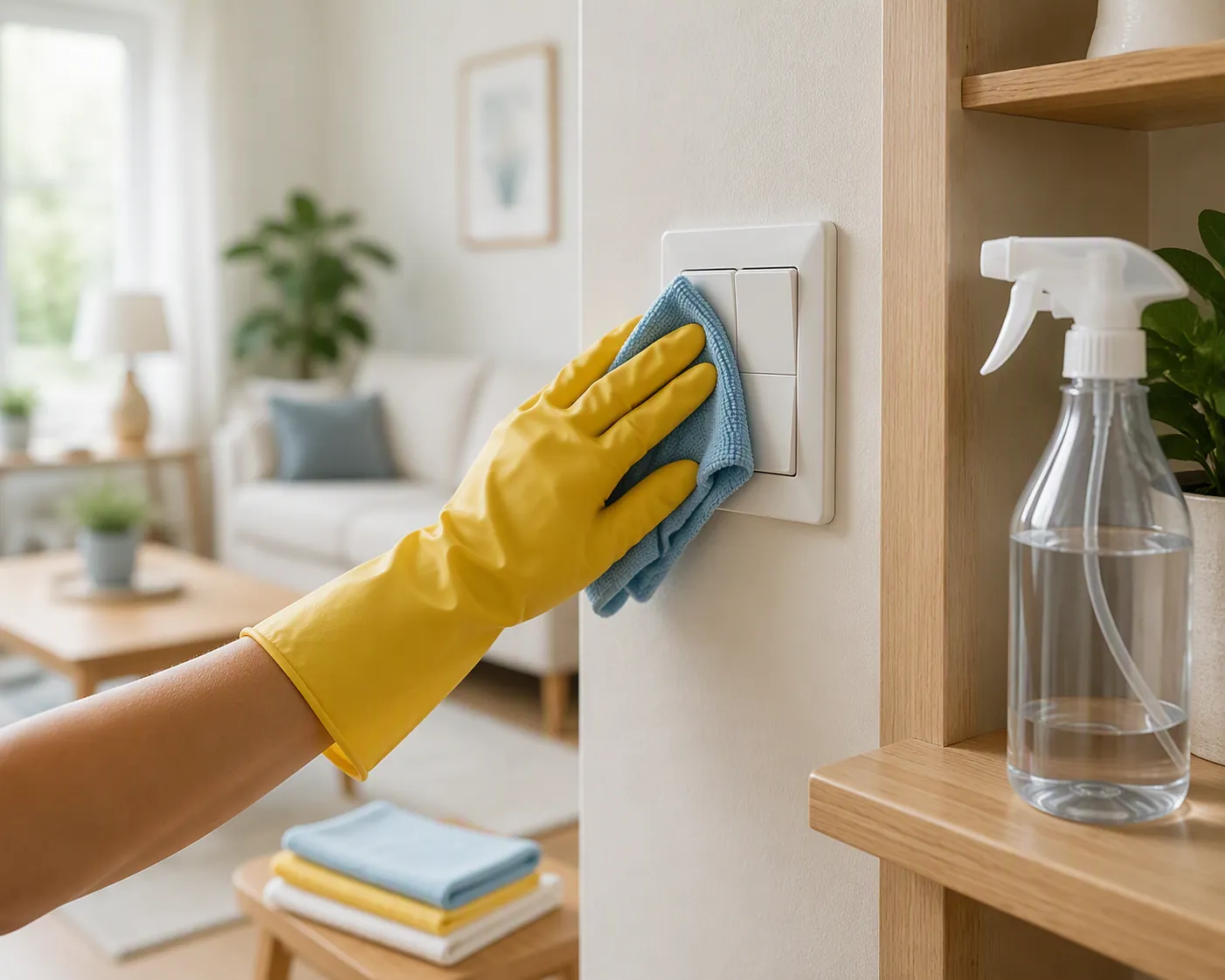
The CDC’s home guidance is the line that keeps the job from turning into chemical theater: clean regularly, and add disinfection when someone is sick or when someone is at higher risk of getting sick because of a weakened immune system.[2] For a parent living independently and well, that may mean ordinary cleaning plus targeted sanitizing in the kitchen. For a parent on immune-suppressing treatment, recovering from illness, or sharing a home with a sick visitor, the same house may need daily attention to high-touch surfaces for a while.
Clean, sanitize, disinfect: three different jobs
| Tier | What it does | Where it usually belongs in an older adult’s home |
|---|---|---|
| Clean | Removes dirt and some germs from surfaces. | The first step everywhere: counters, handles, floors, bathroom surfaces, phones, remotes, rails. |
| Sanitize | Reduces germs to levels considered safe. | Food-contact areas, kitchen surfaces after food prep, and items where lowering germ levels is enough. |
| Disinfect | Kills most germs on surfaces when used correctly. | High-touch surfaces when someone is sick, or when the care team confirms higher infection risk from a weakened immune system. |
That order matters. If the kitchen handle is sticky, or the bathroom faucet has toothpaste and soap film on it, disinfectant is being asked to work through grime. Clean first. Then decide whether that surface needs sanitizing or disinfecting today.
Care-team confirmation note: If the older adult has an immune-related diagnosis, is taking immune-suppressing medication, recently had a transplant, is in active cancer treatment, has HIV, or has another condition that changes infection risk, ask the clinician what level of home disinfection is actually needed and for how long. This article is a household routine, not medical advice.
The room-by-room routine
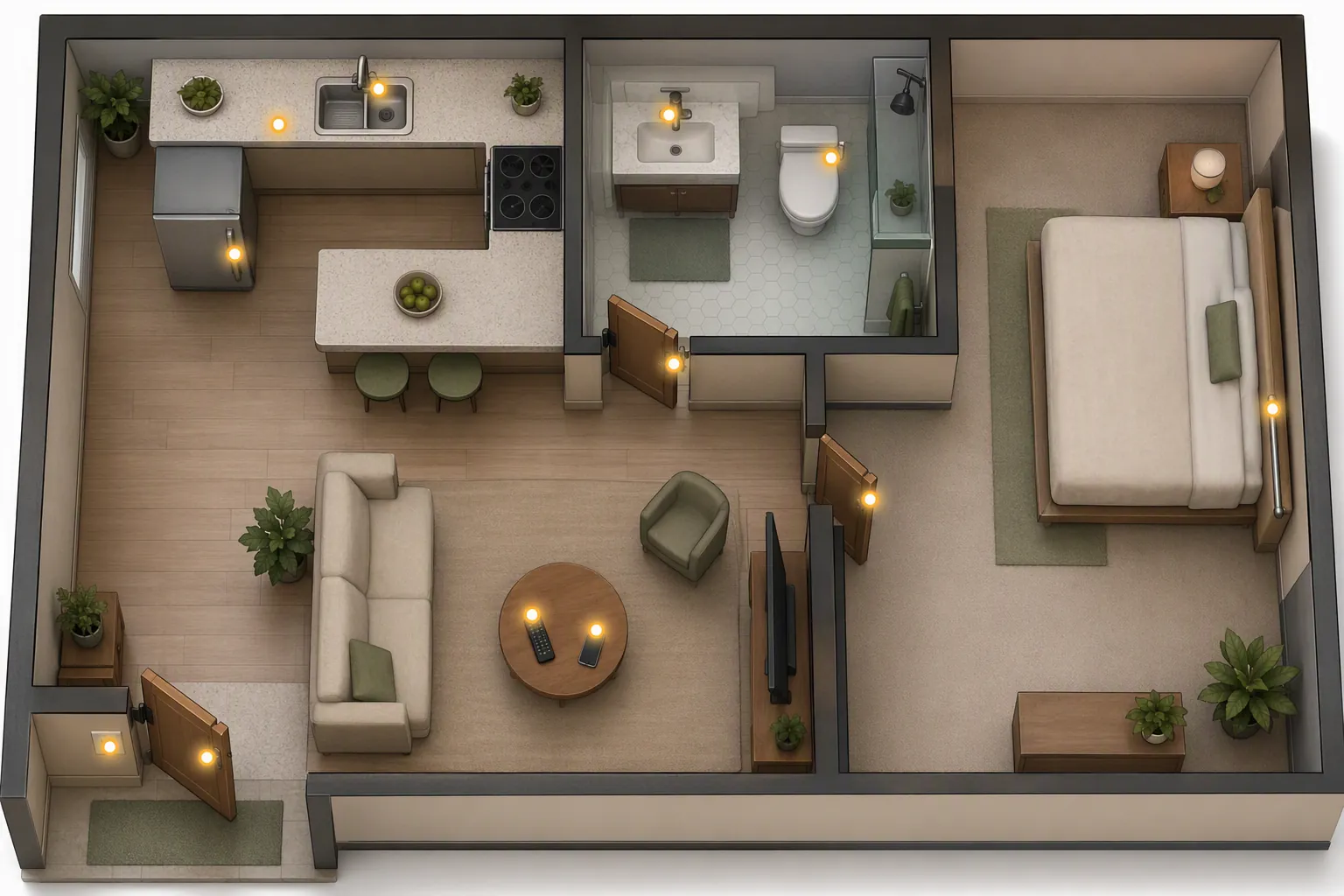
Most homes do not fail because nobody knows germs exist. They fail at the hand-off: one person wipes kitchen counters with the bathroom cloth, another sprays bleach near someone with COPD, and a third person “does the handles” but never leaves the surface wet long enough. The room plan below is built so the next person can repeat it without guessing.
| If this is the situation | Use this level |
|---|---|
| Older adult is living well; no one is sick; no special immune-risk condition has been identified | Clean routinely. Sanitize food-contact kitchen surfaces as needed. Wipe high-touch surfaces often enough that the routine is realistic. |
| Someone in the home is sick | Clean first, then disinfect high-touch surfaces while illness is active. Give bathroom, bedroom, remotes, phones, and kitchen handles more attention. |
| Care team says the older adult is at higher risk because of a weakened immune system | Ask whether daily high-touch disinfection is needed during that risk period. Keep the routine narrow and repeatable instead of disinfecting every object. |
Entryway: handles, switches, and the first dirty drop zone
The entry is where hands arrive before anyone has washed them. Keep the routine short: door handles, deadbolts, light switches, railings, and any table or shelf where mail, keys, walkers, or bags land.
- Clean visible dirt first with detergent or a household cleaner appropriate for the surface.
- If no one is sick and there is no special immune-risk instruction, a regular wipe-down of these high-touch points is usually the practical target.
- If someone is sick or the care plan calls for added protection, disinfect the handle, switch, and rail after cleaning.
- Do not leave wet shoes, cleaning buckets, cords, or spray bottles in the walking path. Infection control should not create a fall hazard.
Kitchen: counters, sink, fridge handle, cloths, sponges, and mops
The kitchen needs stricter boundaries than the rest of the house because food, hands, damp cloths, and sink spray all meet there. Use kitchen-only cloths. Do not bring the bathroom cloth into this room “just for one handle.” Kaiser Permanente’s caregiving guidance specifically advises using different cloths for the bathroom and kitchen.[4]
- Counters: clean crumbs, grease, and spills first. Sanitize after food prep, especially after raw meat, poultry, seafood, eggs, or unwashed produce.
- Sink and faucet: clean the basin, faucet handle, sprayer, and soap-pump top. Disinfect when someone is sick or when the care plan calls for it.
- Refrigerator, microwave, cabinet, and appliance handles: treat these as high-touch surfaces. Clean first; disinfect during illness or higher-risk periods.
- Sponges and mops: if they are kept, soak them weekly for 5 minutes in diluted bleach, then rinse and dry; Kaiser includes this as a weekly home infection-control step.[4]
- Mop water: never pour mop water into the kitchen sink, and never clean or empty bedpans there.[4]
A kitchen routine that someone can repeat after work looks like this: clear food and dishes, clean the counter and sink, sanitize food-contact surfaces, wipe the faucet and fridge handle, put used cloths straight into laundry or a marked dirty-cloth bin, and leave the walking path dry.
Bathroom: separate cloths and no shortcuts around the toilet
Bathrooms deserve their own cloth color, bin, and gloves. The surfaces to name on the checklist are faucet handles, sink rim, soap dispenser, toilet handle, toilet seat, grab bars, light switches, door handle, shower controls, and any commode or raised-seat equipment.
- Clean higher surfaces before lower ones; Kaiser gives this as part of reducing germs at home.[4]
- Clean soap film, urine splashes, toothpaste, and visible soil before applying a disinfectant.
- During illness or confirmed higher-risk periods, disinfect faucet handles, toilet handles, grab bars, switches, and door handles after cleaning.
- Put bathroom cloths in a separate dirty-laundry container or bag. Do not reuse them in the kitchen.
- Dry the floor before leaving the room. A freshly cleaned bathroom with a wet path to the toilet is not safe for a person who gets up at night.
Bedroom and living room: remotes, phones, rails, and blankets
The living room and bedroom often look clean while holding the objects handled most often: phone, TV remote, tablet, glasses case, side-table top, lamp switch, recliner handle, walker grips, bed rail, grab rail, and doorknob. UPMC HealthBeat gives illustrative survival times that explain why these surfaces deserve attention: flu viruses may survive 24 to 48 hours on hard surfaces, cold viruses up to about a week, and C. diff up to five months.[5] Those figures should not become a panic schedule; they are a reason to prioritize the handful of surfaces hands keep returning to.
- Remotes and phones: clean with a barely damp cloth or an alcohol wipe if the manufacturer allows it. Do not spray liquid into openings.
- Grab rails, walker handles, cane grips, lift-chair controls, and bed rails: clean first; disinfect during illness or higher-risk periods.
- Throw blankets and pillow covers: wash when soiled, after illness exposure, or when they are shared often.
- Bedside table: keep tissues, water cups, medication organizers, and used wipes from becoming one mixed pile. The cleaning routine is easier when the surface is not overloaded.
The caregiver hand-off spec box
This is the part to tape inside the cleaning cabinet, not bury in a group text. The person doing the job should not have to remember ratios from memory.
| Item | Use this exact instruction |
|---|---|
| Bleach type | Regular unscented household bleach with 5% to 9% sodium hypochlorite.[3] |
| Bleach dilution for larger jobs | 5 tablespoons, or 1/3 cup, bleach per 1 gallon of room-temperature water.[3] |
| Bleach dilution for small jobs | 4 teaspoons bleach per 1 quart of room-temperature water.[3] |
| Bleach contact time | Surface must stay wet for at least 1 minute.[3] |
| Bleach solution age | Make a fresh solution daily; CDC says diluted bleach solutions weaken after 24 hours.[3] |
| Alcohol | Use alcohol solutions of 70% or higher when alcohol is appropriate for the surface.[6] |
| Disinfectant choice | Use an EPA-registered household disinfectant and follow the label for surface type, contact time, rinsing, and ventilation.[6] |
| Sponges and mops | Soak weekly for 5 minutes in diluted bleach, then rinse and dry.[4] |
| Order | Clean first, then sanitize or disinfect. Dirt and grime can keep chemicals from working properly.[2] |
| Protection | Wear gloves when the product label calls for them; ventilate the space when using bleach or disinfectants.[6] |
If a product label gives a longer contact time than the bleach minimum above, follow the label. A disinfectant that is wiped dry too quickly has not been used as directed, even if the surface smells “clean.”
Frequency without pretending every household is the same
Frequency is where vague advice causes the most friction. A parent living alone, feeling well, and without a special immune-risk condition does not need the same plan as a parent recovering from an infection or living with someone who has symptoms. Use the CDC trigger first: illness or higher risk because of a weakened immune system is when disinfection gets added to cleaning.[2]
| Task | Practical frequency range |
|---|---|
| Kitchen counters and food-prep surfaces | Clean after use; sanitize after food prep when needed. |
| Entry, bathroom, kitchen, bedroom, and living-room high-touch surfaces | Several times a week in a well household if surfaces are used often; daily during active illness or when the care team calls for higher-risk protection. |
| Bathroom fixtures and toilet-area touch points | At least weekly in a well household; more often during illness, in shared bathrooms, or when continence care is involved. |
| Floors | Clean on a weekly routine or when visibly dirty, sticky, or contaminated; dry promptly to reduce fall risk. |
| Sponges and mops | Weekly 5-minute diluted-bleach soak if they are reused.[4] |
| Phones, remotes, tablets, and controls | Wipe often, especially during illness, but follow device-safe instructions. |
Laundry, soft surfaces, and electronics
Soft items do not need to be dragged through a disinfectant routine. For laundry, CDC says items from a sick person can be washed with other household items, hands should be washed after handling dirty laundry, and items should be dried completely.[2] Use the warmest appropriate water setting allowed by the fabric label when illness is involved, and avoid shaking dirty laundry into the air.
Throw blankets, pillow covers, washable lap pads, towels, and robe sleeves matter because they touch hands, faces, and chairs. Put them on a predictable wash cycle rather than waiting until they look dirty. If someone has vomiting, diarrhea, respiratory symptoms, or wound drainage, bag soiled items where they are used and move them directly to the laundry area.
Electronics are high-touch but surface-sensitive. Phones, tablets, remotes, hearing-aid cases, medical alert buttons, and lift-chair controls should be wiped with a method the manufacturer allows. Alcohol at 70% or higher may be appropriate for some hard nonporous surfaces, but it is still possible to damage screens, coatings, seams, or ports.[6]
Safety rules that matter as much as the germ plan
- Never mix bleach with ammonia, vinegar, toilet-bowl cleaner, drain cleaner, or other cleaning products. Mixing products can create dangerous gases.
- Ventilate when using bleach or disinfectants. Open a window or run a fan when practical, and leave the room if fumes are bothering the older adult.
- Avoid spraying bleach into the air, especially around someone with asthma, COPD, chronic cough, or other respiratory problems. Apply product to a cloth when that is safer for the person and the surface.
- Wear gloves when using disinfectants or handling soiled laundry, bathroom cloths, or body-fluid cleanup.
- Keep wet floors, buckets, cords, open cabinet doors, and piles of cloths out of walking paths.
- Store products where the older adult, visitors, pets, and grandchildren cannot mistake them for something else.
- Label spray bottles with the product name and date mixed. Do not keep yesterday’s diluted bleach for today’s disinfecting job.
Cleaning logistics belong with home safety planning. Wet floors, cluttered counters, and products left beside the toilet can raise fall risk while trying to lower infection risk. If the home needs a broader safety pass, use the site’s fall-prevention and home-modifications resources as the next layer of the plan.
A hand-off checklist another person can follow
Use names, not intentions. “Clean kitchen” is too broad. “Maria: Monday and Thursday, kitchen counters, sink, faucet, fridge handle, kitchen cloth only” is much harder to misunderstand.
- Confirm current level: well household, sick household, or care-team-directed higher-risk period.
- Assign cloths by room: kitchen cloths, bathroom cloths, general living-area cloths.
- List high-touch targets: handles, switches, faucets, toilet handle, fridge handle, remotes, phones, rails, walker grips, and lift-chair controls.
- Write the product rule: clean first; sanitize food-contact surfaces; disinfect high-touch surfaces when illness or confirmed higher risk calls for it.
- Write the bleach recipe exactly: 5 tablespoons or 1/3 cup per gallon, or 4 teaspoons per quart, room-temperature water, fresh daily, surface wet at least 1 minute.
- Add the safety line: ventilate, wear gloves when needed, never mix products, and dry floors before leaving.
- Add laundry line: sick-person laundry may go in with other items, wash hands after handling dirty laundry, and dry items completely.
- Add escalation note: call the health-care team if symptoms worsen, if immune-risk instructions are unclear, or if the household is unsure how long daily disinfection should continue.
The same planning logic applies outside the home. If the older adult is traveling, group settings and shared surfaces change the exposure picture; the site’s cruise ship illness prevention checklist uses the same CDC-grounded habit of matching the precaution to the actual risk.
When to step back down
Daily disinfection should not become the permanent personality of the home unless the care team says it needs to be. When the illness has passed, or when a clinician says the higher-risk period is over, step back to the narrower routine: clean regularly, sanitize kitchen surfaces when needed, and keep high-touch surfaces on a schedule the household can actually repeat.
That is the workable standard: not maximum chemicals, not pretend reassurance, but the smallest safe routine that the next caregiver can do the same way.
References
- Aging changes in immunity, MedlinePlus.
- When and How to Clean and Disinfect Your Home, Centers for Disease Control and Prevention.
- Cleaning and Disinfecting with Bleach, Centers for Disease Control and Prevention, April 2024.
- Caregiving: Reducing Germs and Infection in the Home, Kaiser Permanente.
- Should You Disinfect Your Home After an Illness?, UPMC HealthBeat.
- Tip Sheet: Household Cleaning and Disinfecting, Health in Aging.
Related reading
Need a professional assessment?
Find a CAPS-credentialed professional or local aging services through our outbound resource list — we never name or rank individual contractors.
Find Local HelpNoticed something outdated or inaccurate on this page? Flag a correction. We review every report against CDC, NIA, and AARP HomeFit guidance before updating a page.