
Room checklist
The Complete Room-by-Room Senior Bathroom Remodel: What to Change, What It Costs, and What Order to Do It
This guide breaks down a senior bathroom remodel into three hazard zones—shower, toilet, and floor—with cost ranges for each modification and a risk-prioritized order that minimizes expense and disruption.
A senior bathroom remodel gets easier once the room stops being one vague problem and becomes three work areas: the shower or tub, the toilet, and the floor with lighting. Those are the places where a parent has to step, turn, lower, reach, stand wet, or move half-awake at night. The order matters because some changes can be made this week for a few hundred dollars, while others become much cheaper only if they are planned before walls, tile, plumbing, and flooring are finished.
The urgency is not theoretical. In a 2022 study of community-dwelling Medicare beneficiaries who had fallen, 40.2% of older adults with repeated falls still had no bathroom modifications, representing about 1.9 million people.[1] CDC fall data also show that bathroom-related injuries send more than 235,000 older adults to emergency departments each year.[2] Those numbers do not tell a family which tile to buy, but they do justify moving the bathroom to the top of the home-modification list after a fall.
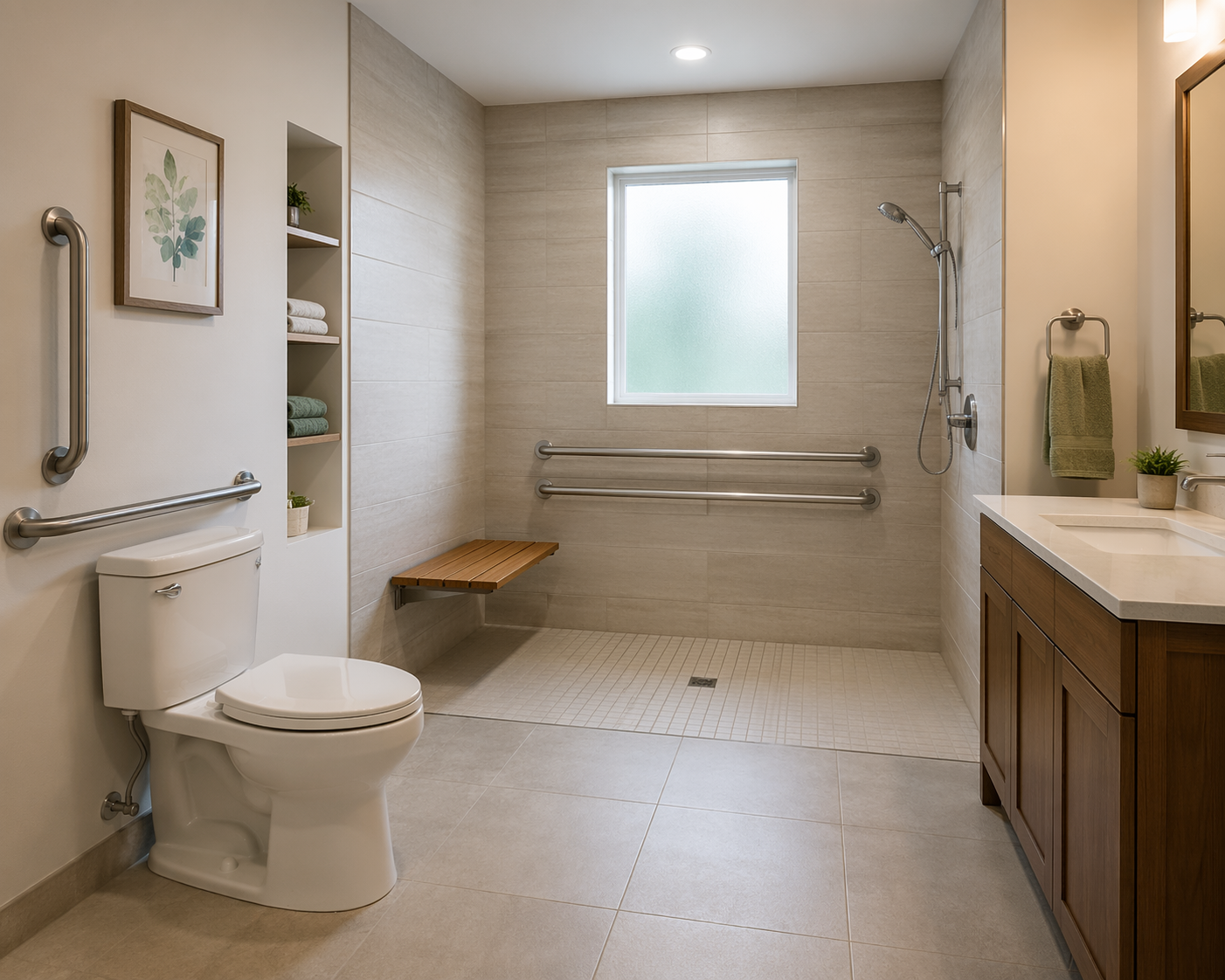
Start With the Three Bathroom Hazard Zones
Before calling a contractor, walk the bathroom in the order your parent uses it. Do not start with finishes. Start with body movement.
| Zone | What to watch | Most common first fixes | When it becomes construction |
|---|---|---|---|
| Shower or tub | Stepping over a tub wall, turning on wet tile, standing without hand support, sitting and reaching | Grab bars, shower chair, handheld showerhead, non-slip strips or mat | Tub-to-shower conversion, curbless shower, walk-in tub, wall blocking, drain and slope work |
| Toilet | Lowering, standing, twisting for paper or a flush handle, lack of side support | Raised toilet seat, toilet safety frame, nearby grab bar | Comfort-height toilet, wall reinforcement, wider transfer space |
| Floor and lighting | Wet transitions, loose rugs, glare, shadows, night trips | Remove rugs, add night lights, improve bulbs, clear pathways | Non-slip flooring, threshold changes, door swing or doorway work |
This three-zone view is useful because it keeps the family from treating every improvement as equally urgent. A loose bathmat and no grab bar are not wait-and-see items. A full doorway widening may be important, but it usually belongs in a priced remodel scope unless a wheelchair or walker already cannot enter the room.
The Fastest Safety Changes Are Not the Most Expensive Ones
The first phase is the work that reduces immediate fall risk without opening the room. If your parent is already avoiding showers, start there. A professionally installed grab bar often falls in the $200–$600 range, while a raised toilet seat can be roughly $30–$80. These are not substitutes for a full remodel when the layout is wrong, but they can reduce danger while the larger decisions are priced.
- Do now: remove loose rugs, add night lighting, install properly anchored grab bars, add a shower chair if it fits safely, switch to a handheld showerhead, and raise the toilet seat if transfers are difficult.
- Price next: comfort-height toilet, permanent toilet grab bar, non-slip flooring, better vanity clearance, improved shower controls, and a safer shower entry.
- Plan during construction: curbless shower, tub removal, walk-in tub, wall blocking, drain relocation, doorway widening, threshold changes, and any plumbing moves.
If the bathroom is part of a larger home-safety push, it helps to compare it against a broader room-by-room home modification priority guide. But after a fall, the bathroom usually earns its place near the front because it combines water, hard surfaces, privacy, and transfers in one small room.
Shower and Tub: Separate This Week’s Fix From the Remodel Decision
The shower is where families lose time because several very different solutions get discussed as if they solve the same problem. A grab bar helps with balance. A shower chair helps with endurance. A tub-to-shower conversion removes the step-over. A curbless shower changes the whole entry. A walk-in tub may reduce climbing but still requires waiting while the tub fills and drains. Those are different answers to different transfer problems.
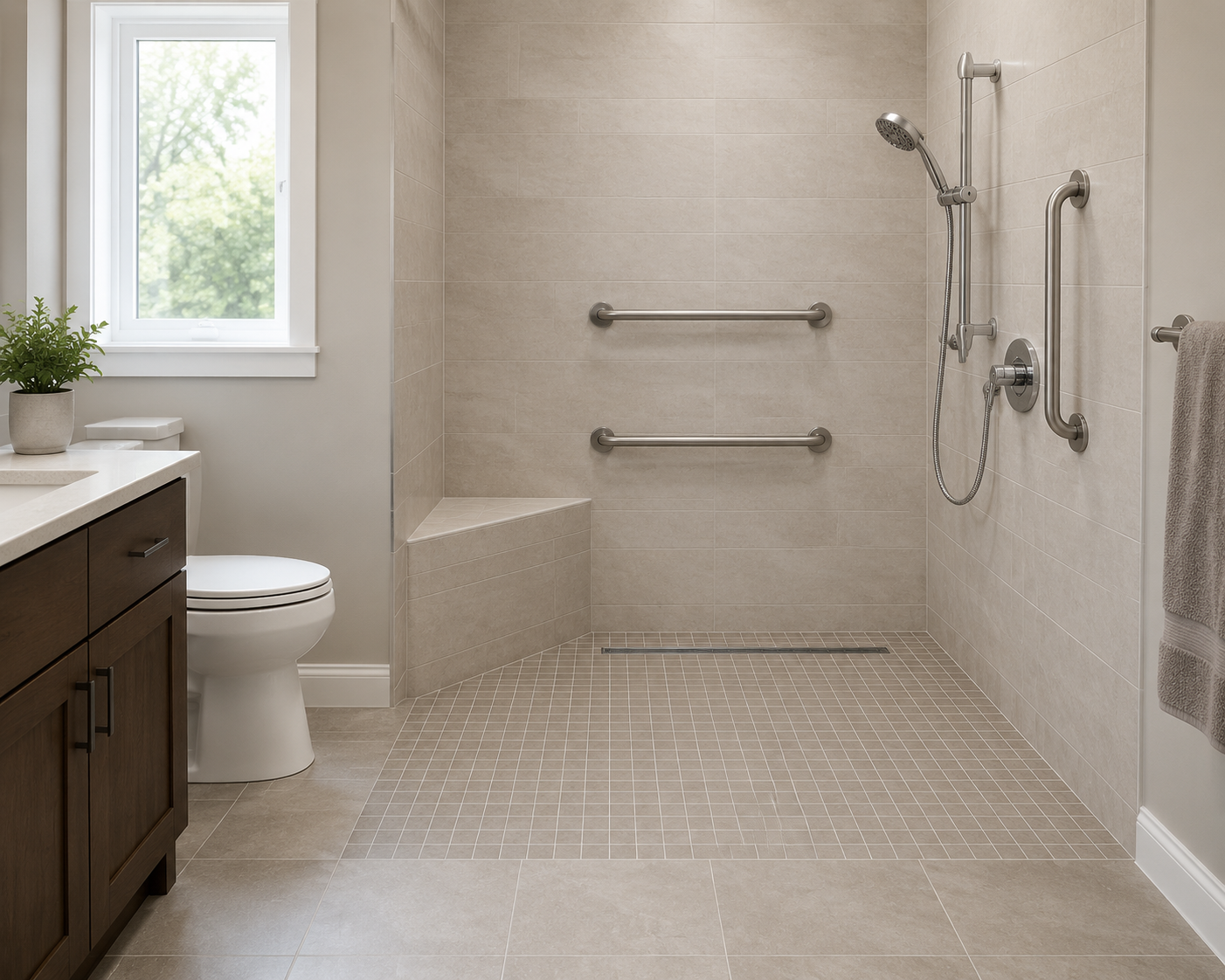
Grab bars come first, but only if they are anchored correctly
A grab bar is not a towel bar with better branding. For bathroom safety, it needs to be placed where the person actually reaches during the transfer and anchored into studs or solid blocking. ADA toilet-room guidance places many grab bars at 33–36 inches above the finished floor, and senior bathroom guidance commonly expects bars to support about 250–300 pounds.[3] For a detailed placement walk-through, use a dedicated grab bar installation guide before anyone drills into tile.
The cheap-looking version of this job is often the expensive one: suction bars, bars fastened only to drywall, or bars placed where they look symmetrical instead of where the hand naturally lands. A contractor or handyman should be able to say exactly what the bar is anchored into. If they cannot, stop the installation.
If the wall is open, add blocking before anyone closes it
Wall blocking is one of the most practical decisions in the whole remodel. During construction, adding solid wood blocking behind the future grab-bar locations may cost roughly $50–$100 per location. After the wall is closed and tiled, retrofitting a bar can run about $300–$500 per bar because the installer has to find secure structure, work around finished surfaces, and sometimes open the wall. More broadly, adding accessibility features during planned construction may add about 15–25% to a project, while later retrofits can add 50–100%.
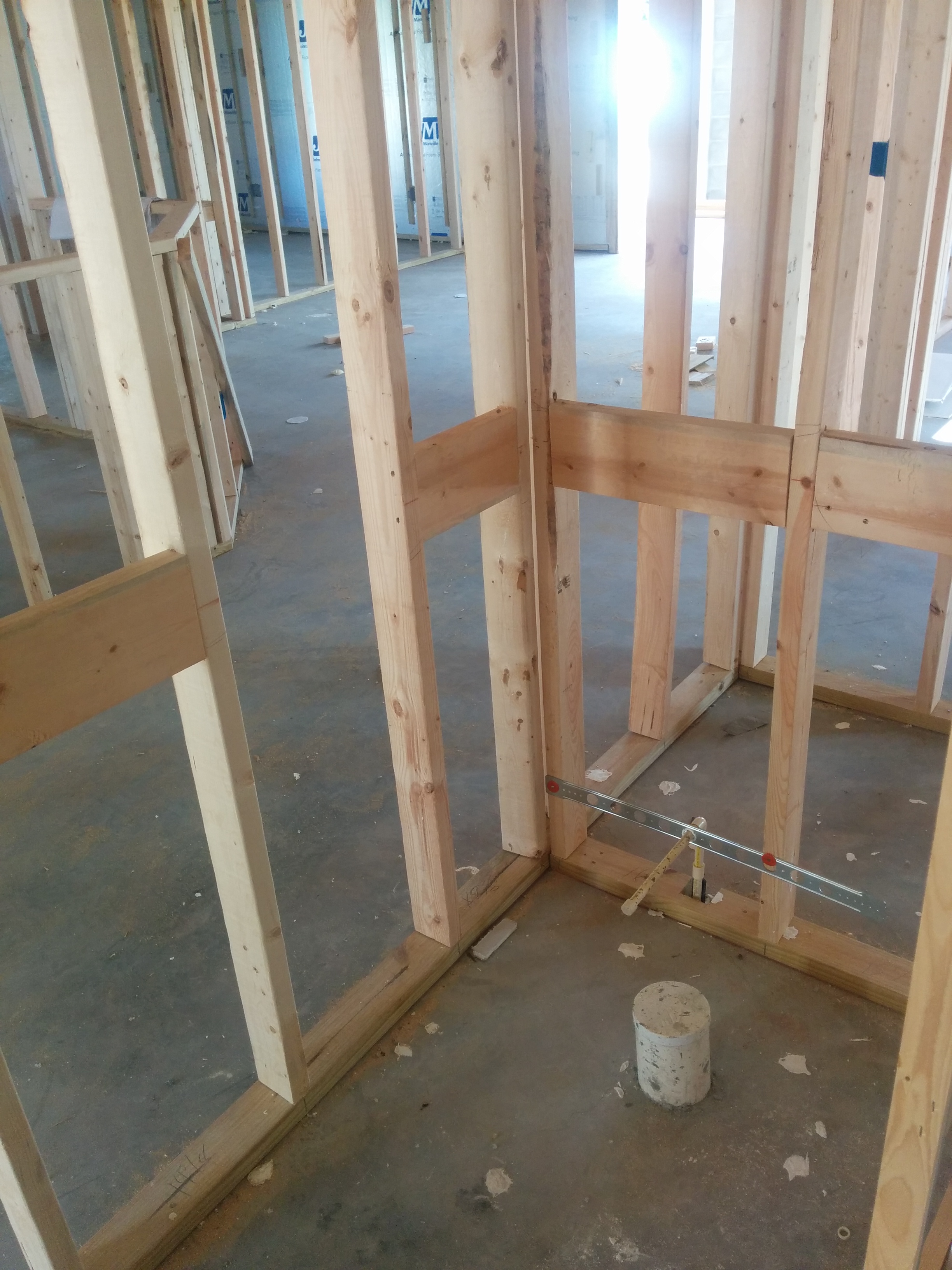
Blocking is not just for the bar being installed today. Ask for backing at the shower entry, inside the shower, beside the toilet, and anywhere a future fold-down seat or support rail might go. This is the part of the scope that disappears once drywall and tile go up, so it belongs in writing before the contractor closes the wall.
A shower chair only helps if the shower can actually support it
A shower chair is usually a near-term fix, but measure before buying. The legs need to sit flat. The chair should not block the door or force the user to twist around the controls. If the tub bottom is curved or narrow, a transfer bench may be safer than a small stool, but it also needs enough clearance outside the tub. The goal is not to add equipment; it is to remove the standing-and-turning moment that made the shower feel dangerous.
Tub-to-shower conversion, walk-in tub, or curbless shower
Once the tub edge is the problem, small products stop solving the main risk. A tub-to-shower conversion or curbless shower removes or reduces the step-over, while a walk-in tub changes the bathing style. National cost ranges vary widely: walk-in tubs can run roughly $3,000–$17,000 or more, and curbless showers can range from about $3,000–$25,000 depending on drainage, waterproofing, tile, plumbing, and structural work.[4]
| Option | Best fit | Watch closely |
|---|---|---|
| Tub-to-shower conversion | Parent can stand or sit in a shower but should not step over a tub wall | Threshold height, door width, seat placement, handheld shower reach, and grab-bar backing |
| Curbless shower | Walker use, wheelchair planning, or a strong need to remove the threshold | Floor slope, drain location, waterproofing, bathroom floor transition, and total project timing |
| Walk-in tub | Parent strongly prefers bathing and can manage seated entry, fill time, and drain time | Door seal, wait time while wet, transfer path, emergency access, and total installed cost |
A curbless shower is often the cleaner long-term safety answer when mobility is declining, but it is not automatically the cheapest or simplest. It may require changing the floor slope, moving the drain, and waterproofing beyond the old tub footprint. A walk-in tub can be a good fit for some bathers, yet it should be chosen for the person’s actual routine, not because it sounds senior-specific.
Toilet Area: Make the Transfer Predictable
The toilet zone is less glamorous than the shower and often more revealing. Watch whether your parent drops onto the seat, pushes up from a vanity, reaches for a towel bar, or twists to find balance. A raised toilet seat can be a quick fix, but it should not wobble, slide, or make hygiene harder. If it does, it has traded one problem for another.
For a more permanent change, a comfort-height toilet usually places the seat around 17–19 inches from the floor, which can make sitting and standing easier for many older adults. Installed costs often fall around $300–$1,200 depending on the toilet, labor, flange condition, and local pricing. Pairing the toilet with a side grab bar or safety rail matters more than the toilet height alone, because the hard part is often the controlled lowering and push back to standing.
If walls are open, ask for blocking beside and behind the toilet even if the grab bar is not being installed immediately. ADA toilet-room guidance is more specific than most homes require, but it gives useful contractor language for clearances, bar locations, and transfer space.[3] The point is not to turn a private bathroom into a public restroom; it is to make sure the next version of the room has structure where a human hand will need support.
Floor and Lighting: Fix the Small Things Before Replacing the Room
The floor does not need to look dangerous to behave dangerously. Loose bath rugs, curled mat edges, glossy tile, puddling near the shower, and a dark path from bedroom to toilet can all create the same result: a person steps, corrects, grabs the wrong thing, and falls.
- Remove loose rugs and replace them only with low-profile, non-slip options if a mat is truly needed.
- Add motion or plug-in night lighting from the bedroom path through the bathroom.
- Reduce glare by avoiding shiny floor surfaces and overly harsh bulbs aimed at mirrors.
- Check the shower threshold, floor transition strips, and door swing for places a foot or walker catches.
When flooring is replaced, ask for slip-resistance information in writing. The common technical measure is DCOF, or dynamic coefficient of friction. A DCOF of 0.42 is often treated as a minimum for level interior tile, while 0.50 or higher is commonly recommended for wet areas in aging-in-place projects.[5] Do not accept “textured” as the whole specification; textured tile can still be hard to clean, uncomfortable under bare feet, or slippery with soap.
Non-slip flooring can run roughly $1,500–$6,000 depending on bathroom size, demolition, subfloor condition, waterproofing, and material choice. If the shower is being rebuilt, combine the flooring decision with the shower threshold and drain plan. Separating those jobs can mean paying twice for demolition, waterproofing transitions, and finish work.
The Remodel Order That Usually Makes Financial Sense
The safest ordering is not the same as the prettiest ordering. A staged plan lets the family act immediately where risk is obvious, then reserve construction money for changes that are expensive to undo later.
| Phase | Typical work | Why it belongs there | Approximate cost range |
|---|---|---|---|
| Immediate | Remove rugs, add lighting, install anchored grab bars, add shower chair or transfer bench, raised toilet seat | Reduces current transfer and slipping risk without waiting for a remodel | $30–$600 per item for many common fixes |
| Next quotes | Comfort-height toilet, permanent toilet rails or bars, handheld showerhead, non-slip flooring, safer shower controls | Improves daily usability and can be bundled with small contractor visits | $300–$6,000 depending on item and scope |
| Planned construction | Tub-to-shower conversion, curbless shower, walk-in tub, doorway widening, drain work, wall blocking, threshold changes | Costs less and performs better when done before finishes are closed | $800–$25,000+ depending on structural and plumbing work |
Doorway widening is a good example of a decision to time carefully. If a walker or wheelchair cannot enter the bathroom, it may be urgent. If mobility is changing but the doorway still works, price it with the larger remodel. A doorway widening can run around $800–$2,500, and it may touch framing, electrical, trim, flooring, and paint. That is not a casual add-on after the bathroom has just been finished.
For families making decisions after a recent fall, a time-based triage approach can keep the first week from turning into a full remodel panic. The useful split is simple: make the next shower and toilet transfer safer now, then price the construction work that prevents paying retrofit costs later. A broader after-a-fall home modification triage guide can help if other rooms are also unsafe.
What to Ask the Contractor Before Work Starts
A senior-safe bathroom scope should be specific enough that two contractors are bidding on the same room. “Make it accessible” is not specific. The bid should name the shower entry, grab-bar locations, wall blocking, toilet height, flooring DCOF target, lighting plan, threshold changes, and whether the work assumes future walker or wheelchair use.
- Where will blocking be installed before the walls close, including future grab-bar locations?
- What is the planned shower threshold height, and can it be reduced or eliminated safely?
- Where will the shower chair, bench, handheld showerhead, and controls sit relative to each other?
- What DCOF rating is specified for the bathroom floor and shower floor?
- Will the toilet seat height be 17–19 inches, and where will side support be anchored?
- If mobility declines, what part of this design would be expensive to change later?
A Certified Aging-in-Place Specialist, or CAPS, can be useful when the project involves layout, future mobility, or multiple rooms. The NAHB aging-in-place remodeling checklist gives homeowners and remodelers a structured way to think through entries, clearances, flooring, bath fixtures, lighting, and related safety details.[5] A general contractor may still be the right hire for a smaller job, but the person bidding should be able to discuss transfers and wall backing without treating them as unusual requests. If you are deciding between hiring paths, compare the roles in a CAPS specialist versus general contractor guide.
Funding Helps, but Do Not Build the Plan Around a Maybe
Medicare coverage is where families can lose precious time. Traditional Medicare generally does not pay for home modifications simply because they make a bathroom safer, although some Medicare Advantage plans may offer limited supplemental benefits for in-home supports or safety-related modifications. Coverage varies by plan and year, so the practical move is to call the plan before assuming that grab bars, a walk-in tub, or flooring work will be covered.[6]
Other help may come from Medicaid waiver programs, Veterans benefits, local aging agencies, state home-modification programs, nonprofit repair programs, or financing. ElderLife’s home repair and modification assistance guide is a useful starting point for the kinds of programs families may need to check locally.[7] Treat funding research as a parallel task, not a reason to delay the low-cost fixes that make tonight’s bathroom trip safer.
The cost-offset argument can be real, but it should be used carefully. If a $25,000 bathroom renovation helps an older adult remain safely at home for five more years, it may compare favorably with assisted-living costs that can total far more over the same period. That does not mean every $25,000 bathroom project is justified. It means the right comparison is not only remodel cost versus no remodel cost; it is remodel cost versus the consequences of an unsafe room.
Keep Dignity in the Specifications
A parent may resist a bathroom that looks like a clinic, even after a fall. That resistance is not vanity. The bathroom is private, and safety equipment can feel like a public announcement that the body is changing. Good specifications make the room safer without making every visit feel supervised.
This is where design has a job, but not the job usually shown in glossy remodel photos. Choose grab bars that match the plumbing finish if that helps them stay installed. Put lighting on a switch the person can actually reach. Pick flooring that is slip-resistant and cleanable, not just attractive in a sample board. Make room for a caregiver only if that is realistically part of the future. Safety changes that embarrass or annoy the person using the room every day have a way of getting avoided.
A Contractor-Ready Scope
By the time you ask for bids, the scope should read less like inspiration and more like instructions. For example: install anchored grab bars at the shower entry and toilet; add blocking at all current and future support locations before closing walls; replace the tub with a low-threshold or curbless shower if the step-over is the hazard; specify slip-resistant flooring with an appropriate DCOF rating; install a comfort-height toilet with side support; improve night lighting; remove trip hazards at thresholds; and identify any doorway or layout change that would be expensive to retrofit later.
That is the workable shape of a bathroom remodel for elderly safety: do the cheap, high-impact fixes immediately; price the mid-range changes that improve transfers and footing; and use any planned construction window to handle blocking, thresholds, drains, doors, and plumbing before the room is finished around the old risks.
References
- Bathroom modifications among community-dwelling older adults who experience falls, National Library of Medicine, 2022, https://pmc.ncbi.nlm.nih.gov/articles/PMC10028600/
- Facts About Falls, CDC, https://www.cdc.gov/falls/data-research/facts-stats/index.html
- Chapter 6: Toilet Rooms, U.S. Access Board, https://www.access-board.gov/ada/guides/chapter-6-toilet-rooms/
- How Much Do Walk-In Tubs Cost?, NCOA, https://www.ncoa.org/article/how-much-do-walk-in-tubs-cost/
- Aging-in-Place Remodeling Checklist, NAHB, https://www.nahb.org/education-and-events/credentials/certified-aging-in-place-specialist-caps/additional-caps-resources/aging-in-place-remodeling-checklist
- Medicare Benefits for Home Improvements, The Senior List, https://www.theseniorlist.com/research/medicare-benefits-home-improvements/
- Home Repair and Modification Assistance for Seniors, ElderLife Financial, https://www.elderlifefinancial.com/resources/home-repair-and-modification-assistance-for-seniors/
Related reading
Need a professional assessment?
Find a CAPS-credentialed professional or local aging services through our outbound resource list — we never name or rank individual contractors.
Find Local HelpNoticed something outdated or inaccurate on this page? Flag a correction. We review every report against CDC, NIA, and AARP HomeFit guidance before updating a page.