
Room checklist
The Best Place to Live for Elderly Adults: Ranking Cities by Home-Modification Readiness and In-Home Care Infrastructure
Most retirement rankings focus on climate and taxes, but miss the housing stock, CAPS-certified contractor density, and home care ecosystem that truly enable aging in place. This guide evaluates U.S. cities through the lens of home-modification readiness and in-home care support, helping adult children decide where their parents can safely stay home.
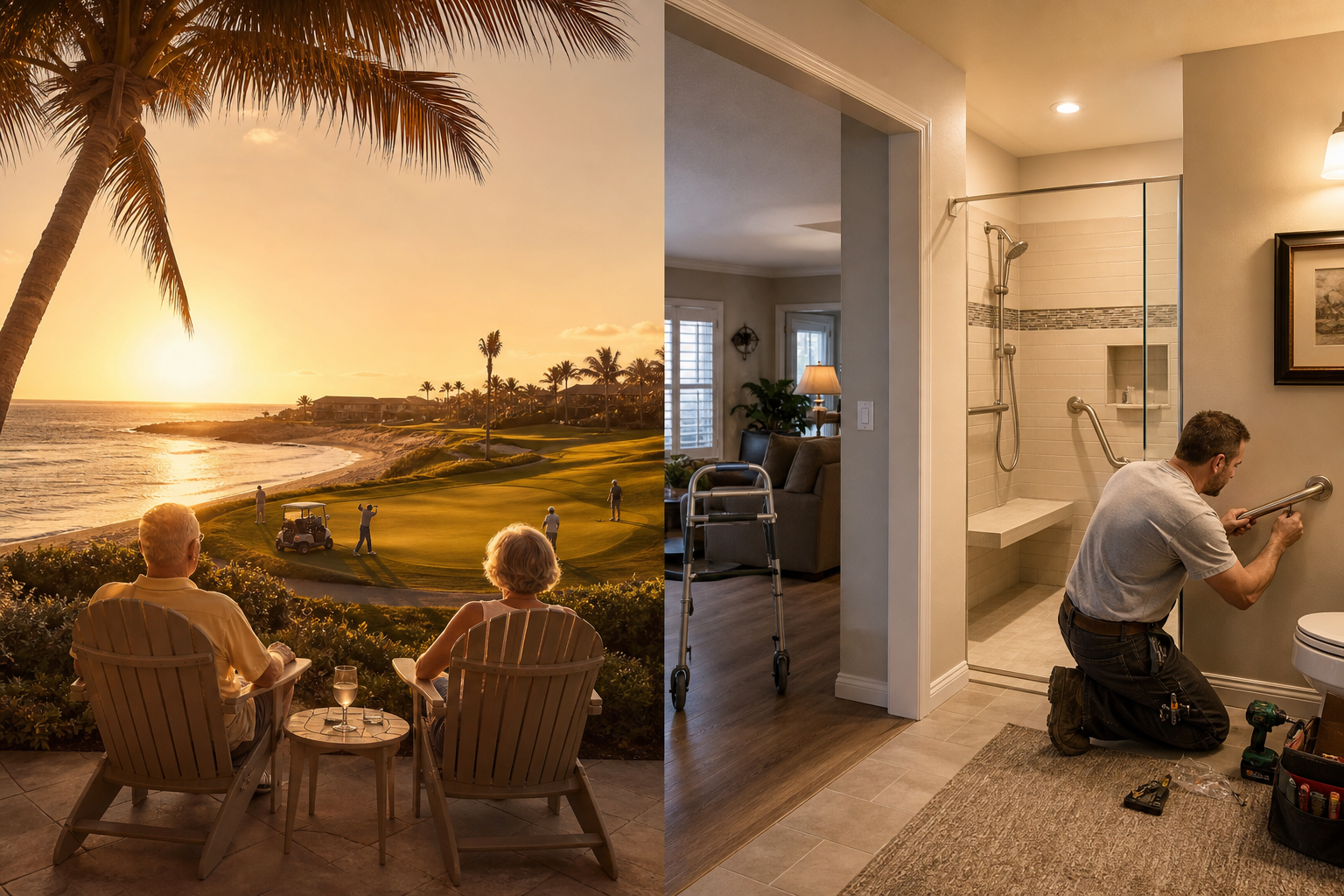
Why Traditional 'Best Places to Retire' Lists Miss What Matters for Aging in Place
Every year, a new wave of retirement rankings lands in your feed. U.S. News, WalletHub, Forbes, and Investopedia each publish their version of the best cities for retirees, and they all tend to agree on the same handful of metrics: cost of living, tax burden, climate, and access to healthcare. These are not irrelevant factors, but for the roughly 75% of people aged 50 and older who say they want to stay in their homes as long as possible — a figure cited in a 2021 AARP poll — they miss the single most decisive variable: whether the city's housing stock and home-modification infrastructure can actually support safe aging in place.
Consider what these lists typically weigh. WalletHub's 2026 ranking of the best states to retire, for example, allocates 40 points to affordability, 30 to quality of life, and 30 to health care. Pennsylvania ranked 8th overall, with a quality-of-life score of 5th nationally. But the ranking does not ask: does the typical home in Pennsylvania have a step-free entry? How many CAPS-certified contractors operate in Pittsburgh versus Phoenix? Can a family on a moderate income access a Medicaid Home and Community-Based Services (HCBS) waiver to pay for a walk-in shower? These questions are invisible to the standard methodology.
The AARP Livability Index, which uses a 0-to-100 scale with a 50 average across 61 indicators, comes closer. Its housing category measures the cost and availability of housing and the variety of housing options for people of all ages and abilities. But even AARP's framework does not explicitly score home-modification resources — the grab bars, widened doorways, stair lifts, and walk-in showers that turn an ordinary house into a safe long-term residence. Pittsburgh ranked 24th and Rochester, Minnesota ranked 14th in AARP's 2025 large-community category, but those rankings tell you little about whether a specific home in those cities can be retrofitted affordably.
This article takes a different approach. Instead of asking which city looks best on paper, it asks: which cities have the housing stock, the contractor infrastructure, the funding programs, and the home care ecosystem that make aging in place a realistic option? The evidence is clear that home modifications are a critical but overlooked factor for successful aging in place, and the rankings that ignore them are incomplete for families committed to keeping a parent at home.
The 6 Pillars of a Truly Senior-Friendly City: A Home-Modification Readiness Framework
To evaluate cities through the lens of aging in place, we need a framework that goes beyond the standard retirement-ranking categories. The Caring Senior Service model identifies six pillars of senior-friendly cities, and it is one of the few frameworks that explicitly includes home-modification resources as a core component rather than an afterthought.
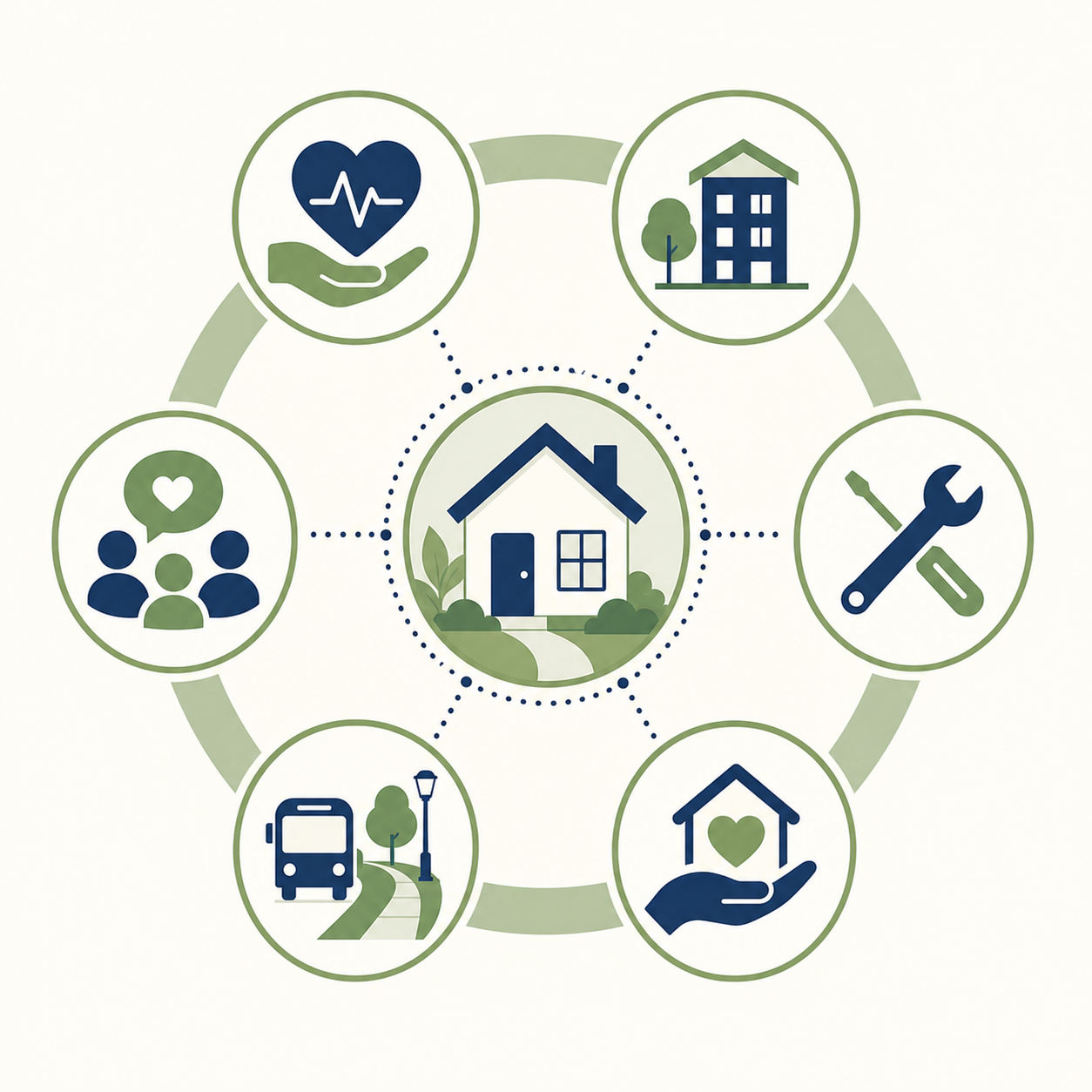
The six pillars are:
- Access to quality healthcare — including primary care physician density, hospital quality, and specialist availability.
- Affordable housing and cost of living — not just purchase price, but property taxes, utility costs, and the availability of single-story homes.
- Walkability and transportation — the ability to reach groceries, pharmacies, and medical appointments without driving.
- Safety and low crime rates — a baseline requirement for any older adult living alone.
- Social and community engagement — access to senior centers, volunteer opportunities, and age-friendly programming.
- Access to home care and aging-in-place support — including home health aide availability, home-modification resources, and caregiver support networks.
For the purposes of this article, the sixth pillar — home care and aging-in-place support — is the one that most traditional rankings neglect, and it is the one we will examine in the greatest detail. The other five pillars remain important, but they are already well-covered by existing lists. What is missing is a systematic way to evaluate a city's home-modification readiness and in-home care infrastructure.
Criteria That Measure Home-Modification Readiness
Home-modification readiness is not a single number. It is a composite of several distinct factors that determine whether a family can realistically retrofit a home for safe aging in place. Here are the specific metrics that matter.
Housing Stock Age and Single-Story Share
Older housing stock is not necessarily a disadvantage. In many older cities — particularly in the Northeast and Midwest — a large share of the housing stock consists of single-story ranch homes, bungalows, and row houses with fewer interior stairs. These homes often require fewer structural modifications than the multi-story townhomes and split-level houses common in newer Sun Belt developments. When evaluating a city, look at Census data on the median year of construction and the percentage of single-family homes with one story. A city with a high proportion of single-story homes built before 1980 may actually be more modification-friendly than a newer city dominated by three-story layouts.
CAPS-Certified Contractor Density
A Certified Aging-in-Place Specialist (CAPS) is a contractor who has completed NAHB training on home modifications for older adults and people with disabilities. The density of CAPS-certified contractors in a metro area directly affects both the availability and the cost of modification work. In cities with a high concentration of CAPS professionals, families can obtain multiple bids, schedule work more quickly, and benefit from contractors who understand universal design principles. In areas with few or no CAPS contractors, families may have to rely on general remodelers who lack specialized knowledge of grab-bar load requirements, wheelchair turning radii, or roll-in shower specifications.
The NAHB maintains a searchable CAPS directory, and while exact per-city counts change monthly, the general pattern is clear: older, denser metro areas with established home-remodeling industries tend to have higher CAPS density than rapidly growing Sun Belt suburbs where the housing stock is newer and the remodeling sector is less mature.
Permit Ease and Cost
Home modifications often require building permits, and the ease and cost of obtaining those permits vary dramatically by jurisdiction. Some cities have streamlined permitting processes for accessibility modifications, while others require the same review process as a full-room addition. When evaluating a city, research the local building department's process for permits related to grab bars, ramps, stair lifts, and bathroom modifications. A city that exempts accessibility modifications from standard permit fees or offers an expedited review process is significantly more modification-friendly than one that does not.
Availability of State and Local Funding Programs
The cost of home modifications can be substantial. Forbes Health reports typical ranges of $15 to $300 for grab bars, $1,500 to $3,500 or more for a walk-in shower, $2,000 to $5,000 for a straight stair lift, and $20,000 to $50,000 for a home elevator. For many families, these costs are prohibitive without financial assistance.
The availability of funding programs varies significantly by state. Key programs include:
- Medicaid HCBS waivers — coverage for home modifications varies by state and waiver type, and typically requires prior authorization.
- VA grants — the HISA grant covers medically necessary home modifications for veterans, while SAH and SHA grants provide funding for service-connected disabilities.
- USDA Section 504 Home Repair program — provides loans up to $40,000 and grants up to $10,000 for very-low-income homeowners aged 62 and older to remove health and safety hazards. Combined loan and grant amounts can reach $50,000, or $55,000 in presidentially declared disaster areas.
- State-specific programs — some states, including California and Iowa, operate their own home-modification assistance programs with varying eligibility criteria and funding levels.
A city located in a state with robust HCBS waiver coverage, active VA grant processing, and supplementary state programs is far more viable for a low-to-moderate-income senior than a city in a state with minimal funding options.
Prevalence of Accessible Housing Features
Some cities have a higher proportion of homes that already include accessibility features such as zero-step entries, wide doorways, lever-handle faucets, and bathrooms on the main floor. These features reduce the scope and cost of modifications needed. While comprehensive data on existing accessible features is not always available at the city level, the age and style of the housing stock can serve as a proxy. Cities with a large inventory of ranch-style homes, single-level condominiums, and age-restricted housing developments tend to have more move-in-ready options.
Criteria for In-Home Care Support Infrastructure
Home modifications are only half the equation. Even a perfectly modified home is not safe if the older adult cannot access the care services they need. Evaluating a city's in-home care support infrastructure requires looking at several specific metrics.
Home Health Aide Availability and Cost
The availability of home health aides varies widely by metro area. In cities with a large healthcare workforce and multiple home care agencies, families have more options and can often negotiate better rates. In rural areas and smaller cities, the pool of available aides may be limited, leading to longer wait times and higher costs. The cost of in-home homemaker services is one of the indicators WalletHub uses in its state-level rankings, and it varies significantly — Wyoming, for example, was cited for having the lowest cost of in-home homemaker services in the 2026 ranking.
Primary Care Physician Density
A strong ratio of primary care doctors per capita is essential for managing chronic conditions, coordinating specialist care, and preventing hospital readmissions. Forbes' 2026 analysis highlighted Pittsburgh for its excellent ratio of primary care physicians per capita, and Rochester, Minnesota for a fabulous ratio — not surprising given the presence of the Mayo Clinic. A city with a weak primary care infrastructure will force older adults to travel farther for routine care, which undermines the goal of aging in place.
Area Agencies on Aging and Caregiver Support Resources
Every region has an Area Agency on Aging (AAA) that serves as the primary entry point for older adults seeking information, referrals, and support services. The quality and breadth of AAA services vary by location. Some AAAs offer comprehensive caregiver support programs, respite care coordination, and home-modification counseling, while others have more limited capacity. When evaluating a city, contact the local AAA to ask about home-modification assistance programs, caregiver support groups, and the availability of options counseling.
Top Cities That Score Well on Home-Modification Readiness and In-Home Care
Applying the combined framework — home-modification readiness plus in-home care infrastructure — produces a different set of top cities than the standard retirement rankings. Two cities stand out across multiple data sources.
Pittsburgh, Pennsylvania
Pittsburgh appears on nearly every relevant list. Forbes' 2026 analysis reports a median home price of $238,000 — 42% below the national median of $409,000. The city has an excellent ratio of primary care doctors per capita, is very bikeable and walkable, and Pennsylvania exempts Social Security and most retirement income from state tax, with a flat 3.07% income tax rate. Investopedia's 2026 ranking of the best 100 cities for retirees placed Pittsburgh among 19 Pennsylvania cities in the top 100, and WalletHub ranked Pennsylvania 8th best state to retire overall.
From a home-modification perspective, Pittsburgh's older housing stock includes a high proportion of single-story and low-rise homes, and the city's established remodeling industry supports a relatively high density of CAPS-certified contractors. The presence of multiple Area Agencies on Aging in Allegheny County and surrounding counties provides a strong foundation for caregiver support and home-modification counseling.
Rochester, Minnesota
Rochester is anchored by the Mayo Clinic, which gives it a fabulous ratio of primary care doctors per capita and a world-class healthcare infrastructure. Forbes reports a median home price of $335,000 — 18% below the national median — and a low serious crime rate. The city is very bikeable, though it has cold winters and a more difficult tax climate, with income tax rates up to 9.85% for income above $337,930 per couple.
Rochester's home-modification readiness is supported by a strong healthcare-adjacent construction sector and Minnesota's relatively robust Medicaid HCBS waiver program. The city was ranked 14th in AARP's 2025 large-community category and is frequently cited by the Caring Senior Service framework as an example of a city with strong home care and aging-in-place support.
Other Cities Worth Considering
The Caring Senior Service framework also identifies Madison, Wisconsin; Boise, Idaho; Durham-Chapel Hill, North Carolina; Gainesville, Florida; Scottsdale, Arizona; and Jackson, Mississippi as cities with strong senior-friendly characteristics. Each of these cities has particular strengths — Madison for its walkability and healthcare access, Boise for its relatively affordable housing and growing healthcare sector, and Scottsdale for its concentration of age-restricted housing with existing accessibility features.
The table below summarizes how the top-scoring cities compare across the key dimensions of home-modification readiness and in-home care infrastructure.
| City | Median Home Price | PCP Density | CAPS Contractor Density | State Funding Strength | Walkability | Tax Climate |
|---|---|---|---|---|---|---|
| Pittsburgh, PA | $238,000 | Excellent | High | Moderate | Very walkable | Favorable (SS exempt) |
| Rochester, MN | $335,000 | Fabulous | Moderate | Strong | Very walkable | Challenging (up to 9.85%) |
| Madison, WI | $350,000 (est.) | Good | Moderate | Moderate | Walkable | Moderate |
| Boise, ID | $420,000 (est.) | Good | Low | Weak | Moderate | Favorable |
| Scottsdale, AZ | $550,000 (est.) | Good | Moderate | Weak | Car-dependent | Favorable |
How to Evaluate Any City for Aging-in-Place Readiness
Not every family is considering one of the cities on the list above. You may be evaluating your parent's current city or a smaller community that does not appear in national rankings. The following step-by-step framework allows you to assess any city for home-modification readiness and in-home care infrastructure using publicly available data.
- Check the AARP Livability Index housing score. Visit the AARP Livability Index website and enter the city or neighborhood. Look at the housing category score, which measures cost, availability, and variety of housing options. A score above 50 (the national average) indicates a relatively strong housing environment, but remember that this score does not explicitly measure home-modification resources.
- Search the NAHB CAPS directory for contractor density. Go to the NAHB CAPS directory and search by zip code or metro area. Count the number of CAPS-certified professionals within a 30-minute drive of the target home. A metro area with 10 or more CAPS listings is likely to have a competitive market for modification work.
- Contact the local Area Agency on Aging. Call or visit the website of the AAA serving the target city. Ask specifically about home-modification assistance programs, funding sources, and whether they maintain a list of vetted contractors. The quality of the response — how quickly they answer, how detailed the information is — is itself a signal of the local aging-in-place infrastructure.
- Research state Medicaid HCBS waiver coverage. Visit the state Medicaid website and search for Home and Community-Based Services waivers. Look for specific language about home modifications, including whether grab bars, ramps, and bathroom modifications are covered, what the annual or lifetime cap is, and whether prior authorization is required. This information changes annually, so verify the current year's coverage.
- Evaluate housing stock age via Zillow or Census data. Use Zillow's market reports or Census Bureau data to determine the median year of construction for homes in the target city. A city with a high proportion of homes built before 1980 may have more single-story ranches and bungalows, but may also have more deferred maintenance. Look for neighborhoods with a mix of older single-story homes and newer accessible-construction homes.
- Assess home health aide availability. Search for home care agencies in the target city and call three to five of them. Ask about current availability for new clients, hourly rates, and whether they have aides with experience in dementia care or post-hospitalization support. Long wait times or very limited availability are red flags.
State-Level Home Modification Funding Programs: A Comparison
The availability of funding for home modifications is one of the most variable factors across states. A family in one state may have access to multiple funding streams, while a family in a neighboring state with similar income and needs may have no options at all. Understanding these differences is essential for making an informed decision about where a parent should live.
The table below compares the major funding programs available at the federal and state levels. Note that state-specific programs change frequently, and eligibility criteria vary by county and income level.
| Program | Maximum Funding | Eligibility | Coverage Scope | Geographic Limitation |
|---|---|---|---|---|
| USDA Section 504 Loan | $40,000 | Very-low-income, age 62+, homeowner | Health and safety hazard removal | Rural areas only |
| USDA Section 504 Grant | $10,000 | Very-low-income, age 62+, homeowner | Health and safety hazard removal | Rural areas only |
| VA HISA Grant | Varies by need | Veteran with medical necessity | Medically necessary modifications | No geographic limit |
| VA SAH/SHA Grant | Varies by disability level | Veteran with service-connected disability | Home purchase, construction, or modification | No geographic limit |
| Medicaid HCBS Waivers | Varies by state | Income-eligible, meets nursing home level of care | Home modifications (varies by state) | State-specific |
| State-Specific Programs (e.g., CA, IA) | Varies by state | Varies by program | Home modifications | State-specific |
For a more detailed explanation of each funding program, including application steps and documentation requirements, see our comprehensive guides on paying for aging-in-place home modifications and funding sources for home modifications. These guides provide step-by-step instructions for navigating each funding stream, including sample application timelines and documentation checklists.
Making the Decision: What to Prioritize When Choosing a City for a Parent
The framework presented in this article is designed to help you ask better questions, not to give you a single correct answer. Every family's situation is different, and the tradeoffs between cities are real. A city with strong home-modification infrastructure but a higher cost of living may still be the right choice if the parent's existing home can be modified affordably. A more affordable city with weaker home care may work if the family can supplement care services out of pocket.
What the evidence consistently shows is that the specific home matters more than the city. A well-located single-story home in a city with moderate home-modification resources is almost always a better choice than a multi-story home in a city with excellent resources, because the scope and cost of modifications are dramatically lower. The best place to live for an elderly adult is not the city with the highest ranking — it is the city where the specific home can be made safe, and where the care services the parent needs are accessible within a reasonable distance.
For families weighing the financial tradeoffs between modifying a home and moving to an assisted living facility, our cost comparison guide provides a detailed analysis of the long-term costs of each option. And for families who have already chosen a city and need to find a qualified contractor, our guide to hiring a CAPS-certified specialist walks through the vetting process step by step.
Related reading
- How to Pay for Aging in Place Home Modifications: A Complete Guide to Grants, Loans, and Assistance Programs
- CAPS vs. General Contractor vs. Occupational Therapist: Who Should You Hire for Aging-in-Place Home Modifications?
- How Much Does It Cost to Hire a Certified Aging-in-Place Specialist? Real Pricing, What You Get, and How to Find Funding
Need a professional assessment?
Find a CAPS-credentialed professional or local aging services through our outbound resource list — we never name or rank individual contractors.
Find Local HelpNoticed something outdated or inaccurate on this page? Flag a correction. We review every report against CDC, NIA, and AARP HomeFit guidance before updating a page.