
Room checklist
Does Aging in Place Really Work? What the Evidence Says About Home Modifications, Falls Prevention, and Quality of Life
A 2025 systematic review confirms that home modifications are effective for fall reduction, functional independence, and quality of life — but only when personalized and combined with exercise and caregiver support. This article synthesizes the peer-reviewed evidence for families deciding whether a parent can safely remain at home.
The Evidence Base: What a 2025 Systematic Review Found
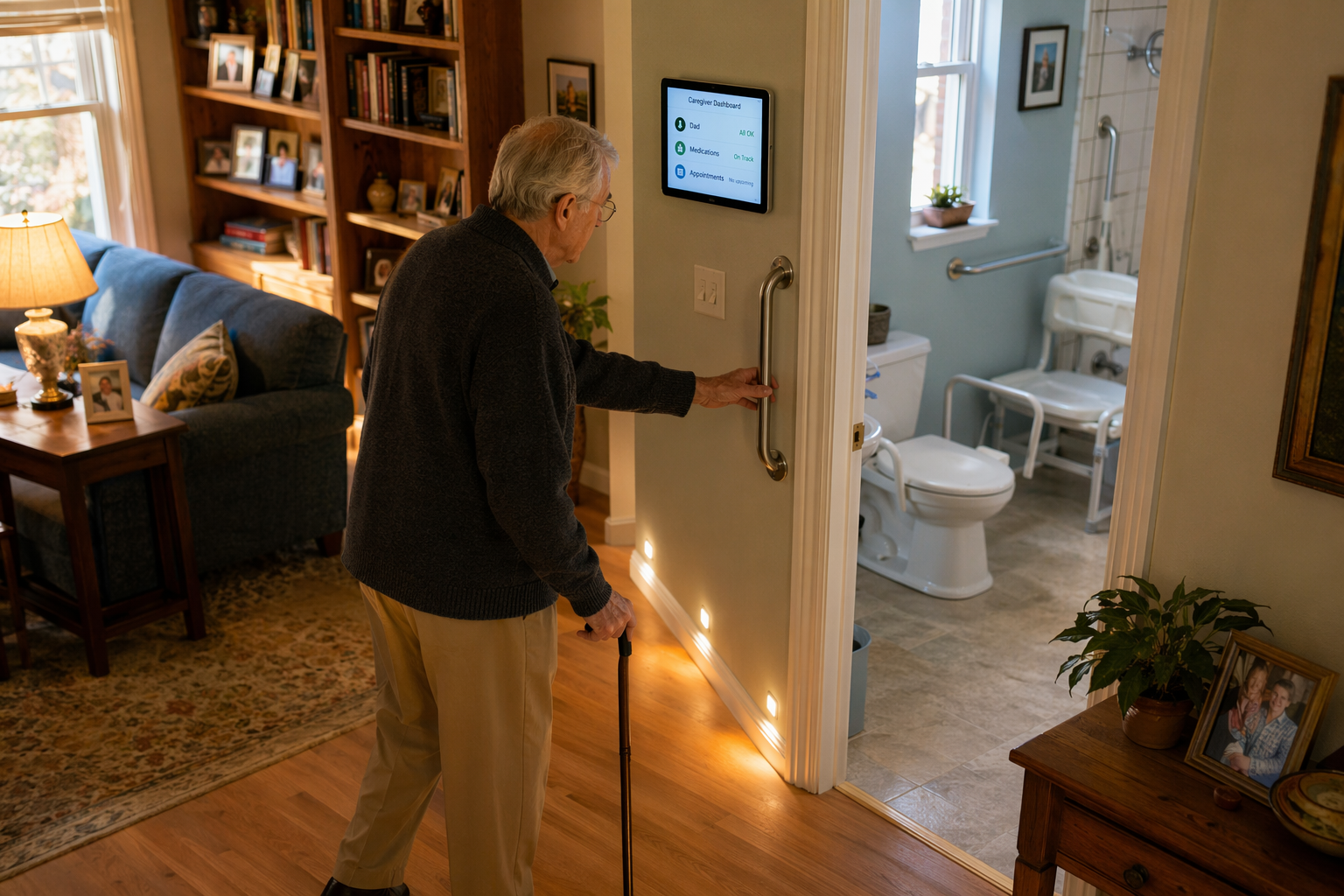
For families weighing whether a parent can safely remain at home, the question is rarely about desire — 87% of adults 65 and older say they prefer to age in place, according to AARP data cited in the review. The real question is whether the interventions available actually work. A 2025 systematic review by Su-Min Cha, published in the journal Healthcare, provides the most comprehensive answer to date.
The review applied PRISMA 2020 methodology to analyze 20 peer-reviewed studies on home modifications for aging in place. The headline finding: 13 of the 20 studies — 65% — confirmed that home modifications are effective for fall prevention, maintaining functional independence, and generating cost savings. The remaining seven studies highlighted the importance of housing accessibility and lifestyle factors, reinforcing that modifications do not work in isolation.
The review also underscores a sobering reality: only about 10% of U.S. homes are adequately designed for an aging population, according to U.S. Census Bureau data (Vespa et al., 2020). And 77% of home modification funding in the United States comes directly from families' own pockets, based on the 2019 American Housing Survey. The gap between preference and preparedness is vast — but the evidence shows that closing it is achievable.
What Works: Specific Interventions with Proven Results
Not all home modifications are equally effective. The systematic review, along with supporting studies, identifies a core set of interventions with the strongest evidence base. These interventions target the most common fall locations and the most significant risk factors.
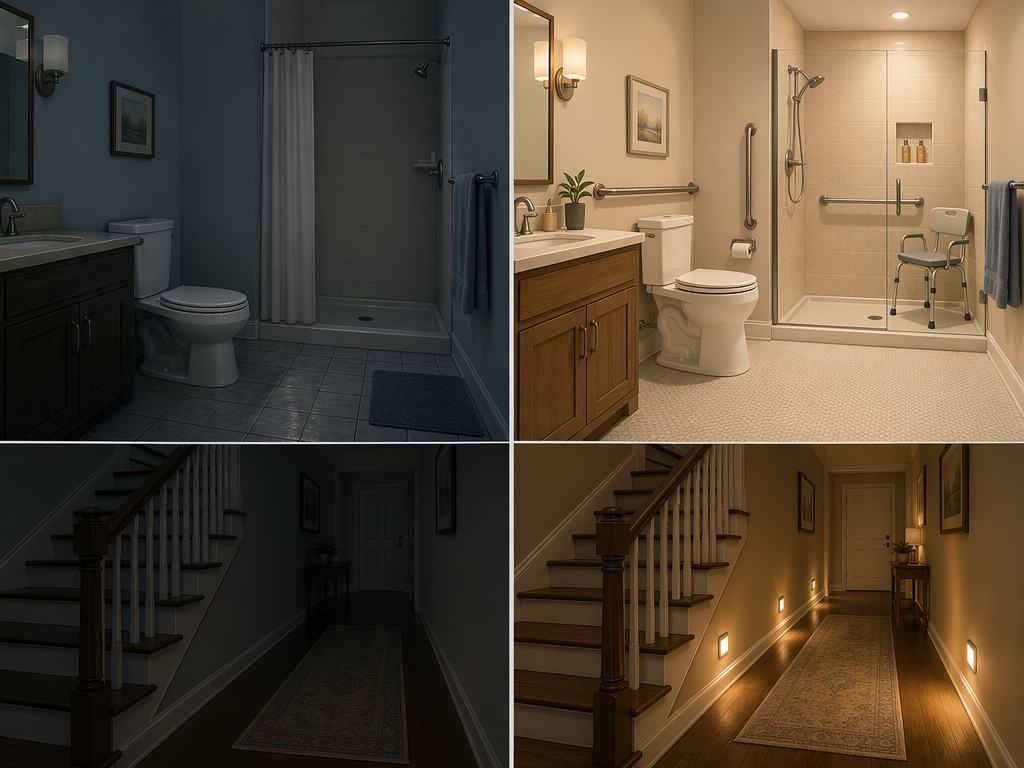
- Grab bars in bathrooms. Research by Levine et al. in the journal Human Factors found that older adults with grab bars were 75% more likely to maintain their balance when exiting the shower. The bathroom is the most dangerous room in the house for falls, and grab bars are the single most impactful structural intervention.
- Non-slip flooring. Replacing slick tile or worn carpet with non-slip surfaces in bathrooms, kitchens, and entryways addresses the environmental hazard most commonly cited in fall reports. The CDC identifies home hazards such as broken steps, throw rugs, and clutter as major contributors to the 3 million emergency department visits for older adult falls each year.
- Stair railings and improved lighting. Secure railings on both sides of staircases and motion-sensor night lighting along hallways and in bathrooms address two of the most common fall triggers: poor balance on stairs and inadequate visibility during nighttime trips to the bathroom.
For families ready to act, the bathroom is the highest-impact starting point. Our detailed guide on bathroom remodeling for elderly parents provides a phased decision framework for planning these changes.
By the Numbers: Fall Reduction, Care Hours, and Emergency Admissions
Three studies within the systematic review provide the most concrete evidence for what home modifications can achieve. Their findings are worth examining closely because they come from different populations and methodologies, yet converge on the same conclusion: modifications produce measurable, meaningful improvements.
| Outcome | Finding | Study & Population | Significance |
|---|---|---|---|
| Fall reduction | 39% reduction in falls | Stark et al. (2017) — U.S. randomized controlled trial | Experimental group vs. usual care; one of the strongest RCT designs in the field |
| Care hour reduction | 42% reduction in weekly care hours (informal care down 46%, formal care down 16%) | Carnemolla & Bridge (2019) — pre-post intervention study | Demonstrates that modifications reduce burden on both family and paid caregivers |
| Emergency admission reduction | 3% reduction per quarter in fall-related emergency admissions | Hollinghurst et al. (2022) — national longitudinal study of 657,536 older adults in Wales | Small per-quarter effect, but statistically significant (OR = 0.97, p < 0.001) across a very large population |
The 39% fall reduction from the Stark RCT is particularly noteworthy because it comes from a randomized controlled trial — the gold standard in clinical research. The 42% reduction in care hours from the Carnemolla & Bridge study speaks directly to the experience of family caregivers: fewer hours spent on hands-on assistance means more sustainable caregiving over the long term. And the Hollinghurst study, with its massive sample of over 650,000 older adults, demonstrates that even modest per-person effects can translate into significant population-level reductions in emergency department strain.
For a deeper look at the financial rationale behind these numbers, see our analysis of the cost of modifications versus the cost of a fall.
What Doesn't Work as Well: One-Time Fixes and Ignoring Cognitive Decline
The evidence is not uniformly positive, and responsible interpretation requires acknowledging where home modifications fall short. The systematic review identifies two patterns where interventions underperform.
- One-time modifications without follow-up. Installing grab bars and non-slip flooring and then never reassessing is significantly less effective than a model that includes periodic re-evaluation. As an older adult's mobility, balance, and cognitive status change, the home environment must adapt with them. A modification that works at age 75 may be inadequate at age 80.
- Modifications that ignore cognitive decline. This is the more consequential limitation. For older adults with dementia or mild cognitive impairment, standard safety modifications can sometimes be counterproductive if they disrupt the familiar environment. The next section explores this in detail.
Special Considerations for Cognitive Decline
For the significant subset of older adults with dementia or mild cognitive impairment, the standard approach to home modification needs adjustment. Research by Yeni (2022) and Jeon (2020), both included in the systematic review, found that gradual modifications that maintain a familiar environment consistently outperform abrupt changes.
The tension is real: safety modifications (grab bars, raised toilet seats, stair gates) can feel foreign and disorienting to someone with cognitive impairment, potentially increasing agitation or confusion. The solution is not to skip the modifications but to introduce them thoughtfully.
- Introduce changes one at a time. Adding a grab bar, waiting two weeks, then adding a shower chair gives the person time to adjust without feeling that their entire environment has been replaced overnight.
- Use familiar colors and materials. A grab bar in a color that matches existing bathroom fixtures is less jarring than a stark white hospital-style bar. Consistent flooring between rooms reduces the visual confusion that can trigger wandering or agitation.
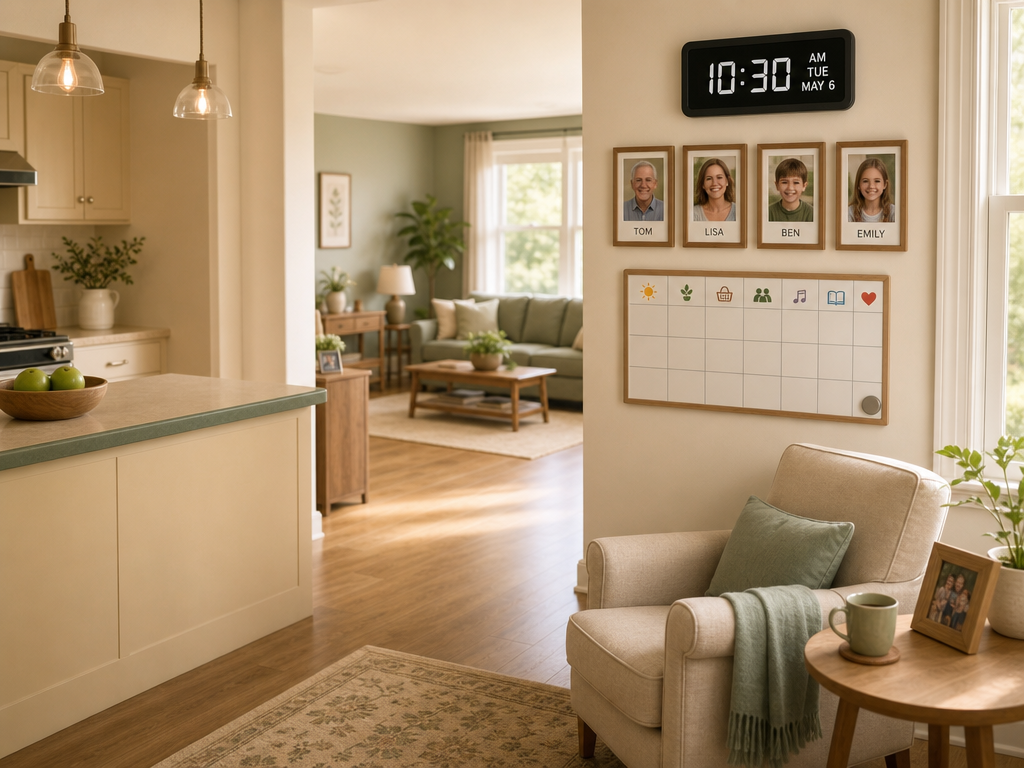
- Maintain visual cues. A large digital clock, a simple weekly calendar with icons, and a family photo wall can help maintain orientation. These are not structural modifications but they are essential components of a dementia-friendly home.
Cost-Effectiveness Evidence: Is It Worth the Investment?
Families understandably want to know whether the money spent on home modifications is justified. The systematic review includes a modeling study from New Zealand that provides a rigorous answer.
Wilson et al. (2017) conducted a cost-effectiveness analysis and found that home modifications cost NZD $5,480 per quality-adjusted life year (QALY) gained. This figure falls well below typical cost-effectiveness thresholds used in health economics (commonly NZD $50,000 per QALY in New Zealand, or $50,000–$100,000 in the U.S.). The uncertainty interval ranged from cost-saving to NZD $15,300, meaning the intervention is highly likely to be cost-effective even under conservative assumptions.
The greatest cost savings were observed in adults aged 75 and older who had already experienced a fall — precisely the population most families in this situation are concerned about. For this group, the cost of modifications is offset by avoided hospitalizations, reduced care hours, and delayed transitions to assisted living.
What's Missing from the Research
A responsible evidence review must also acknowledge what the research does not yet tell us. The Cha (2025) systematic review, while the most comprehensive to date, reveals several gaps that families and clinicians should keep in mind.
- Long-term sustainability data. Most studies follow participants for 12 to 24 months. We have limited evidence on whether the benefits of home modifications — reduced falls, lower care hours — persist for five years or longer. As an older adult's health status changes, the home environment may need repeated adjustments, and the research has not yet caught up to this reality.
- Effectiveness of smart home technologies. Motion sensors, automatic lighting, fall detection devices, and remote monitoring platforms are increasingly common, but the systematic review found insufficient evidence to evaluate their effectiveness as standalone interventions. These technologies are promising, but they have not yet been subjected to the same rigorous RCT methodology as grab bars and non-slip flooring.
- Personalized intervention models. The field lacks validated tools for matching specific modification packages to individual risk profiles. A 78-year-old with Parkinson's and a history of falls needs a different set of modifications than an 82-year-old with mild cognitive impairment who has never fallen. Current research tends to treat "home modifications" as a single category rather than a customizable toolkit.
These gaps do not undermine the existing evidence. They simply define the frontier of what we still need to learn. For families making decisions today, the evidence is clear enough to act on — but it also argues for a mindset of ongoing reassessment rather than a single installation-and-forget approach.
Practical Takeaways for Families
The evidence supports a clear, actionable path forward. Here is what families should prioritize based on the current research.
- Start with the bathroom. Grab bars, a raised toilet seat, a shower chair, and non-slip flooring address the highest-risk environment. This is the single most impactful place to begin.
- Combine modifications with exercise. The evidence consistently shows that home modifications work best when paired with balance and strength training programs. The physical environment and the person's physical capacity must improve together.
- Plan for ongoing reassessment. Schedule a home safety review at least once a year, and immediately after any hospitalization, fall, or noticeable change in mobility or cognition. What works today may not work in 18 months.
- Get a professional assessment. An occupational therapist or a CAPS-certified specialist can identify hazards and recommend modifications that a family member might miss. These professionals also understand how to tailor recommendations to specific health conditions. Our guide on occupational therapists versus CAPS specialists can help you choose the right assessor.
- Think beyond the physical structure. Home modifications are one layer of a broader care plan. For families evaluating whether a parent can safely remain at home, it is essential to consider the full picture — including caregiver support, monitoring technology, and community services. Our layered home intervention path guide provides a framework for evaluating all the options together.
The evidence is clear: aging in place works when it is done thoughtfully. The 2025 systematic review confirms that home modifications reduce falls, lower caregiving burden, and improve quality of life — but only when they are personalized, introduced gradually for those with cognitive decline, and combined with exercise and caregiver support. The gap between the 87% of older adults who want to age in place and the 10% of homes that are ready for it is not a reason to give up. It is a call to action — and the research now provides a reliable roadmap.
Related reading
- The Evidence Behind Aging in Place Home Modifications: What the Latest Research Says Works
- The Evidence for Aging-in-Place Home Modifications: What Research Says About Fall Prevention, Independence, and Cost Savings
- The Evidence for Home Modifications: What Research Says About Preventing Falls, Reducing Caregiver Burden, and Keeping Older Adults Independent
Need a professional assessment?
Find a CAPS-credentialed professional or local aging services through our outbound resource list — we never name or rank individual contractors.
Find Local HelpNoticed something outdated or inaccurate on this page? Flag a correction. We review every report against CDC, NIA, and AARP HomeFit guidance before updating a page.