Home Modifications That Keep Seniors Safe During Tropical Storms
Generic storm checklists miss the home-safety risks that become critical for older adults when a tropical storm hits. This article covers targeted modifications—from grab bars and backup power planning to slip-resistant flooring—that reduce hazards and fill the gap between basic supplies and actual senior safety.
The dangerous part of a tropical storm is not always the moment when the wind is loudest. In an older adult’s home, it may be the first trip to the bathroom after the lights go out. The hallway looks different. A throw rug has shifted. The bathroom floor is damp from a leaking window or wet shoes. A power cord that was harmless in daylight is now across the path between the bed and the toilet.
That is where many generic emergency preparedness tips for seniors during tropical storms come up short. Water, flashlights, batteries, medications, and evacuation routes still matter. But for an older adult who wants to stay safely at home as long as possible, preparedness also has to mean changing the house before the storm changes it for them.
One national poll of 2,256 adults ages 50 to 80 found that only 25% of older adults who used electrically dependent medical equipment had a backup power plan, a narrow but important finding because the survey does not fully represent adults over 80, who may have even greater vulnerability during outages.[1] The fall risk is just as plain: falls are the leading cause of injury death among adults 65 and older, and about 1 in 4 older adults falls each year.[2] A tropical storm does not create those risks from scratch. It removes the normal supports that keep them under control.
Start With What Fails When the Power Fails
A flashlight in a drawer is not a backup power plan. It may help someone find the hallway. It does not keep a CPAP machine running, charge a phone, power a medical alert device, support a refrigerated medication plan, or keep a mobility device ready for use.
The first home-safety pass should identify every device that depends on electricity and ask what happens if the power is out overnight, then into the next day. This includes obvious medical equipment, but also less dramatic items: lift recliners, stair lifts, adjustable beds, oxygen concentrators, hearing aid chargers, phone chargers, smart locks, Wi-Fi-dependent monitoring devices, and electric garage doors.
| What to Check | Why It Matters During a Tropical Storm |
|---|---|
| Medical equipment | A device that works every night can become unavailable the moment the electricity fails. |
| Phone and medical alert charging | A call button or phone is only useful if it remains charged and reachable. |
| Powered mobility or transfer aids | A stair lift, lift chair, or adjustable bed may leave someone stranded if there is no manual option. |
| Refrigerated medication | Medication continuity depends on both supply and storage, not only refills. |
| Cord layout | Backup batteries and chargers can add trip hazards if cords run across walking paths. |
For a parent who uses electrically dependent equipment, the practical question is not “Do they have batteries?” It is “Which device stops first, who knows it stopped, and what is the next safe move?” The answer may involve a portable battery power station, manufacturer-approved backup batteries, a generator used only according to safety instructions, a utility medical baseline program where available, or an evacuation decision made earlier than the rest of the neighborhood would make it.
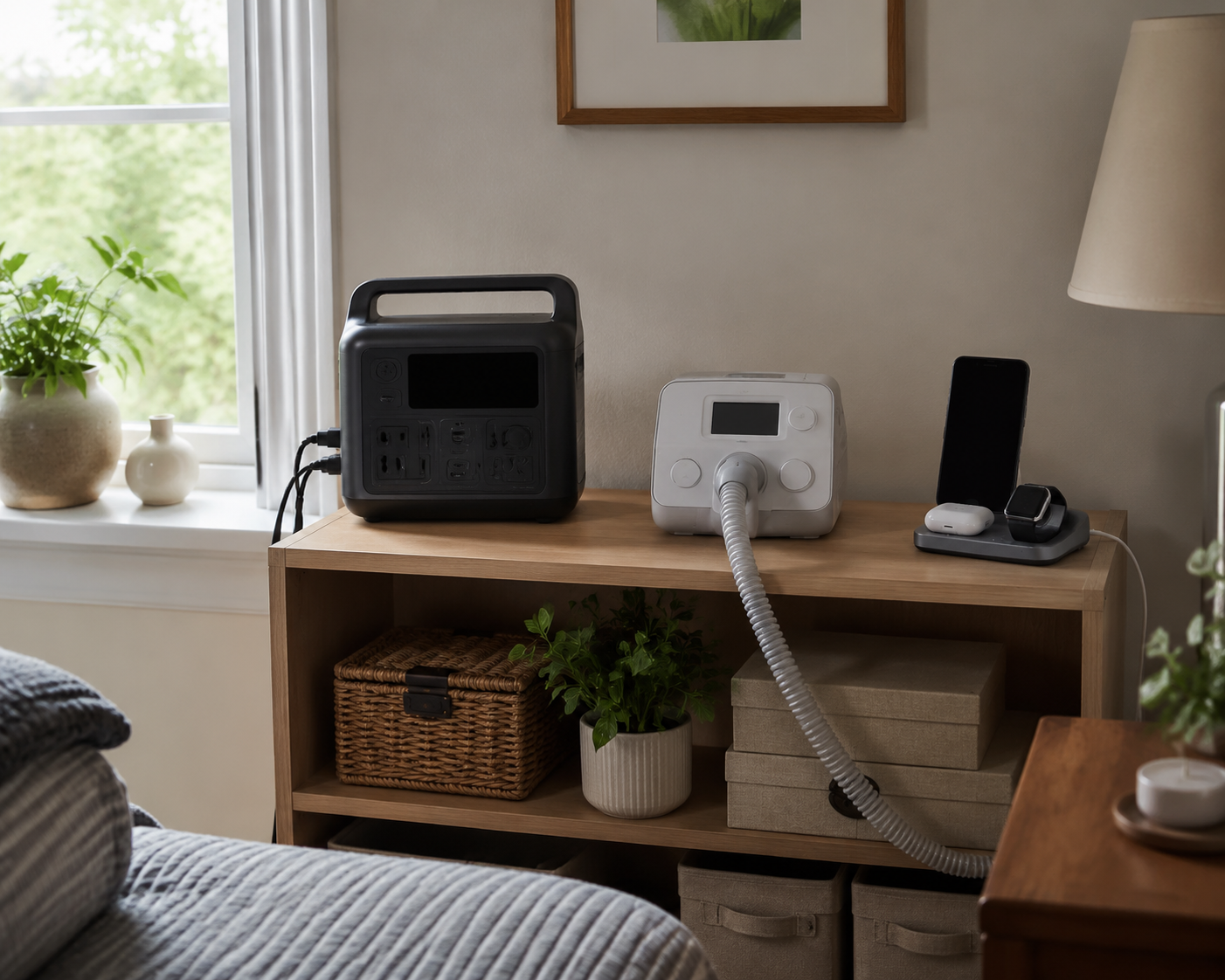
The modification here is partly equipment and partly layout. Put the backup battery where the older adult can reach it without bending behind furniture. Label what plugs into it first. Keep cords short, bundled, and out of the walking path. If a generator is part of the plan, it belongs outside and away from openings, not in a garage or enclosed area; the CDC’s hurricane safety guidance includes carbon monoxide prevention as a core storm hazard.[3]
Modify the Transfers, Not Just the Room
The bathroom deserves attention, but the bathroom is not the whole problem. The risky movement often begins at the bed: sitting up, standing, finding slippers, crossing a dark hallway, turning into a doorway, reaching the toilet, then reversing the whole route while tired.
Grab bars should be placed where hands actually search for support: beside the toilet, at the shower or tub entry, and along the path where a person turns or changes level. A towel bar is not a grab bar. A sink edge is not a grab bar. During a calm afternoon, people compensate with balance, patience, and lighting. At 2 a.m. during a power outage, those compensations disappear.
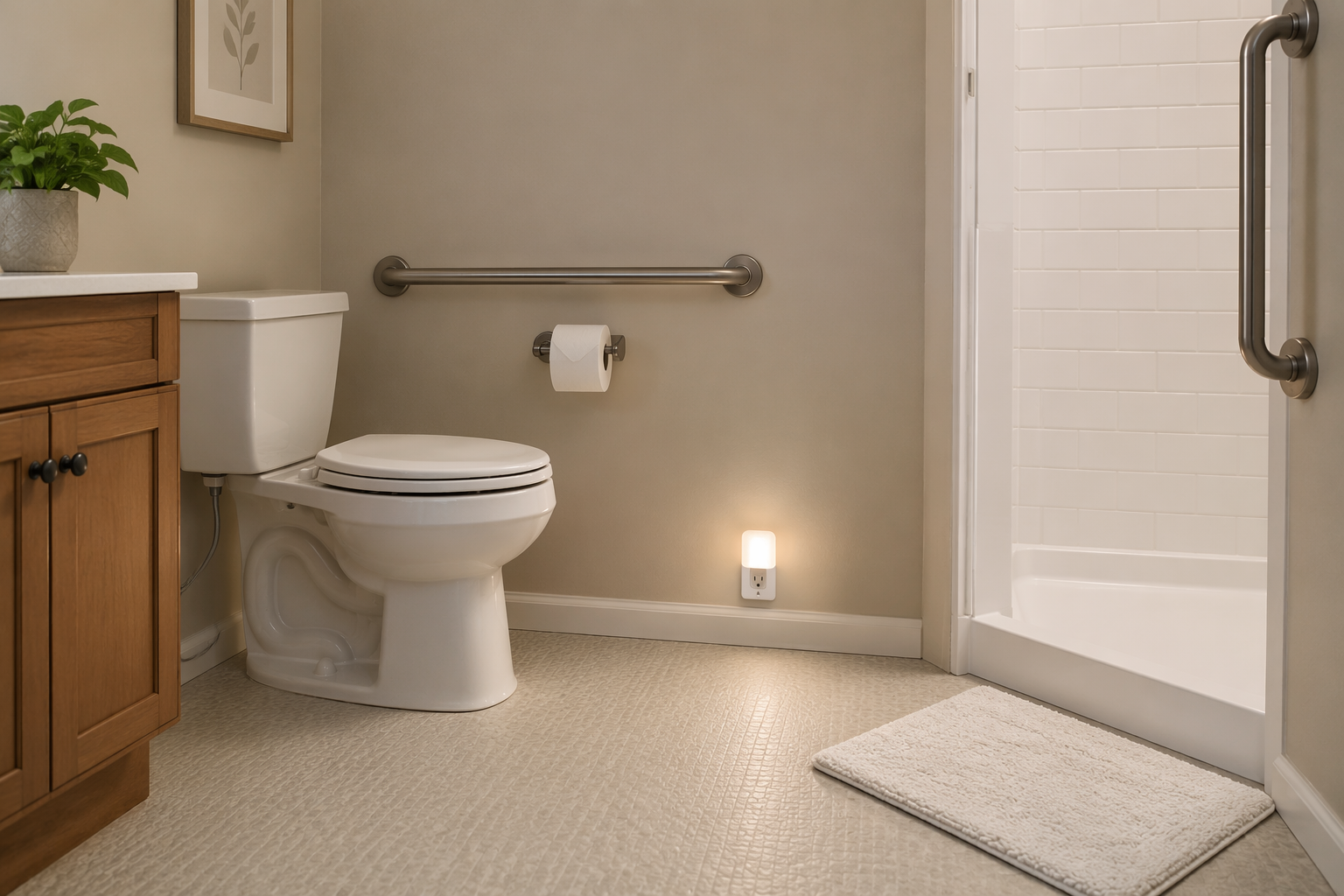
A storm-ready bathroom does not have to look institutional. It does need real supports. Install grab bars into proper backing or studs, use a raised toilet seat if standing from the toilet has become difficult, add a shower chair if bathing during extended outages or cleanup periods is likely, and replace slick bath mats with non-slip versions that do not curl at the edges. If the bathroom floor is polished tile, a slip-resistant surface treatment or flooring change may belong on the longer-term project list.
For renters, the options are narrower but not empty. Tension-mounted poles, non-slip mats, shower chairs, bedside commodes, and battery-operated lighting can reduce risk without opening walls. Suction grab bars should be treated cautiously: they may help with balance cues in limited circumstances, but they should not be trusted as weight-bearing supports unless the product and surface are explicitly designed for that use.
Light the Path Before Anyone Has to Find It
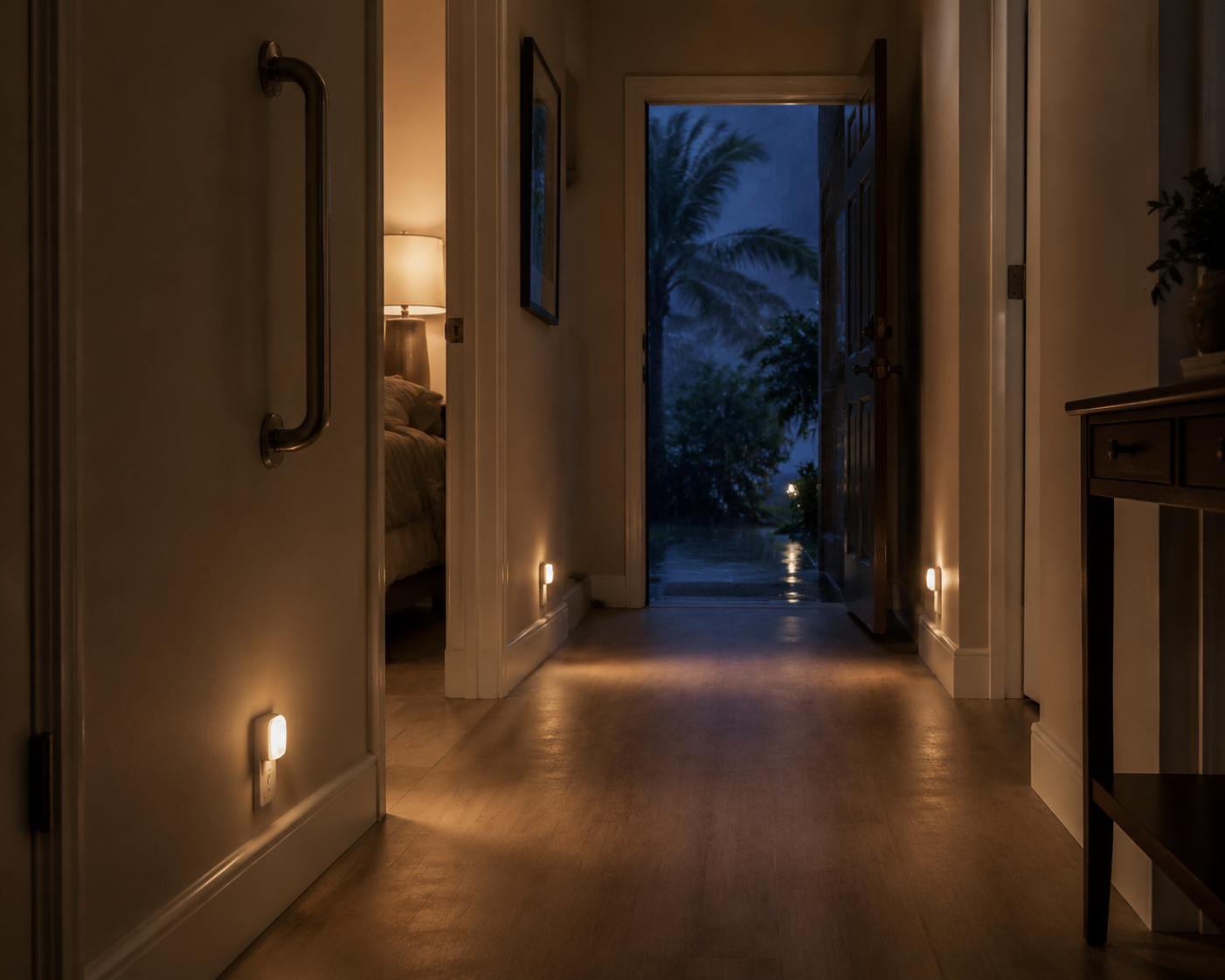
Motion lighting is one of the least glamorous storm modifications and one of the easiest to appreciate after the first outage. It helps because it does not rely on memory. No one has to find a flashlight, remember where spare batteries are stored, or hold a light while also holding a cane, walker, doorframe, or railing.
Battery-operated motion lights belong low along the bed-to-bathroom route, near the toilet, at the top and bottom of stairs, inside the main entry, near the medication area, and beside any interior step or threshold. Plug-in night lights are helpful on normal nights, but storm planning should assume the outlet may be dead. If the older adult uses a walker, keep the light placement wide enough that it does not narrow the path or become something to bump.
- Stand in the bedroom at night and walk the exact route to the bathroom.
- Remove rugs, cords, baskets, plant stands, and small tables from that route.
- Add battery-operated motion lights where the person turns, reaches, or changes flooring.
- Check the route while carrying nothing, then again with the cane, walker, or other device the person actually uses.
- Repeat the same pass from the living room to the bathroom and from the main chair to the medication area.
This is where reminders are weakest. A parent may know perfectly well that the flashlight is on the nightstand and still stand up without it because the bathroom feels only a few steps away. The safer design is the one that turns on without being asked.
Treat Floors and Entryways as Storm Equipment
Entryways become work zones during tropical storms. People bring in wet shoes, towels, pets, sandbags, patio cushions, mail, coolers, and sometimes branches or debris. If an older adult uses a walker or has low vision, that clutter changes the home faster than the forecast does.
A safer entry has a clear landing area, a stable chair or bench for changing shoes, a place to put wet items that is not the floor, and a non-slip mat that lies flat. Thin throw rugs are usually not worth defending during storm season. If they bunch, slide, or catch a walker foot, remove them before the first watch or warning.
Interior thresholds deserve the same suspicion. A half-inch transition between rooms may be manageable on a sunny day and still become a fall point when the lights are out and the person is tired. Temporary threshold ramps, beveled transitions, or a clearer alternate route can matter more than another case of bottled water.
Make Furniture Helpful, or Move It
Furniture becomes part of the safety system during a storm, whether anyone planned it that way or not. A heavy chair may be a useful rest point. A narrow side table may become an obstacle. A rolling cart may move just enough to betray someone who reaches for it.
Before storm season, walk the main routes and decide what each piece of furniture is doing there. Keep stable seating near the entry and bedroom. Remove small furniture from turns and doorways. Anchor tall bookcases, cabinets, and televisions where possible, especially in rooms where someone may shelter or sleep. If windows leak or break, move chairs, beds, and electrical items away from those openings before the weather arrives.
This is also a good moment to stop using furniture as a substitute for installed support. If a parent always pushes up from a towel bar, leans on a rolling bedside table, or grabs a dresser when turning, the house is already showing where the next modification belongs.
Windows, Doors, and the Outside Path Still Count
Window protection is not usually the first senior-specific modification people think about, but it affects the inside of the home: broken glass, water intrusion, moved furniture, blocked exits, and cleanup hazards. Permanent shutters, impact-rated windows, and professionally installed protection may be appropriate in storm-prone areas, but they are larger projects and may not be possible for renters or for families working under short timelines.
Renter-appropriate preparation is more modest: know which windows leak, move seating and bedding away from them, keep towels and a bucket accessible without blocking the path, and ask the landlord early about approved storm protection. Do not wait until a storm is named to discover that plywood, shutter hardware, or exterior access requires permission.
The outside route matters because evacuation, emergency medical access, and post-storm check-ins all depend on it. Clear the walkway, trim low branches where feasible, improve exterior lighting, and make sure house numbers are visible. Ready.gov’s older adult preparedness guidance emphasizes planning around support networks, transportation, and assistive devices; the home exterior is where those plans either connect or fail.[4]
What Can Be Done This Weekend
Not every family can renovate before hurricane season. Some adult children are working with a landlord. Some parents are not ready for visible changes. Some fixes require a contractor, an occupational therapist, a Certified Aging-in-Place Specialist, or a funding source. That does not make the smaller work symbolic. It means the first pass should reduce the hazards most likely to matter during the next outage.
| This Weekend | Needs More Planning |
|---|---|
| Remove loose rugs and cords from main walking paths | Replace flooring or add permanent slip-resistant surfaces |
| Add battery-operated motion lights along bed-to-bathroom routes | Rework lighting, switches, or hardwired backup systems |
| Move furniture away from windows and narrow turns | Install impact windows, shutters, or exterior drainage improvements |
| Set up a reachable charging and backup-battery station | Develop a medically appropriate backup power plan for equipment |
| Add non-slip mats and a shower chair where appropriate | Install properly mounted grab bars or remodel a bathroom entry |
Cost deserves honesty. A motion light and rug removal are not in the same category as a bathroom remodel, and exact pricing changes by region, labor market, home condition, and product choice. If a family is trying to prioritize, it is usually better to separate low-cost hazard removal, mid-level installed supports, and major structural work rather than pretend all “home modifications” are one decision.
The Supplies Still Matter, but They Are Not the Center of This Job
A home-modification plan does not replace the standard emergency kit. The CDC’s hurricane guidance and Ready.gov both cover core preparedness steps such as supplies, communication, evacuation, and health protection.[3][4] The Red Cross advises older adults to prepare medication information and keep at least a 30-day supply of medications when possible.[5] Those are still part of the work.
They are just not enough by themselves. A month of medication does not help if the pill organizer is across a dark room with a rug in the way. A charged phone does not help if it is on the kitchen counter and the person is stranded in a lift chair. An evacuation route does not help if the walker cannot get through the cluttered entry.
Older adults are disproportionately affected by disasters, which is why AARP’s disaster resilience work treats age, housing, transportation, social connection, and local planning as linked risks rather than separate topics.[6] Inside one home, that same logic becomes very concrete: the safest plan is the one that accounts for the body moving through the rooms under worse-than-normal conditions.
Use the Storm Pass to Protect Independence
The hardest part of this conversation is often not the hardware. It is the meaning attached to it. A grab bar can feel like an announcement that someone is becoming frail. A cleared hallway can feel like a daughter or son has started taking over the house.
Frame the work around storm function, not decline. The question is not “Can you still manage?” It is “What changes when the lights are out, the floor is wet, and help may be delayed?” That framing gives the older adult credit for ordinary competence while still admitting that a tropical storm makes the home less forgiving.
A senior-safe tropical storm plan is not only what sits in a plastic bin. It is the backup power plan that is already understood, the bathroom support already installed, the hallway that lights itself, the rugs already gone, the cords already managed, and the entry that stays clear when the weather turns bad.
References
- Emergency Preparedness Among Older Adults, National Poll on Healthy Aging, PubMed Central.
- Facts About Falls, Centers for Disease Control and Prevention.
- Stay Safe After a Hurricane or Other Tropical Storm, Centers for Disease Control and Prevention.
- Older Adults, Ready.gov.
- Older Adults Emergency Preparedness, American Red Cross.
- Disaster Resilience Toolkit, AARP, 2022.
Related decisions
Suggest a correction
We keep this content strictly product-neutral and reviewed against CDC STEADI, NIA, and AARP HomeFit guidance. If something here looks outdated, unclear, or inaccurate, tell us — this page does not carry open public comments, because it touches medical urgency, cost, or capacity-adjacent decisions where a discussion thread is a trust liability rather than a trust asset.
See the correction process on our editorial standards page →