
A Room-by-Room Severe Storm Safety Checklist for Seniors
Generic emergency checklists overlook the home itself. This guide provides a room-by-room severe storm preparedness plan for older adults, covering structural retrofits, a senior-specific supply kit, medical device backup plans, and a post-storm re-entry protocol that prevents falls, CO poisoning, and medication disruptions.
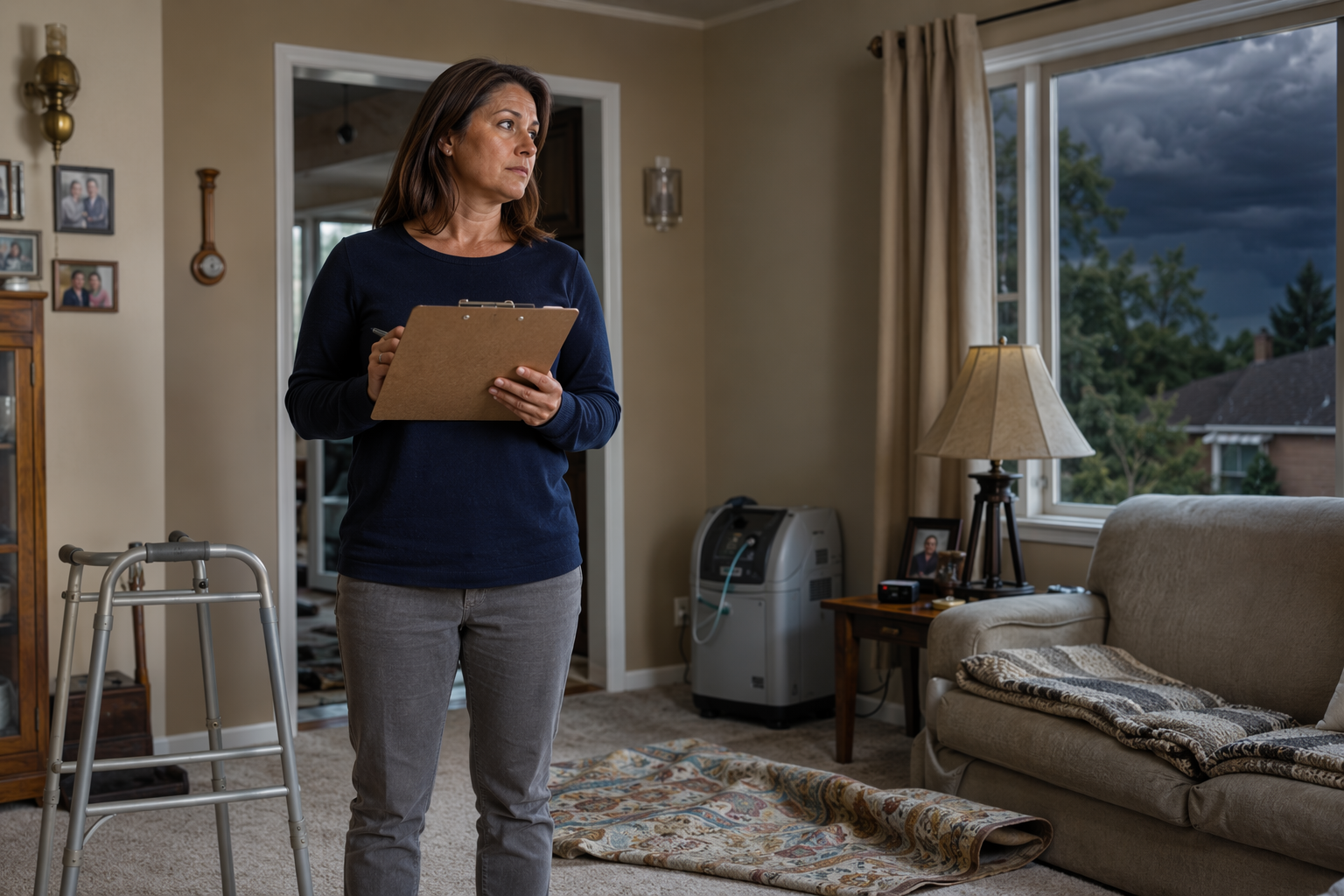
The first useful severe storm safety checklist for older adults does not start in the garage with bottled water. It starts in the house where your parent actually lives: the entry mat that curls at one corner, the lamp cord stretched behind the recliner, the bathroom that gets slick when humidity rises, the oxygen concentrator using the one outlet no one wants to disturb.
That house may look familiar enough to feel safe. Storms expose the parts everyone has learned to work around. A loose rug becomes a fall hazard when the lights go out. A missing handrail matters more when an older adult is carrying a flashlight and a medication bag. A generator in the wrong place can turn a power outage into a carbon monoxide emergency.
The age pattern in recent storm deaths is hard to ignore. AARP, citing Florida medical examiner data after Hurricane Ian, reported that 84 of 87 fatalities were people age 60 or older.[1] That does not mean every older adult is fragile, and it does not mean age alone explains every death. It does mean storm preparation for an aging household has to be more specific than “keep a flashlight nearby.”
The planning gap is just as concrete. AARP reported AARP/NORC survey findings that fewer than 3 in 10 older adults have a documented emergency plan.[1] Many families substitute memory for planning: “She has been through hurricanes before,” “Dad knows where the flashlights are,” or “The neighbor checks in.” Those may be true and still not answer who gets the prescriptions, where the walker goes during an evacuation, whether the medical device has battery backup, or who decides the home is safe to re-enter.
Walk the Home Before You Pack the Kit
Ready.gov’s older-adult preparedness guidance emphasizes making a plan that reflects medical, mobility, communication, transportation, and support-network needs.[2] For a caregiver, the simplest way to make that real is to inspect the home in the order your parent would use it during a long outage or evacuation decision.
Do this when the weather is calm. Bring painter’s tape, a marker, your phone, and a bag for items that need to be moved. Take photos of shutoff valves, device labels, medication bottles, and any area you need a contractor, landlord, or sibling to see. The goal is not to remodel the entire house in one afternoon. The goal is to remove avoidable hazards, identify the work that truly needs help, and leave instructions a tired person could follow with poor cell service.
| Area | What to Check | What to Fix Before Storm Season |
|---|---|---|
| Entryways and exterior access | Door thresholds, porch steps, railings, ramps, exterior lighting, drainage, keys, and evacuation path | Clear the exit route, secure loose mats, test locks, add lighting where possible, and make sure mobility devices can pass through without tight turns |
| Main living areas | Area rugs, cords, furniture spacing, flashlight placement, phone charging spot, recliner or chair height | Remove trip hazards, create a clear walking lane, place lighting within reach, and keep a cane or walker where the older adult actually sits |
| Bedroom | Path from bed to bathroom, bedside light, slippers, glasses, medication list, hearing aids, and emergency contact card | Clear the floor, put essentials within reach, add battery lighting, and make sure evacuation clothes and shoes are easy to find |
| Bathroom | Grab bars, tub or shower surface, toilet height, night lighting, towels on floor, and medication storage | Add nonslip surfaces, remove floor clutter, keep a flashlight nearby, and protect medication from water or heat |
| Kitchen | Food that can be opened without power, manual can opener, water access, stove controls, refrigerator medication, and cleanup supplies | Group storm food at reachable height, label refrigerator medications, and plan what must be discarded or replaced after a long outage |
| Stairways and hallways | Handrails, clutter, night lights, uneven flooring, walker clearance, and interior doors that stick | Clear both sides of hallways, secure cords, check rail stability, and use battery lights along the walking route |
| Utility and medical-device areas | Breaker panel, generator location, oxygen equipment, CPAP or other powered devices, extension cords, batteries, and supplier contacts | Label shutoffs, document device needs, arrange backup power, and set a safe generator placement rule before anyone is improvising outside |
Entryways and Exterior Access
Start where evacuation or return will happen. A front step that is merely annoying in July can become the point where an older adult falls while carrying a go-bag. Check whether the main exit is the safest exit, not just the door everyone normally uses.
- Remove loose mats from porches, garages, and interior doorways, or replace them with low-profile, nonskid versions.
- Check railings and ramp surfaces by putting weight on them, not just looking at them.
- Clear plant pots, hoses, extension cords, decorations, and stored items from the route between the bedroom, main exit, and car.
- Place a labeled spare key or lockbox plan where the designated helper can access it if the older adult cannot come to the door.
- Take a photo of the exterior approach before storm season so damage, blocked access, or new hazards are easier to spot afterward.
FEMA has warned, in older-adult preparedness materials summarized by AARP, that many older adults live in older homes or manufactured housing that may be less able to withstand severe weather.[1] That observation supports a practical distinction: caregivers can remove many hazards themselves, but structural questions need qualified help. If windows, roof condition, drainage, porch stability, or manufactured-home anchoring are concerns, the checklist item is not “assume it is fine.” It is “get the right person to inspect it before the storm is named.”
Main Living Areas: Make the Blackout Path Obvious
The living room is usually where the older adult waits, watches updates, charges a phone, and decides whether the storm is “really that bad.” It is also where small obstacles accumulate. Walk from the favorite chair to the bathroom, kitchen, bedroom, and exit with the lights off during daytime or with shades partly closed. Anything your foot touches is a storm hazard.
- Move electrical cords out of walking lanes and stop running chargers across open floor.
- Remove small tables, magazine baskets, footstools, and decorative objects that narrow the path used by a cane, walker, or rollator.
- Put a flashlight or battery lantern within arm’s reach of the main chair, then test whether the older adult can turn it on without reading tiny instructions.
- Keep shoes with backs, not loose slippers, near the sitting area if the person may need to move through debris, wet flooring, or a dark hallway.
- Write the Wi-Fi password, emergency contacts, utility account numbers, and pharmacy information on paper, because a phone battery is not a plan.
For the blackout-specific walking route, use a separate power outage fall prevention checklist for seniors and mark the same route on this storm checklist. The lighting plan and the fall-prevention plan should describe the same house, not two different ideal versions of it.
Bedroom: Plan for the 2 a.m. Decision
A storm problem at 2 a.m. is different from a storm problem at 2 p.m. The older adult may be half awake, without glasses, without hearing aids, and trying to reach the bathroom or phone. Set up the bedroom for that version of the person, not the fully alert one who insists everything is fine.
- Clear the exact path from bed to bathroom and from bed to the exit route.
- Place a battery light, glasses, phone, backup hearing aid batteries, and a written contact card on the same side as the usual exit from bed.
- Keep a packed change of clothes and sturdy shoes in one reachable place, not split between closet, dresser, and laundry room.
- If the person uses a walker, cane, or transfer aid, park it where it cannot roll away or become blocked by a door.
- Attach a current medication list and allergy list to the go-bag, then keep a duplicate in the bedroom.
If your parent resists moving items because “I know where everything is,” do not argue about independence in the abstract. Ask them to sit on the bed, turn toward the usual exit side, and reach for what they would need if the power failed. The gaps become visible without turning the conversation into a lecture.
Bathroom: Treat Water, Darkness, and Urgency as One Hazard
Bathrooms are where storm preparedness and fall prevention meet. The danger is not only standing water from a leak. It is urgency, poor lighting, wet tile, medication side effects, and a person who may be trying not to bother anyone.
- Install secure grab bars where the older adult actually transfers, rather than relying on towel bars or shower doors.
- Use nonslip surfaces in the tub or shower and remove loose bath mats that slide or bunch.
- Keep a battery light in or near the bathroom, with a second light along the route from the bed.
- Move medications and supplies away from areas likely to get wet, overheated, or inaccessible if the bathroom is damaged.
- Stock incontinence products, wipes, gloves, and disposal bags as storm supplies, not as an afterthought someone has to locate on day three.
A raised toilet seat, shower chair, or handheld shower may already be part of daily care. Before storm season, check whether those items are stable, clean, and usable during a water disruption. Equipment that is technically present but stored in a closet will not help during an outage.
Kitchen: Prepare for Medication, Hydration, and Reach
Universal emergency advice about water, shelf-stable food, a manual can opener, and flashlights still applies. The older-adult version adds a few less glamorous questions: Can your parent open the food? Can they reach it without climbing? Are any medications refrigerated? Would they drink enough if the house gets hot and no one is prompting them?
- Place storm food, water, cups, utensils, and the manual can opener between waist and shoulder height.
- Choose foods that match dental, swallowing, diabetes, kidney, cardiac, or low-sodium needs already present in the household.
- Label refrigerated medications and write down what the pharmacy or prescriber says to do if cooling is interrupted.
- Keep paper towels, disinfecting supplies, trash bags, and gloves together for cleanup, but do not expect an older adult to handle floodwater or spoiled food alone.
- If the person has trouble sensing thirst or remembering fluids, assign check-in responsibility instead of hoping they will self-monitor during stress.
If heat is a likely post-storm problem, cooling is part of storm preparation. Caregivers planning for extended outages can also use a seasonal heat-wave cooling and fall-prevention plan for seniors to decide when staying home has become unsafe.
Stairways and Hallways: Protect the Routes, Not Just the Rooms
Hallways and stairs are easy to overlook because no one “uses” them in the way they use a bedroom or kitchen. During a storm, they become the whole safety system. They connect the older adult to the bathroom, phone, exit, medication, and caregiver.
- Clear laundry baskets, storage bins, shoes, pet bowls, and small rugs from hallways.
- Check both ends of each handrail for looseness and repair wobbling before storm season.
- Use battery-operated lights or plug-in lights with battery backup along the bed-to-bathroom and bed-to-exit routes.
- Make sure walkers and rollators fit through the route after furniture is moved for storm supplies.
- Decide in advance whether stairs are off-limits during an outage, and move essential supplies to the level where the older adult will stay.
If the home has a second floor and the older adult has any mobility limitation, do not wait for a tornado warning or flood alert to debate sleeping arrangements. The safer temporary bedroom may be a recliner, guest room, or first-floor setup that feels less ideal but eliminates a dangerous stair trip in the dark.
Utility and Medical-Device Areas Need Their Own Plan
This is where generic checklists most often fail older adults. “Charge your devices” is not enough if the household depends on oxygen equipment, a CPAP machine, a power wheelchair, a refrigerated medication, a stair lift, a medical alert system, or a phone that is also the emergency lifeline.
Ready.gov advises older adults to plan around medical equipment, assistive devices, transportation, communication needs, and support networks.[2] The Red Cross similarly tells older adults to plan for medical, mobility, and communication needs before emergencies, not during them.[3] In practice, that means every powered medical item needs a written answer to four questions: What does it do, how long can it run without wall power, who supplies it, and what happens if power is out longer than expected?
| Item | Write Down Before Storm Season | Decision to Make Now |
|---|---|---|
| Oxygen concentrator or oxygen supplies | Supplier name, emergency number, prescription details, backup oxygen instructions, and whether evacuation changes the oxygen plan | Who calls the supplier, when to switch to backup supply, and when the home is no longer safe without power |
| CPAP, BiPAP, nebulizer, or other respiratory device | Power requirements, battery option, cleaning needs, and provider contact | Where the device will run during an outage and whether backup power is sufficient |
| Power wheelchair, scooter, or stair lift | Charging time, manual-release instructions, backup mobility option, and repair contact | Whether the older adult can safely remain home if the device cannot be used |
| Medical alert system | Backup battery duration if known, monitoring contact, and cellular or landline dependence | How the older adult calls for help if the system fails |
| Refrigerated medication | Medication name, storage instructions from pharmacy or prescriber, and refill information | Who checks temperature exposure and who replaces medication if needed |
Generator safety belongs in this same plan, not in a separate garage conversation. The CDC says portable generators must be placed at least 20 feet from any window, door, or vent to help prevent carbon monoxide poisoning.[4] That rule should be written on the generator, in the storm folder, and in any text sent to relatives or neighbors who might “help” by setting it up.
- Never run a generator indoors, in a garage, on a porch, or near windows, doors, or vents.
- Install and test carbon monoxide alarms before storm season, especially near sleeping areas.
- Use the generator only according to manufacturer instructions and local safety requirements.
- Do not let an older adult be the person responsible for fuel handling, cord placement, or nighttime generator checks if balance, strength, vision, or cognition is a concern.
- If a neighbor provides generator help, make the 20-foot placement rule explicit before the outage.
Backup power also needs limits. A battery that runs one device for part of a night is useful information, not a guarantee that staying home is safe. If a device is life-sustaining, ask the medical supplier and clinician what outage duration, oxygen level, heat exposure, or access problem should trigger evacuation or relocation. Write the answer down while offices are open.
Build the Senior-Specific Storm Kit Around Continuity of Care
A storm kit for an older adult still needs the ordinary supplies: water, food, flashlight, batteries, phone charger, radio, cash, copies of documents, and basic first aid. Do not spend so much attention on those items that the care-specific supplies get squeezed into the last five minutes.
The medication standard should be more ambitious than “enough for the weekend.” The American Red Cross recommends that older adults preparing for evacuation or extended isolation have a 30-day supply of prescription medications.[3] Insurance rules, refill timing, controlled substances, refrigeration, and prescriber policies can complicate that, which is exactly why the medication plan has to be handled before the storm track is on television.
- Prescription medications: work toward a 30-day supply when possible, with a current medication list, doses, prescriber names, pharmacy phone number, allergies, and refill schedule.
- Medical-device documents: include equipment model, supplier contact, prescription or order information, backup-power instructions, and oxygen details if applicable.
- Hearing and vision supplies: pack hearing aid batteries or chargers, backup glasses, magnifier, cleaning cloths, and any communication cards needed if hearing is limited.
- Mobility supplies: include cane tips, walker glide caps if used, wheelchair charger, transfer belt if prescribed, and a lightweight blanket or cushion for evacuation waiting areas.
- Personal care supplies: pack incontinence products, wipes, gloves, skin-protection items, denture supplies, and disposal bags.
- Caregiver information: include names, phone numbers, relationship, distance from the home, who has a key, who can transport, and who is authorized to speak with providers if needed.
The kit should be packed so someone else can use it. A sibling, neighbor, EMS worker, or shelter volunteer should not have to interpret a drawer full of pill bottles or guess which charger belongs to which device. Label bags in plain language: “morning medications,” “hearing aids,” “oxygen papers,” “bathroom supplies,” “phone charger.”
Put the Support Network in Writing
Preparedness advice often says to “have a support network.” For an older adult living alone, that sentence has to become assignments. Ready.gov recommends that older adults build a support network and share emergency plans with it.[2] The useful version names who does what.
| Task | Primary Person | Backup Person |
|---|---|---|
| Calls before the storm to confirm medication, device, and transportation status | Name and phone | Name and phone |
| Moves exterior objects, checks entry path, and confirms generator placement plan | Name and phone | Name and phone |
| Picks up prescriptions or contacts the pharmacy | Name and phone | Name and phone |
| Transports the older adult if evacuation or relocation is needed | Name and phone | Name and phone |
| Checks the home before the older adult re-enters | Name and phone | Name and phone |
Paper still matters. Put one copy on the refrigerator, one in the go-bag, one with the main caregiver, and one with the person most likely to arrive first. If the older adult uses a smartphone comfortably, add the same contacts there, but do not make the phone the only copy.
Post-Storm Re-Entry Is a Safety Protocol, Not a Homecoming
The wind stopping is not the same as the home being safe. For older adults, the return period can concentrate the hazards that generic storm checklists barely mention: carbon monoxide, wet flooring, spoiled medication, dark rooms, damaged stairs, disrupted oxygen supply, and a caregiver who is trying to make decisions while everyone is tired.
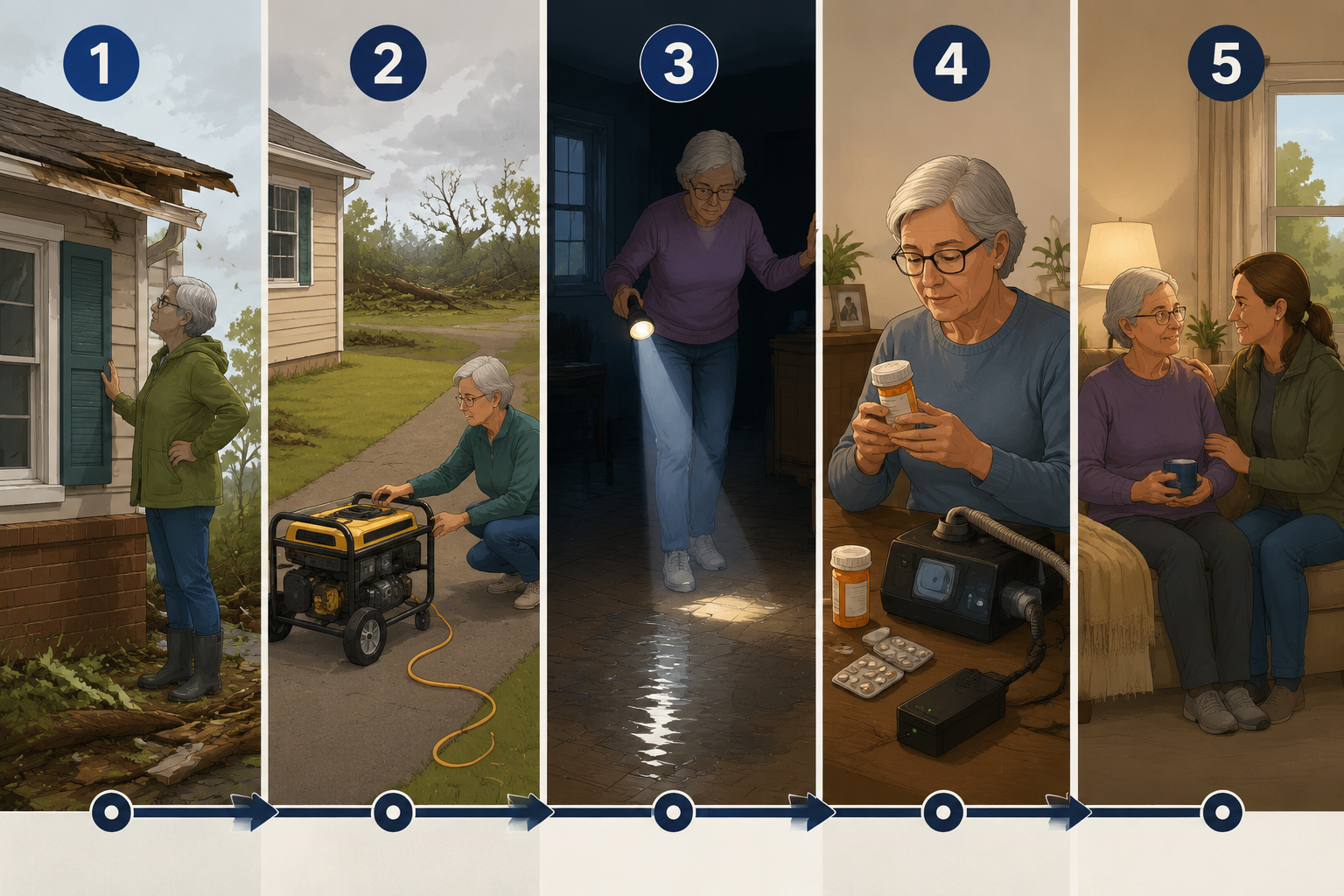
Use a sequence. Do not let the older adult walk in first because they are anxious to see the house. Do not let a helpful neighbor start a generator near a window. Do not restart ordinary routines until the medical and fall hazards have been checked.
- Confirm the home is safe to approach. Look for downed lines, visible structural damage, flooding, unstable steps, broken glass, shifted ramps, blocked exits, or standing water before anyone with limited balance or mobility gets out of the car.
- Keep carbon monoxide risk out of the house. Follow the CDC generator rule: at least 20 feet from any window, door, or vent, and never inside a garage, porch, or living area.[4]
- Light the walking route before walking it. Use a flashlight or lantern to inspect floors, rugs, thresholds, hallway clutter, bathroom tile, and stair edges before the older adult moves through the home.
- Check medication access. Confirm prescriptions are present, dry, and usable; check refrigerated medications according to pharmacy or prescriber instructions; and identify any refill or replacement need before pharmacies are overwhelmed.
- Inspect medical devices and power sources. Confirm oxygen equipment, CPAP or other devices, chargers, batteries, medical alert systems, and backup plans are functioning before the older adult is left alone.
- Reopen the home slowly. Restore one safe living zone first: a lit path to a chair, bathroom, bedroom or sleeping area, phone, medications, water, and exit.
CDC hurricane safety guidance warns about hazards that remain during cleanup and recovery, including carbon monoxide poisoning, unsafe water, injuries, and other post-storm dangers.[4] For an older adult, those warnings should translate into a rule: re-entry is a caregiver task unless the home has already been checked by someone steady, rested, and able to recognize hazards.
For the fall-risk side of re-entry, use a tropical-storm fall prevention guide for older adults alongside this storm checklist. The same puddle, extension cord, or dim hallway that looks like minor inconvenience to a younger adult can decide whether an older adult remains independent after the storm.
A Caregiver’s Final Pass Before Storm Season
After the room-by-room walk-through, do one final pass as if you are the person getting the call at 9 p.m. The power is out. Cell service is weak. Your parent says the house is “mostly fine.” Ask what you would need to know without being there.
- Can your parent reach light, phone, glasses, hearing aids, shoes, bathroom, water, medication, and exit without crossing a hazard?
- Does every medical device have a written outage plan, supplier contact, and backup decision point?
- Are prescriptions, personal care supplies, mobility supplies, and medical documents packed for more than a short interruption?
- Does every helper know the generator placement rule and who is responsible for checking carbon monoxide alarms?
- Is there a named person who checks the home before your parent returns or resumes normal routines?
For older adults, severe storm safety is not a bigger emergency kit. It is a prepared home, a medical continuity plan, and a careful return protocol that prevents the hazards most likely to appear after the headline weather has passed.
References
- How Older Adults Can Prepare for Fires, Hurricanes and Other Disasters — AARP
- Older Adults — Ready.gov
- Emergency Preparedness for Older Adults — American Red Cross
- Hurricane Safety — CDC
Related decisions
Suggest a correction
We keep this content strictly product-neutral and reviewed against CDC STEADI, NIA, and AARP HomeFit guidance. If something here looks outdated, unclear, or inaccurate, tell us — this page does not carry open public comments, because it touches medical urgency, cost, or capacity-adjacent decisions where a discussion thread is a trust liability rather than a trust asset.
See the correction process on our editorial standards page →