
Room checklist
What Home Modifications Actually Work? An Evidence-Based Guide to Which Aging-in-Place Upgrades Reduce Falls and Improve Independence
A 2025 systematic review found that 65% of studies confirm home modifications are effective for fall prevention and independence. This guide translates the research into actionable recommendations for adult children deciding which upgrades to prioritize after a parent's fall or mobility decline.
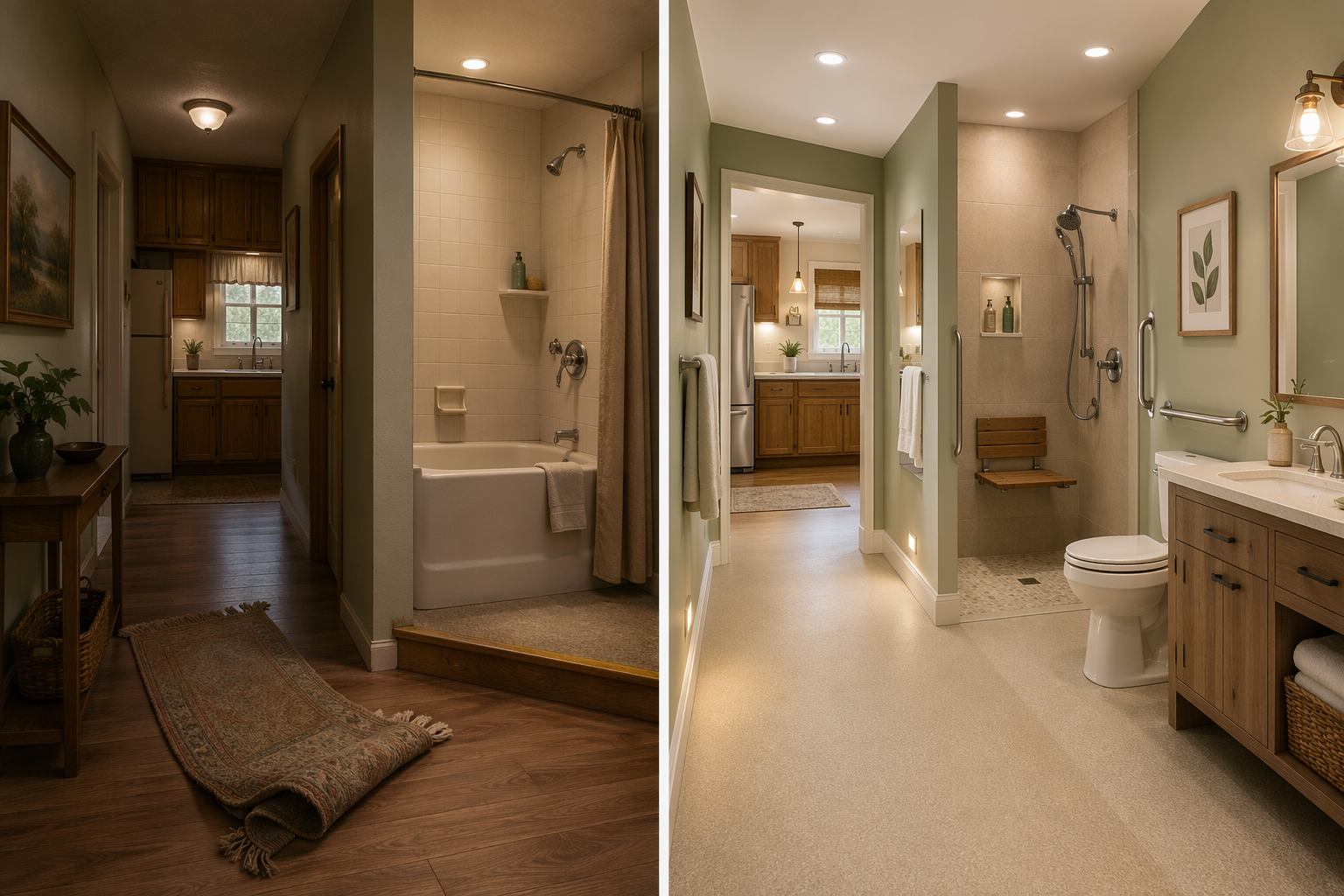
The Evidence Is Clear: Home Modifications Work
When you are deciding which home upgrades to prioritize for a parent after a fall or mobility decline, the first question is usually the hardest: Do these modifications actually make a difference, or are they just expensive wish-list items? A 2025 systematic review provides a definitive answer. The review, published in PMC, analyzed 20 studies on home modifications for aging in place and found that 13 of them — 65% — confirmed that modifications are effective for fall prevention, functional independence, and cost savings.
This is not a single small trial or an opinion piece. The review included five randomized controlled trials rated as excellent quality on the PEDro scale, alongside 15 non-randomized studies. The conclusion is consistent across multiple research designs: modifying the home environment is a legitimate, evidence-backed strategy for keeping older adults safer and more independent.
This guide translates that research into a practical framework. You will learn which specific modifications have the strongest evidence behind them, how much they can reduce fall risk, and how to prioritize your budget for maximum impact.
What the Research Says About Fall Reduction
The most compelling evidence for home modifications comes from studies that measure actual fall rates before and after changes are made. Three studies in particular stand out for their scale and rigor.
The Home Assessment and Renovation Program (HARP) randomized controlled trial, led by Stark et al. in 2017, is one of the strongest individual studies in the field. It found that participants who received home modifications experienced a 39% reduction in falls compared to the control group. This is not a marginal improvement — it is a near-40% drop in one of the most dangerous events an older adult can experience.
A more recent program evaluation by Hawkins et al. (2024) reported even more striking results: 79% of participants reported no falls at all after their homes were modified. While this was not a randomized trial, the magnitude of the effect is consistent with the HARP findings and adds real-world weight to the evidence.
Perhaps the most population-level evidence comes from Hollinghurst et al. (2022), who analyzed data from 657,536 older adults in Wales. They found that home safety assessments and modifications were associated with a 3% reduction in fall-related emergency admissions per quarter. That may sound small, but across a population of that size, it translates to thousands of avoided hospital visits every year.
| Study | Design | Key Finding | Population |
|---|---|---|---|
| Stark et al. (2017) — HARP RCT | Randomized controlled trial | 39% reduction in falls (intervention vs. control) | Community-dwelling older adults |
| Hawkins et al. (2024) | Program evaluation | 79% of participants reported no falls post-modification | Older adults receiving home modifications |
| Hollinghurst et al. (2022) | Population-level cohort study | 3% reduction in fall-related emergency admissions per quarter (OR = 0.97, p < 0.001) | 657,536 older adults in Wales |
Related reading
Need a professional assessment?
Find a CAPS-credentialed professional or local aging services through our outbound resource list — we never name or rank individual contractors.
Find Local HelpNoticed something outdated or inaccurate on this page? Flag a correction. We review every report against CDC, NIA, and AARP HomeFit guidance before updating a page.