
Room checklist
How Much Does It Cost to Hire a Certified Aging-in-Place Specialist? Real Pricing, What You Get, and How to Find Funding
A cost-focused guide for budget-conscious family caregivers and older adults evaluating aging-in-place modifications. Learn the real price ranges for CAPS assessments and common home modifications, compare them to the cost of assisted living, and discover multiple 2026 funding sources to offset expenses.
The True Cost of Aging in Place vs. Assisted Living
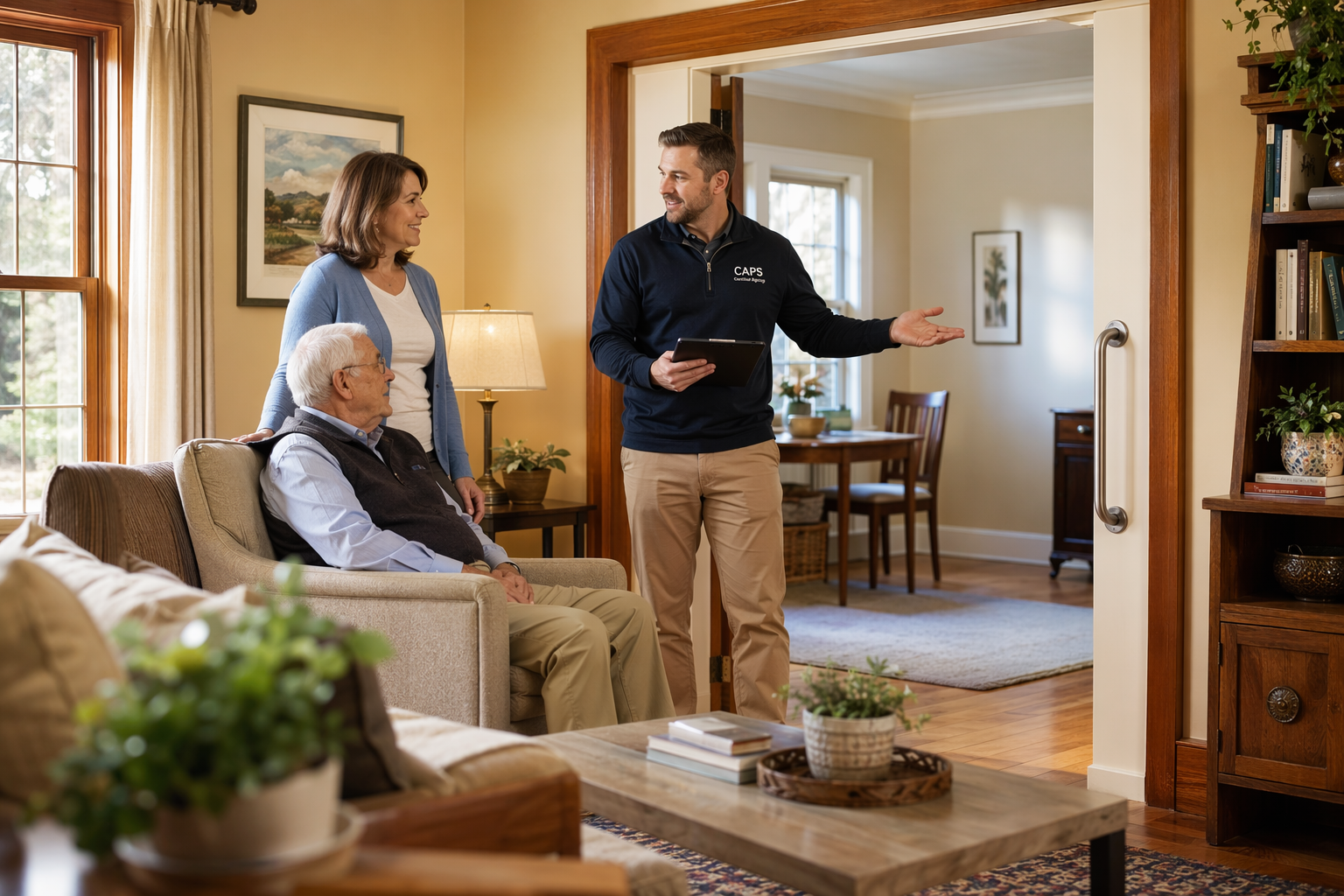
When families first hear the price tag for a full home modification — $10,000 for a bathroom, $50,000 for a kitchen — the number can feel paralyzing. But that reaction often comes from comparing the wrong things. The real financial comparison is not between a remodel and doing nothing. It is between a one-time investment in your home and the recurring, escalating cost of a facility.
According to the American Health Care Association and National Center for Assisted Living (AHCA/NCAL), the national median cost of assisted living is approximately $64,200 per year, or about $5,350 per month. That is a recurring annual expense with no equity, no asset, and no flexibility. A $50,000 bathroom remodel — even a high-end one — costs less than a single year in assisted living and adds value to the home.
| Option | Typical Cost | Cost Type | What You Get |
|---|---|---|---|
| Assisted Living (1 year) | $64,200 (national median) | Recurring annual | Room, meals, basic assistance, no equity |
| Full Bathroom Remodel (CAPS-designed) | $50,000 – $100,000+ | One-time | Accessible shower, grab bars, widened door, home value increase |
| Stairlift Installation | $3,000 – $5,000 | One-time | Multi-level access, avoids moving or renovating entire home |
| Basic Safety Package (grab bars, ramp, lighting) | $2,000 – $7,000 | One-time | Immediate fall risk reduction, often fundable via grants |
Yet despite this math, the gap between desire and action remains enormous. A 2023 University of Michigan National Poll on Healthy Aging found that while 88% of adults aged 50–64 say it is important to age in place, only 18% have actually made any home modifications. The same poll, cited in the Choice Mutual 2026 aging-in-place report, notes that only about 10% of U.S. homes are considered "aging ready." Cost — or the perception of cost — is the primary barrier standing between that 88% desire and the 18% action rate.
The key insight for budget-conscious families: even a full, professionally designed modification costing $50,000 is cheaper than one year in assisted living. And for many families, the actual cost is far lower — especially when you factor in the funding sources and tax benefits covered later in this guide.
What Does a CAPS Assessment Cost — and What Do You Get?
Before any construction begins, a Certified Aging-in-Place Specialist (CAPS) typically starts with a home assessment. This is not a casual walkthrough. It is a systematic evaluation of the home's layout, door widths, bathroom access, lighting, flooring transitions, stair safety, and the older adult's current and anticipated mobility needs.
The cost for this assessment varies by location, specialist experience, and the depth of the report. Based on multiple sources, here is the typical pricing structure:
| Service | Typical Cost Range | What's Included |
|---|---|---|
| Initial home assessment & written report | $250 – $1,000 | Full walkthrough, measurement, photos, prioritized recommendations, estimated cost ranges |
| Hourly consultation (add-on services) | $75 – $200 per hour | Decluttering guidance, lighting swaps, grab bar placement, contractor coordination |
| Flat-rate assessment (common in metro areas) | $199 – $500 | Standardized evaluation with a summary report and top-3 priority modifications |
Marian Berman, a CAPS professional cited by Care.com, charges $250 for an assessment and report, then $150 per hour for additional services like decluttering, simple improvements, lighting swaps, and grab bar installation. Gina Knight, another CAPS, reports a $500 fee for a personalized home evaluation that includes a full report with visuals. Fritzi Gros-Daillon, CAPS, notes that initial meeting and assessment costs typically range from $199 to $399 depending on location and demographic.
For readers who want a deeper understanding of the CAPS role before scheduling an assessment, our guide What Does a CAPS Certified Aging-in-Place Contractor Do — and How to Find One covers the full scope of their work, credentials, and how to vet candidates.
Common Home Modification Price Ranges (2026)
Once the assessment is complete, the actual modification costs depend heavily on the scope of work. Below are the most common modifications with current price ranges drawn from industry sources. Note that these are national estimates; actual costs vary by region, contractor rates, and whether structural changes are required.
| Modification | Typical Cost Range | Notes |
|---|---|---|
| Grab bars (installed) | $100 – $300 | Per bar; depends on wall type (tile vs. drywall) and reinforcement needed |
| Wheelchair ramp (permanent, wood or aluminum) | $1,500 – $5,000 | Varies by length, height, and local building codes |
| Walk-in tub | $5,000 – $15,000 | Includes installation; higher end for models with hydrotherapy jets |
| Stairlift (straight rail) | $3,000 – $5,000 | Curved rail stairlifts cost significantly more ($8,000 – $15,000) |
| Doorway widening (per door) | $500 – $1,500 | Requires structural assessment; load-bearing walls increase cost |
| Full bathroom remodel (aging-in-place design) | $50,000 – $100,000+ | Includes zero-entry shower, grab bars, non-slip flooring, widened door, comfort-height toilet |
| Full kitchen remodel (accessible design) | $100,000 – $250,000+ | Pull-out shelves, lowered counters, touchless faucets, task lighting, wide clearance |
| First-floor living conversion (bedroom + bath) | $75,000 – $300,000+ | Major structural work; converting garage or adding an addition |
For families considering a stairlift, our Stair Lift vs. Alternatives: A Decision Guide for Families Aging in Place provides a detailed comparison of stairlifts, platform lifts, and home layout alternatives to help you choose the right solution.
Factors That Affect Your Total Project Cost
No two home modification projects are priced the same. Understanding the variables that drive costs up or down helps you budget realistically and avoid surprises when the estimates arrive.
- Scope of work: A single grab bar installation is a $200 job. A full bathroom gut renovation involves plumbing, electrical, flooring, framing, and permits — easily $50,000 or more. The more systems you touch, the higher the cost.
- Geographical location: Labor rates vary dramatically. A bathroom remodel that costs $50,000 in Cincinnati might cost $80,000 in San Francisco or $35,000 in rural Ohio. Material costs also differ by region.
- Structural changes: Widening a doorway in a non-load-bearing wall is relatively inexpensive. Widening a doorway in a load-bearing wall requires a structural engineer, a header beam, and permits — potentially tripling the cost.
- Specialist credentials: A CAPS-certified professional may charge a premium over a general contractor, but that premium reflects specialized training in universal design, building codes for accessibility, and knowledge of funding programs. The investment often pays for itself in avoided mistakes.
- Material and finish choices: A basic walk-in tub starts around $5,000. A model with heated surfaces, hydrotherapy jets, and quick-drain technology can exceed $15,000. Similarly, non-slip flooring ranges from $3/sq ft for sheet vinyl to $15+/sq ft for textured porcelain tile.
- Permits and inspections: Major structural work requires building permits, which add fees and inspection costs. Skipping permits can lead to fines, insurance issues, and problems when selling the home.
Funding Options in 2026: VA Grants, Medicaid, USDA, and More

The single most important thing to know about funding home modifications: you do not have to pay for everything out of pocket. Multiple federal, state, and local programs exist specifically to help older adults and people with disabilities make their homes safer and more accessible. The challenge is knowing which ones apply to your situation.
| Funding Source | Maximum Amount | Who Qualifies | Key Notes |
|---|---|---|---|
| VA HISA Grant | Up to $6,800 | Veterans receiving VA medical care | Covers medically necessary modifications; no service-connected disability required |
| VA SAH Grant | Up to $109,000 | Veterans with specific service-connected disabilities | For severe mobility or vision impairments; requires VA determination |
| VA SHA Grant | Varies | Veterans with qualifying mobility or vision impairments | Supplemental to SAH; for adapting home to specific disability needs |
| Medicaid HCBS Waivers | State-dependent | Medicaid-eligible individuals needing home-based care | Covers ramps, grab bars, bathroom modifications; prior authorization required; varies by state |
| USDA Section 504 Home Repair Program | Up to $10,000 (loan); up to $7,500 (grant) | Very-low-income rural homeowners aged 62+ | For repairs and accessibility modifications; grant portion for seniors only |
| Area Agency on Aging (AAA) | Varies by region | Older adults (usually 60+) | May offer small grants for grab bars, railings, ramps; also provides information and referral |
| State Assistive Technology Loan Programs | Varies by state | Individuals with disabilities of any age | Low-interest loans for assistive technology and home modifications |
| Local Nonprofits & Community Foundations | Varies | Income-qualified older adults | Often cover smaller items: grab bars, railings, lighting, small ramps |
The Harmar funding guide, which inventories these programs for 2026, emphasizes that funding can often be combined. A veteran might use a HISA grant for a bathroom remodel, then layer in a local nonprofit grant for grab bars and railings. A Medicaid-eligible individual might use an HCBS waiver for a ramp, then a state loan program for a walk-in tub.
How to Combine Funding Sources (Funding Stacks)
Rarely does a single funding source cover the full cost of a major modification. The most successful families use a strategy called "funding stacking" — layering multiple sources to close the gap between what they can afford and what the project costs.
Here is a simple decision flow to determine which sources to pursue first:
- If the older adult is a veteran: Start with the VA. Apply for a HISA grant (up to $6,800) first, as it has the broadest eligibility. If the veteran has a service-connected disability, also apply for SAH or SHA grants. VA grants do not count as income for most other programs, so they can be stacked with other sources.
- If the older adult is Medicaid-eligible: Contact the state Medicaid agency and ask about Home and Community-Based Services (HCBS) waivers. These waivers specifically cover home modifications to avoid institutionalization. Be prepared for a prior authorization process and a waiting list in some states.
- If the household has low income and lives in a rural area: Check the USDA Section 504 Home Repair Program. For very-low-income homeowners aged 62 and older, the program offers grants up to $7,500 for home repairs and modifications. For others, low-interest loans up to $10,000 are available.
- For smaller modifications (under $2,000): Contact your local Area Agency on Aging and search for local nonprofits. Many offer free or low-cost grab bar installations, railings, and lighting improvements. These programs often have shorter application processes and no income verification.
- For the remaining gap: Consider a state assistive technology loan program for low-interest financing, or use personal savings. Some families also use home equity lines of credit (HELOCs) for major remodels, though this should be weighed carefully against the cost of alternative living arrangements.
Cost-Saving Strategies for Budget-Conscious Families
Even with funding sources, home modifications require a financial commitment. These strategies can help you maximize every dollar without compromising safety.
- Prioritize essential modifications first. A CAPS assessment will produce a prioritized list. Start with the items that address the most immediate fall risks or mobility barriers: grab bars in the bathroom, a ramp at the main entrance, non-slip flooring in the shower. Cosmetic upgrades can wait.
- Bundle services with a single contractor. Hiring one CAPS-certified contractor to handle multiple modifications — rather than separate specialists for plumbing, electrical, and carpentry — often reduces overall labor costs and simplifies coordination. Ask for a bundled price.
- Phase work over time. If the full remodel is out of reach, break it into phases. Install grab bars and a raised toilet seat this year. Add a walk-in tub next year. Phase the ramp when funding becomes available. A CAPS can design a phased plan that avoids redoing work later.
- Explore nonprofit programs for smaller items. Many local nonprofits and faith-based organizations offer free or low-cost installation of grab bars, railings, and basic ramps. These programs are often underutilized because families do not know they exist. Call your Area Agency on Aging to ask about local options.
- Get multiple quotes. Prices for the same modification can vary by 30–50% between contractors. Always get at least three written estimates from CAPS-certified professionals. Compare not just the total price, but the scope of work, materials specified, and warranty terms.
A CAPS assessment is the single most cost-effective first step. It identifies the modifications that will have the greatest impact on safety and independence, and it prevents the common mistake of spending money on changes that do not actually address the underlying mobility or accessibility needs.
Tax Deductions for Medically Necessary Home Modifications
One often-overlooked way to offset the cost of home modifications: the IRS allows you to deduct medically necessary home improvements as a medical expense under IRS Publication 502. This applies to modifications that are primarily for medical care — not general home improvement.
Qualifying modifications include:
- Ramps and no-step entrances
- Grab bars and handrails installed for medical reasons
- Widened doorways to accommodate a wheelchair or walker
- Walk-in tubs or shower modifications prescribed by a physician
- Lift systems (stairlifts, ceiling lifts) for medical mobility needs
The deduction is limited to the amount by which the modification increases the home's value. For example, if a $10,000 ramp installation increases the home's value by $2,000, the deductible medical expense is $8,000. Medical expenses are deductible only to the extent they exceed 7.5% of your adjusted gross income (AGI).
The Choice Mutual 2026 aging-in-place report confirms that medically necessary home modifications may be tax-deductible under IRS Publication 502, but emphasizes that the deduction applies only to the cost exceeding the home's value increase. This is not a loophole — it is a legitimate tax treatment for a documented medical expense.
Related reading
Need a professional assessment?
Find a CAPS-credentialed professional or local aging services through our outbound resource list — we never name or rank individual contractors.
Find Local HelpNoticed something outdated or inaccurate on this page? Flag a correction. We review every report against CDC, NIA, and AARP HomeFit guidance before updating a page.