Do Seniors Helping Seniors Programs Work for Dementia Care? What the Evidence Shows
By Editorial Team
dementia communication
caregiver burnout
respite care
BPSD
Alzheimer's Association
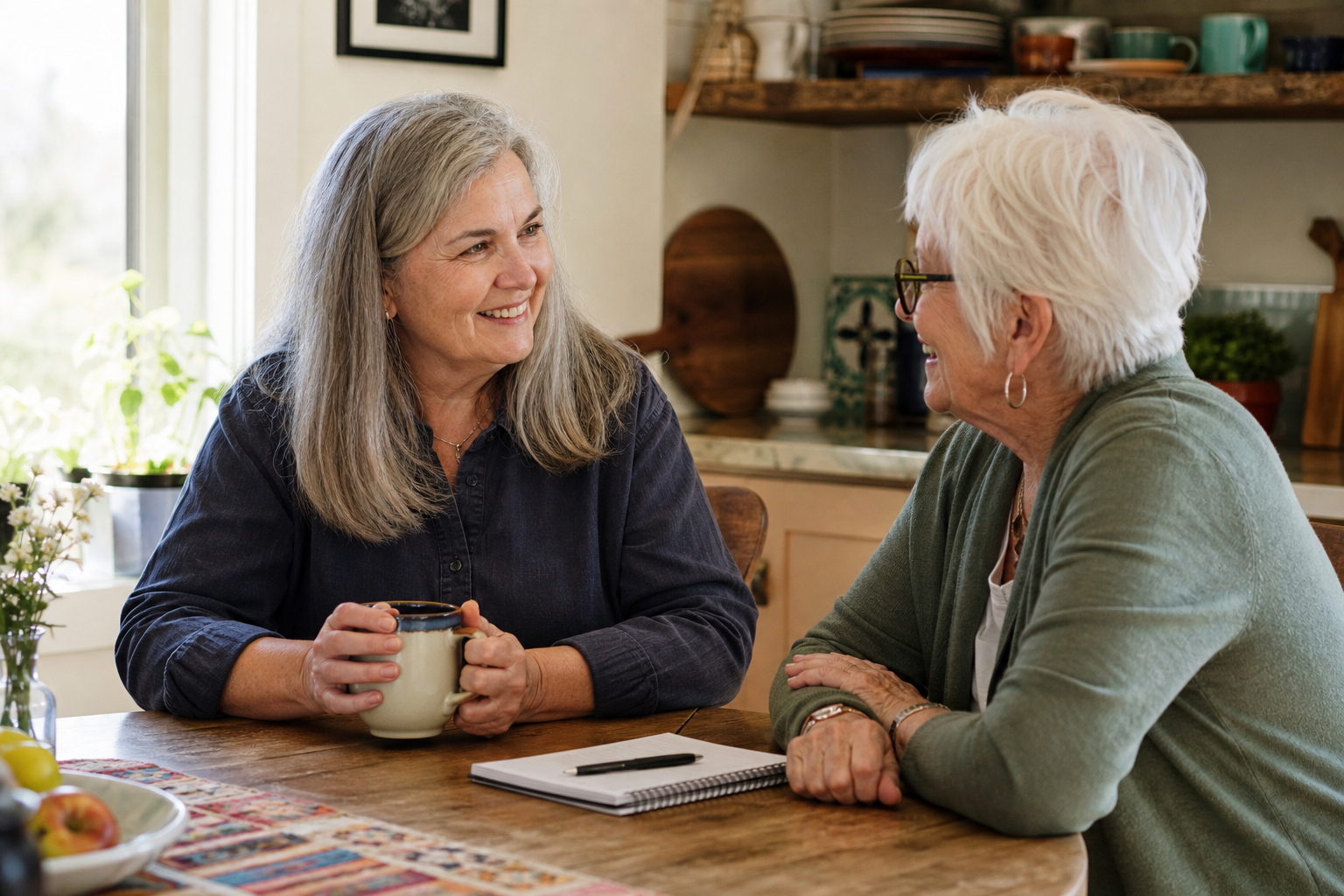
Peer support programs pair trained senior volunteers with family caregivers, creating a relationship built on shared experience rather than a clinical hierarchy.
The Memory Care Gap in Standard Senior Companion Programs
When a family caregiver first hears the phrase "seniors helping seniors," the image that comes to mind is often a friendly volunteer who stops by for conversation, light housekeeping, or a ride to the grocery store. That model — rooted in the AmeriCorps Seniors Senior Companion Program — has been a lifeline for thousands of older adults. But for families navigating Alzheimer's disease or a related dementia, a general companion who lacks specialized training can be ill-equipped to handle the behavioral and communication challenges that define the caregiving experience.
The gap is significant. A companion trained only in general elder companionship may not understand why a person with dementia repeats the same question twenty times in an hour, or how to redirect agitation without escalating it. They may misinterpret sundowning as willful stubbornness. And the family caregiver, already stretched thin, ends up spending their limited respite time explaining the disease rather than actually resting.
This is where the evidence-based model of the Senior Companion Program Plus (SCP Plus) enters the picture. Developed and tested with funding from the National Institute on Aging (NIH R15 grant 1R15 AG058182-01), SCP Plus is not a generic companion service. It is a structured, peer-led psychoeducational program designed specifically to support African American family caregivers of people with Alzheimer's disease and related dementias — and the early results are striking enough to warrant serious attention from any family caregiver searching for practical, low-cost support.
What Is SCP Plus? A Peer-Led Program Built for Dementia Caregivers
SCP Plus takes the existing infrastructure of the federal Senior Companion Program — where volunteers aged 55 and older, often from low-income backgrounds, provide companionship and light assistance to their peers — and adds a layer of rigorous, dementia-specific training. The result is a program that transforms a general volunteer into a knowledgeable lay provider capable of delivering meaningful psychoeducational support in the home.
The training component is substantial. Senior Companions in the SCP Plus intervention received 12 hours of in-person ADRD-specific instruction delivered over two days, covering nine distinct modules. After training, these companions delivered the content in weekly 60-minute home sessions to family caregivers over a nine-week period.
The Nine Training Modules of SCP Plus
Myths and Facts About Alzheimer's Disease — Correcting common misconceptions that can lead to stigma or inappropriate care responses.
Understanding Dementia Behaviors — Explaining the neurological basis for symptoms like agitation, wandering, and repetitive questioning.
Behavior Management Strategies — Non-pharmacological techniques for de-escalation and redirection.
Effective Communication — How to speak, listen, and respond to a person with dementia in a way that reduces frustration.
Coping Skills for Caregivers — Helping family caregivers manage their own emotional responses and stress.
Safety and Home Environment — Identifying and reducing fall risks and wandering hazards.
Legal and Financial Planning — Basic orientation to advance directives, power of attorney, and care costs.
Community Resources — Connecting caregivers to local support groups, respite services, and adult day programs.
Self-Care for the Companion — Ensuring the volunteer also knows how to protect their own emotional health.
What makes this model distinct from a typical support group or a hired home health aide is the peer dynamic. The companion is not a medical professional delivering clinical advice. They are a trained peer — someone who is themselves a senior, often with lived experience of caregiving or aging — who can sit with a family caregiver in their own home and say, "I understand. Let me share what I've learned." That relational parity is the core of the "seniors helping seniors" philosophy, and SCP Plus demonstrates that when you add structured dementia training to that foundation, the outcomes can be transformative.
The Evidence: How SCP Plus Reduced Caregiver Burden and Improved Knowledge
The SCP Plus study was a small randomized controlled trial conducted across sites in Texas and Arkansas, and its results were published in a peer-reviewed journal. Despite the modest sample size — 20 caregiver-companion dyads were enrolled, with 11 completing both post-test and six-month follow-up — the magnitude of the changes observed in the intervention group is difficult to dismiss.
Caregiver burden was measured using the Zarit Burden Interview (ZBI), a widely validated 22-item scale where higher scores indicate greater burden. Among caregivers in the SCP Plus intervention group, the median ZBI score dropped from 40 at pre-test to 32 at post-test, and further to 15 at the six-month follow-up (p = 0.003). That is a 62.5% reduction from baseline to follow-up — a change that, if replicated in larger studies, would represent a clinically meaningful improvement in quality of life for dementia caregivers.
The control group, which received standard services without the SCP Plus training, showed no significant changes on any measure. The contrast is stark.
Key outcomes from the SCP Plus randomized controlled trial for African American ADRD family caregivers. Source: NIH-funded study (1R15 AG058182-01).
Outcome Measure
Intervention Group (Pre)
Intervention Group (Post)
Intervention Group (6-Month Follow-Up)
Statistical Significance
Zarit Burden Interview (median)
40
32
15
p = 0.003
Knowledge of AD/Dementia (KAD)
Baseline
Increased
Increased
p = 0.04
Satisfaction with Social Support (SSS)
Baseline
Increased
Increased
p = 0.04
Positive Aspects of Caregiving (PAC)
Baseline
Increased
Increased
p = 0.04
Beyond burden reduction, caregivers in the intervention group showed statistically significant improvements in three additional domains: knowledge of Alzheimer's disease and related dementias (KAD), satisfaction with social support (SSS), and positive aspects of caregiving (PAC). Each of these measures improved from pre-test to post-test and was sustained at the six-month follow-up (p = 0.04 for all three). The fact that gains were maintained months after the nine-week program ended suggests that SCP Plus may equip caregivers with durable skills and perspectives, not just temporary relief.
The Mutual Benefit: Senior Companions Also Gained Knowledge and Preparedness
One of the most compelling features of the SCP Plus model — and of the "seniors helping seniors" philosophy more broadly — is that the benefits are not one-sided. The program was designed to help family caregivers, but the Senior Companions themselves also experienced measurable gains.
Among the 11 Senior Companions in the SCP Plus intervention group, knowledge of Alzheimer's disease and dementia (KAD) improved from a median score of 10 to 12 (p = 0.003). Their preparedness for caregiving — measured by a scale assessing confidence in handling caregiving tasks — improved from a median of 24 to 31 (p = 0.005). These are not trivial shifts. A companion who understands the disease process is better equipped to support the caregiver, but they also carry that knowledge forward into their own lives and communities.
"It's changed my life... It makes me feel like I am needed."
That quote comes from a peer mentor in a different program — the Java Peer Mentoring pilot in Canadian long-term care — but it captures a sentiment that emerged consistently across the SCP Plus qualitative data as well. Researchers reported that companions described learning new skills about caregiving, gaining knowledge about ADRD, and recognizing benefits for the caregiver-companion dyad. The act of helping, when structured and supported, appears to be intrinsically rewarding and cognitively enriching for the helper.
Broader Evidence: Volunteering in Later Life Protects Cognitive Health
The SCP Plus findings sit within a larger body of population-level research that suggests volunteering and helping others in later life is associated with better cognitive outcomes. Two recent studies — one from UC Davis and one from the University of Texas at Austin — provide particularly relevant context.
The UC Davis study, presented at the Alzheimer's Association International Conference in 2023, examined data from 2,476 ethnically diverse older adults (average age 74; 48% Black, 20% White, 17% Asian, 14% Latino). Those who reported volunteering in the past year — 43% of the sample — had better baseline scores on tests of executive function and verbal episodic memory, even after adjusting for age, sex, education, income, practice effects, and interview mode. The association was dose-dependent: participants who volunteered several times per week had the highest levels of executive function.
The UT Austin study, published in Social Science & Medicine in August 2025, analyzed data from the national Health and Retirement Study spanning more than 30,000 U.S. adults over two decades. The researchers found that regular volunteering or informal helping — such as assisting neighbors, relatives, or friends with appointments, childcare, or household tasks — of about 2 to 4 hours per week was associated with a 15% to 20% slower rate of cognitive decline. Importantly, the benefits were observed for both formal volunteering through organizations and informal helping within social networks. Withdrawing from helping, conversely, was associated with worse cognitive function.
Three studies supporting the mutual-benefit thesis of seniors-helping-seniors programs. Note: The UT Austin study examined general helping behaviors, not specifically senior-to-senior programs.
Study
Population
Key Finding
Relevance to Peer Programs
UC Davis (2023)
2,476 diverse older adults (avg. 74)
Volunteers had better executive function and episodic memory; dose-dependent effect
Supports cognitive benefit for senior companions who volunteer regularly
UT Austin (2025)
30,000+ U.S. adults over 20 years
2–4 hrs/week of helping associated with 15–20% slower cognitive aging
Suggests structured peer programs may slow cognitive decline for volunteers
SCP Plus RCT (NIH-funded)
20 caregiver-companion dyads
Companions' dementia knowledge and preparedness significantly improved
Direct evidence that trained peer programs benefit volunteers' skills and confidence
Peer Mentoring in Long-Term Care: The Java Program Model
The evidence for peer support in dementia care extends beyond home-based programs to institutional settings. The Java Peer Mentoring program, piloted in Canadian long-term care communities (Schlegel Villages in Ontario) and published as a research letter in JAMDA, offers a striking example of what happens when residents themselves become the helpers.
In this pilot, 48 resident mentors (mean age 80; 88% women) were paired into two-person teams — one resident and one community volunteer — and received weekly training before visiting isolated residents. Notably, 9 of the resident mentors were described as "not cognitively competent" and were enrolled with surrogate consent. Over six months, researchers observed significant decreases in depression and loneliness scores among the peer mentors themselves. The mentors reported increased confidence and a strong sense of purpose from making a difference in another resident's life.
This finding is particularly important because it extends the "seniors helping seniors" evidence to two populations often excluded from such programs: people living in long-term care facilities, and people who themselves have cognitive impairment. If peer mentoring can reduce depression and loneliness among resident mentors with cognitive challenges, it suggests that the therapeutic value of helping may be accessible even to those who are typically cast as care recipients.
How to Find a Dementia-Capable Companion Program
For family caregivers who are now wondering whether a peer companion program might be right for their situation, the challenge is separating programs with genuine dementia expertise from those that simply use the phrase "dementia care" as a marketing label. The SCP Plus model provides a useful benchmark: look for programs that offer structured, in-person ADRD training for their volunteers, not just a one-hour orientation video.
Questions to Ask When Evaluating a Companion Program
What specific dementia training do your volunteers receive? Look for programs that can describe a structured curriculum — hours of training, topics covered, and whether training is in-person or online-only.
Is the program based on a research-backed model like SCP Plus? Some local programs may have adapted elements of evidence-based models. Ask if they track outcomes like caregiver burden or satisfaction.
How are volunteers matched with families? The best programs consider personality, communication style, and the specific challenges of the caregiver's situation, not just geographic proximity.
What happens if a behavioral challenge arises during a visit? A dementia-capable program should have clear protocols for de-escalation, supervisor contact, and caregiver notification.
Is the program free or low-cost? Federal programs like the AmeriCorps Seniors Senior Companion Program are typically free to participants. Franchise-based models like Seniors Helping Seniors charge $28–$30 per hour on average, according to a 2026 review by SeniorLiving.org, and most clients pay privately or through long-term care insurance.
The AmeriCorps Seniors Senior Companion Program is a logical starting point for families seeking a federally structured, volunteer-based model. It operates through local agencies across the country, and some local affiliates may have adopted dementia-specific training components. However, the level of ADRD training varies by location — ask directly about it. Local peer counseling programs, such as the Polara Health Senior Peer Program in Arizona or the Snohomish County Senior Peer Counseling Program in Washington, may also offer one-on-one peer support for older adults and their caregivers, though these programs are typically focused on emotional support rather than dementia-specific psychoeducation.
For a broader overview of the support landscape — including how peer programs fit alongside other options like adult day services, home health aides, and respite care — see our complete guide to finding the right support for an aging parent. And if you are experiencing the kind of intense caregiver burden that SCP Plus was designed to address, our guide to caregiver burnout offers evidence-based strategies for recognizing exhaustion and finding sustainable support.
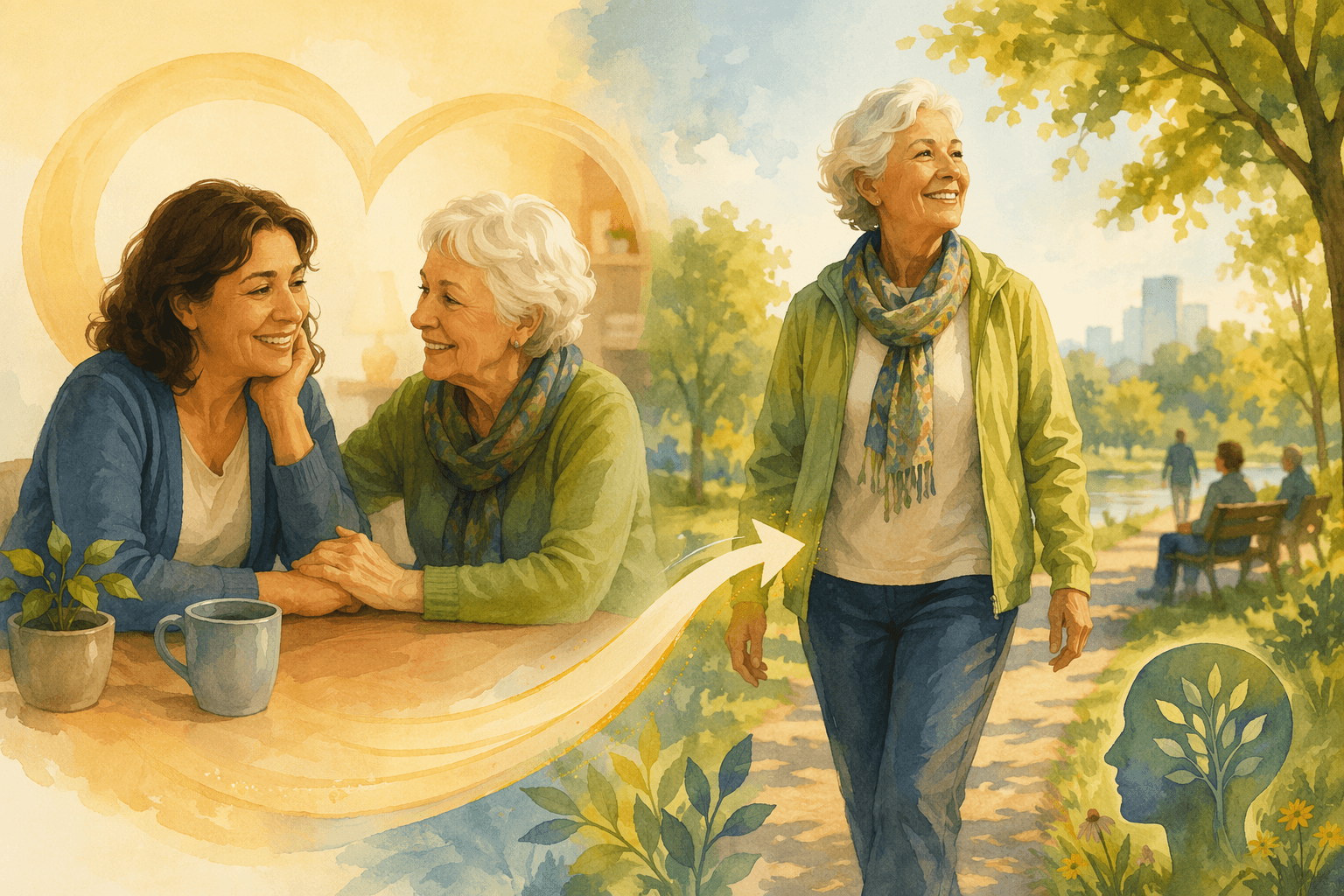
The mutual-benefit model: trained senior companions provide relief to family caregivers while gaining purpose, knowledge, and potential cognitive health benefits themselves.

Comments
Join the discussion with an anonymous comment.