
Caregiver decision guide
How to Use AI to Find a Lost Elderly Family Member
When a loved one with dementia wanders off, time is critical. This article provides a minute-by-minute crisis protocol that leverages AI-powered GPS tracking, real-time location sharing, and MedicAlert activation alongside traditional search strategies to maximize the chance of a safe return.
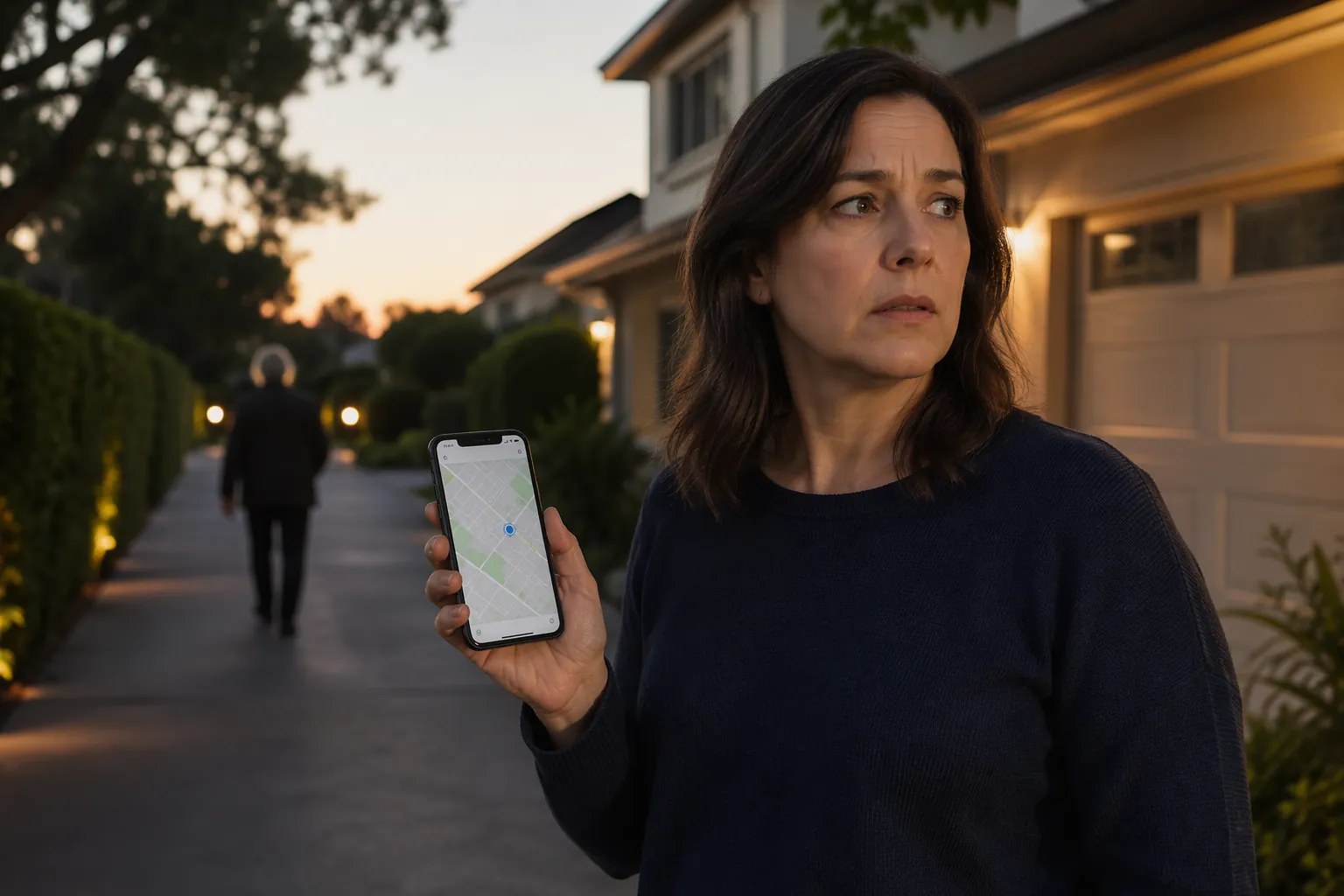
If your elderly family member with dementia is missing right now, start the clock. The Alzheimer’s Association gives one rule that should not be softened: if the person is not found within 15 minutes, call 911 to file a missing person’s report. Tell the dispatcher the person has dementia and say the words “critically missing at-risk adult.”[1]
Use AI and tracking tools immediately, but do not wait for the map to solve the whole problem. One person should check the device location, one person should search the nearest danger zones, and one person should prepare the 911 call if the person is not already found. The useful technology is the kind that removes delay: a live GPS dot, an emergency tracking link, a preloaded photo, a MedicAlert record, or a flyer police can use without asking the family to repeat medical details under stress.
The first 15 minutes: do these things in parallel
Do not spend the first 15 minutes debating whether this is “really” a missing person situation. In dementia wandering, minutes matter because the person may not recognize danger, may keep walking, or may be unable to explain who they are if someone tries to help.
| Time | Action | Who should do it |
|---|---|---|
| Minute 0 | Confirm the person is not in the home, yard, garage, bathroom, closets, vehicle, or a usual hiding/resting place. | Nearest caregiver |
| Minutes 1–3 | Open the GPS tracker, phone location sharing, smartwatch app, or caregiver dashboard. If the tool has an emergency or high-frequency tracking mode, turn it on. | Person with tracker access |
| Minutes 3–7 | Search immediate danger zones: street, driveway, nearby water, wooded areas, unlocked sheds, stairwells, bus stops, and the route toward a former home, workplace, church, store, or school. | Local family, neighbors, staff |
| Minutes 7–10 | Send the live location or emergency tracking link to the person preparing to call 911. Pull up a current photo, clothing description, diagnosis, medications, and last known location. | Family coordinator |
| Minute 15 | If not found, call 911. Say: “This is a critically missing at-risk adult with dementia.” Ask how to send the photo, tracker link, and MedicAlert information. | Calmest available caller |
Most individuals who wander are found within 1.5 miles of where they disappeared, so the first search area is not random.[1] Start close, but do not search quietly. Call their name only if that is usually calming. Ask neighbors to check cameras, yards, garages, porches, and unlocked cars. A person with dementia may be very near and still unable to answer.
How to use AI tracking without losing time
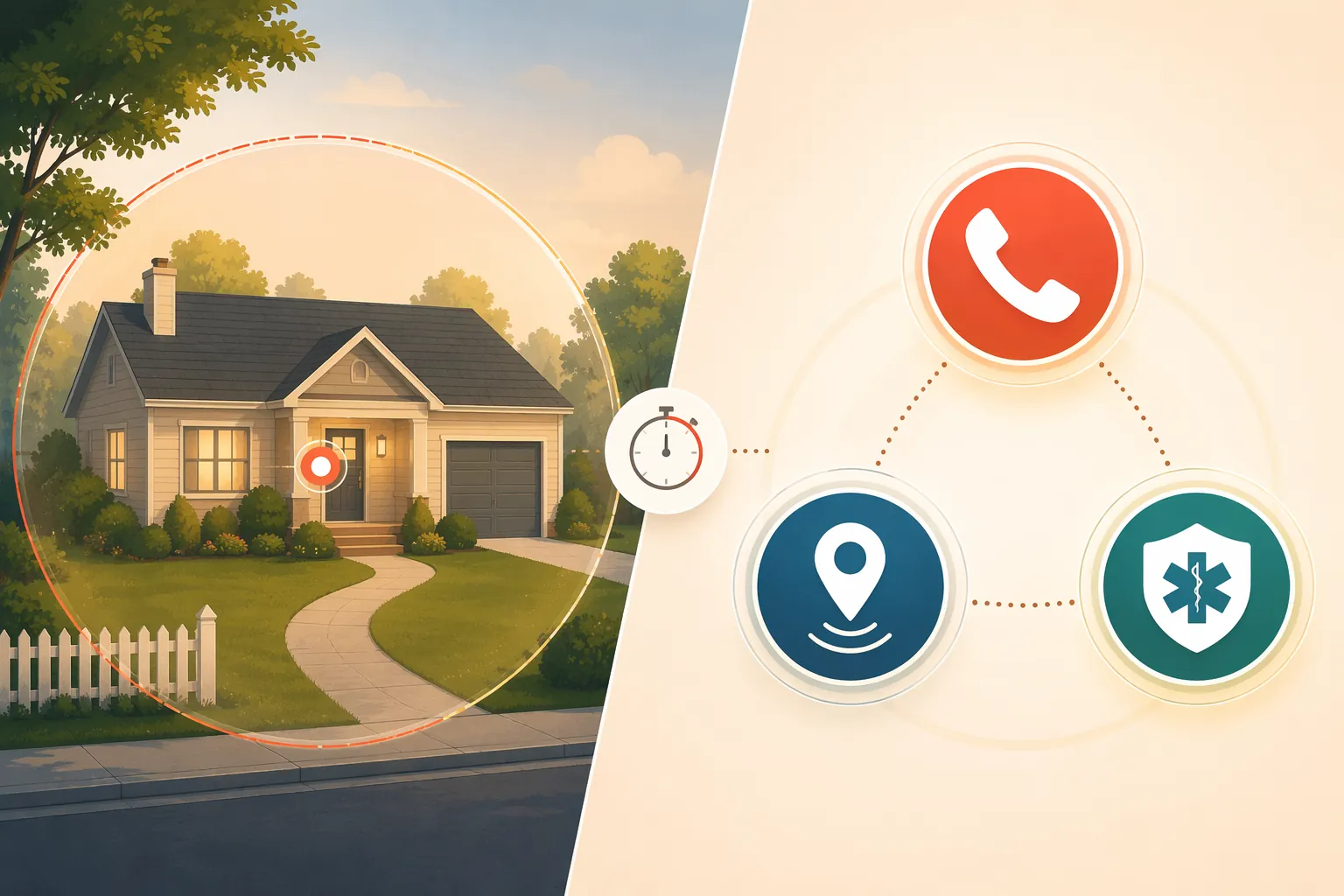
In this situation, “AI” is useful only when it produces a faster next action. A tracker that learns routines, alerts when someone leaves a safe zone, refreshes location quickly, or lets police follow a live link can help. A vague promise that an app can “search with AI” is not enough.
If the person wears an AngelSense device, SafeWise’s 2026 review notes that Runner Mode updates location every 10 seconds and allows a caregiver to share an emergency tracking link with law enforcement.[2] That is the kind of feature to use immediately: turn on the high-frequency mode, copy the emergency link, and give it to the dispatcher or responding officer as soon as they tell you how to send it.
- Open the tracking app before you start calling relatives.
- Take a screenshot of the last known location and timestamp in case the signal drops.
- Share the live link with one family coordinator and law enforcement, not with a chaotic group chat where instructions get buried.
- If the map shows movement, send searchers ahead of the direction of travel instead of sending everyone to the old dot.
- If the tracker stops updating, keep searching. Indoor gaps, dead batteries, poor signal, and device removal are common enough that the human search cannot pause.
Do not try to personally run facial recognition. The practical role for the family is to give police a current photo, the case number once assigned, and any known locations or camera sources. Law enforcement may have access to video tools or traffic-camera analysis in some jurisdictions, but that is not the same as a consumer caregiver being able to scan public cameras from a phone.
What to say when you call 911
The wording matters because the dispatcher has to understand risk quickly. Keep your voice as steady as you can and read from a prepared note if you have one.
Say: “I need to report a critically missing at-risk adult. My [mother/father/spouse] has dementia. They were last seen at [place] at [time]. They are wearing [clothing]. We have checked the home and immediate area. We have a current photo and [GPS tracker/MedicAlert ID/live location link] available.”
The Alzheimer’s Association specifically recommends telling police about the dementia diagnosis and using “critically missing at-risk adult” language when reporting the missing person.[1] If the dispatcher asks whether you want to wait, repeat that the person has dementia, is at risk, and has not been found within the 15-minute window.
- Give the last known location, not a guess about where they “probably” went.
- Describe mobility: walking speed, cane, walker, shuffling, falls, or tendency to enter vehicles.
- Name medical risks: diabetes, heart condition, seizures, medication needs, dehydration risk, or weather vulnerability.
- Mention likely destinations: former home, old workplace, favorite store, church, school, bus stop, or a deceased relative’s house.
- Ask how to send the photo, MedicAlert information, and GPS tracking link.
Activate MedicAlert Safe & Found if the person is enrolled
If your family member has MedicAlert Safe & Found, activate it as soon as you know they are missing. MedicAlert says the service can create a missing person flyer, relay critical medical information to EMS and police, and coordinate with family contacts; it operates 24/7 as part of a MedicAlert Protection Plan.[3]
That matters because the daughter calling 911 should not have to design a flyer, spell every medication, and text every sibling while also watching a driveway. MedicAlert also reports that it reunites more than 500 wandering individuals annually.[3] Treat the service as one part of the response, not a reason to delay the 911 call.
Keep the local search moving after police are called
Once 911 is involved, the family still has work to do. One person should stay reachable for police. One person should monitor the tracker. Others can search likely nearby routes if officers say it is safe to do so. Do not send everyone in different directions without a coordinator; that is how sightings, calls, and updated locations get missed.
Ask law enforcement whether a Silver Alert or similar endangered-person alert applies in your state. Criteria and activation procedures vary, so the useful question is not “Can I issue a Silver Alert?” but “Does this case meet our state’s criteria, and what information do you need from me right now?”
AARP recommends checking hospitals every few hours and asking not only for the person by name but also about unidentified John or Jane Doe admissions.[4] Give hospitals the person’s name, age, description, dementia diagnosis, and your callback number. Keep a written log of who called, when, and what each place said.
What neighbors and relatives can do
Give helpers small assignments. “Drive around and look” sounds useful, but it often creates overlap. Better assignments are concrete: check the creek path, knock on the three houses behind ours, stand at the bus stop, call the grocery store, watch the tracker, or wait by the house in case they return.
- Send one current photo and one clothing description; do not let old photos circulate.
- Tell helpers not to chase, grab, or argue if they find the person; approach calmly and call 911 or the family coordinator.
- Ask neighbors to check doorbell cameras and yard cameras for the time window after the person was last seen.
- Have someone stay at the home with the porch light on and a phone available.
The setup that makes the first minutes work
The fastest crisis response is built before the crisis. The small tasks that feel fussy on a quiet Tuesday are the same tasks that prevent a 20-minute delay when someone is gone: a charged tracker, a shared login, a recent photo, an account number, and a printed note with the exact 911 wording.
| Prepare this now | Why it matters during a wandering incident |
|---|---|
| A current face photo and full-body photo | Police, hospitals, neighbors, and MedicAlert can use the same accurate image immediately. |
| Tracker app installed on more than one caregiver’s phone | The search does not depend on the one sibling who is asleep, driving, or unreachable. |
| Geofencing or safe-zone alerts | The family may learn about wandering when the person leaves the area, not after someone notices an empty room. |
| MedicAlert Safe & Found enrollment or similar ID program | Medical information and contacts are already organized before the family is under pressure. |
| Nearby hospitals and police non-emergency numbers | Follow-up calls can begin without searching for phone numbers during the incident. |
| Written 911 script | The caller does not forget to say dementia, at-risk, last seen, clothing, and tracker information. |
The Alzheimer’s Association and AARP both emphasize preparation steps such as current photos, safety planning, identification, and ready access to emergency information.[1][4] In practice, the photo is often the piece people think they have until they discover the newest picture is from a holiday, the person is wearing sunglasses, or the caregiver who has it is not answering.
If you use a GPS device, make the device acceptable to the person who has to wear it. A tracker left on a charger, removed because it feels childish, or hidden in a coat the person did not wear cannot help in the first 15 minutes. Prices and feature sets change; if comparing devices in mid-2026, look less at the longest feature list and more at charging routine, wearer comfort, caregiver access, emergency sharing, and update frequency.
Share access before you need it
A tracker account that only one person can open is a weak plan. Share location access with the people who would actually respond: the spouse at home, the adult child nearby, the sibling who handles calls, and any paid caregiver who is authorized to act. Decide ahead of time who calls 911, who watches the map, who checks hospitals, and who talks to neighbors.
Consent and dignity still matter. Discuss tracking as early as possible while the person can participate, and choose the least intrusive tool that reliably protects them. But do not leave the family with a device nobody can access because the conversation was uncomfortable.
When the incident shows the care plan is no longer enough
A single wandering episode does not automatically decide where someone should live. It does mean the current plan needs to be reviewed immediately: door alarms, supervision gaps, nighttime restlessness, medication timing, transportation access, and whether the person can be safely alone for any period.
If wandering happens at night, the next plan should include the sundowning pattern, not just a better lock. If wandering repeats or the person leaves home without warning, the family may need to compare more supervision at home with memory care or another 24-hour setting. The search protocol brings someone home; it does not by itself make the next night safe.
A final preparedness checklist
- Write the 911 sentence now: “This is a critically missing at-risk adult with dementia.”
- Save a current photo where every responder or caregiver can reach it.
- Test the tracker, charger, geofence, alert settings, and emergency sharing link.
- Enroll in MedicAlert Safe & Found, Project Lifesaver, or a local at-risk adult program if available.
- Make a one-page profile with diagnosis, medications, communication tips, likely destinations, and emergency contacts.
- List nearby hospitals and assign one person to call them every few hours during an active search.
Public Safety Canada has reported that a person with Alzheimer’s disease who is not found within 12 hours faces about a 50% chance of injury or death from hypothermia, dehydration, or drowning.[5] That statistic is not there to frighten a family into panic. It is there to remove hesitation. Start the search, activate the tools, call 911 on time, and make sure the information responders need is already in their hands.
References
- Wandering and Dementia, Alzheimer’s Association.
- Best GPS Trackers for Dementia Patients, SafeWise, 2026.
- Safe & Found, MedicAlert Foundation.
- Dementia Wandering: Finding a Missing Person, AARP.
- Public Safety Canada source on Alzheimer’s wandering risk, Public Safety Canada.
Questions to bring to a clinician or OT
This is not medical, legal, or a family's final decision — only a framework. Bring these questions to a clinician, occupational therapist, or your local Area Agency on Aging.
Find Local HelpRelated reading
Noticed something outdated or inaccurate on this page? Flag a correction. We review every report against CDC, NIA, and AARP HomeFit guidance before updating a page.