
Caregiver decision guide
How Drinking Water Benefits Seniors with High Blood Pressure
Discover how proper hydration stabilizes blood pressure in seniors and directly reduces fall risk, along with practical tips for caregivers and older adults managing hypertension.
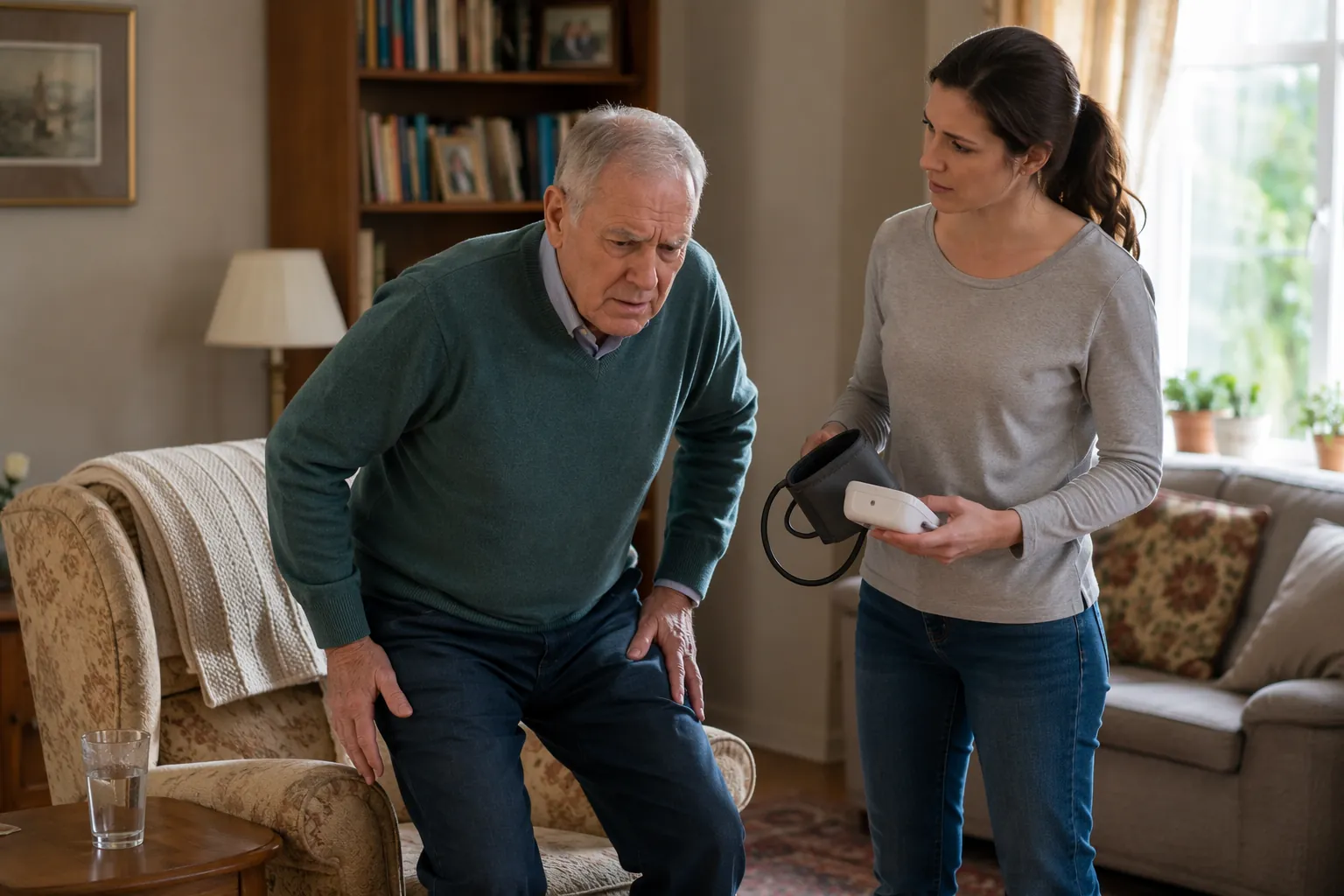
An older parent stands up from the chair, pauses, and reaches for the armrest again. The blood pressure monitor is still on the table. So is a half-empty glass of water. In that moment, the practical question is not whether water is “good for health.” It is whether dehydration, medication, blood pressure, or all three are making the hallway less safe.
The benefits of drinking water for seniors with high blood pressure are real, but they are easy to overstate. Water does not replace blood pressure medication, and it is not a quick hypertension treatment. Its value is steadier and more ordinary: enough fluid helps the body maintain blood volume, temperature, kidney function, and the signals that help regulate circulation. For an older adult who is already managing hypertension, that can mean fewer swings that lead to dizziness, weakness, confusion, rapid heartbeat, or a fall.
The difficult part is that dehydration can push blood pressure in two different directions. When the body senses too little fluid, it can release vasopressin, a hormone that narrows blood vessels and can raise blood pressure. In more severe dehydration, there may not be enough circulating blood volume, and blood pressure can drop instead, especially when someone stands up quickly.[1][2]
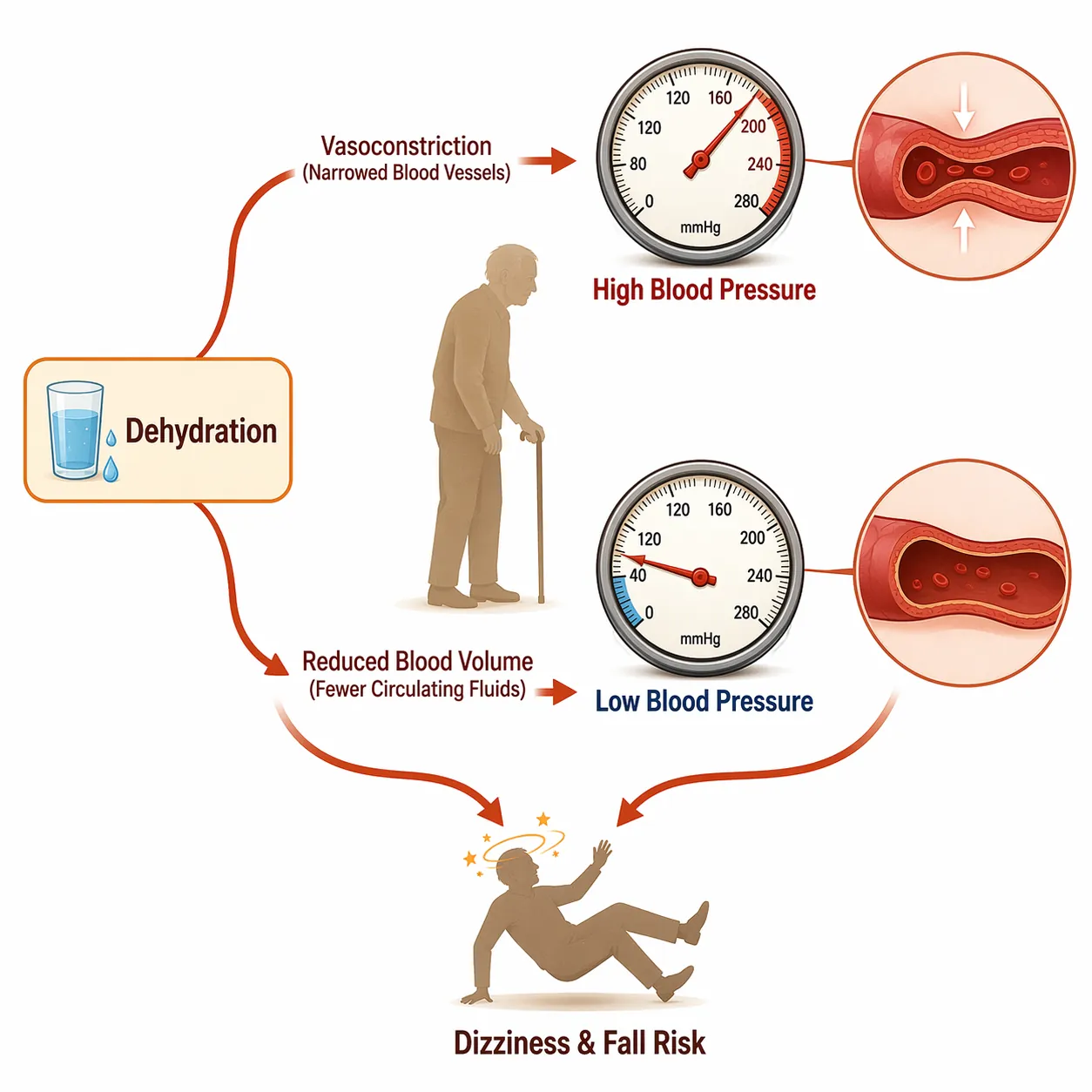
Why dehydration can mean both high readings and hallway dizziness
Caregivers often expect one clean pattern: dehydration raises blood pressure, or dehydration lowers it. At home, the pattern can be messier. A morning reading may be high after a dry night, a salty dinner, or not drinking much with evening pills. Later, the same person may feel lightheaded after getting up from the toilet, after a hot afternoon, or after a diuretic has done exactly what it was prescribed to do.
The vasopressin pathway helps explain the high-reading side. When fluid is low, the body tries to hold onto water and maintain pressure. Blood vessels can tighten, and the blood pressure number may rise.[1] That does not mean a glass of water is a substitute for medication. It means poor hydration can be one of the conditions making the number harder to interpret.
The low-pressure side is just as important for independence. If fluid loss reduces blood volume, the body may struggle to keep enough pressure when an older adult changes position. Standing up can bring dizziness, blurred thinking, wobbliness, or a need to sit back down. Cleveland Clinic and WebMD both describe dizziness, confusion, and rapid heartbeat as warning signs that may appear with dehydration and blood pressure instability.[1][3]
That is where hydration stops being a general wellness habit and becomes part of fall prevention. The dangerous moment is not always the high blood pressure reading itself. It may be the two steps from the bed to the bathroom, the turn in the hallway, or the attempt to stand while embarrassed about needing help.
Older adults are more likely to run low on fluid than they realize
Dehydration in older adults is common enough that it should not be treated as a rare explanation. Estimates vary because researchers measure dehydration in different ways. One review notes a wide range, from 1% to 60%, depending on the definition and setting.[4] Other summaries put dehydration among community-dwelling older adults around 17% to 28%, while UCLA Health cites research suggesting up to 40% of people over 65 may be chronically dehydrated.[5][6]
The range matters. It would be careless to pick the largest number and make every older adult sound dehydrated. But it would also be careless to ignore the pattern. Thirst can become less reliable with age, and some older adults drink less on purpose because they worry about nighttime urination, incontinence, or not reaching the bathroom in time.[6]
Medication adds another layer. Diuretics, often prescribed for high blood pressure or fluid-related heart conditions, increase fluid loss. That can be appropriate and necessary, but it changes the safety math: a person taking a “water pill” may be more vulnerable to dehydration, especially during hot weather, poor appetite, vomiting, diarrhea, or a day when they simply forgot to drink.[6][3]
What the research says about water and hypertension
The evidence supports hydration as a helpful background condition, not as a proven stand-alone treatment for hypertension. There are not randomized trials showing that increasing water intake in already well-hydrated seniors reliably lowers their blood pressure. Much of the evidence is observational or explains what happens when dehydration is corrected.
A 2024 analysis from the China Health and Nutrition Survey found that adults who drank at least 6 cups of plain water per day had 41% lower odds of developing hypertension than those who drank 1 cup or less per day.[7] That is worth noticing, especially because the apparent benefit was strongest around 6 to 8 cups per day. But the study was conducted in Chinese adults with a mean age of 46.8, so it should not be treated as a direct promise for U.S. adults in their 70s, 80s, or 90s.[7]
Longer-term hydration markers also suggest that fluid balance is not trivial. In an ARIC study following more than 11,000 adults over 30 years, higher serum sodium, a marker associated with lower fluid intake, was linked with faster biological aging and higher chronic disease risk.[8] That finding belongs in the background, not at the wheel. For the caregiver watching someone sway after standing, today’s cup, medication timing, and symptom note matter more than a longevity headline.
How much water should a senior with high blood pressure drink?
There is no safe universal “eight glasses” rule for every senior with hypertension. The better question is what kind of fluid target is being discussed: drinks only, or total fluid from beverages plus food.
| Source or target | What it means | How to use it at home |
|---|---|---|
| ESPEN guidance for older adults | At least 1.6 L/day for older women and at least 2.0 L/day for older men from drinks alone | Useful as a drinks-only reference, unless the clinician has set a different limit |
| National Academies total-fluid reference | About 9 cups/day for women 50+ and 13 cups/day for men 50+, including fluid from foods | Do not compare directly with drinks-only goals; roughly 20% of fluid often comes from food |
| CHNS observational range | Lower hypertension odds were seen around 6 to 8 cups/day of plain water | Interesting but not a prescription, especially for older U.S. adults with medical complexity |
ESPEN recommends at least 1.6 liters per day for older women and at least 2.0 liters per day for older men from drinks alone.[4] The National Academies’ commonly cited numbers are larger: 9 cups per day total fluid for women 50 and older and 13 cups for men 50 and older, but those totals include fluid from food, with about 20% often coming from food rather than drinks.[9]
That distinction prevents a common mistake. A person may hear “13 cups” and think they must drink 13 cups of water on top of soup, fruit, milk, coffee, and other beverages. For some older adults, especially those with heart failure, chronic kidney disease, or a prescribed fluid restriction, that could be unsafe.
More water is not always better. Verywell Health notes research in which roughly doubling usual water intake by about 2 liters per day raised daytime blood pressure, and the CHNS analysis found benefits plateauing beyond the 6-to-8-cup range.[2][7] For a senior with hypertension, the aim is not to force large amounts of water. The aim is to avoid running dry while staying within the medical plan.
A practical hydration-and-BP routine for caregivers
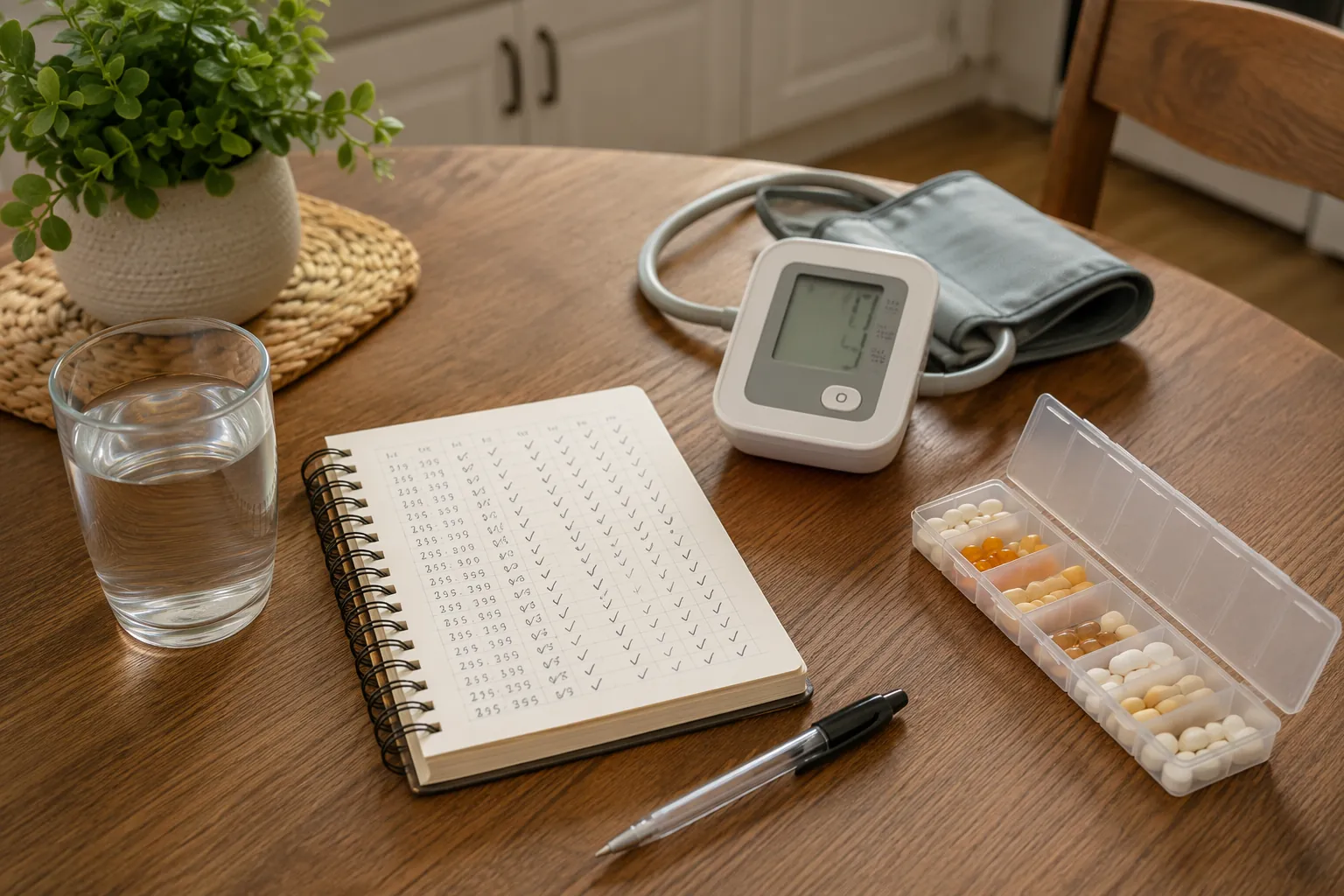
The safest routine is simple enough to survive an ordinary week. It should connect fluid intake, blood pressure readings, symptoms, medication, and fall-risk moments in one place. A notebook works. So does a shared phone note. The point is not perfect tracking; it is giving the clinician and caregiver a pattern instead of a guess.
- Track cups of fluid, not just water. Include water, milk, tea, coffee, broth, and other drinks unless the clinician has given different instructions.
- Write down timing. A large drink late at night may worsen bathroom anxiety; too little fluid before an afternoon walk may increase lightheadedness.
- Record blood pressure at consistent times. Add notes such as “before morning pills,” “after diuretic,” “after standing,” or “felt dizzy.”
- Watch position changes. Note dizziness, wobbling, confusion, rapid heartbeat, unusual fatigue, or needing to sit back down.
- Flag fluid-loss days. Hot weather, fever, vomiting, diarrhea, poor appetite, and extra sweating can change the usual hydration need.
A useful day might read like this: “7:30 a.m. BP before pills, drank water with breakfast. 10:30 a.m. diuretic taken, two bathroom trips. 1:00 p.m. stood up from lunch and felt lightheaded. 3:00 p.m. had broth and water, no dizziness walking to bedroom.” Those plain details can help a clinician decide whether the issue looks like hydration timing, medication effect, orthostatic blood pressure changes, or something else.
Make drinking easier without making bathroom trips scarier
Many older adults are not refusing water because they do not understand hydration. They may be protecting their dignity, their sleep, or their ability to get to the bathroom safely. A plan that ignores that will fail by Tuesday.
- Offer smaller drinks more often instead of pushing a large glass all at once.
- Pair fluids with existing routines: morning pills, breakfast, lunch, afternoon snack, and early evening.
- Move most fluids earlier if nighttime urination is a major fall risk, but confirm this with the clinician if medications or fluid limits are involved.
- Use water-rich foods such as soup, fruit, yogurt, or vegetables when appetite allows, remembering that food fluid counts toward total fluid.
- Keep a safe path to the bathroom: clear cords, add night lighting, use stable footwear, and do not rush after standing.
Slow the stand-up moment
Hydration helps, but it does not remove the need for safer movement. If dizziness tends to happen after lying down, after using the bathroom, or after taking morning medication, build a pause into the routine: sit at the edge of the bed, place both feet on the floor, wait, then stand with support. The person who feels proud of “not needing help” may accept this better as a balance habit than as supervision.
Special caution: diuretics, heart failure, kidney disease, and fluid limits
No caregiver should independently raise fluid intake for an older adult with heart failure, chronic kidney disease, low sodium problems, swelling, shortness of breath, or a prescribed fluid restriction. The same caution applies when diuretics are involved. These medicines can increase fluid loss, but they may also be treating conditions where excess fluid is dangerous.[6][3]
This is the point to call the clinician rather than improvise: repeated dizziness, fainting, new confusion, very high or very low blood pressure readings, rapid heartbeat, signs of dehydration that do not improve, sudden swelling, worsening shortness of breath, or a change in urine output. Bring the hydration log, blood pressure readings, medication list, and symptom notes. That information is more useful than saying, “I think they need more water.”
Ask directly whether there is a daily fluid range, whether coffee or tea count, what to do during hot weather or stomach illness, and whether blood pressure should be checked sitting and standing. If the senior takes a diuretic, ask what symptoms should prompt a medication review and whether any lab monitoring is needed.
What to change today
For a senior with high blood pressure who has no fluid restriction, the first step is usually not a dramatic increase. Start by finding the current pattern: how much they drink, when they drink, whether they avoid fluids before leaving the house or going to bed, and when dizziness appears. Then make the smallest adjustment that addresses the risky moment.
- If morning dizziness is common, review evening and breakfast fluids, morning blood pressure, and medication timing with the clinician.
- If bathroom trips drive fluid restriction, improve bathroom access and lighting before simply telling the person to drink more.
- If hot weather or illness is present, track fluids and symptoms more closely and ask in advance what fluid changes are safe.
- If readings swing from high to low, write down position, timing, meals, medications, and symptoms instead of reacting to one number.
Water is a practical lever, not a cure. For many seniors with hypertension, steady hydration can make blood pressure readings easier to interpret and daily movement safer. The right amount depends on the person’s medications, kidneys, heart, diet, weather, and fall risk. Treat the glass of water, the blood pressure cuff, and the walking path as part of the same care routine.
References
- How Dehydration Affects Blood Pressure, Cleveland Clinic
- Does Drinking Water Lower Blood Pressure?, Verywell Health
- Water Intake: Tips for Getting Enough Water When You're Older, WebMD
- Hydration in older people: a systematic review, PMC
- Dehydration and Blood Pressure: What's the Link?, EatingWell
- Hydration and older adults: Why water matters more as you age, UCLA Health
- Association between plain water intake and incident hypertension: A prospective cohort study in China, PMC, 2024
- H2O for healthy aging, NIH MedlinePlus
- Do You Really Need 8 Glasses of Water a Day?, AARP
Questions to bring to a clinician or OT
This is not medical, legal, or a family's final decision — only a framework. Bring these questions to a clinician, occupational therapist, or your local Area Agency on Aging.
Find Local HelpRelated reading
Noticed something outdated or inaccurate on this page? Flag a correction. We review every report against CDC, NIA, and AARP HomeFit guidance before updating a page.