
Caregiver decision guide
Does drowsy driving detection work for older drivers?
Drowsiness alerts and camera-based driver monitoring can serve as a second set of eyes for an older driver, but no current system can force a stop or prevent being turned off. Families can learn what these systems actually sense, where independent testing found them lacking, and how to verify a specific car's feature before relying on it.
What it actually senses
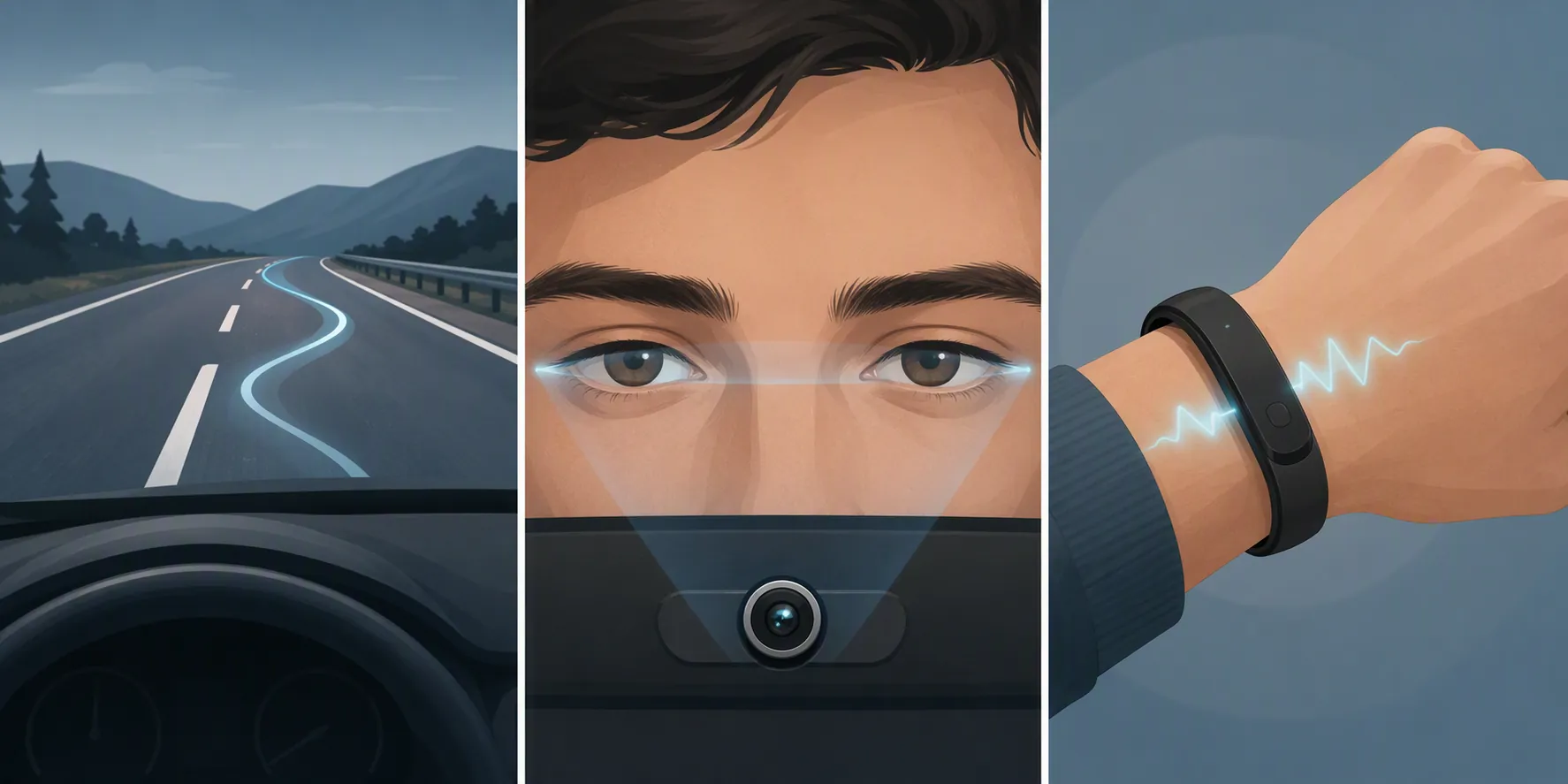
Drowsy driving detection for elderly drivers can be useful, but only as a second set of eyes. It can notice trouble, not command a stop. The value depends on what kind of sensing the car uses: lane-position and steering-pattern systems react after drifting starts, camera-based systems watch the face for eyelid closure, head position, and similar signs, and wearable or physiological approaches are still more research-oriented for most family decisions.
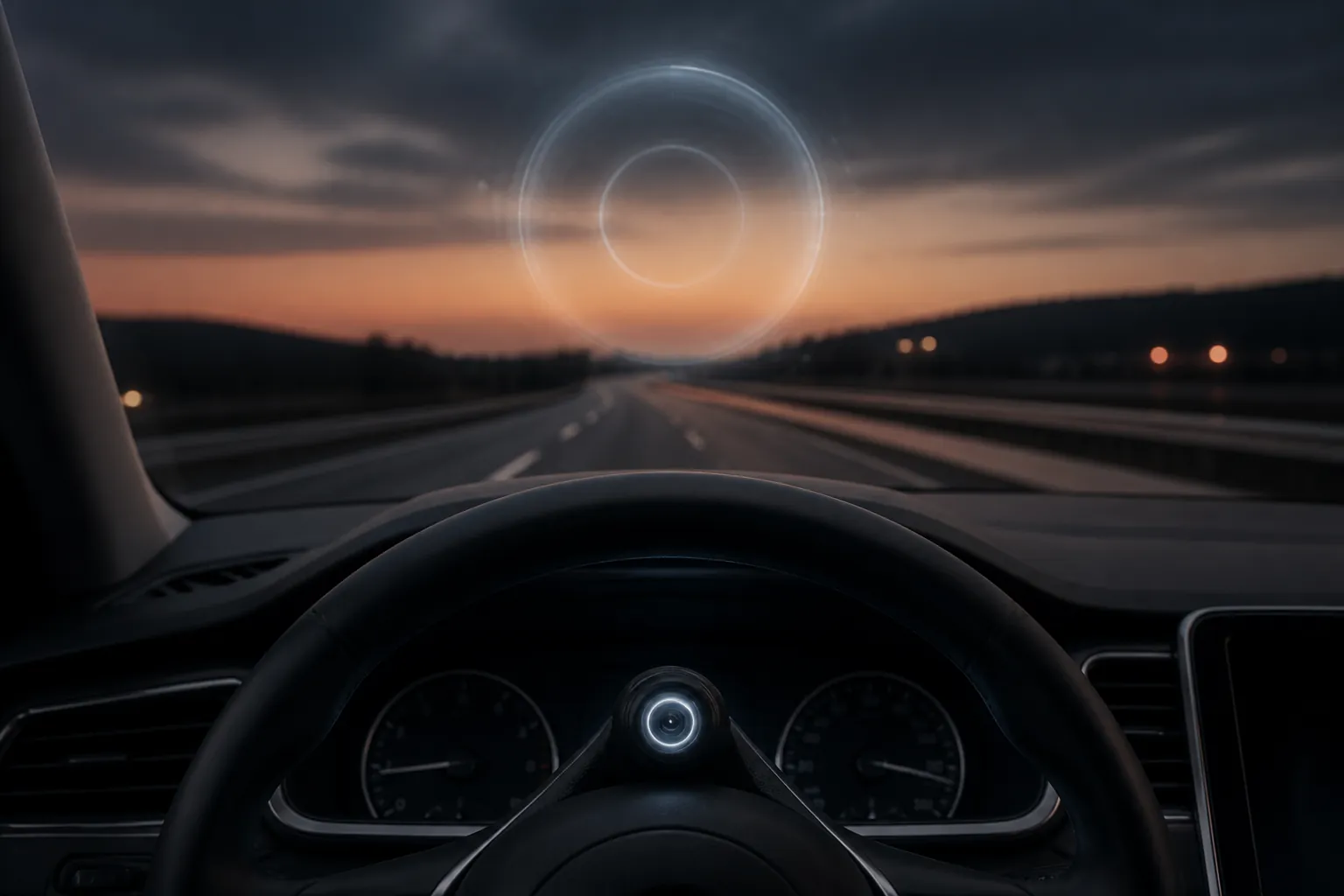
That distinction matters because some systems are only lane monitors with a fatigue label attached, while others are trying to read the driver directly. The camera-based version is closer to what families mean when they ask whether the car can detect an older parent drifting off.
What the stronger systems do
Consumer Reports found that GM Super Cruise and Ford BlueCruise met its effectiveness standard because they escalated alerts and refused to engage when the camera was covered. It also found systems that could still operate with a covered camera or be defeated more easily, which is the difference between a serious safeguard and a brochure feature. [2]
That is the useful floor, not the finish line. GHSA notes that no current drowsiness-detection system prevents a driver from ignoring alerts or turning the feature off. A good system can add friction at the right moment; it cannot take the keys away. [3]
Why age is the wrong frame
The older-driver issue is not that drowsiness suddenly becomes common with age. AAA Foundation’s naturalistic study found that drowsiness prevalence did not vary significantly by age, which pushes the real question toward consequences and contributors: sedating medication, untreated sleep apnea, and how badly an older body can absorb a crash. [1]
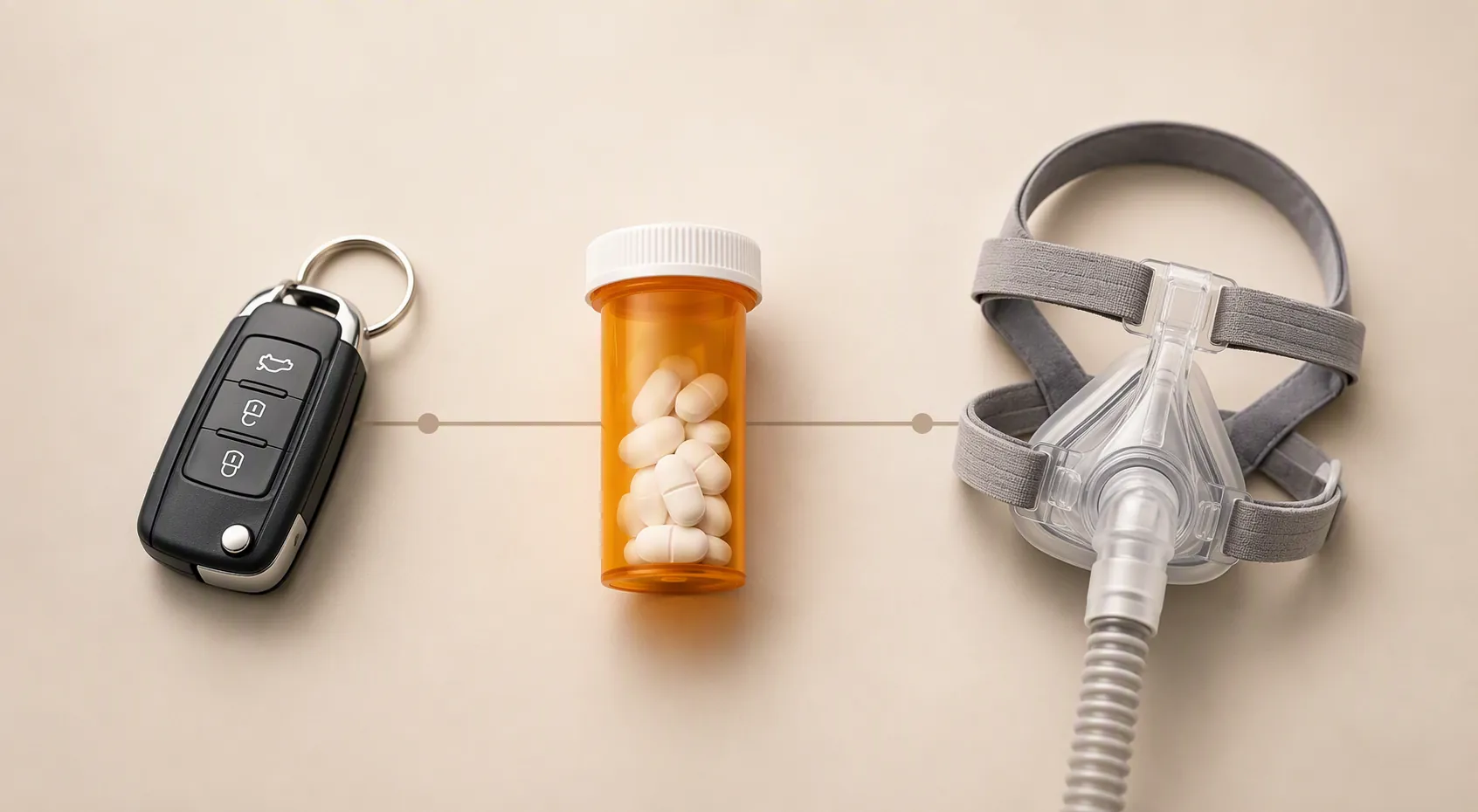
AAA’s LongROAD work reported that nearly half of older drivers were taking seven or more medications, and about 20% were on potentially inappropriate medications associated with crash risk increases of up to 300%. AASM also reports that obstructive sleep apnea is associated with about 2.5 times the crash risk, and that adequate CPAP treatment reduced motor vehicle accidents by 70% in the material it cited. [4][5]
That is why the feature earns its place only inside a broader family plan. If the car alerts, or if fatigue is already part of the reason for shopping, the next move is not just changing settings. It is checking prescriptions for sedation, looking for medication interactions, asking about untreated sleep apnea, and watching for recent changes in attention, balance, or routine.
The regulatory picture is uneven. In the EU, driver drowsiness and attention warning has been required for new vehicle types since 2024, but there is no equivalent U.S. mandate, so families still have to verify the exact make, model, trim, and system behavior instead of assuming the feature is present. [6]
What to check before you rely on it
- What does this car actually sense: lane drift, steering behavior, camera-based eye and head movement, or some combination?
- Do the alerts escalate clearly, and do they become harder to ignore if the driver keeps drifting?
- What happens if the camera is covered or blocked?
- Can the feature be disabled, and how easy is that for the driver?
- What does the owner’s manual say about when it works, when it does not, and what it will not do?
- If alerts happen, what is the family’s next step: medication review, sleep screening, or a driving conversation?
References
- Prevalence of Drowsy Driving Crashes: Estimates from a Large-Scale Naturalistic Driving Study, AAA Foundation for Traffic Safety
- Driver Monitoring Systems Can Help You Be Safer on the Road, Consumer Reports
- Drowsy Driving Kills 6,000 Americans Each Year, New Analysis Shows, Governors Highway Safety Association
- Taking Multiple Medications Can Increase Crash Risk for Older Drivers, AAA Newsroom
- Risk of motor vehicle accidents is higher in people with sleep apnea, American Academy of Sleep Medicine
- Driver drowsiness detection, Wikipedia
Questions to bring to a clinician or OT
This is not medical, legal, or a family's final decision — only a framework. Bring these questions to a clinician, occupational therapist, or your local Area Agency on Aging.
Find Local HelpRelated reading
Noticed something outdated or inaccurate on this page? Flag a correction. We review every report against CDC, NIA, and AARP HomeFit guidance before updating a page.