
Caregiver decision guide
How Long Does Meniscus Tear Recovery Take for Seniors?
Most meniscus tears in older adults are the result of everyday wear and respond to a conservative recovery plan rather than surgery as a first step. This guide gives seniors and their caregivers a phase-by-phase roadmap — from the first 72 hours through months 2-6 — with realistic timelines and the warning signs that mean a doctor call is needed.
If the knee is newly painful and the diagnosis is a torn meniscus, the first useful answer is not one recovery date. It is a safe route through the next few days and weeks. In older adults, meniscus tears are often degenerative: the cartilage has weakened over years of use and may tear after an ordinary twist, squat, or getting up from a chair rather than a dramatic injury [1].
That matters because recovery is partly about the tear and partly about the rest of the knee. A small tear may commonly improve in four to six weeks, while a full meniscus repair can require three to six months of rehabilitation [1][2]. Physical therapy may run four to eight weeks for a smaller tear and longer for a more serious one, with progress commonly re-evaluated about every four weeks [3]. Existing arthritis, swelling, pain with weight-bearing, and loss of thigh strength can stretch the timeline.

A practical recovery map, not a single deadline
A caregiver may be listening for one thing — “When will Mom be back to normal?” — while the person with the knee injury is listening for something else: “Can I walk to the bathroom safely tonight?” Both questions belong in the plan. The table below gives the broad path, then the sections that follow slow down where the decisions are most important.
| Phase | Main job | What may change the timeline |
|---|---|---|
| First 72 hours | Calm swelling, protect the knee, avoid twisting, watch for locking, giving way, sharp pain, or worsening swelling. | A knee that cannot bear weight safely, keeps swelling, or catches and locks needs clinician guidance rather than a home timeline. |
| Days 4-14 | Begin gentle movement as directed, restore comfortable walking, and avoid losing strength from too much sitting. | Pain, arthritis, poor balance, or fear of stairs may require a cane, walker, or earlier physical therapy support. |
| Weeks 2-6 | Build thigh and hip strength carefully; many minor tears improve within four to six weeks [1][2]. | The tear’s size and location, swelling after activity, and existing osteoarthritis can slow progress. |
| Weeks 4-8 and beyond | Physical therapy often continues four to eight weeks for a small tear and longer for more serious tears, with reassessment about every four weeks [3]. | No clear improvement, new instability, or recurring swelling should trigger reassessment. |
| Months 2-6 | Keep rebuilding strength and safe mobility; full repair rehabilitation can take three to six months [1][2]. | Surgical repair, a larger tear, or arthritis can make “improved” and “fully recovered” very different milestones. |
Why tear location changes expectations
The meniscus is not equally able to heal in every spot. The outer third has a better blood supply and is often described as the red zone. The inner portion has little to no blood supply and is often called the white zone [1][2]. This does not mean someone can look at a diagram and know their outcome. It means the MRI report, exam findings, symptoms, and the condition of the rest of the knee all matter.
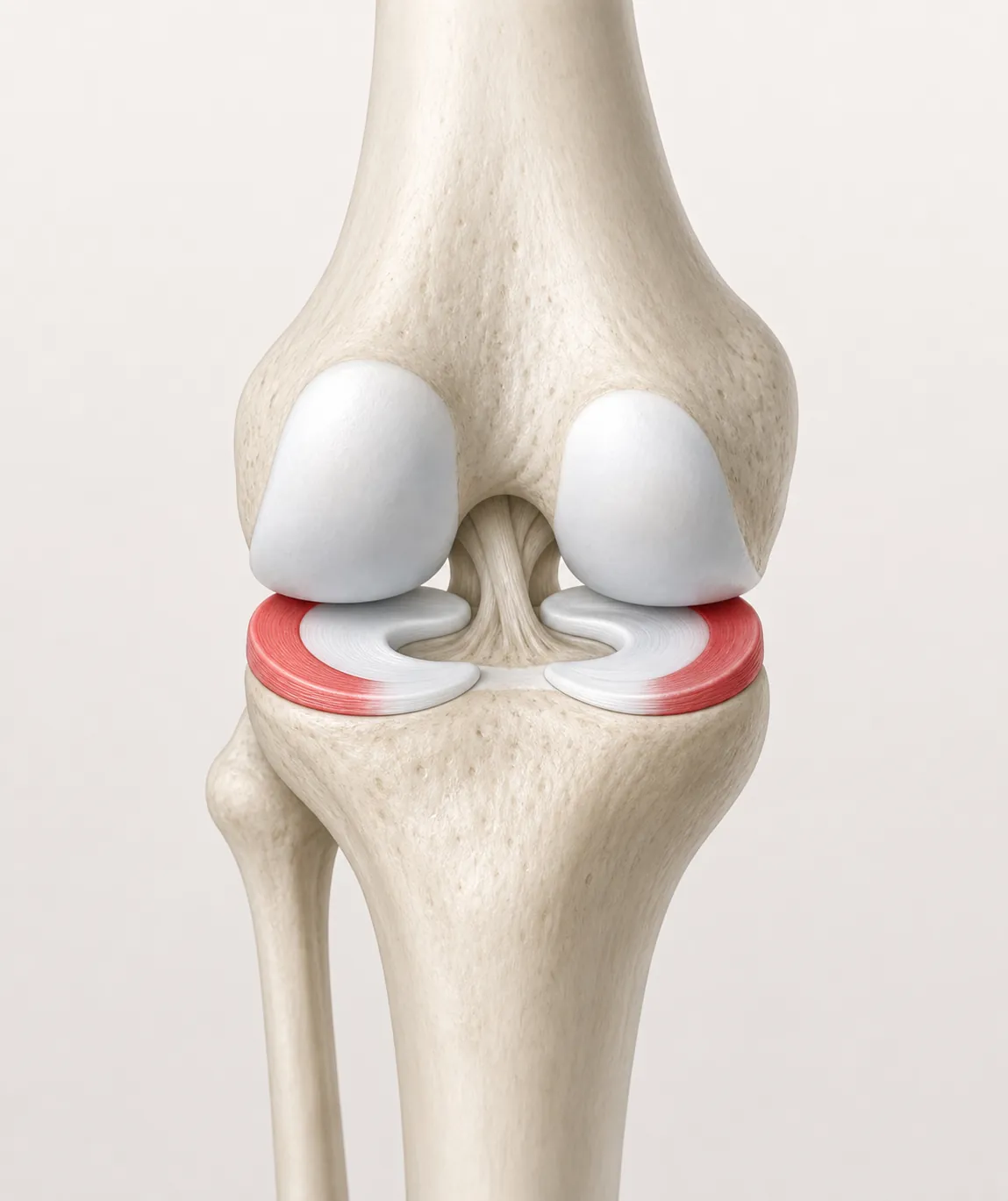
For an older adult, this is where dramatic “fix the tear” language can mislead. A degenerative tear in a knee with arthritis is not the same problem as a fresh sports injury in a younger knee. The practical question is whether pain and swelling settle, walking becomes safer, and the leg regains enough strength to handle daily life without repeated setbacks.
First 72 hours: protect the knee without turning the person into a patient in bed
The first three days are for calming the knee and preventing one problem from becoming two. Painful knees change how people move. They shorten their steps, avoid bending, stop using stairs, and sometimes hold furniture instead of asking for an assistive device. That may feel like independence, but it can make a fall more likely.
Ice deserves specifics. Mayo Clinic advises icing a torn meniscus for about 15 minutes every four to six hours for the first day or two [4]. AAOS describes icing for about 20 minutes several times a day [1]. In real homes, that usually means using a towel between the cold pack and skin, setting a timer, and checking the skin afterward. Older skin can be less forgiving, and a person who dozes off with ice on the knee can overdo what was meant to be a short treatment.

During this first window, keep the knee away from twisting, deep squatting, hurried stair climbing, and uneven ground. That does not necessarily mean staying in bed. It means choosing short, deliberate trips: bathroom, kitchen, favorite chair, and back. If a cane or walker is needed temporarily, the goal is not to “give in.” The goal is to avoid a preventable fall while the knee is painful.
A caregiver can help most by doing the ordinary things that are easy to miss: clear throw rugs and cords, put a chair near the entryway, make sure the person has shoes with backs, place ice packs where they can be reached safely, and watch how the knee behaves after each short walk. If equipment or therapy coverage questions come up, a Medicare benefits checklist for seniors can help organize the conversation before a device or service is ordered.
Call the clinician early if the knee is not behaving like a simple flare
Locking, catching, giving way, sharp pain, and worsening swelling are not just annoyances to “push through.” They are decision points. Meniscus tears can cause catching or locking symptoms, and AAOS notes that symptoms may include the knee giving way, stiffness, swelling, and trouble moving the knee through its full range [1]. A senior who is already less steady cannot afford several days of guessing while the knee buckles on the way to the bathroom.
Days 4-14: start moving carefully before weakness takes over
Once the first swelling and pain begin to settle, the plan shifts. The knee still needs protection, but the person also needs normal movement. Too much rest can turn a knee injury into a whole-body slowdown: less walking, less confidence, weaker thighs, and more help needed for bathing, stairs, and errands.
This is often the right time to ask the clinician what level of weight-bearing is safe, whether physical therapy should start now, and whether an assistive device would reduce fall risk while symptoms calm down. The answer may differ for a small degenerative tear, a knee with osteoarthritis, or a tear that causes mechanical symptoms such as catching.
At home, the safest progress is usually boring progress: shorter walks more often, sitting before fatigue changes the gait, and avoiding the “I’ll just carry this laundry basket upstairs” moment. Health events that disturb walking can raise fall risk in practical ways even when the event itself is not neurological. The same home-safety thinking used during other recovery windows — such as planning for falls during cancer treatment or adapting routines for a parent with multiple sclerosis — is useful here too: fewer hazards, slower transitions, and no rushing on stairs.
Weeks 2-6: improvement should be visible, even if recovery is not complete
For many smaller tears, four to six weeks is a reasonable improvement window reported by orthopedic sources [1][2]. Improvement may look modest at first: less swelling after walking, less night discomfort, better confidence getting out of a chair, or fewer sharp twinges with ordinary steps. Those changes count. They are not the same as being ready for long walks, yard work, kneeling, or a full day of errands.
This is the phase where thigh and hip strength matter most. The quadriceps help control the knee as the leg straightens. Hip strength helps keep the leg from drifting inward or wobbling during steps. A physical therapist may choose exercises such as gentle range-of-motion work, straight-leg raises, seated knee extensions, bridges, or supported balance practice, depending on the person’s pain, swelling, and medical restrictions. The exact menu should come from the treating clinician or therapist, not from a generic list.
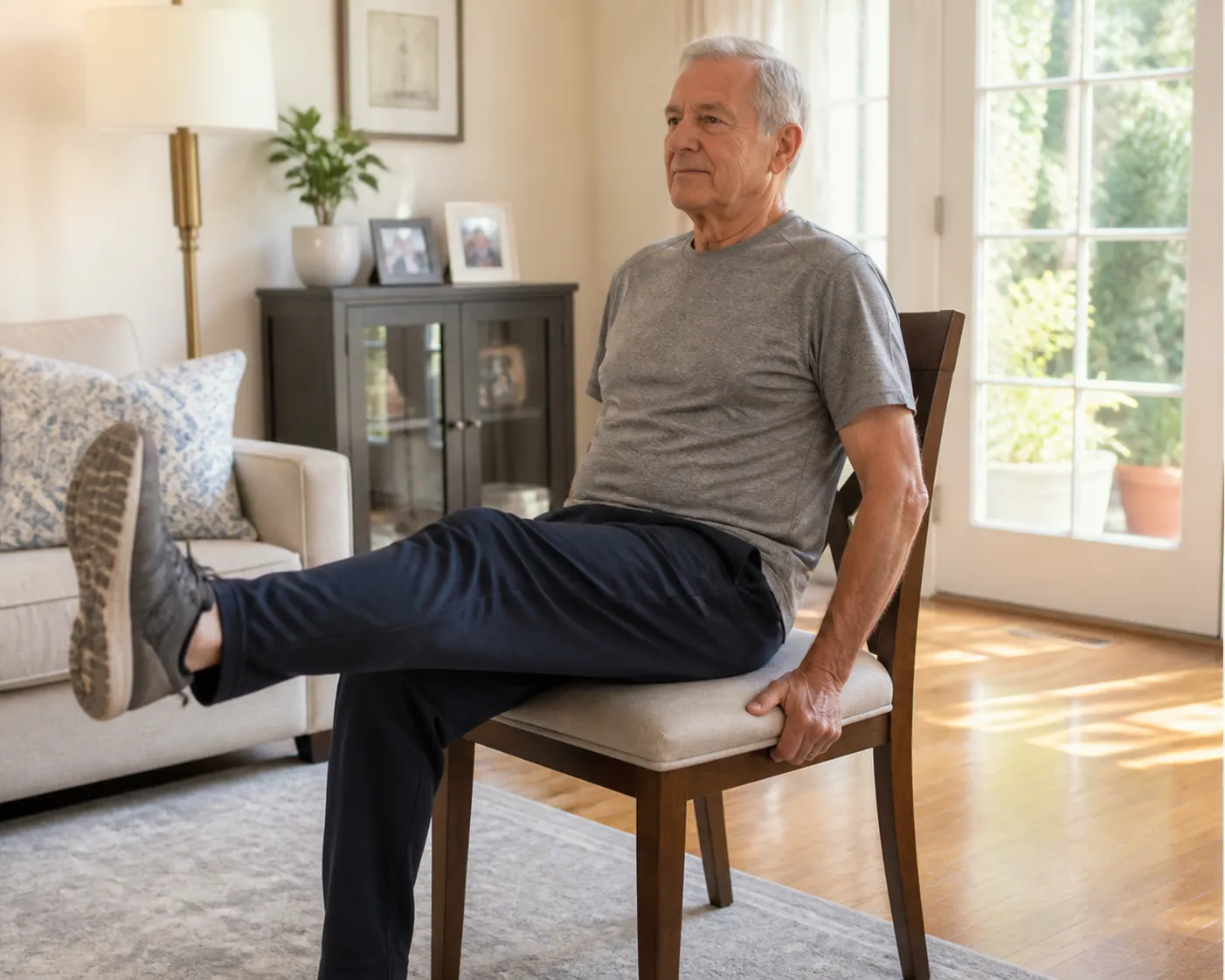
A useful caregiver question is not “Are you better?” It is “What happened after you walked?” Swelling that rises after every activity, pain that sharpens instead of eases, or a knee that gives way on turns should be reported. On the other hand, mild soreness after new therapy work may be part of rebuilding, especially when it settles and does not change the person’s walking safety.
Balance work should stay close to support. A kitchen counter, sturdy chair, or therapist-supervised setting is different from practicing on a rug in the middle of the room. When the knee is calmer and the clinician approves, simple posture and balance routines can help rebuild confidence; the site’s posture exercises for senior balance and senior workout videos for strength and balance are best used as gentle add-ons only after the knee plan is clear.
Weeks 4-8 and beyond: use reassessment, not stubbornness
NYU Langone describes nonsurgical physical therapy as often lasting four to eight weeks for a small tear and eight weeks or longer for more serious tears, with progress re-evaluated about every four weeks [3]. That reassessment point is important. It gives everyone permission to look honestly at what is changing.
- Good signs: walking distance is increasing, swelling is less frequent, stairs are safer, and the person needs fewer pain-limited rest breaks.
- Stall signs: the same short walk causes the same swelling every time, the knee still catches or locks, or the person is avoiding more daily tasks than before.
- Urgent-to-report signs: giving way, sharp pain, worsening swelling, or a new fall during recovery.
A stalled recovery does not automatically mean surgery. It does mean the plan needs another look: Was the diagnosis complete? Is arthritis driving more of the pain than the tear? Is the exercise load too high, too low, or poorly matched to the person’s balance? Is the person avoiding movement because the house setup feels unsafe?
Physiopedia’s review of degenerative meniscal tear management describes a three- to six-month period of nonsurgical management before surgery is considered in this context [5]. Mayo Clinic also frames initial treatment around conservative measures such as rest, ice, and medication, with therapy used to strengthen the muscles around the knee and in the legs [4]. For an older adult, that conservative window is not passive waiting. It is an active trial of safer walking, swelling control, and strength rebuilding.
Months 2-6: improved is not always the same as fully recovered
By the second month, some people with smaller degenerative tears are already much more comfortable. Others are better but still not steady on uneven ground, not ready to kneel, or still cautious with stairs. If surgery was performed, the timeline changes again: HSS describes partial meniscectomy recovery as about three to six weeks, while recovery after a meniscus repair can take three to six months [2]. AAOS also describes meniscus repair rehabilitation as commonly taking three to six months [1].
Those surgical ranges are not interchangeable. A partial meniscectomy removes the damaged portion. A repair tries to preserve and heal the meniscus, which usually requires a longer, more protected rehabilitation course. A person who hears that someone else “was fine in a month” may be hearing about a different tear, a different procedure, or a different knee.
For conservative care, the later months are where independence is either rebuilt or quietly narrowed. The knee may hurt less, but the person may still have stopped walking outside, stopped visiting friends, or stopped using the basement stairs. That is the loss worth catching. A good recovery plan asks not only about pain but also about the activities that make the person’s life feel like their own.
What to track at home
- Swelling pattern: Does the knee puff up after the same activity, or is the threshold improving?
- Walking safety: Is the person limping less, turning more safely, and using an aid correctly if one was recommended?
- Chair and stair ability: Can they rise from a chair and manage steps without grabbing, rushing, or twisting?
- Confidence: Are they resuming normal routines, or has fear of the knee started shrinking the day?
- Mechanical symptoms: Any locking, catching, giving way, sharp pain, or worsening swelling should be shared with the clinician.
When the plan needs a doctor’s input
A general recovery roadmap is helpful until the knee steps outside it. Call the clinician if the knee locks, catches repeatedly, gives way, develops sharp pain, swells more instead of less, or fails to show meaningful progress during the therapy reassessment window. Call sooner if a fall happens, if walking to the bathroom is unsafe, or if the person cannot follow the plan without more help than expected.
Most older adults do not need a surgery-first mindset for a degenerative meniscus tear. They do need a plan that protects the knee early, rebuilds thigh and hip strength steadily, and treats worsening symptoms as information rather than inconvenience. This article is for education only and is not medical advice, diagnosis, or treatment. A clinician who has examined the knee should guide weight-bearing, medication choices, therapy progression, imaging decisions, and any surgical discussion.
References
- Meniscus Tears, AAOS OrthoInfo
- Meniscus Tear: Symptoms & Treatment of a Torn Meniscus, HSS
- Nonsurgical Treatments for Meniscus Tears, NYU Langone
- Torn meniscus - Diagnosis & treatment, Mayo Clinic
- Managing Degenerative Meniscal Tears, Physiopedia
Questions to bring to a clinician or OT
This is not medical, legal, or a family's final decision — only a framework. Bring these questions to a clinician, occupational therapist, or your local Area Agency on Aging.
Find Local HelpRelated reading
Noticed something outdated or inaccurate on this page? Flag a correction. We review every report against CDC, NIA, and AARP HomeFit guidance before updating a page.