
Caregiver decision guide
Can seniors who can't drive use self-driving cars?
Self-driving ride services can help fill the gap after a parent stops driving, but only when service coverage, fare, booking, and accessibility all line up. This four-point checklist tells you whether driverless rides are a viable option for your parent.
Self-driving cars for seniors who can no longer drive are a conditional yes in 2026. The useful question is not “do robotaxis exist?” They do. The useful question is whether a service works in your parent’s city, at a fare your family can sustain, with a booking method your parent can actually use, and with accessibility details that match the way they move through the world.
One line should stay bright: a fully driverless ride service is different from a supervised driver-assistance feature. If a licensed, attentive person still has to sit behind the wheel and remain responsible for the trip, it may extend someone’s driving years, but it does not replace transportation for a parent who has already stopped driving.
The “is this real yet?” part has changed. In July 2026, Waymo announced driverless ride service in San Diego, Las Vegas, Tampa, and Denver, bringing its public robotaxi service to more than 10 U.S. cities; Waymo’s own FAQ describes a fleet of roughly 4,000 vehicles and more than 20 million total rides. [1][2]
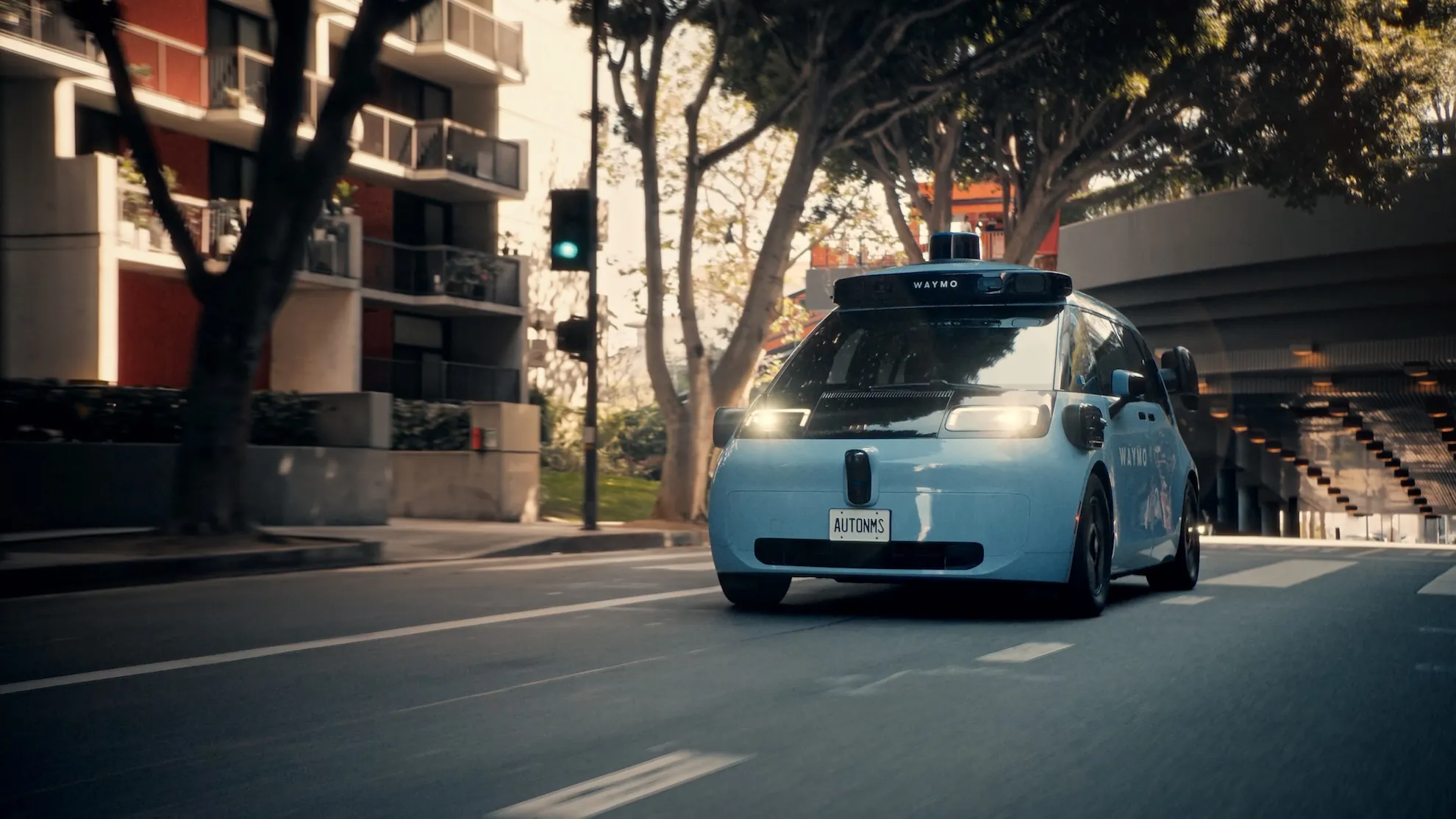
That is enough to make self-driving rides worth checking. It is not enough to make them a transportation plan.
The four checks that decide whether this is useful
| Check | What to verify for your parent | Why it matters |
|---|---|---|
| Service area | Does a public driverless service pick up and drop off at the actual home, clinic, grocery store, senior center, or relative’s house? | A city launch does not mean every neighborhood, suburb, medical campus, or airport trip is covered. |
| Fare | What would the regular rides cost in a real month, not just for one novelty trip? | A few dollars per ride becomes a budget issue when the rides replace weekly errands, appointments, and social visits. |
| Booking | Can your parent book, change, and cancel rides without fighting a smartphone app? | A technically available ride is not available to someone who cannot use the booking flow. |
| Accessibility | Can the service handle the actual mobility need: cane, walker, wheelchair, low vision, hearing loss, slower boarding, or a caregiver traveling along? | Generic “accessible” language is not the same as a trip your parent can complete safely and without feeling stranded. |
If the ride is for a medical appointment after an injury or surgery, the transportation question should sit alongside the recovery plan. A parent who is still rebuilding strength after something like back surgery or a meniscus tear may need more than a curb-to-curb ride.
Availability comes first, because “in the city” can still mean “not for Mom”
Start with the addresses, not the brand name. Put in your parent’s home, the cardiologist’s office, the pharmacy, the grocery store, and the house where they still play cards on Thursdays. If the service will not cover the actual pattern of life, the rest of the discussion is mostly decoration.
This is where families researching from another city can get fooled by expansion headlines. A robotaxi company may operate in a metro area while still limiting service by neighborhood, time, road type, or operating zone. A ride that works downtown may not work from a parent’s subdivision. A clinic that appears close on a map may sit outside the service boundary.
For a parent who has already given up the keys, partial coverage is not useless. It may still cover grocery trips, library visits, or a recurring appointment. But it should be labeled honestly: a supplement, not a replacement.
The fare has to survive a month of real use
Robotaxi fares are moving closer to ordinary ride-hail fares, but the careful reading is “closer,” not “cheap.” In a Bay Area sample of about 94,000 simulated ride requests from November 27, 2025, through January 1, 2026, Waymo averaged $19.69 per ride, compared with $17.47 for Uber and $15.47 for Lyft. [3]
That sample does not tell you what a ride will cost in Tampa, Denver, or your parent’s neighborhood next month. It does tell you how to think about the budget. A self-driving ride may be in the same general band as ride-hail, while still costing enough more that weekly repetition matters.
For a family plan, price the recurring routes. The cardiology visit. The physical therapy trip. The grocery run. The hair appointment that is not medically necessary but absolutely part of staying human. Then decide whether the likely monthly total is sustainable without quietly rationing the rides later.
Booking is where many “available” rides stop being available
For some older adults, the hard part is not getting into the car. It is getting the ride ordered in the first place. If the service assumes a smartphone, a current app, a saved payment method, text alerts, map-reading, and comfort with last-minute on-screen prompts, it may work beautifully for an adult child and poorly for the parent who needs it.
There are workarounds, but they are not all robotaxi workarounds. GoGoGrandparent lets riders request Uber and Lyft trips by phone, with no app or internet required. [4] Uber Senior accounts let a family organizer book, pay for, and track rides for an older adult. [5]

That distinction matters. A phone-based Uber or Lyft booking service may be the practical backup that keeps a parent moving, even if the fully driverless option in the same city still requires an app. For some families, the better transportation plan may be a mix: driverless rides where they are easy, human-driven ride-hail when the booking or assistance needs are different, and family rides only for the trips that truly require family.
When you test booking, do not test it as yourself. Test it the way your parent would have to use it. Can they call? Can they hear the instructions? Can they recognize the vehicle? Can they cancel if the appointment runs late? Can you track the ride from another city without taking over every step?
Accessibility is not one feature
Accessibility is where vague confidence gets people into trouble. A parent with a folding cane, a parent using a rollator, a parent who transfers from a wheelchair, and a parent with low vision do not need the same ride experience.
Waymo has described accessibility work that includes wheelchair-accessible vehicles, audio cues, screen-reader support, rider support chat, and collaboration through the Waymo Accessibility Network. [6] Those are meaningful features to look for. They are also not a substitute for checking whether the specific ride your parent wants can be completed with the specific device, doorway, curb, and assistance level involved.
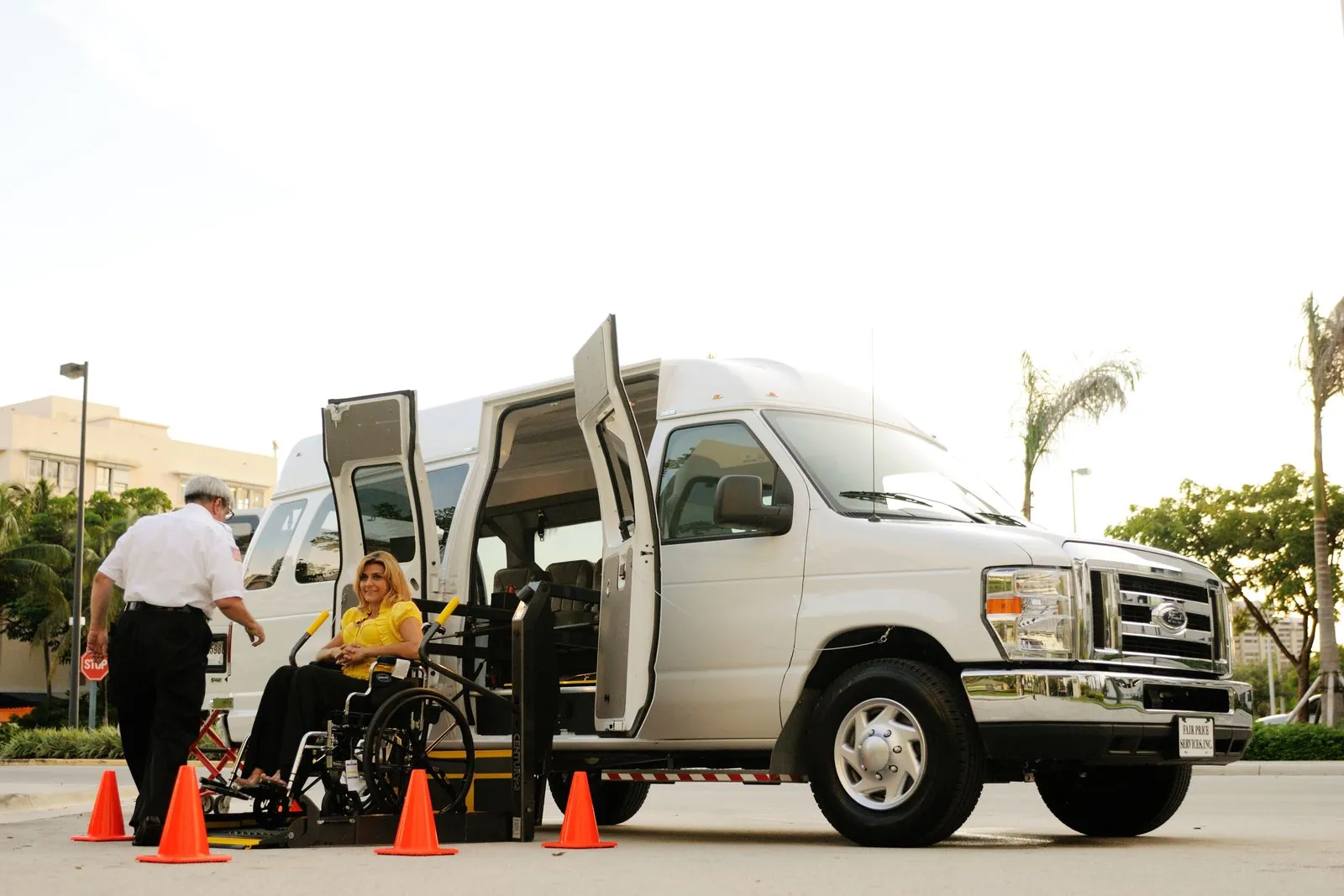
The booking channel is part of accessibility too. AARP’s Public Policy Institute has warned that new mobility and automated vehicle services can create barriers for older adults when they depend on apps, internet access, or digital payment systems. [7] That is not a side issue. It is often the difference between “this exists” and “my father can use it on Tuesday at 8:30 a.m.”
Before promising anything to a parent, check these details with the service:
- Whether wheelchair-accessible vehicles are available in that city and whether they can be requested reliably.
- Whether a walker, rollator, oxygen tank, or other device can be brought along and where it goes.
- Whether the parent must navigate to a pickup point or whether pickup can happen at the curb they already use.
- Whether a companion or caregiver can ride with them.
- What happens if the parent needs more time to board or gets anxious during the ride.
- How live support is reached if the parent cannot use in-app chat.
Expect hesitation before the first ride
An older parent’s skepticism is not the obstacle to the plan. It is part of the plan.
In a Pew Research Center survey conducted in November 2021 with 10,260 U.S. adults, 74% of adults ages 50 and older said they would not want to ride in a driverless passenger vehicle. [8] That attitude data predates the larger 2025–2026 robotaxi expansion, so it should not be treated as a permanent ceiling. But it does capture something families recognize immediately: “safe enough for the city to allow it” and “safe enough for my mother to climb in” are different emotional thresholds.
The more encouraging evidence comes from actual exposure. A University of Florida study involving 240 older adults found that participants had positive opinions of self-driving shuttles after riding in one. [9] That is a better model for families than trying to win the argument in the kitchen.
A first ride should not be the cardiology appointment your parent has waited three months to get. It should not be after dark, in bad weather, with a phone battery at 12%. The first ride should be boring on purpose.
Pilots matter, but they are not the same as everyday service
There are also senior-focused automated shuttle efforts, and they are worth watching because they are built around the right population. A JMIR review describes local pilots including Detroit’s free Accessibili-D service and goMARTI in rural Minnesota. [10] These programs point toward a useful model, especially for short community trips, but they should be treated as pilots unless your parent actually lives inside the service area and can use the schedule.
The reason this deserves attention is not that every new transportation technology deserves attention. It is that stopping driving can be a serious loss. A systematic review from the AAA Foundation for Traffic Safety found that driving cessation was associated with nearly doubled risk of depressive symptoms, a 51% reduction in social network size over 13 years, and about five times the risk of long-term care entry. [11]
Columbia researchers also cautioned that simply having transportation alternatives available does not automatically offset the losses that follow driving cessation. [12] That is the sober part. A ride option only helps if the older adult can and will use it often enough to preserve pieces of ordinary life.
Transportation is only one part of independence, of course. If a parent is losing social contact along with mobility, families often have to think more broadly about routines, visitors, community ties, and even small daily companionship supports like pets for seniors living alone. A robotaxi cannot replace a social network. It can only help someone reach one.
How to run a first test without making it a big production
If the service area, fare, booking method, and accessibility details all pass the first screen, try one supervised ride before making any promises about regular use. The goal is not to prove a point. The goal is to see whether your parent can complete the whole trip without feeling trapped, embarrassed, or dependent on a hidden helper.
- Pick a low-stakes destination: a familiar café, library, pharmacy, or relative’s house.
- Schedule it in daylight and good weather if possible.
- Use the same booking method your parent would use later, even if that means you sit beside them while they call or tap through the steps.
- Have a companion ride along the first time.
- Confirm how to reach support before the car arrives.
- Have a backup ride ready, without treating backup as failure.
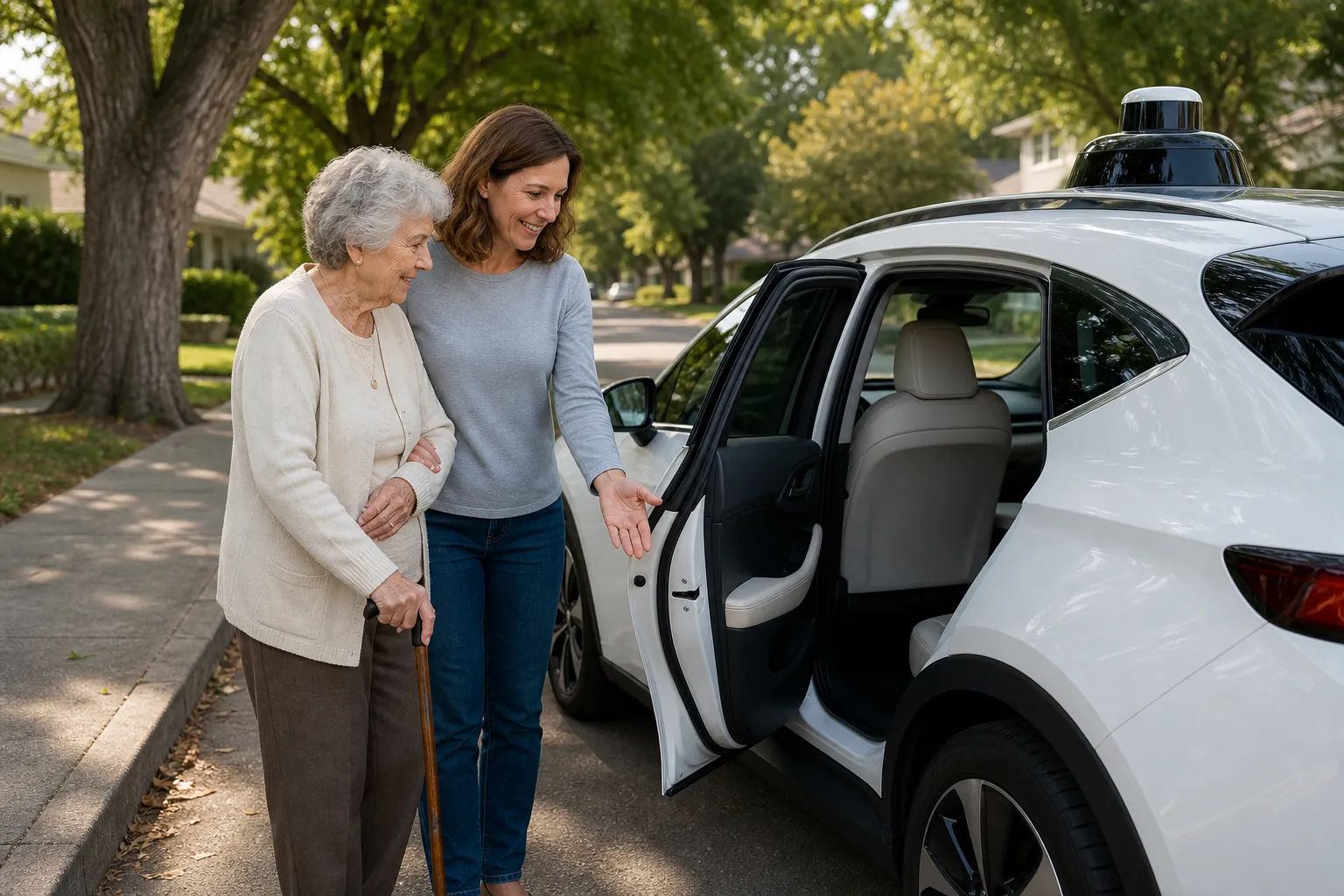
After the ride, ask practical questions, not technology questions. Did the pickup feel clear? Was the car easy to identify? Could your parent get in and out comfortably? Did the silence of no driver feel peaceful or strange? Could they imagine doing that trip again without you?
A conditional yes is still a yes. If the local service covers the right places, the fare fits the real monthly budget, the booking flow works without digital gymnastics, and the accessibility details match your parent’s body and confidence level, a self-driving ride can be worth a careful first trial. If any one of those pieces fails, the family has learned something useful before handing a parent another system that says “independence” while making them wait at the curb.
References
- Waymo starts driverless rides in San Diego, Las Vegas, Tampa, Denver — CNBC, July 8, 2026.
- Waymo FAQ — Waymo.
- The price gap between Waymo and Uber is narrowing — TechCrunch, January 27, 2026.
- How We Work — GoGoGrandparent.
- Uber for Seniors FAQs — Uber Help.
- Launching the Waymo Accessibility Network — Waymo Blog, October 2022.
- Older Adults, New Mobility, and Automated Vehicles — AARP Public Policy Institute.
- Older Americans more wary than younger adults about prospect of driverless cars on the road — Pew Research Center, October 24, 2022.
- Older adults have positive opinions of self-driving shuttles, study finds — University of Florida College of Public Health and Health Professions, June 3, 2024.
- Autonomous Vehicle Technology and Senior Mobility: A Review — JMIR.
- Driving Cessation and Health Outcomes in Older Adults — AAA Foundation for Traffic Safety.
- Health Goes Downhill When Older Adults Stop Driving — Columbia University Mailman School of Public Health.
Questions to bring to a clinician or OT
This is not medical, legal, or a family's final decision — only a framework. Bring these questions to a clinician, occupational therapist, or your local Area Agency on Aging.
Find Local HelpRelated reading
Noticed something outdated or inaccurate on this page? Flag a correction. We review every report against CDC, NIA, and AARP HomeFit guidance before updating a page.