
Caregiver decision guide
Five Foundations for Staying Fabulous in Your 90s
This article outlines five evidence-backed pillars — mobility, cognitive engagement, personal style, purposeful routine, and proactive health — that research shows can help people maintain a vibrant, independent life in their 90s, while acknowledging the role of genetics and luck.
To stay fabulous in your 90s is not to pretend to be 60. It is to keep enough command of ordinary life that you can choose your shirt, cross the room, answer the phone, meet a friend, decline help politely, accept useful help without shame, and still recognize yourself in the day you are living.
That distinction matters because families often arrive at this question frightened. They have seen a fall, a forgotten bill, a missed medication, or a parent who suddenly seems smaller in the world. Safety becomes urgent, as it should. But if safety is allowed to become the whole plan, the 90s can quietly turn into a well-monitored life with too little life in it.
The evidence gives a more useful picture than either despair or cheerleading. People aged 90 and older can report higher life satisfaction and happiness than people in middle age, according to UK well-being data from the Office for National Statistics.[1] At the same time, The 90+ Study reports that disability and dementia are common in this age group, with almost 80% disabled at 90+ and more than 40% living with dementia.[2] Both truths belong in the room.
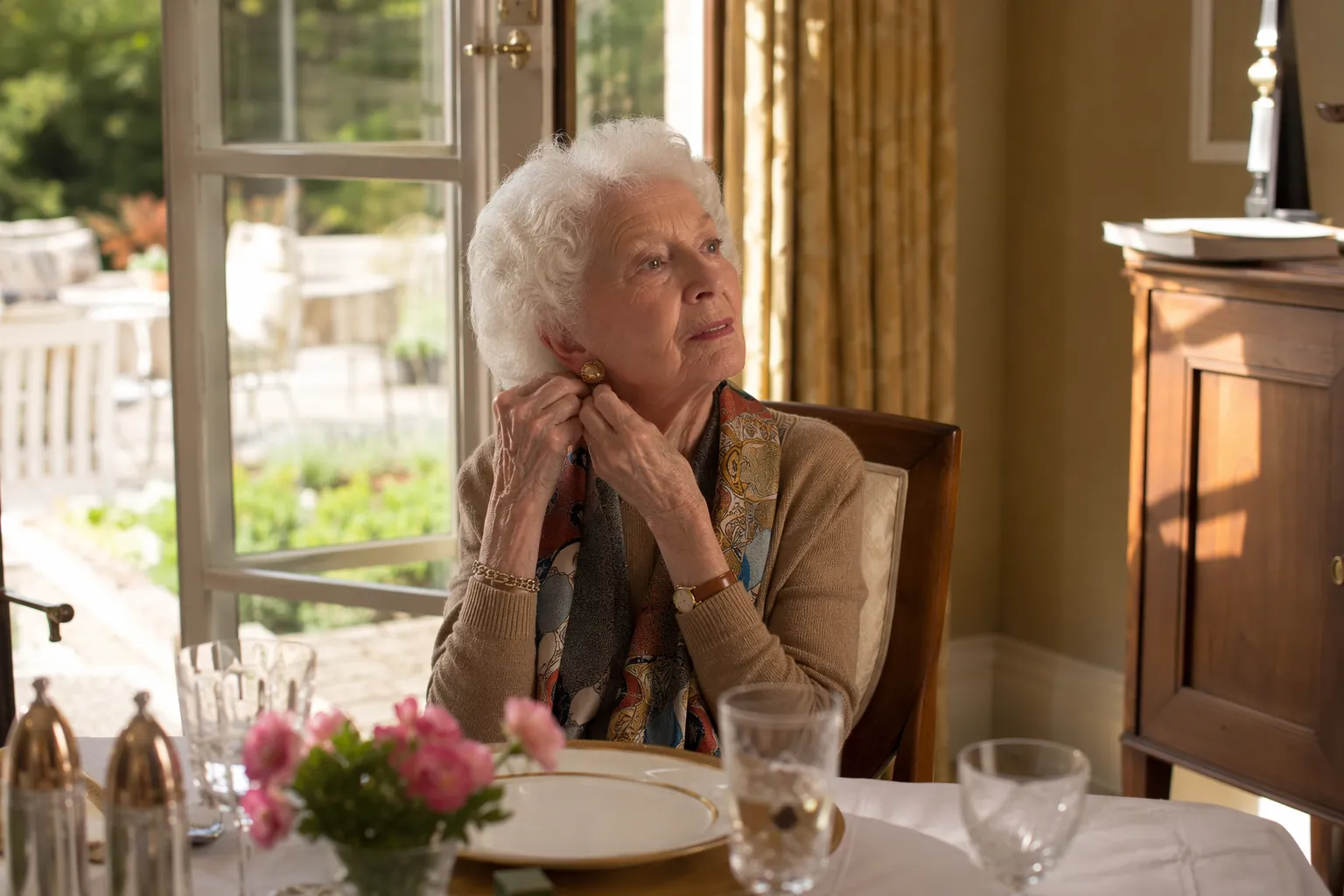
The question, then, is not how to guarantee a glamorous old age. No one can. The better question is: which foundations most often preserve usable life, dignity, and participation when someone is already in their late 80s or 90s? Five stand out: mobility, cognitive and social engagement, personal style and self-care, purposeful routine, and proactive health monitoring.
Mobility Comes First Because It Sets the Size of the World
Mobility is not a fitness hobby in the 90s. It is the difference between the bedroom and the breakfast table, the bathroom and the hospital, the front step and the wider neighborhood. A person who can rise from a chair, steady herself, and walk to the door still has choices that disappear quickly when every transfer requires another adult.
The 90+ Study found that people who exercised daily in their 60s and 70s had a lower likelihood of falling at age 90 and beyond.[2] Stanford Medicine’s 2026 guidance for people in their 60s and 70s recommends 7,000 steps a day, 150 minutes a week of moderate aerobic activity, and strength training twice weekly, with the goal of carrying capacity forward into later decades.[3] That does not mean a 92-year-old should be handed a generic exercise target. It means the body keeps score over time, and strength is worth treating as a form of long-term independence planning.
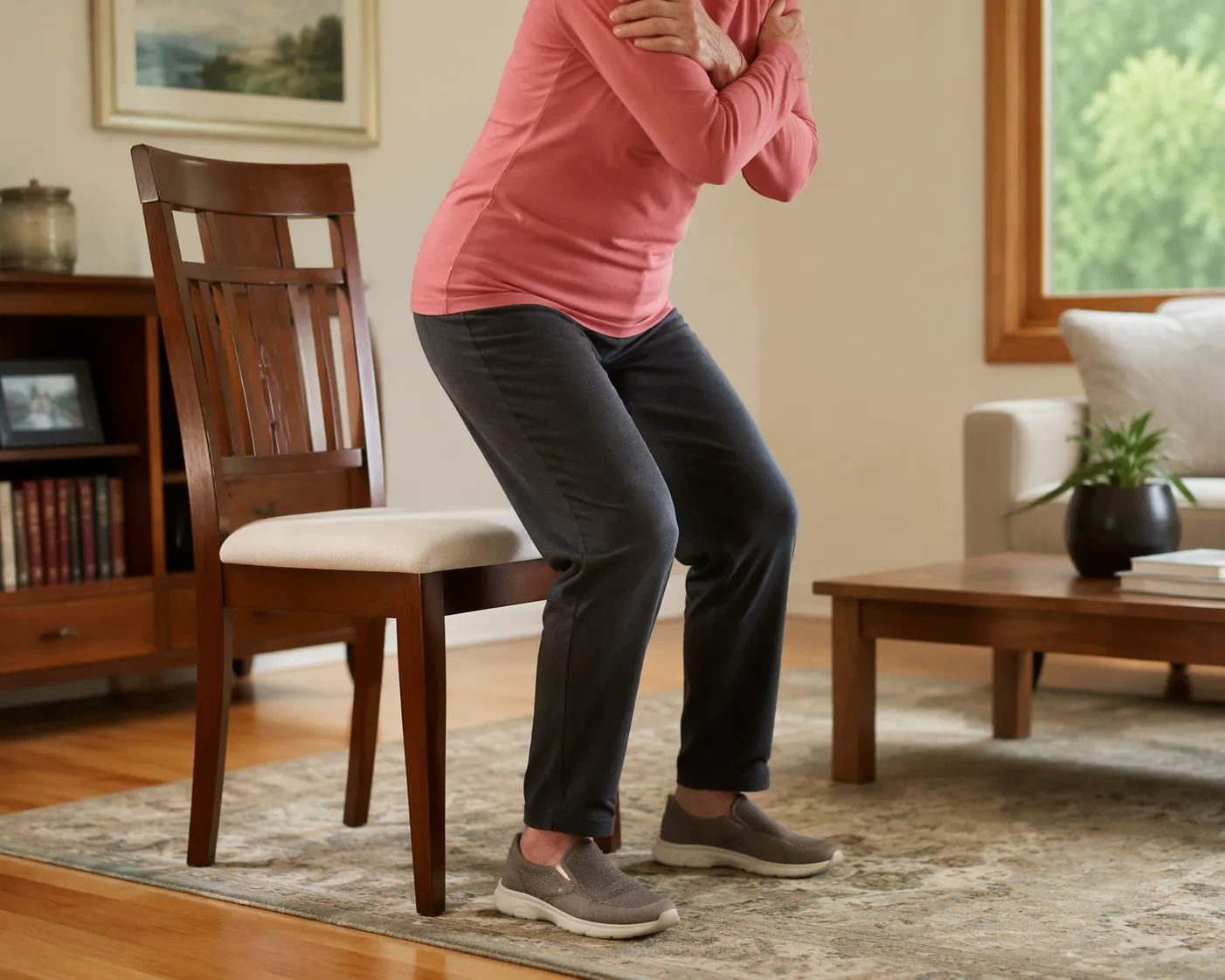
One of the most revealing questions is plain: can your parent stand up from a chair without using their hands? Stanford’s guidance treats the sit-to-stand movement as a functional separator between independent living and needing assistance.[3] It is not elegant, and that is why it is so useful. It shows leg strength, balance, coordination, confidence, and whether the person can manage one of the repeated acts that fills a day.
Balance belongs beside strength. Stanford also notes that the ability to stand on one leg for 10 seconds correlates with improved mortality in people aged 51 to 75.[3] That finding is not a magic test for a 94-year-old, and no one should turn it into a parlor trick. But it does point toward something families can observe: balance is not a decorative skill. It is a reserve against fear, falls, and shrinking routines.
For an adult child, the mobility conversation should become more specific than “Mom needs to move more.” Ask what movement is currently protecting. Is she still walking to the mailbox? Can she get out of her favorite chair? Does she avoid the porch step? Has she stopped going to lunch because the parking lot feels too wide? The loss may present as “she does not feel like going,” when the real barrier is the distance between the car and the door.
This is also where families have to change the emotional meaning of equipment. A cane, walker, or rollator is often introduced too late, after a fall or a humiliating scare, and then it arrives as a symbol of decline. Fitted well and introduced with respect, it can be a ticket back to the garden path, the grocery aisle, or the dining room at church. The right question is not “Does this make her look old?” It is “Does this let her go somewhere she has stopped going?”
The same practical lens applies to the house. A home can either preserve mobility or quietly defeat it. A low chair, loose rug, dark hallway, high threshold, or bathroom without grab bars may matter more than another lecture about exercise. If the goal is aging in place, the environment has to stop making ordinary movement feel like a test.
Mobility work can be modest and still meaningful: repeated sit-to-stands from a safe chair, supervised balance practice, short regular walks, strength training adapted by a clinician, or a class that the older person actually enjoys. The best program is not the most impressive one on paper. It is the one that gets repeated because it protects something the person wants to keep doing.
Cognitive Engagement Works Best When It Is Social, Demanding, and Chosen
Cognition in the 90s deserves honesty without fatalism. The 90+ Study reports that more than 40% of people aged 90 and older have dementia, and about half of those cases do not have enough Alzheimer’s neuropathology to explain the dementia.[2] That finding is one reason researchers take cognitive reserve seriously: the brain’s performance in late life is not explained by plaques alone, and lifelong engagement appears to matter.
For families, that does not translate into buying a stack of puzzle books and declaring the mind cared for. The richer forms of engagement usually involve effort, novelty, relationship, or responsibility. Learning French, singing in a choir, playing bridge, writing a memoir, joining a discussion group, or taking a comedy class all ask something of the person. They require listening, timing, recall, language, humor, turn-taking, and showing up.
A CNBC profile of a 90-year-old aging expert described her learning French as part of her own approach to staying sharper and happier.[4] Brain & Life has also cited choir participation research showing reduced loneliness and improved cognitive engagement.[5] These examples should not become prescriptions. French is not the secret. Choir is not the secret. The pattern is active participation with enough challenge to make the mind reach.
A parent who once loved politics may do better in a current-events discussion group than in a generic “senior activity.” A former teacher may want to tutor, read aloud, or lead a book conversation. Someone who loved cards may accept bridge or another strategic game because it still feels like adult society, not therapy disguised as fun. The dignity of the activity matters because adults know when they are being entertained instead of engaged.
Social engagement also protects the calendar. A weekly lunch date, choir rehearsal, bridge table, or discussion group creates a reason to dress, remember, prepare, and leave the house. When those appointments disappear, the loss is not only emotional. The week loses its scaffolding.
Style and Self-Care Are Not Trivial When They Protect Identity
Personal style is easy to dismiss until it is gone. A woman who has chosen her earrings for dinner for 70 years may experience “comfortable clothes” selected by someone else as a small erasure. A man who always shaved before breakfast may feel less like himself when grooming becomes rushed, negotiated, or skipped because it is not medically necessary.
There is some evidence that beauty and grooming interventions can affect mood and self-perception, though the limits matter. A Taiwan randomized controlled trial of a 13-session beauty program in community-dwelling older adults with an average age of 78.6 found significantly improved self-perception of aging and reduced depression scores, with p<0.001.[6] That study does not prove that beauty programs produce the same outcomes for all people in their 90s. It does support a narrower, useful point: self-care can be emotionally meaningful, not merely cosmetic.
Lifestyle profiles make the same point in a different, less scientific way. Sixty and Me has described women such as Syble at 96 dressing for dinner every night, Emelia at 90 coordinating holiday outfits, and Doris at 96 practicing casual elegance.[7] These are illustrations, not population-level proof. They also come from a narrow slice of older adulthood, often shaped by race, class, gender, and access to leisure. Still, they capture something families should not miss: presentation can be a form of continuity.
The practical version is simple. Keep the older person’s preferences visible. Which lipstick, scarf, watch, shoes, haircut, cologne, jacket, or jewelry still feels like theirs? Which clothing fasteners have become too hard? Can adaptive clothing preserve style rather than replacing it with bland convenience? Can grooming be scheduled before the activity that matters, not after the person is already too tired?
Style will not prevent dementia, reverse frailty, or remove grief. It should not be sold that way. Its value is more intimate: it lets a person remain recognizable to herself.
Purposeful Routine Means Initiating, Not Just Being Kept Busy
A full calendar is not the same as a purposeful life. Many older adults are transported to activities they did not choose, praised for attending, and then brought home with everyone satisfied except the person whose day has been managed. Purpose has a different texture. It includes preference, responsibility, anticipation, and some degree of authorship.
Profiles of people in their 90s make this pattern visible. Brain & Life and Grown and Flown have described nonagenarians and near-centenarians who organize lunches, start discussion groups, play bridge several times a week, publish memoirs, and take comedy classes: Syble organizing a No Host Lunch for widows, Elaine Sharer starting a Great Decisions discussion group at 91, Eunice Black playing three bridge games a week at 99, Albert Pollack publishing a memoir at 98, and Katharine Esty taking a comedy class at 90.[5][8]
The shared mechanism is not extraordinariness. It is initiation. These people are not only receiving programming; they are hosting, practicing, publishing, learning, competing, inviting, remembering, and preparing. That difference matters for families arranging support. A parent may need a ride, a reminder, a quieter room, or help printing notes. Those supports should strengthen the person’s role, not replace it.
A purposeful routine can be small. Tuesday lunch. Saturday calls to grandchildren. Watering the patio plants. Choosing the hymn for a memorial service. Keeping the bridge score. Writing two paragraphs of family history every morning. Folding napkins before guests arrive. The scale matters less than the fact that the older person is still connected to consequence: someone expects them, receives something from them, or notices their absence.
Proactive Health Monitoring Should Preserve Life Outside the Exam Room
Health monitoring in the 90s should be personal, proportionate, and tied to function. Stanford Medicine’s guidance emphasizes screening adapted to age rather than a one-size-fits-all approach.[3] That is especially important when a person is old enough that every appointment has a cost: transportation, fatigue, anxiety, waiting rooms, medication changes, and another afternoon lost to being a patient.
The useful monitoring questions are concrete. Are medications increasing dizziness? Has vision changed enough to affect walking? Is hearing loss making conversation exhausting? Has sleep shifted? Is pain causing the person to move less? Has a recent illness reduced strength? Are there new falls, near-falls, or furniture-grabbing habits? These are not glamorous questions, but they often determine whether someone keeps participating in ordinary life.
Fall-risk awareness belongs here, not as a reason to confine someone, but as a reason to intervene early. The 90+ Study’s disability findings make clear that late-life independence is fragile, while its exercise findings show that modifiable habits still matter.[2] A medication review, vision check, physical therapy referral, home-safety adjustment, better footwear, or properly fitted mobility aid can preserve freedom when used at the right time.
Families also need to watch for overmedicalizing. A 92-year-old may need excellent clinical care and fewer unnecessary disruptions. The point of monitoring is not to turn the decade into one long appointment. It is to catch reversible barriers before they steal mobility, mood, appetite, sleep, or confidence.
The Part No Checklist Can Control
There is a kind of cruelty in pretending that aging is fully controllable. Genetics, injuries, disease, money, neighborhood, caregiving availability, and luck all shape what is possible. The 90+ Study is valuable partly because it refuses the fantasy that one habit, supplement, or attitude explains survival and function at very old ages.[2]
That does not make the five foundations weak. It makes them worth using honestly. Mobility, engagement, style, routine, and health monitoring are meaningful because they are close to daily life and often modifiable. They can widen the radius of a person’s world, protect identity, reduce preventable losses, and give families better questions than “Is she safe?”
A fabulous 90s may include a rollator, a hearing aid, a nap after lunch, and help with the shower. It may also include earrings chosen with care, a standing bridge date, strong-enough legs, a joke delivered on time, and the authority to say no. The goal is not to control aging completely. It is to invest in the parts of life that still let a person belong to herself.
References
- At what age is personal well-being the highest, Office for National Statistics
- The 90+ Study, UCI MIND
- Five healthy habits for successfully aging in our 60s and 70s — and beyond, Stanford Medicine, 2026
- 90-year-old with no regrets: My 9 rules for a happier, sharper, healthier life, CNBC, 2025
- Tips for Longevity: Living Well, Brain & Life
- The Effects of a Beauty Program on Self-Perception of Aging and Depression among Community-Dwelling Older Adults, PMC
- How to Feel Beautiful, Stylish and Resilient at 90, Sixty and Me
- How to Stay Vital and Engaged Through Your 90s, Grown and Flown
Questions to bring to a clinician or OT
This is not medical, legal, or a family's final decision — only a framework. Bring these questions to a clinician, occupational therapist, or your local Area Agency on Aging.
Find Local HelpRelated reading
Noticed something outdated or inaccurate on this page? Flag a correction. We review every report against CDC, NIA, and AARP HomeFit guidance before updating a page.