
Caregiver decision guide
A Flood Safety Checklist for Seniors Living Alone
Seniors living alone face unique flood risks that generic checklists miss. This timeline-based guide covers before, during, and after a flood — with specific steps for mobility limitations, medication needs, medical devices, and building a support network.
A flood safety checklist for seniors living alone has to answer harder questions than “Do you have a flashlight?” What if the evacuation notice comes after dark, the walker is by the bed, the insulin is in the refrigerator, the oxygen concentrator needs power, and the adult child who usually helps is two states away?
The goal is not to take over an older adult’s life. The goal is to make independence safer by deciding, ahead of time, who calls, who drives, where the medication list sits, what gets unplugged, and when leaving is no longer optional.
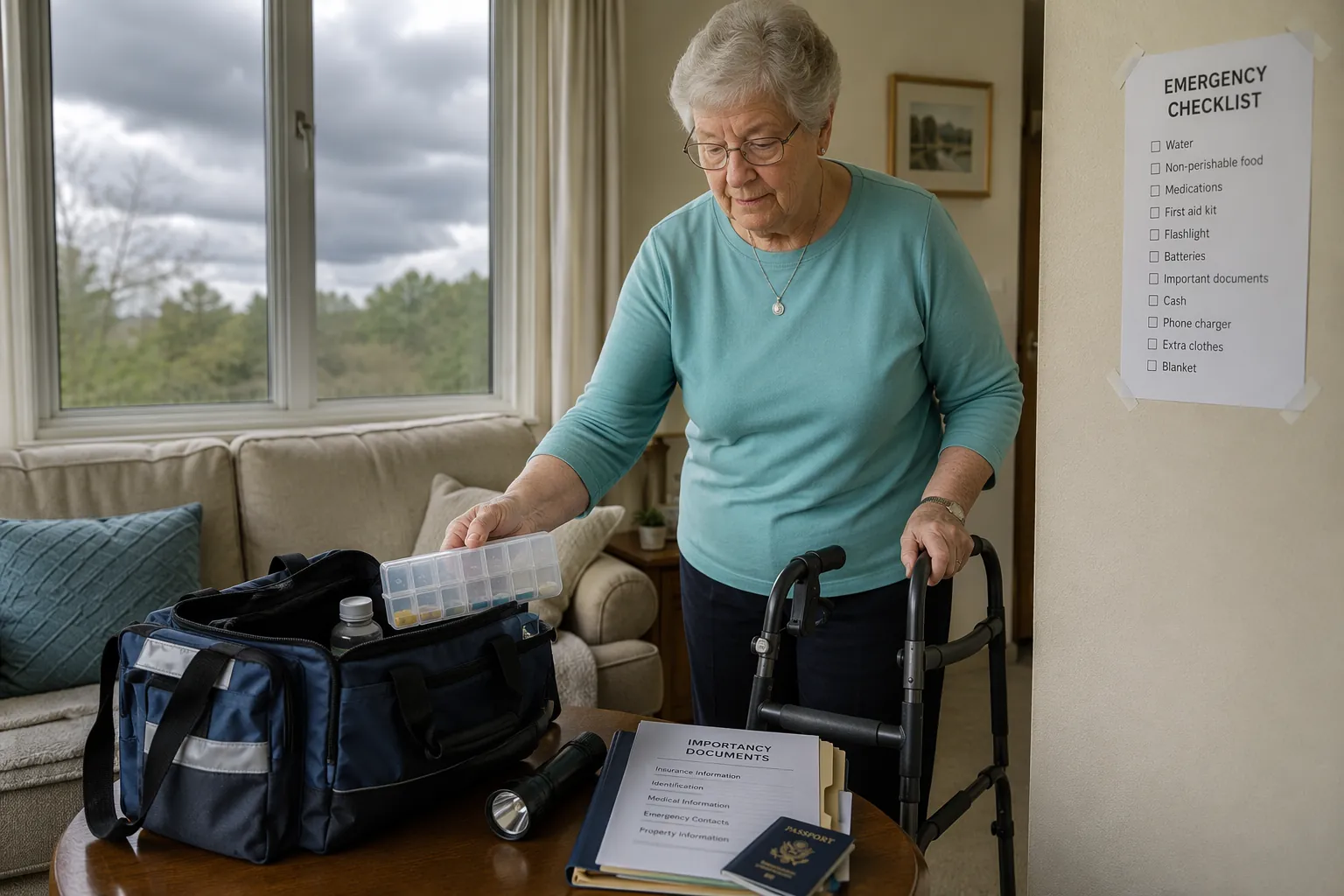
The Flood Checklist Timeline
Print this part first. A flood plan works best when it follows the same order as the emergency: preparation before the season, decisions when a watch or warning is issued, safety during flooding, and re-entry after the water recedes.
| When | Main Job | Who Must Be Named |
|---|---|---|
| Before flood season | Build the support network, documents, medication plan, transportation plan, power plan, and home shutoff plan | Senior, adult child or caregiver, neighbor, backup driver, pharmacy, medical equipment supplier |
| Flood watch or warning | Decide whether to leave, call helpers, pack medication, protect devices, move essentials, and avoid delay | First caller, driver, backup caller, destination contact |
| During flooding or evacuation | Stay out of floodwater, avoid driving through water, preserve medications, and follow the written destination plan | Senior, driver, emergency contact, shelter or receiving household |
| After water recedes | Check re-entry safety, avoid contaminated water, prevent falls, replace spoiled medications, and watch for mold | Senior, inspector or local authority, caregiver, neighbor, pharmacy, cleanup professional if needed |
Before Flood Season: Set Up Help Before Help Is Urgent
This is the most important work because it happens while there is still time to think. Older adults are more likely to live with chronic conditions that complicate evacuation, sheltering, heat, medication access, and power loss. CDC materials on vulnerable older adults note that chronic disease needs are a major disaster-planning issue, and CDC estimates cited in preparedness guidance report that about 80% of older adults have at least one chronic condition.[1]
Age also changes the stakes in real floods. After Hurricane Katrina, more than half of the identified victims were age 75 or older, according to reporting based on state data and analyses after the disaster.[2] That does not mean every older adult is helpless. It means the checklist has to account for slower evacuation, hearing or vision limits, powered equipment, refrigerated medication, and the plain fact that no one may be in the house when the water starts rising.
Write the Support List as Names, Not Categories
“Call someone” is not a plan. Write down the person’s name, phone number, role, and backup. Keep one copy by the phone, one in the go-bag, one on the refrigerator, and one with the adult child or main caregiver. If you already keep a family emergency binder, this is where the flood page belongs; if not, use an emergency contact binder for aging parents as the place where these names do not get lost.
- First caller: the person who checks in when a flood watch is issued, not after evacuation is already difficult.
- Evacuation driver: the person who can physically help the senior into a car or accessible vehicle.
- Backup driver: someone close enough to act if the first driver is at work, out of town, or blocked by road closures.
- Key holder: a neighbor, relative, or building manager who can enter if the senior cannot reach the door.
- Medical contact: pharmacy, primary care office, home health agency, oxygen supplier, dialysis center, or other essential provider.
- Destination contact: the person at the receiving home, hotel, shelter, or facility who knows the senior may arrive.
For an adult child coordinating from work or another state, the first hour matters. Put the contact order in writing so the caregiver is not hunting through text messages while roads are closing. A separate first-hour emergency response plan for long-distance caregivers can spell out who calls the neighbor, who checks evacuation routes, and who confirms medication and device needs.
Decide the Evacuation Trigger While the Weather Is Calm
A senior living alone should not wait until water is at the curb to decide whether leaving is “really necessary.” The written plan should include a personal evacuation trigger. For example, leave when local officials issue an evacuation order, when the usual access road begins to flood, when power is likely to fail and medical equipment depends on electricity, or when the caregiver and backup driver agree that daylight evacuation is safer.
This decision deserves a family conversation, not a rushed argument at the door. If the adult child is helping make the plan, use an emergency evacuation plan for an aging parent to write down transportation, destination, mobility equipment, pets, and the exact conditions that mean it is time to go.
Build the Go-Bag Around Medication, Mobility, and Paper
The American Red Cross advises older adults to prepare for either staying home for at least two weeks or evacuating, and it recommends keeping at least a 30-day supply of medications when possible.[3] That recommendation changes the whole kit. The bag is not just snacks and batteries. It is a way for a shelter worker, paramedic, neighbor, or adult child to understand the senior’s medical needs if the senior is tired, stressed, or unreachable by phone.
- Current medication list: drug name, dose, schedule, prescribing doctor, pharmacy, and allergies.
- Medication supply: enough routine medication to cover evacuation delays, plus copies of prescriptions if available.
- Refrigerated medication plan: small cooler, cold packs, storage instructions, and pharmacy contact.
- Medical device list: device name, supplier, power needs, battery type, and backup instructions.
- Mobility items: cane, walker, wheelchair cushion, transfer belt if used, spare glasses, hearing aid batteries, and labeled chargers.
- Paper documents: ID copy, insurance cards, Medicare or Medicaid cards, emergency contacts, advance directive if used, and pet vaccination records if evacuating with an animal.
Put the medication list in a plastic sleeve. Tape a second copy inside the go-bag. A phone photo is useful, but it should not be the only copy. Floods and power outages are exactly when phones are misplaced, wet, dead, or in someone else’s car.
Plan for Power Before the Battery Is Low
If the senior uses oxygen equipment, a CPAP machine, a power wheelchair, a hospital bed, a stair lift, a refrigerated medication system, or a phone-based medical alert device, the flood plan needs a power section. Ready.gov tells older adults to consider their medical, transportation, and daily living needs when preparing for emergencies.[4]
- Label every charger with the device name.
- Keep backup batteries charged and stored where they can be reached without bending or climbing.
- Ask the medical equipment supplier how long the device runs on backup power.
- Ask the utility company whether a medical baseline, priority restoration, or notification program exists locally.
- Write down what to do if the device fails: who to call, where to go, and whether evacuation should happen earlier.
Backup power is not a promise that staying home will be safe. It is one layer. For more device-specific planning, keep a separate power outage preparedness checklist for elderly adults with medical equipment with the flood documents.
Store Water, Then Add Medical Reality
CDC flood preparation guidance recommends storing at least 1 gallon of water per person per day for at least 3 days, with extra water for medical needs.[5] For a senior living alone, that extra water may be for swallowing pills, cleaning a wound, using certain medical supplies, or mixing formula or nutrition products if prescribed.
Do not store all water where it requires stairs, a step stool, or heavy lifting. Smaller containers may be more practical than one large jug. The best water supply is the one the person can actually reach and open.
Know the Shutoffs, but Do Not Improvise in Water
Before flood season, identify the electrical panel, gas shutoff, water shutoff, and any basement or garage hazards. Label them in large print. If the senior cannot reach them safely, name the person who can. The plan should say “call Sam in 2B to shut off the basement breaker if safe,” not “try to turn everything off.”
CDC warns that an unanchored fuel tank can be swept away or contaminate a basement during flooding.[5] If the home has a fuel tank, add this to the pre-season home maintenance list and ask a qualified professional whether it is properly anchored.
Check Insurance Before the Forecast
Do not assume homeowners or renters insurance covers flood damage. Before flood season, ask the insurance agent what is covered, what is excluded, how to document belongings, and whether any waiting period applies before flood coverage becomes active. Keep the policy number and claim phone number in the go-bag and the emergency binder.
When a Flood Watch or Warning Is Issued
This is the window where a good checklist earns its keep. A flood watch or warning is not the time to debate whether the plan was “too much.” It is the time to follow the contact order, protect medication, and leave before mobility, darkness, traffic, or water depth makes leaving harder.
Make the First Three Calls
- Call the first helper: “A flood warning is in effect. I am starting the checklist.”
- Call the evacuation driver or backup driver: “Can you pick me up if the trigger is met?”
- Call the destination contact: “If I leave, I am coming to you or to the named shelter.”
If the senior has hearing loss, weak cell service, or trouble managing calls under stress, the adult child or caregiver should make these calls. The senior should not have to perform like a dispatcher while also packing medication and moving carefully through the house.
Use the Evacuation Trigger, Not Reassurance
Leave when the written trigger says to leave. That may be an official evacuation order, water approaching the access road, forecasted power loss for someone using powered medical equipment, or a caregiver decision that daylight evacuation is safer than waiting for night. Reassurance is not a transportation plan.
For many older adults, leaving home feels like losing control. The checklist should respect that by being specific: where the person is going, what will be locked, who will check the house later, how pets will be handled, and when the senior can get updates. Evacuation planning is not an insult to competence. It is a way to avoid making a life-and-safety decision after the safe choices have narrowed.
Pack the Items That Cannot Be Replaced Quickly
- Medication, medication list, and pharmacy information.
- Refrigerated medication in a cooler with cold packs, if required by the medication instructions.
- Chargers, backup batteries, and medical device instructions.
- Glasses, hearing aids, dentures, cane, walker, wheelchair, or transfer supplies.
- ID, insurance cards, emergency contacts, house key, car key, and cash in small bills if available.
- Phone, charging cord, battery bank, and written phone numbers in case the phone fails.
Protect the Home Only If It Does Not Delay Leaving
If there is time and it is safe, move critical documents and light valuables to a higher shelf, unplug small appliances, raise cords off the floor, and move a labeled medication cooler into the go-bag. Do not go into a basement with water, do not lift heavy furniture alone, and do not stay behind to finish chores after an evacuation order.
Adult children sometimes ask for a complete home-protection list. That is useful only after the evacuation decision is settled. The order is person first, medication second, devices third, documents fourth, property last.
During Flooding or Evacuation: Do Not Test the Water
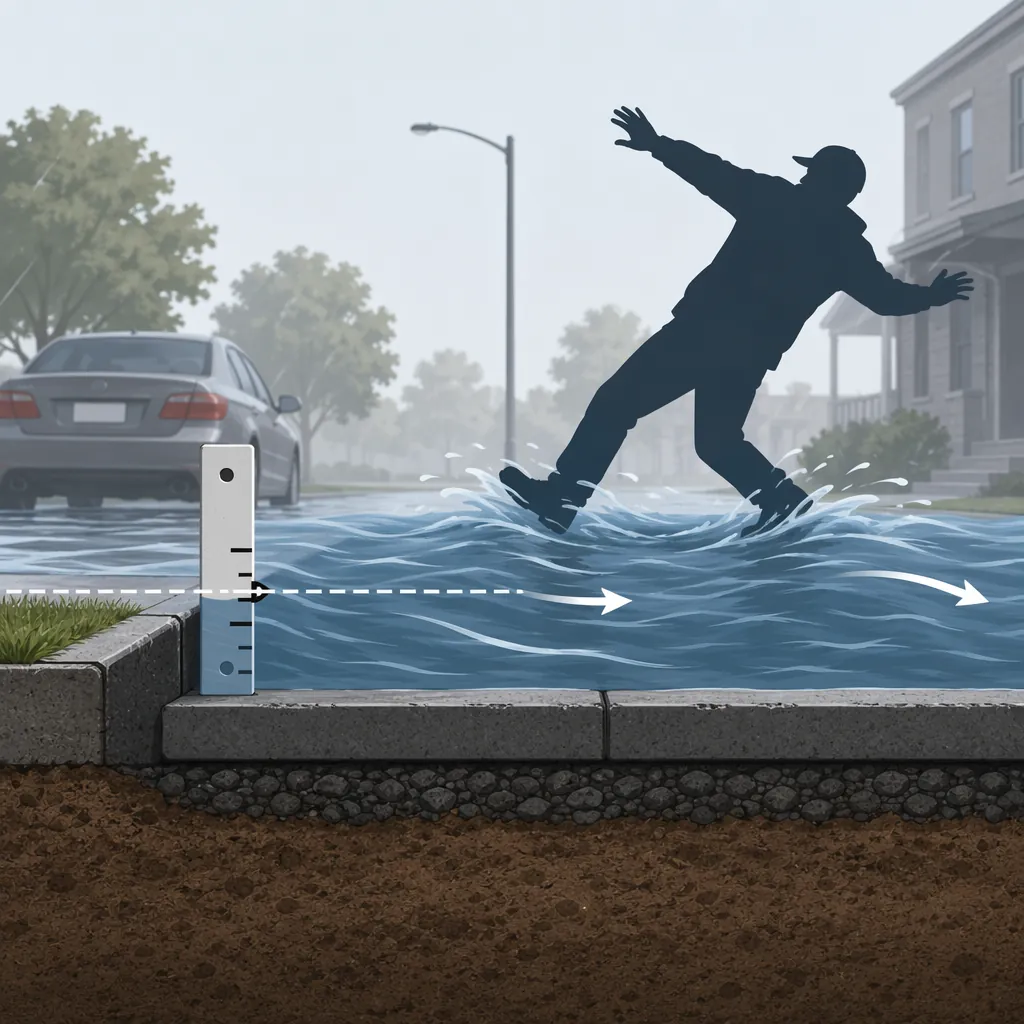
Ready.gov warns that 6 inches of moving water can knock a person down, and 1 foot of moving water can sweep away a vehicle.[6] That warning belongs in large print on the checklist. A senior using a cane, walker, wheelchair, oxygen tubing, or bifocals has even less margin for a misstep.
- Do not walk through floodwater.
- Do not drive through flooded roads.
- Do not use a walker, cane, or wheelchair in moving water.
- Do not touch electrical equipment if standing in water or if the equipment is wet.
- Do not return for forgotten items once evacuation has started.
Falls are a serious storm hazard even before water enters the home: wet steps, loose rugs, dim rooms, extension cords, and rushed movement all matter. A separate storm and fall-prevention checklist for elderly adults can help remove tripping hazards before the flood watch.
If the senior is sheltering in place because officials have not ordered evacuation and the home remains safe, keep the phone charged, keep shoes on or nearby, keep medication and documents together, and check in on the schedule written in the plan. If power fails and medical equipment is involved, follow the device-power plan immediately rather than waiting to see how long the outage lasts.
After the Water Recedes: The House May Still Be Unsafe
The end of visible flooding is not the same as safe re-entry. CDC flood guidance warns about contaminated water, electrical hazards, carbon monoxide risks, and cleanup dangers after floods.[5] For a senior living alone, the re-entry rule should be written before the storm: do not return alone if there was indoor flooding, structural damage, suspected mold, breathing difficulty, mobility trouble, or a power outage affecting medical equipment.
Check These Before Going Back Inside
- Local officials have said the area is safe to enter.
- Electricity, gas, and water hazards have been checked by someone qualified or directed by local authorities.
- The senior is not entering alone if floors are wet, lighting is poor, stairs are damaged, or mobility is limited.
- Spoiled food, wet medication, and contaminated supplies are separated for disposal or replacement.
- A pharmacy or clinician has been contacted about any medication that may have been exposed to heat, floodwater, or unsafe storage temperatures.
- Respiratory conditions such as asthma or COPD are considered before the senior enters a damp or moldy home.
Ready.gov notes that mold can begin growing within 24 to 48 hours after flooding.[6] That timing matters for older adults with breathing problems, weakened immunity, or limited ability to clean safely. If the home smells musty, has wet drywall, or has standing water, re-entry should wait until the hazard is assessed and cleanup help is arranged.
Do not ask a senior who uses a walker to “just step around” wet carpet, buckled flooring, or loose debris. A post-flood fall can turn a property problem into a medical emergency. The same neighbor who holds a key may be the right person to meet the senior at the door, turn on lights, check the walking path, and say plainly if the home is not ready.
A Printable Personal Checklist
Use this as the one-page version to tape inside a cabinet, keep by the phone, and copy into the go-bag.
- My evacuation trigger is written down: official order, access road flooding, expected power loss affecting medical equipment, or caregiver decision before dark.
- My helper list names the first caller, driver, backup driver, key holder, medical contact, and destination contact.
- My medication plan includes a current list, pharmacy number, allergy list, supply plan, and refrigerated-medication instructions if needed.
- My device-power plan lists every powered medical device, charger, backup battery, supplier phone number, and what to do if power fails.
- My water and food supplies are reachable without stairs, ladders, or heavy lifting.
- My documents are copied in a plastic sleeve: ID, insurance cards, emergency contacts, prescriptions, medical information, and key legal papers.
- My re-entry rule says I do not return alone after indoor flooding, structural damage, mold concerns, breathing trouble, or unsafe walking conditions.
Last reviewed: July 23, 2026.
References
- Disaster Preparedness and the Chronic Disease Needs of Vulnerable Older Adults — CDC
- Half of Katrina Victims Were 75 or Older — NBC News
- Older Adults Emergency Preparedness — American Red Cross
- Older Adults — Ready.gov
- Preparing for Floods — CDC
- Floods — Ready.gov
Questions to bring to a clinician or OT
This is not medical, legal, or a family's final decision — only a framework. Bring these questions to a clinician, occupational therapist, or your local Area Agency on Aging.
Find Local HelpRelated reading
Noticed something outdated or inaccurate on this page? Flag a correction. We review every report against CDC, NIA, and AARP HomeFit guidance before updating a page.