
Caregiver decision guide
Ford Bronco Fire Recall: Precautions for Older Drivers
This guide helps older Ford Bronco owners and their caregivers understand the engine fire recall (26S55), check if their vehicle is affected via VIN, recognize early warning signs, and take practical safety steps before the free repair is completed.
If you own a 2021–2026 Ford Bronco or Bronco Raptor, the first sensible move is not to stop driving forever and not to wait around for a letter. Check the VIN, learn the warning signs, and use a few parking and monitoring precautions until the dealer completes the free repair.
Ford recall 26S55, also listed by NHTSA as 26V468, covers 565,691 full-size Bronco and Bronco Raptor vehicles because a wiring-harness problem can increase the risk of an engine-compartment fire. Ford’s estimate says about 1% of the recalled vehicles may have the defect; that is an engineering estimate, not a confirmed count of vehicles already showing trouble. The company reported 15 incidents and no crashes or injuries at the time of the recall announcement.[1][2]
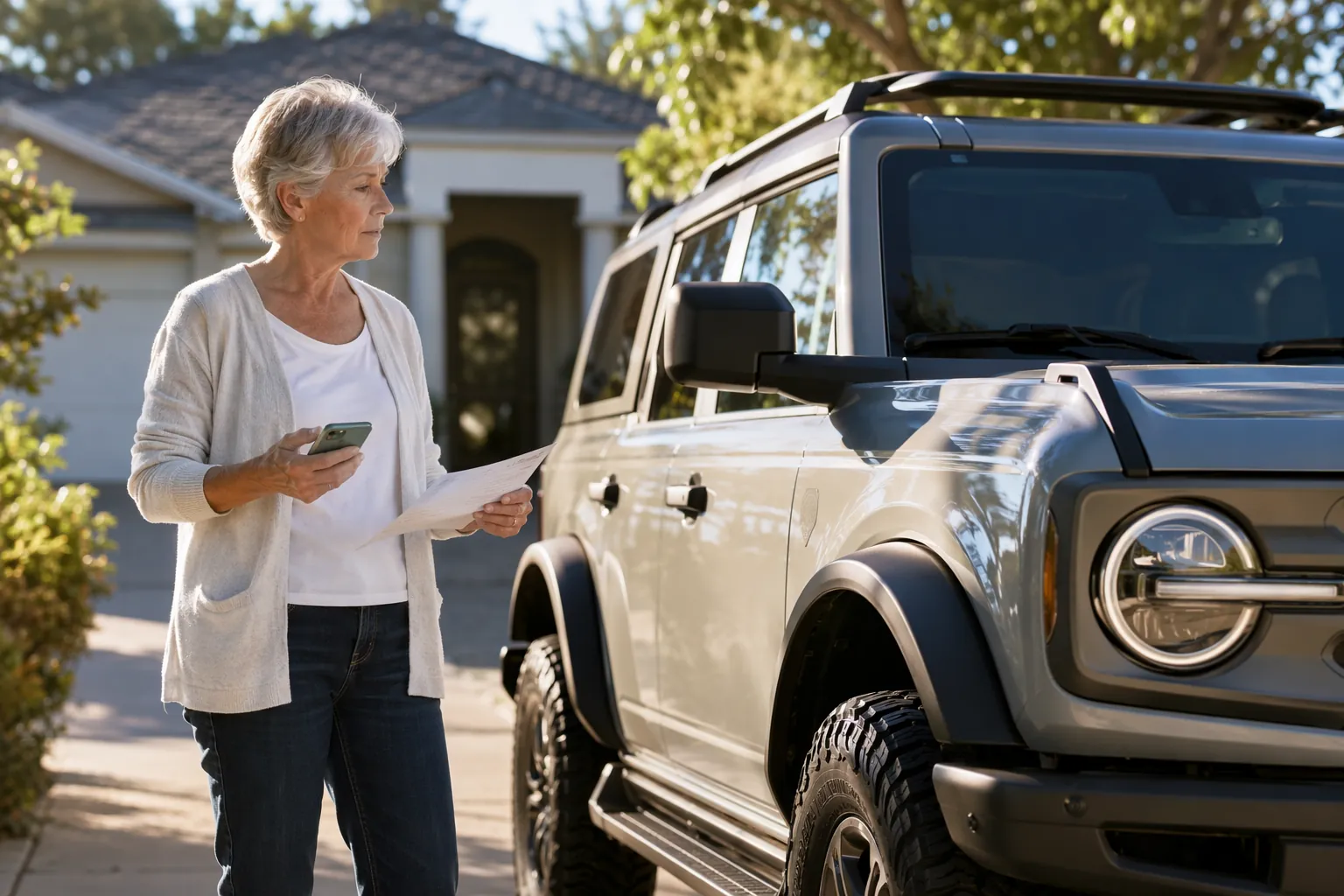
That is the right shape of the problem: low likelihood, serious consequence. For an older driver who depends on the Bronco for groceries, appointments, church, grandkids, or simply not having to ask for rides, the goal is to reduce uncertainty quickly without turning a recall notice into a loss of independence.
Make Sure This Is the Right Bronco Recall
The recall at issue is the full-size Ford Bronco and Bronco Raptor wiring-harness recall: Ford 26S55 / NHTSA 26V468. It is not the separate Bronco Sport fuel-injector recall, listed by Ford as 25S76. The names are close enough to cause trouble, and that is exactly why a VIN check matters more than a headline.
| Question | What to Check |
|---|---|
| Vehicle name | Ford Bronco or Bronco Raptor, not Bronco Sport |
| Model years | 2021 through 2026 |
| Ford recall number | 26S55 |
| NHTSA recall number | 26V468 |
| Main concern | Possible wiring-harness damage that can raise engine-fire risk |
| Owner letters | Scheduled for Aug. 24–28, 2026 |
Owner notification letters are scheduled to be mailed Aug. 24–28, 2026, but there is no need to wait for the mailbox if you are worried or if someone else in the family is doing the checking.[1] A recall letter is useful. A VIN answer is better.
Check the VIN Before You Change Anyone’s Routine
Use the vehicle identification number, not just the model name. The VIN is usually visible at the lower corner of the windshield on the driver’s side and also appears on registration and insurance documents. If reading the windshield number is awkward, use the paperwork. No prize is given for leaning over a dashboard when the insurance card is sitting on the kitchen table.
- Go to NHTSA’s recall lookup and enter the VIN.
- Look specifically for Ford recall 26S55 or NHTSA recall 26V468.
- If the result is unclear, call Ford customer service at 1-866-436-7332.
- If the VIN is affected, call a Ford dealer and ask about scheduling the recall repair.
- If you are helping a parent, write down the date, who you called, and what the dealer said about timing.
Car recalls are generally repaired at no charge to the owner, and this Ford repair is described as free at Ford dealers.[1][3] Because the recall was announced July 24, 2026, dealer scheduling and parts logistics may still be settling. If the first call does not produce a neat answer, call again later or try another authorized Ford dealer rather than assuming nothing can be done.
What Ford Says the Repair Does
The recall involves a wiring harness that may be damaged in a way that can create a fire risk. The dealer remedy is to install convolute sheathing and abrasion tape on the wiring harness.[1] Plainly put, the repair adds protection where Ford says the harness needs it.
That is enough mechanical detail for most owners. The important part is not whether you can picture the harness under the hood. The important part is whether your VIN is included, whether the repair is complete, and whether any warning sign appears before the appointment.
Warning Signs That Should End the Trip
Ford identified three warning signs owners may notice: smoke from the cabin vents, a dashboard message, or flames from the passenger side of the engine compartment.[1] Smoke from the vents deserves special attention because it can be easy to explain away as something outside, a neighbor’s leaf blower, a truck ahead in traffic, or a strange heater smell.
- If smoke comes from the cabin vents, pull over as soon as you can do so safely.
- If a dashboard warning message appears, treat it as a stop-and-check situation, not as something to investigate after errands.
- If you see flames from the passenger side of the engine area, get out, move away, and call 911.
- Do not open the hood to “take a quick look” if you suspect fire.
- Do not drive home to avoid inconvenience if any of these signs appear.
For an older driver, the practical plan should be simple enough to remember under stress: signal, stop safely, turn the vehicle off, get out, move away, call 911. If walking is slow, if a cane or walker is in the back, or if glasses and phone usually ride in a purse on the passenger floor, sort that now while nothing is happening.
If you are helping a parent or older neighbor, this is a good time to review the same kind of exit thinking used in an emergency evacuation plan for an aging parent. The point is not to rehearse a disaster. It is to remove small delays before they matter.
Precautions Before the Dealer Repair
If the VIN check shows the Bronco is affected and the vehicle is still driving normally, use it with more attention until the repair is complete. That means changing habits around parking, readiness, and trip planning—not treating the vehicle as if it has already caught fire.
Park With Space Around the Vehicle When Practical
When you can, park outdoors and away from an attached garage, carport, porch, fence, or other structure until the recall repair is done. This is not always perfect in apartments, townhomes, snow, heat, or tight neighborhoods. Use the safest practical option you have, and avoid turning a good precaution into a fall risk by making yourself walk across poor lighting or uneven ground.
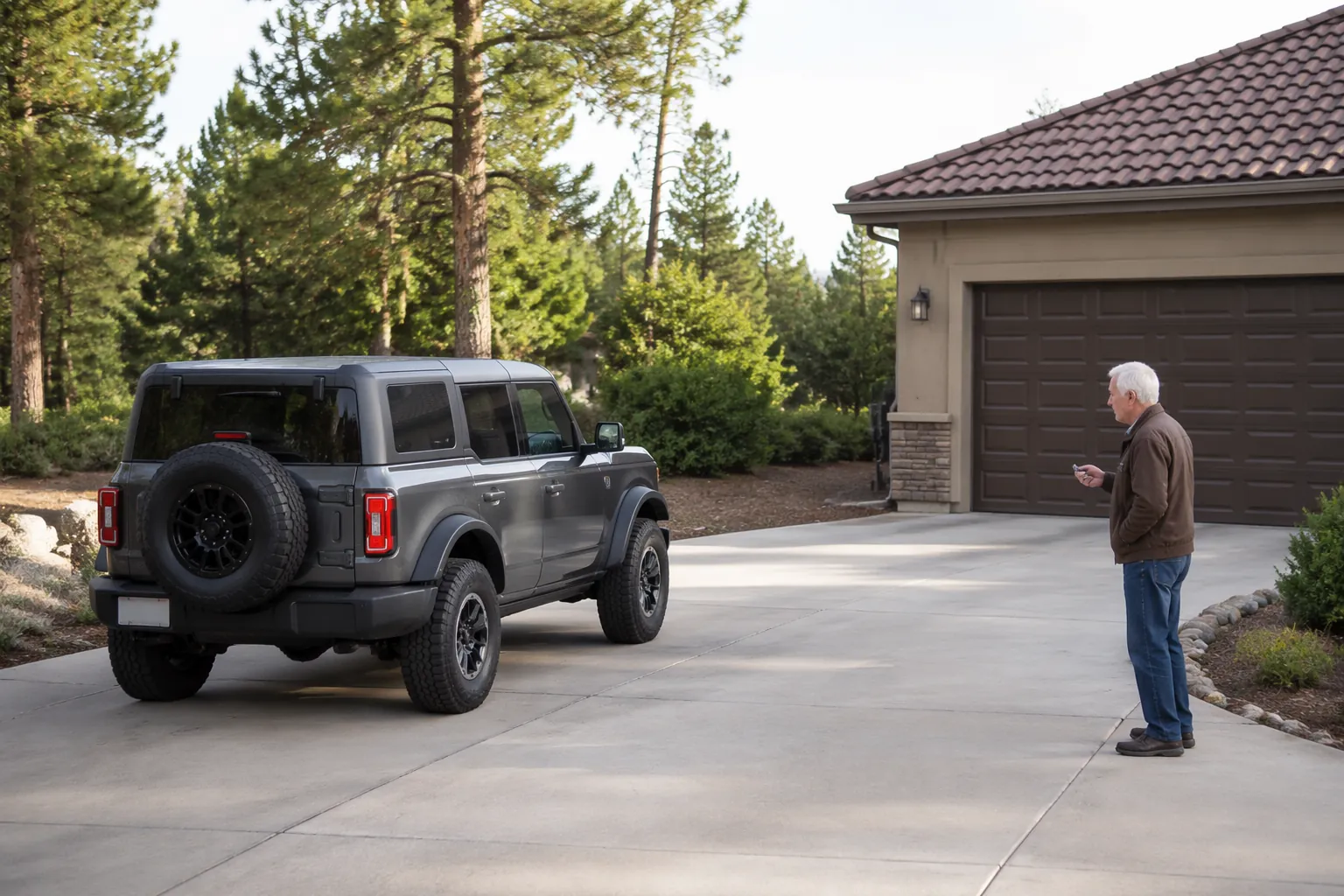
Older adults face added risk in home fires, including the challenge of moving quickly once there is smoke or flame.[4] That is why parking location matters. A vehicle fire outside and away from the house is still serious, but it gives people and firefighters more room than a vehicle tucked into an attached garage. For more household planning around that issue, see how to protect seniors from fire emergencies at home.
Keep the Exit Items Where They Can Be Reached
Before driving, put the essentials where they move with the driver: phone, keys, glasses, wallet, emergency contacts, and any mobility aid that is needed to get safely away from the vehicle. If a cane is usually tossed into the cargo area, consider whether that leaves the driver stranded beside the road during an urgent exit.
Caregivers should be careful here. Helping does not mean stripping independence away. A better approach is to ask, “If you had to get out quickly, what would you need in your hand?” Then fix that one thing.
Choose Shorter, Daylight Trips if Anxiety Is Rising
There is no recall instruction in the available materials that says every affected Bronco must sit unused until repair. At the same time, a nervous driver is not a safer driver. If the Bronco is affected and the repair appointment is not soon, consider shorter daytime trips, combining errands, or having someone else drive for longer appointments until the fix is done.
If the vehicle needs to sit or the driver simply does not want to use it before repair, arrange alternatives before the missed appointment becomes the emergency. AARP points caregivers toward transportation options such as family coordination, volunteer driver programs, paratransit, ride-hailing, and local services, depending on what is available where the person lives.[5] You can also compare options in transportation alternatives that help seniors stay mobile.
How Caregivers Can Help Without Taking Over
The most useful caregiver is not the one who arrives announcing, “You can’t drive that anymore.” The useful one brings the VIN lookup page, reads the recall number carefully, calls Ford if needed, and helps schedule the dealer visit. That keeps the decision tied to the vehicle’s actual status.
- Confirm whether the vehicle is a Bronco, Bronco Raptor, or Bronco Sport before discussing the recall.
- Run the VIN through NHTSA’s recall lookup and save or print the result.
- Call Ford at 1-866-436-7332 if the lookup result is confusing or incomplete.
- Help call the dealer, especially if phone menus or service scheduling are frustrating.
- Agree on what warning signs mean “stop driving now” before anyone is upset or rushed.
NHTSA’s older-driver safety materials emphasize that many older adults continue to drive safely while paying attention to changes in health, vehicle fit, and driving needs.[6] A recall should be handled with the same respect: identify the real risk, make the needed adjustments, and avoid using one notice as an excuse for a much bigger argument unless the facts call for it.
What to Ask the Ford Dealer
When calling the dealer, use the recall number and ask for specifics. Since this recall was only announced July 24, 2026, answers may improve as Ford and dealers move through the rollout.[2] A vague “we don’t know yet” on the first day is not the same as a final answer.
- “My VIN shows Ford recall 26S55 / NHTSA 26V468. Can you schedule the repair?”
- “Do you have the materials for the wiring-harness sheathing and abrasion-tape repair?”
- “How long should the vehicle be at the dealership?”
- “Is there any updated interim guidance from Ford for affected vehicles waiting on repair?”
- “Can you document that I called and am waiting for the recall appointment?”
If the driver has already noticed smoke, a warning message, or anything that looked like flame, do not treat the dealer call as routine scheduling. Tell the dealer exactly what happened, and if there is active smoke or fire, call emergency services first.
When the Bronco Should Sit Until It Is Checked
A VIN match alone does not mean the Bronco has already developed the defect. The available recall information points to a small estimated defect rate, 15 incidents, and no reported injuries or crashes at announcement.[1][2] Still, there are times when caution should win over convenience.
- Do not keep driving if smoke comes from the vents.
- Do not keep driving if flames are seen near the passenger side of the engine compartment.
- Do not ignore a dashboard message connected with the warning signs Ford described.
- Do not park inside an attached garage if a recent trip ended with suspicious smoke, odor, or warning messages.
- Do not ask an anxious older driver to “just get over it” if a temporary ride would solve the day’s problem.
Use this as practical guidance, not legal advice or vehicle-specific safety advice. For the final word on your vehicle, use the VIN, Ford, NHTSA, and an authorized Ford dealer.
If the VIN check says the Bronco is affected, do not ignore it and do not wait passively for mail. Monitor for smoke from the vents, dashboard messages, or flames from the passenger side of the engine; park thoughtfully; keep exit essentials close; call the dealer; and treat any warning sign as an emergency until the free repair is complete.
References
- Ford Recalls Bronco, Bronco Raptor over Potential Engine Fires, Car and Driver.
- Ford recalls more than half-million Broncos due to engine fire risk, WMBF News, July 24, 2026.
- Car Recall Guide: Your Questions Answered, Consumer Reports.
- Fire Safety for Older Adults, U.S. Fire Administration/FEMA.
- Transportation Services, AARP.
- Older Drivers, National Highway Traffic Safety Administration.
Questions to bring to a clinician or OT
This is not medical, legal, or a family's final decision — only a framework. Bring these questions to a clinician, occupational therapist, or your local Area Agency on Aging.
Find Local HelpRelated reading
Noticed something outdated or inaccurate on this page? Flag a correction. We review every report against CDC, NIA, and AARP HomeFit guidance before updating a page.