
Caregiver decision guide
Can Gluten-Free Cake Be More Than Empty Calories for Seniors?
Many gluten-free commercial products lack fiber, iron, and calcium — nutrients seniors already struggle to get. This article shows how strategic ingredient choices can turn a gluten-free cake into a nutrient-dense treat that supports appetite and health.
The hard part is not finding a gluten-free cake. It is standing in the kitchen with a parent who eats half of what they used to eat, reading a label that is gluten-free but low in the nutrients already slipping out of the day, and wondering whether dessert is helping or just taking up precious appetite.
For an older adult who needs a gluten-free diet, cake can go either way. A packaged slice can be mostly refined starch, sugar, and fat. Or, with a few deliberate choices, it can become a soft, familiar food that brings along some protein, calcium, fiber, potassium, vitamin B12, or vitamin E. That does not make cake a treatment for deficiencies, and it does not make dessert a meal replacement. It does make the slice worth thinking about more carefully.
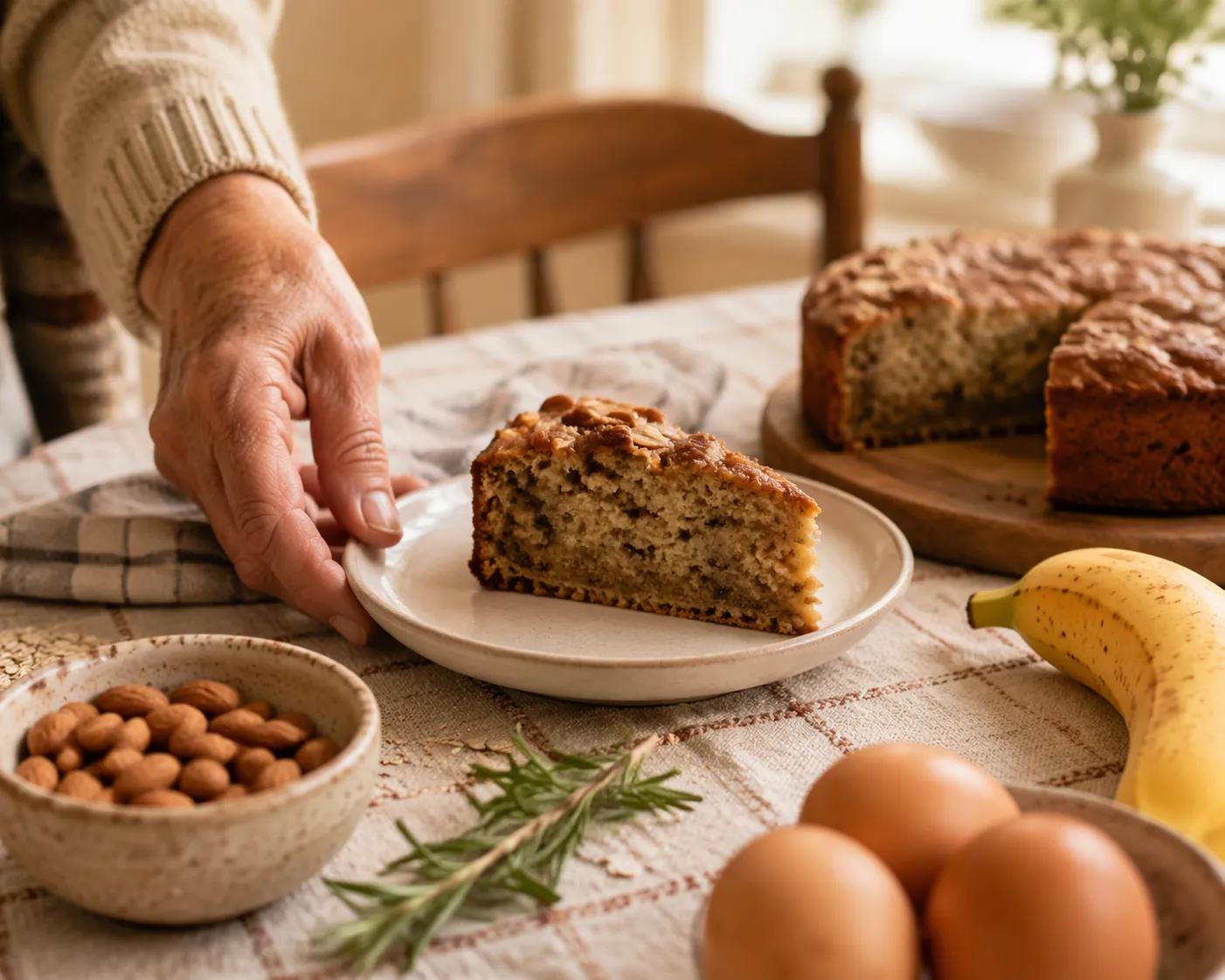
Why Gluten-Free Cake Matters More When Appetite Shrinks
Older adults on gluten-free diets can run short on calcium, vitamin D, vitamin B12, fiber, iron, potassium, zinc, and magnesium, according to the Gluten Intolerance Group’s senior care guidance.[1] The New York State Office for the Aging gives the same practical warning in simpler terms: gluten-free diets may not provide enough fiber, iron, and calcium, and packaged gluten-free foods may be higher in fat and sugar.[2]
That matters because many seniors are not eating large, flexible meals that can easily absorb a low-nutrient dessert. Clean Monday Meals puts the caregiver problem plainly: when someone eats less overall, every bite has to work harder, and a gluten-free diet can backfire if it lowers the protein and fiber seniors often need most.[3] GIG also notes that calorie needs decline with age, while nutrient needs do not fall in the same proportion.[1]
So the question is not whether cake is “healthy” in the abstract. The better question is what the cake is displacing. If a senior eats one small slice and then leaves lunch untouched, the ingredients in that slice carry more consequence. If the same small slice includes eggs, ricotta, almond flour, fruit, or certified gluten-free oats, it is still dessert, but it is no longer nutritionally empty in the same way.
There is also a difference between enrichment and wishful thinking. A clinical review found that calcium-fortified gluten-free products could increase calcium content in the diets of people with celiac disease.[4] That supports the idea of strategic fortification. It does not prove that any gluten-free cake automatically improves health, or that a fortified dessert corrects a diagnosed deficiency.
Choose the Cake Style Before the Sweetener
The most useful gluten-free cake options for older adults usually start with a familiar texture and then build nutrition into the base. This is more reliable than baking an ordinary cake and trying to sprinkle health on top afterward.
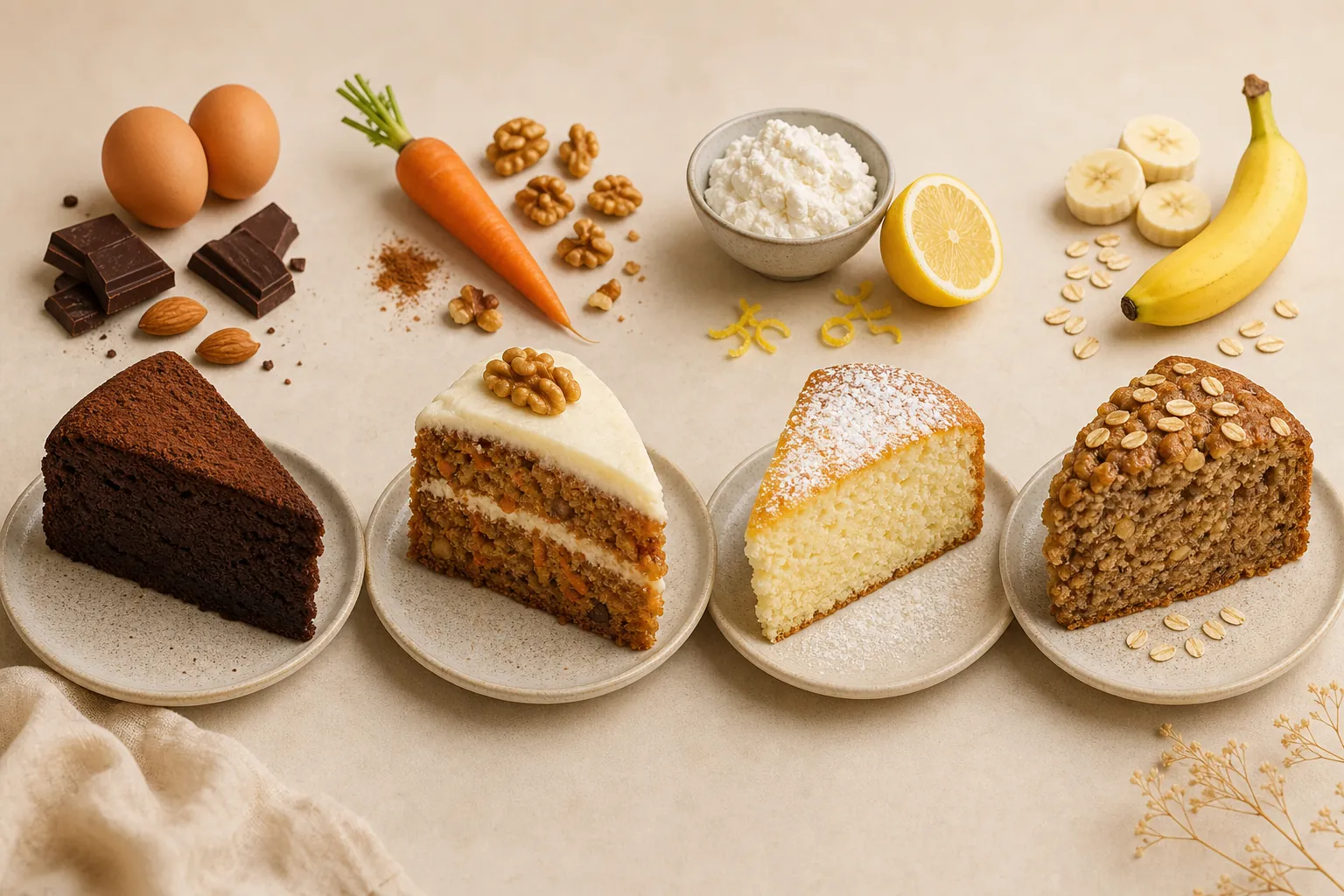
| Cake style | What it can contribute | Why it may work for seniors |
|---|---|---|
| Flourless chocolate cake | Eggs can add protein and vitamin B12 | Dense, soft texture; no gluten-free flour blend required |
| Carrot cake with almond flour | Almond flour can add vitamin E and fiber | Moist crumb; grated carrot helps keep it soft |
| Lemon ricotta cake | Ricotta can add calcium and protein | Tender, custard-like texture when baked gently |
| Banana oat cake with certified gluten-free oats | Oats can add fiber; banana can add potassium | Naturally moist and easy to portion into small servings |
This is not a ranking. It is a way to match the cake to the nutrition gap and the person eating it. A parent who avoids milk may not benefit from a ricotta cake. Someone who cannot chew nuts safely may need almond flour only if it is finely ground and baked into a soft crumb. A senior with diabetes, kidney disease, swallowing problems, or unexplained weight loss needs individualized guidance rather than a clever dessert workaround.
Flourless Chocolate Cake: Useful When Softness Comes First
A flourless chocolate cake can be practical because it does not depend on a gluten-free flour blend at all. Eggs do real work here: they provide structure, and they also contribute protein and vitamin B12. For a senior who misses traditional desserts but struggles with dry crumbs, the dense, soft texture can be easier to manage than a crumbly packaged cake.
The tradeoff is richness. A very heavy slice may be too much for someone with a small appetite, reflux, or nausea. Smaller portions usually make more sense than trying to turn the recipe into a large nutritional event. A thin wedge with fruit or yogurt on the side may be more realistic than a full bakery-sized serving.
Carrot Cake With Almond Flour: Moist, Familiar, and Not Too Fussy
Carrot cake is useful because it is supposed to be moist. That gives the baker permission to use grated carrot, applesauce, crushed pineapple, or another moisture source without making the cake feel like a medical substitute. Almond flour can add vitamin E and fiber, and it often produces a softer crumb than some starch-heavy gluten-free flour blends.
Cost is the sticking point. Almond flour and specialty gluten-free mixes can be expensive, and gluten-free foods may strain older adults on fixed incomes.[7] If almond flour is not realistic every week, it can be used partly, not perfectly: blend it with a less expensive certified gluten-free flour, bake smaller portions, or save it for the cake a parent reliably eats.
Lemon Ricotta Cake: A Dessert That Can Carry Calcium
Lemon ricotta cake is one of the more useful formats when calcium and protein are priorities. Ricotta helps create a tender texture while contributing both. The lemon keeps the flavor bright, which can matter when appetite is low and sweet foods start to taste flat.
This is where fortification can be reasonable if it stays honest. A caregiver might choose calcium-fortified gluten-free flour or another fortified gluten-free ingredient when it fits the recipe and budget. The goal is not to turn dessert into a supplement. The goal is to avoid spending one of the day’s few accepted bites on something that contributes almost nothing.
Banana Oat Cake: Check the Oats, Then Keep It Simple
Banana oat cake can be one of the easiest home options because banana adds moisture and potassium, while certified gluten-free oats can add fiber. The word certified matters for people who must avoid gluten strictly, because oats need to be verified as gluten-free rather than assumed safe.
This style also adapts well to small portions: mini loaves, soft squares, or muffins that can be frozen individually. For caregivers already juggling appointments and medications, a cake that freezes well may be more helpful than a beautiful recipe that has to be eaten in two days.
Texture Is Not a Side Issue
A nutrient-dense cake only helps if it is eaten. Seniorly’s soft-food guidance notes that older adults may experience decreased appetite and dysphagia, making texture a central part of food choice rather than an afterthought.[5] Dry gluten-free baked goods are especially unforgiving here. A cake that crumbles, catches in the throat, or requires too much chewing may be left on the plate no matter how nutritious the ingredients look.
- Favor moist formats: ricotta cakes, banana cakes, flourless cakes, cobblers, crisps with softened fruit, and custard-like textures.
- Avoid hard crusts, dry crumbs, large nut pieces, sticky toppings, or coarse add-ins if chewing or swallowing is difficult.
- Serve small pieces first. A large slice can discourage a senior who already feels pressured to eat.
- Add moisture at serving: yogurt, applesauce, softened fruit, or a thin drizzle can make a slice easier to finish.
- Ask about comfort, not just taste. “Was that easy to swallow?” may tell you more than “Did you like it?”
Alternative Senior Care’s gluten-free dessert examples, including sticky lemon cake, fruit cobbler, blueberry crisp, and flourless chocolate brownie cookies, point in the same practical direction: soft, familiar desserts are often better candidates than dry cakes that rely on specialty flour blends alone.[6]
When Store-Bought Gluten-Free Cake Is the Realistic Option
Not every caregiver can bake. Sometimes the useful choice is a store-bought cake that is safe, affordable, and available today. In that case, the label matters more than the front of the package.
- Look for certified gluten-free labeling if cross-contact is a serious concern.
- Compare fiber, calcium, iron, protein, and added sugar across products instead of assuming all gluten-free cakes are similar.
- Check whether the product uses nutrient-contributing ingredients such as eggs, dairy, nuts, fruit, or certified gluten-free oats.
- Buy the size that will actually be eaten safely before it dries out or spoils.
- Recheck labels even on familiar products, because formulas and allergen statements can change.
Delivery bakeries can help when local options are thin, but they are not a set-it-and-forget-it solution. A gluten-free bakery shipping guide updated in May 2024 lists multiple bakeries that ship, yet policies, menus, allergen practices, and delivery areas can change, so caregivers still need to verify current details before ordering.[8]
A Simple Way to Decide Whether a Cake Is Worth Serving
Before baking or buying, it helps to ask three plain questions.
- Will this be easy and pleasant for my parent to eat?
- Does it bring at least one useful nutrient along with the sweetness?
- Is it realistic for our budget, schedule, and food-safety routine?
A cake does not need to solve everything to be worth serving. A small square of banana oat cake after a light lunch may support appetite. A lemon ricotta slice may add calcium and protein in a form that feels like pleasure rather than another instruction. A flourless chocolate cake may give a parent with a restricted diet something that feels normal.
The boundary is important. If a senior is losing weight unintentionally, avoiding most meals, choking or coughing while eating, showing signs of nutrient deficiency, or managing several medical diets at once, cake strategy is not enough. A registered dietitian, physician, speech-language pathologist, or other appropriate clinician should be involved.
For caregivers trying to make everyday food conversations less tense, broader guidance on healthy eating habits for seniors can help place dessert in the larger pattern. If you are preparing and storing gluten-free baked goods at home, review food safety tips for seniors too, especially when cakes include dairy, eggs, or moist fruit fillings.
If Your Parent Lives in Assisted Living or a Care Facility
Facility meals add another layer: the caregiver may not control the kitchen, ingredients, or cross-contact practices. Tricia Thompson, MS, RD, notes that healthcare facilities are required to provide a therapeutic diet as prescribed, and that every state has an Ombudsman program when care falls short.[9] If a prescribed gluten-free diet is not being followed, or if the available desserts are repeatedly unsuitable, this is not just a menu preference.
In that setting, ask for the diet order, ingredient information, and the facility’s process for gluten-free meals. If appetite is declining, ask whether a dietitian can review snacks and desserts as part of the whole day’s intake. A safe, soft, nutrient-contributing dessert may be a small thing on paper, but small foods often carry a lot of independence for someone whose choices have narrowed.
References
- Assisted Living & Gluten-Free, Gluten Intolerance Group, January 22, 2020, link
- Why Do Some People Follow a Gluten-Free Diet?, New York State Office for the Aging, 2023, link
- Gluten-Free for Older Adults: When Nutrition Comes Down to Texture, Appetite, and Familiar Comfort, Clean Monday Meals, 2026, link
- Calcium-Fortified Gluten-Free Products Could Increase the Calcium Content in the Diet of CD Patients, NIH, link
- 40 Delicious Soft Food Recipes for the Elderly, Seniorly, link
- 5 Gluten-Free Desserts for Seniors, Alternative Senior Care, link
- Is a Gluten-Free Diet Better for Older Adults?, MedBox, 2025, link
- The Best Gluten-Free Bakeries That Ship, Celiac and the Beast, updated May 2024, link
- Gluten-Free Meals for the Elderly, Gluten Free Dietitian, link
Questions to bring to a clinician or OT
This is not medical, legal, or a family's final decision — only a framework. Bring these questions to a clinician, occupational therapist, or your local Area Agency on Aging.
Find Local HelpRelated reading
Noticed something outdated or inaccurate on this page? Flag a correction. We review every report against CDC, NIA, and AARP HomeFit guidance before updating a page.