
Caregiver decision guide
How Gum Graft Recovery Supports Fall Prevention in Older Adults
This article explains how recovering well from gum graft surgery can help older adults reduce fall risk by improving nutrition and oral health, based on recent evidence linking oral health to balance and muscle strength.
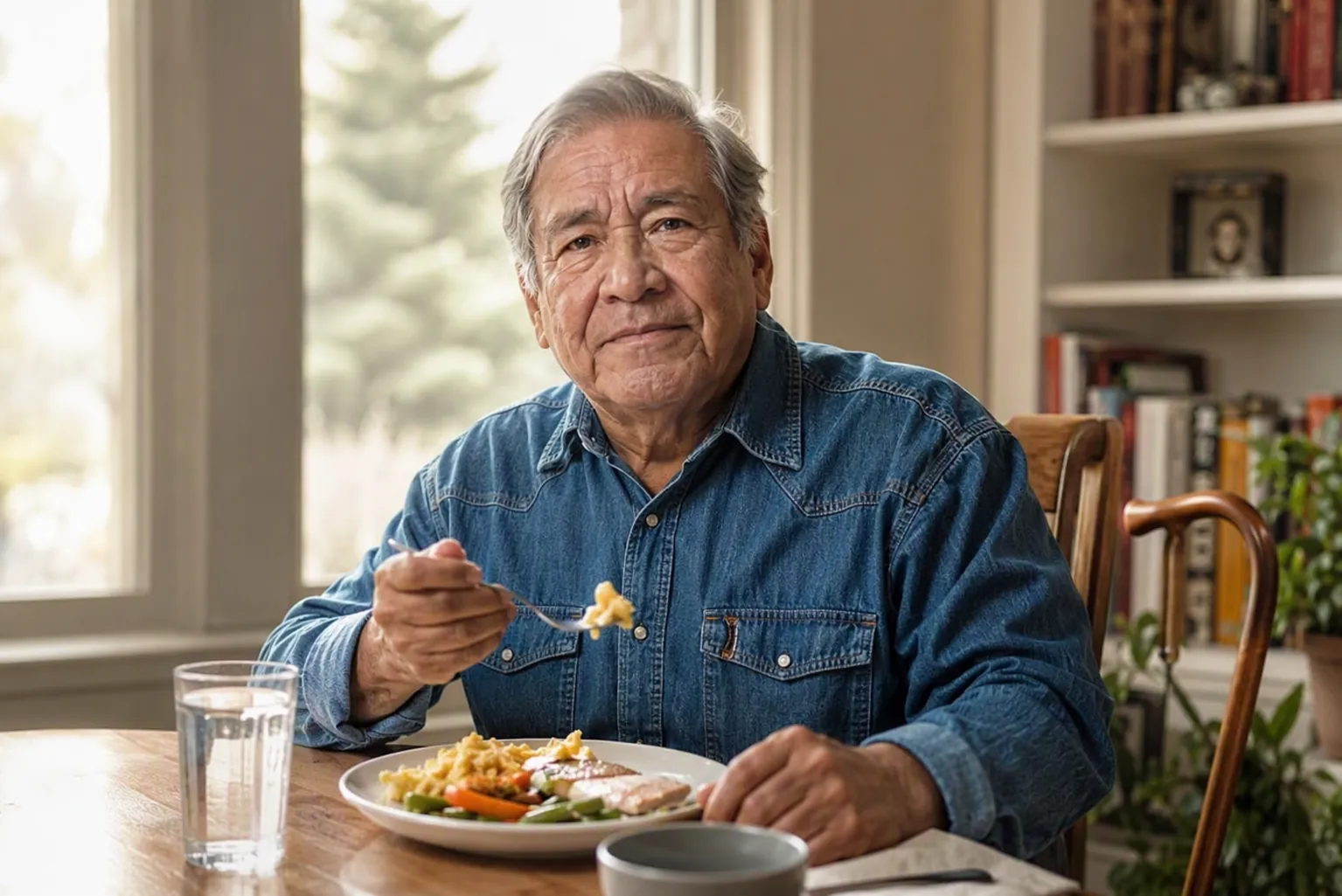
After an older parent falls, the first questions usually go to the floor: Was there a throw rug? Were the shoes loose? Did the walker catch on something? Those questions matter. But another clue may be sitting at the kitchen table. If the same parent has been leaving meat untouched, avoiding nuts and raw vegetables, complaining that teeth feel “long,” or choosing soup and toast because chewing feels unreliable, the fall may not be only a balance problem.
Gum graft surgery recovery for older adults can support fall prevention when it does something very practical: it helps restore comfortable chewing well enough for the person to eat, hydrate, rebuild strength, and keep moving safely. That is a narrower claim than “gum grafting prevents falls.” Surgery can cover exposed roots and improve gum health, but fall risk changes only if recovery reconnects the mouth to the rest of daily function.
The strongest evidence for that connection comes from a 2024 study of 409 community-dwelling adults age 60 and older, which found that nutritional status mediated 48.8% of the pathway between oral frailty and fall risk.[1] In plainer terms, nearly half of the measured oral-frailty-to-fall-risk relationship ran through nutrition. That does not prove that one dental procedure prevents a fall. It does explain why chewing comfort deserves a place on a caregiver’s fall-prevention checklist.
The Fall Clue That Starts in the Mouth
Gum recession can expose tooth roots, make hot or cold foods painful, and leave chewing feeling unstable. For an older adult, that discomfort may not show up as a dental complaint. It may show up as a smaller plate, slower meals, skipped protein, or a quiet shift toward foods that require the least effort.
A 2026 study of 2,150 Chinese adults age 60 and older found that better oral health was associated with a 26% lower fall rate. The same study found that gingival bleeding was associated with 95% higher fall prevalence, and having 3 to 5 missing teeth was associated with 72% higher fall prevalence.[2] Those figures should not be treated as U.S. prevalence estimates, and they do not prove that fixing gums directly prevents falls. They do make it harder to keep oral health in a separate box from mobility.
For a caregiver, the useful question is not whether the mouth caused the fall. It is whether oral pain, poor chewing, dry mouth, missing teeth, or gum disease is making the parent weaker, less nourished, less steady, or less willing to eat enough to recover.
Why Nutrition Is the Main Bridge Between Gum Recovery and Fall Risk
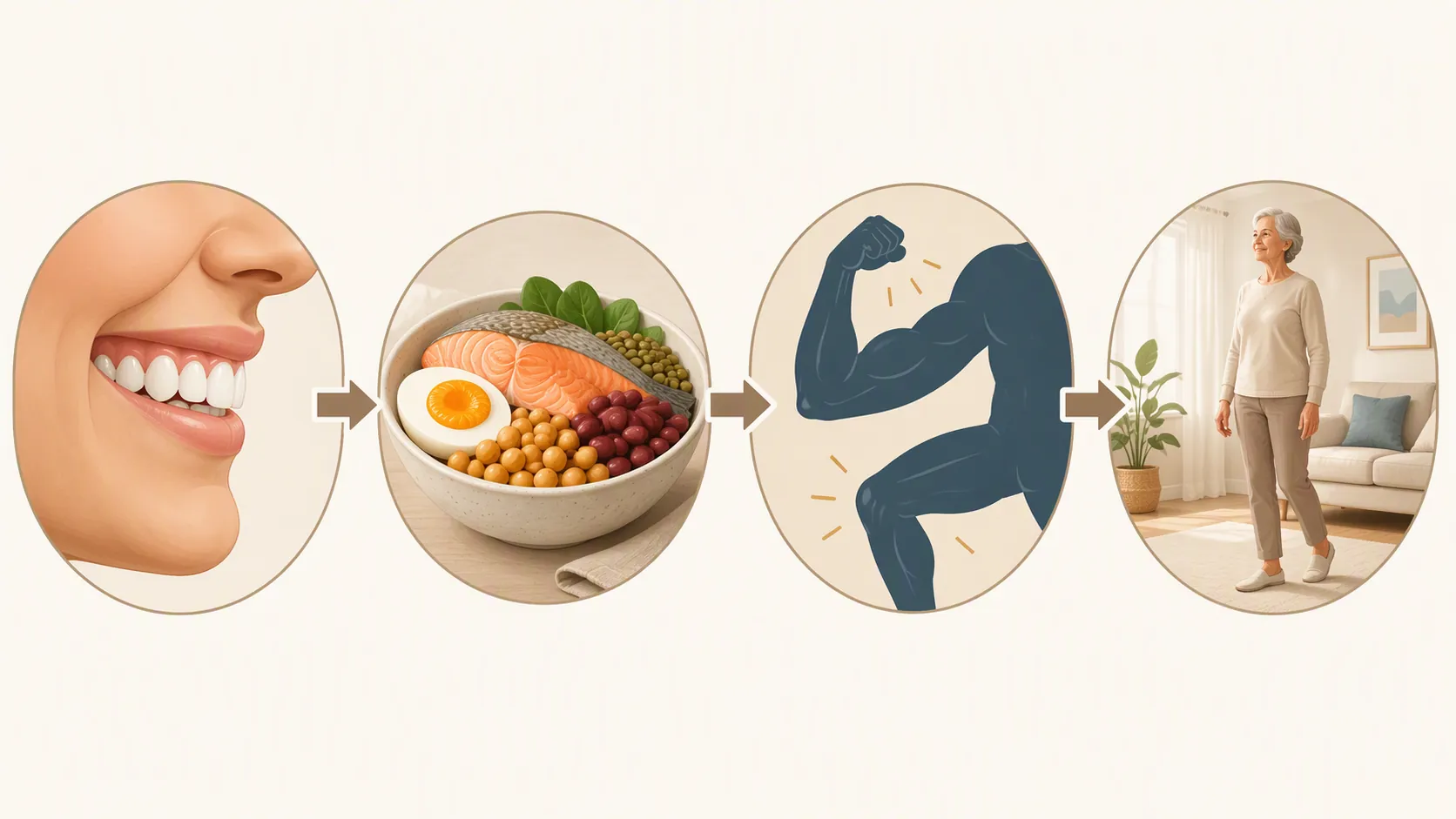
The pathway is unglamorous and easy to miss: gum recession makes chewing painful or unreliable; food choices narrow; protein and overall intake drop; muscle strength declines; standing, transferring, and catching oneself after a stumble become harder. By the time a fall happens, the kitchen-table part of the story may already look normal because everyone has adjusted to it.
That is why the 48.8% mediation finding matters.[1] It points caregivers toward the part of recovery they can actually observe. The key question after gum grafting is not only whether the surgical site looks healthy at a follow-up visit. It is whether the older adult is gradually returning to enough safe, protein-containing food to support muscle.
| What the caregiver sees | Why it matters for fall prevention |
|---|---|
| Choosing only soup, crackers, toast, or sweets | Soft foods can be easier after surgery, but they may not provide enough protein or calories for strength. |
| Leaving meat, beans, eggs, yogurt, or other protein foods unfinished | Lower protein intake can make it harder to maintain muscle needed for balance and transfers. |
| Drinking less because the mouth feels dry or sore | Poor hydration can worsen weakness, dizziness, and medication side effects. |
| Eating alone more often or taking much longer to finish meals | Meal fatigue can hide inadequate intake even when food is available. |
| Saying chewing feels better but still avoiding tougher textures | Comfort may improve before confidence and food variety return. |
The National Council on Aging warns that diets lacking protein because of poor oral health can contribute to physical deterioration, falls, and weakened immunity.[3] That is a broad aging-health point, but it becomes very specific during gum graft recovery. A parent may be following soft-food instructions correctly and still drifting into a low-protein pattern if no one is watching what replaces the foods they stopped chewing.
This does not mean rushing back to steak, nuts, crusty bread, or crunchy vegetables before the periodontist clears them. It means planning the recovery diet so “soft” does not become “nutritionally thin.” Eggs, Greek yogurt, cottage cheese, soft fish, well-cooked beans if tolerated, smooth nut butters when appropriate, and protein-containing smoothies may matter more to fall prevention than another lecture about rugs.
What Gum Graft Recovery Can Realistically Change
Gum grafting is usually done to treat gum recession by adding tissue where the gumline has pulled away. Cleveland Clinic describes gum grafting as having a success rate above 90%, and notes that many people return to normal daily comfort within 1 to 2 weeks.[4] Those are encouraging recovery facts, especially for an older adult who is worried that dental surgery will mean weeks of being unable to eat or function.
But a successful graft and a safer gait are not the same outcome. The graft can heal well while the person continues to eat too little, lose confidence with meals, skip fluids, or avoid activity. Fall prevention depends on what recovery restores: chewing comfort, appetite, nutrition, hydration, oral hygiene, and enough energy to keep participating in strength and balance routines.
A useful recovery goal sounds less like “the gums look better” and more like “she can comfortably eat enough protein at breakfast and dinner,” or “he is drinking normally again without mouth pain.” Those are the changes that connect the dental procedure back to mobility.
The Two Smaller Pathways: Balance Signals and Inflammation
Nutrition carries the most practical weight, but it is not the only reason oral health belongs in a fall-risk conversation. Teeth and periodontal tissues help provide sensory feedback from the mouth and jaw. When gums are diseased, teeth are loose, or teeth are missing, that feedback may become less reliable. The effect is not as obvious as poor vision or neuropathy in the feet, but postural control is built from many small signals, and the mouth is one of them.
Periodontal inflammation is another plausible link. Chronic gum disease is associated with inflammatory activity in the body, and inflammation is part of the broader frailty picture. For caregivers, the practical takeaway is modest: treating gum disease is not just about preserving teeth. It may also remove one chronic burden from an older body that is already trying to maintain strength, appetite, and recovery capacity.
These mechanisms should not be oversold. The strongest day-to-day target remains eating well enough to preserve muscle. The balance-signal and inflammation pathways help explain why oral health fits into the frailty system, but they do not turn gum graft surgery into a stand-alone fall-prevention treatment.
Medication, Dry Mouth, and the Older Adult Recovery Problem
Older adults often bring a medication list into dental recovery, not just a mouth. The American Dental Association reports that 39% of adults age 65 and older use 5 or more prescription drugs, and that xerostomia, or dry mouth, affects 30% of people age 65 and older.[5] Dry mouth can make chewing, swallowing, denture use, oral hygiene, and post-surgical comfort harder.
This is where fall prevention and dental recovery overlap in a very practical way. A parent who drinks less because the mouth feels dry may become more lightheaded. A parent who avoids food because swallowing is uncomfortable may become weaker. A medication that contributes to dry mouth may also sit on a list that includes blood pressure drugs, sleep medications, or other prescriptions relevant to fall risk.
The periodontist needs to know about the full medication list before and after the procedure. The primary care provider needs to know that oral discomfort, dry mouth, and reduced intake are part of the current fall-risk picture. Neither clinician can coordinate what they cannot see.
What to Watch During Recovery
This is not a substitute for dental or medical advice. The periodontist’s instructions on wound care, diet texture, activity limits, and warning signs come first. The fall-prevention layer is about watching whether recovery is protecting strength rather than quietly draining it.
- Ask what foods are safe now, what foods should wait, and how to keep protein intake adequate within those limits.
- Track whether meals are getting smaller, slower, or less varied after the first few recovery days.
- Watch fluid intake, especially if dry mouth, dizziness, constipation, or medication changes are present.
- Report chewing pain, bleeding concerns, poor appetite, or sudden weakness rather than treating them as ordinary aging.
- Keep walking aids, clear pathways, good lighting, and transfer support in place while intake and energy are still recovering.
The first 1 to 2 weeks matter because daily comfort often improves during that window, but comfort alone is not the finish line.[4] The better question is whether the person is eating and drinking well enough to resume the routines that keep legs strong: walking, standing from a chair, therapy exercises, safe stair practice, or ordinary household movement.
How to Coordinate the Dental and Fall-Prevention Plans
The caregiver does not need to turn into a dental specialist. The most useful role is to make sure the right information crosses office doors.
- With the periodontist: describe the parent’s chewing changes before surgery, recent falls, food avoidance, dry mouth, and any fear of eating after the procedure.
- With the primary care provider: explain that gum recession or recovery is affecting intake, hydration, weight, strength, or balance.
- With the pharmacist or prescribing clinician: ask whether any medications may be worsening dry mouth, dizziness, appetite, or fall risk.
- At home: connect oral recovery to the existing fall-prevention checklist, including lighting, footwear, mobility aids, strength work, hydration, and safe meals.
Gum graft surgery recovery can support fall-risk reduction when it helps restore oral comfort and nutrition as part of a broader plan. If the procedure heals but the older adult keeps eating less, drinking less, losing muscle, or moving less, the fall-risk work is unfinished.
A parent’s mouth is not separate from their balance. It is part of how they eat, how they maintain strength, how they tolerate medications, and how much independence they can keep after a fall.
References
- The mediating effect of nutritional status on the relationship between oral frailty and fall risk in community-dwelling older adults, BMC Geriatrics, 2024.
- Association between oral health and falls among older adults, BMC Geriatrics, 2026.
- Healthy Smiles Make Healthy Aging: 3 Lesser-Known Risks of Poor Oral Care, National Council on Aging.
- Gum Graft Surgery, Cleveland Clinic.
- Aging and Dental Health, American Dental Association.
Questions to bring to a clinician or OT
This is not medical, legal, or a family's final decision — only a framework. Bring these questions to a clinician, occupational therapist, or your local Area Agency on Aging.
Find Local HelpRelated reading
Noticed something outdated or inaccurate on this page? Flag a correction. We review every report against CDC, NIA, and AARP HomeFit guidance before updating a page.