
Caregiver decision guide
How Long Does a Hair Transplant Take for Seniors?
A hair transplant for seniors typically takes 4 to 8 hours per session, but age-related health factors often mean surgeons split the procedure into multiple shorter sessions. This guide explains what the surgery day looks like for older adults and why planning for a longer overall commitment is key.
A senior hair transplant usually takes 4 to 8 hours per session. That is the useful starting answer, but it is not the whole schedule. For an older adult with heart disease, hypertension, diabetes, blood thinners, or limited stamina, the better question is whether one long day is wise or whether the surgeon should divide the work into shorter sessions.
The International Society of Hair Restoration Surgery says patients in their 70s and 80s routinely undergo hair transplantation, and it specifically notes that larger procedures may be split into two or more shorter sessions for people with heart conditions, hypertension, or diabetes to reduce surgical stress.[1] That one point changes the planning for many seniors. The operation may be the same category of procedure, but the day should not be treated like the same day a healthy 35-year-old would tolerate.

What the 4-to-8-hour day actually includes
The clock does not start when the first graft goes in and stop when the last one is placed. A realistic surgery-day estimate includes arrival, check-in, review of the medical plan, confirmation of medications, marking the hairline, local anesthesia, harvesting grafts, preparing grafts, placing grafts, short breaks, post-op instructions, and discharge.
| Part of the day | What it means for an older patient |
|---|---|
| Arrival and pre-op review | The team confirms blood pressure, medications, allergies, the day’s graft plan, and whether anything has changed since clearance. |
| Local anesthesia and setup | The scalp is numbed; the patient is awake, so comfort, positioning, bathroom breaks, and fatigue matter. |
| Graft harvesting | Follicles are removed from the donor area. More grafts usually means more time in the chair. |
| Graft preparation and placement | The team prepares and implants the grafts. This is often the long middle stretch of the day. |
| Breaks and discharge | Breaks are not wasted time for seniors. They may be the difference between finishing safely and pushing too hard. |
Most people hear “outpatient” and think “quick.” Hair transplantation is usually outpatient, but outpatient does not mean short. It means the patient generally goes home the same day rather than staying overnight. For a senior who no longer drives at night, uses a cane after long sitting, or needs help remembering evening medicines, that distinction matters.
Why seniors are more likely to need a split schedule
Age by itself is not the main scheduling problem. The problem is the company age often keeps: blood pressure that needs monitoring, diabetes that needs stable control, a cardiology history, aspirin or anticoagulant use, neck and back stiffness, and less tolerance for a long day of sitting still.
That is why the senior-specific answer should separate per-session duration from total treatment time. A surgeon may decide that a planned graft count should be completed over two shorter sessions rather than one longer session. That does not mean the patient is too old. It means the schedule is being adjusted to the body that is actually coming through the door.

For a healthy older adult with a modest graft plan, one session may still be reasonable. For someone with diabetes, hypertension, heart disease, or medication issues that need coordination, the safer plan may be staged. The decision belongs with the surgeon and the patient’s medical team, not with a clinic advertisement promising convenience.
Some clinic pages publish specific cutoffs for blood pressure or HbA1c before elective hair transplantation. Those numbers can be useful conversation starters, but when they come from clinic marketing pages rather than clearly cited surgical guidelines, they should not be treated as universal rules. A primary care doctor, cardiologist, endocrinologist, or prescribing clinician may need to weigh in before the hair restoration plan is set.
Graft count is the biggest reason one day becomes a long day
The more grafts a surgeon removes and places, the longer the procedure usually takes. That sounds obvious, but it is where many older adults can make a practical decision instead of chasing the densest possible result.
A senior plan often uses a conservative graft count, commonly described as about 1,500 to 3,000 grafts in one senior-focused clinic source.[2] The same source describes this as a “less is more” strategy: lower density can still look natural, while reducing surgical time and tissue trauma.[2] That is not a consolation prize if the goal is to look normal, rested, and proportionate rather than artificially dense.
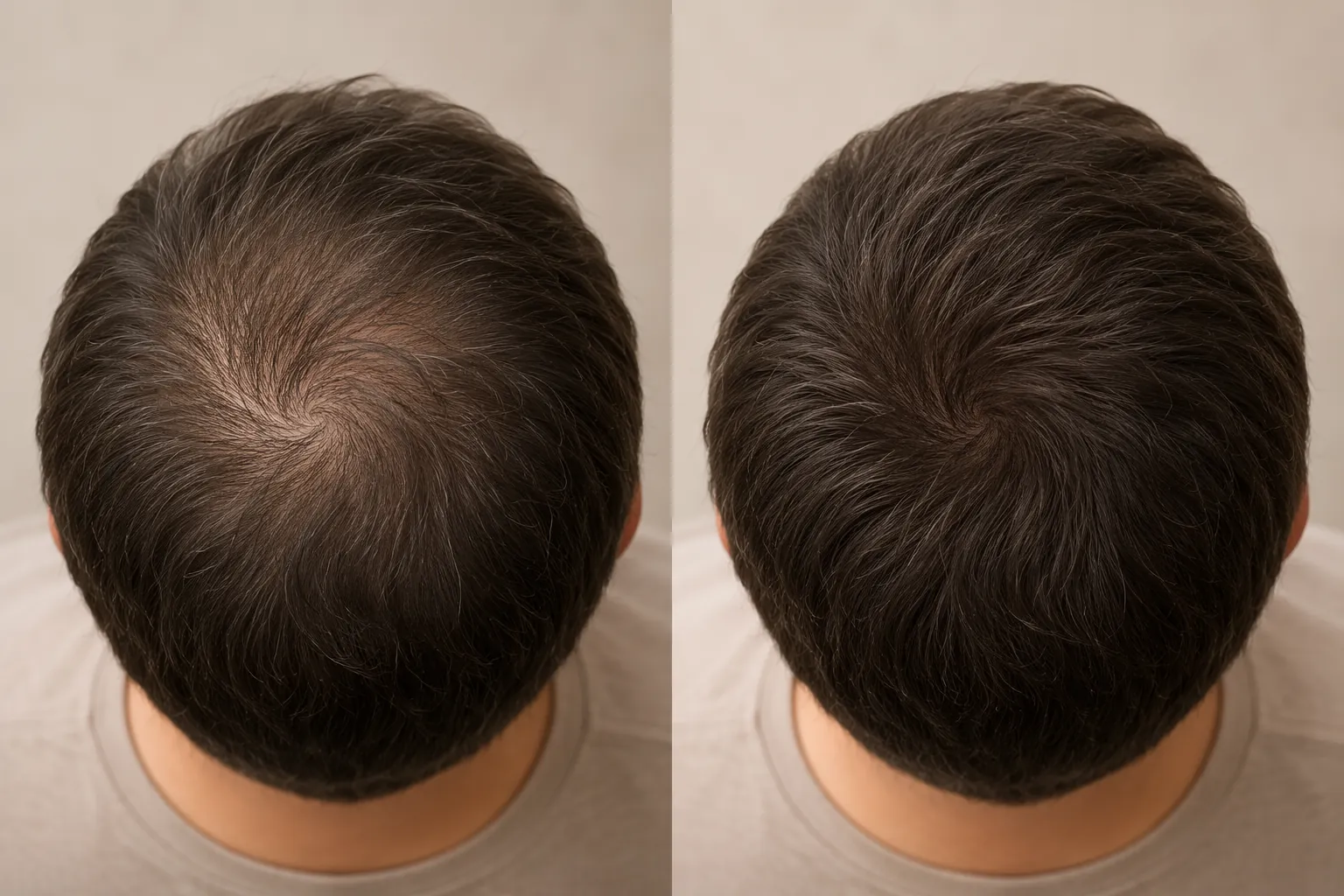
Hair density is not judged under a microscope in daily life. It is judged across a room, in a bathroom mirror, under restaurant lighting, and in family photographs. If a lower-density transplant frames the face well and blends with existing gray or thinning hair, it may do the job without making the patient sit through a larger, more tiring procedure.
This is also where expectations need to be honest. A 72-year-old with a broad bald area and limited donor hair may not be planning the same cosmetic endpoint as a younger patient filling in early recession. A good senior plan often favors hairline shape, frontal framing, and natural coverage over maximum density everywhere.
FUE or FUT only matters here if it changes time, scarring, or tolerance
Follicular unit extraction, or FUE, removes individual follicular units. Follicular unit transplantation, or FUT, removes a strip of donor scalp that is then divided into grafts. Both methods can be used for hair restoration, and both require local anesthesia, harvesting, graft preparation, and placement.[3][4]
For duration planning, the important question is not which acronym sounds newer. It is how long the patient must remain positioned, how much donor work is needed, how many grafts are planned, what kind of scar is acceptable, and whether the surgeon expects one session or staged sessions. A 68-year-old on a blood thinner needs a medication and bleeding-risk discussion before arguing about technique.
There is one senior-specific scarring point worth knowing. A published review notes that older skin may produce finer, less visible linear scars with FUT because of reduced collagen tension.[5] That does not make FUT automatically better for every older adult, but it does mean “older skin heals badly” is too broad a fear.
The calendar commitment is longer than the chair time
A single session may take 4 to 8 hours, but the calendar around it is wider. There may be a consultation, medical clearance, medication instructions, the procedure day, the first few nights of careful wound care, follow-up checks, and then months of waiting before the final cosmetic result appears.
The American Academy of Dermatology explains that transplanted hair commonly falls out after surgery and that most patients see results 6 to 9 months later, with some needing 12 months.[3] Cleveland Clinic similarly describes shedding in the first weeks and new growth beginning months later, with full results often taking up to a year.[4] So the procedure day is not the finish line. It is the start of a long, mostly quiet waiting period.
| Time point | What to plan for |
|---|---|
| Before booking | Ask whether primary care, cardiology, endocrinology, or medication clearance is needed. |
| Procedure day | Plan for several hours in the chair, plus transportation home and a low-demand evening. |
| First days after | Expect wound-care instructions, sleeping-position guidance, and limits on activity. |
| Weeks 2–3 | Shedding can be normal, not a sign that the procedure failed. |
| Months 3–4 | Early regrowth may begin, but the visible change is still developing. |
| Months 9–12 | This is the more realistic window for judging the mature cosmetic result. |
If the procedure is split, the calendar stretches further. Two shorter sessions may be easier on the body than one long session, but they also mean two rides, two recovery starts, two sets of instructions, and possibly two blocks of time when an adult child or friend should check in.
Safety data are reassuring, but they do not replace clearance
Hair transplantation has a generally favorable safety profile when patients are properly selected. A 10-year study of 2,896 hair transplant patients reported no life-threatening complications and a 0.10% minor complication rate.[5] That is reassuring, especially for an older adult who worries the procedure is automatically reckless.
But the right lesson is not “nothing can happen.” The right lesson is that screening and surgical judgment matter. The same published safety record does not tell any one patient whether their blood pressure is controlled enough, whether their anticoagulant can be safely managed, or whether their stamina supports an 8-hour day.
One senior-focused hair restoration source says patients over 65 may require clearance from a primary care provider before surgery.[6] That is a sensible expectation even when a clinic does not make it sound mandatory. Elective surgery gives the patient time to check the medical details before the appointment is on the books.
Questions to ask before accepting a surgery date
The consultation should produce a schedule, not just enthusiasm. Before paying a deposit or arranging transportation, ask questions that force the clinic to describe the actual day.
- How many grafts are you planning, and why is that number appropriate for my age, donor hair, and goals?
- Do you expect one session or two or more shorter sessions?
- What is the expected arrival time, chair time, break plan, and discharge time?
- What medical clearance do you need because of my blood pressure, diabetes, heart history, or other conditions?
- Who gives instructions about aspirin, anticoagulants, diabetes medicines, supplements, and blood pressure medications?
- If I become too uncomfortable or my vital signs are not where you want them, what happens to the remaining graft plan?
- How soon should someone stay with me or check on me after I get home?
That last kind of question is not pessimism. It is ordinary planning. A clinic that works well with older adults should be able to explain the stopping point, the backup plan, and the follow-up process without making the patient feel difficult for asking.
A practical answer
For many seniors, the best estimate is still 4 to 8 hours for one hair transplant session. The more useful plan adds the medical conditions, medications, graft count, transportation, recovery support, and the possibility of staged sessions.
Seniors are not automatically too old for hair transplant surgery. They should simply treat “How long does it take?” as two questions: how long one session lasts, and how much total time their health profile makes wise.
This article is for general education and is not a substitute for medical advice. Anyone considering hair transplantation should review personal risks, medications, and clearance needs with qualified clinicians before scheduling an elective procedure.
References
- A Guide to Hair Transplantation After Age 50 — ISHRS.
- Hair Transplant for Men Over 60 — ineedmorehair.com.
- Hair transplant — American Academy of Dermatology.
- Hair Transplant — Cleveland Clinic.
- Complications of Hair Transplant Procedures—Causes and Management — PMC/NIH, 2021.
- Are There Age Limits for Hair Transplants? — Hairphysician.com.
Questions to bring to a clinician or OT
This is not medical, legal, or a family's final decision — only a framework. Bring these questions to a clinician, occupational therapist, or your local Area Agency on Aging.
Find Local HelpRelated reading
Noticed something outdated or inaccurate on this page? Flag a correction. We review every report against CDC, NIA, and AARP HomeFit guidance before updating a page.