
Caregiver decision guide
Low-Effort Meal Ideas for Older Adults Tired of Cooking
A three-tier meal system — no-cook plates, reheat-only meals, and batch-and-freeze — helps older adults who are tired of cooking get enough protein and calories even on their hardest days. The guide explains why appetite and cooking energy decline with age, sets realistic protein targets, and pairs each tier with a kitchen-safety checklist to reduce burn, slip, and fire risk.
The first sign may be quiet: the stove is clean because it has not been used, the refrigerator has food that keeps expiring, and dinner has become “some crackers” or “I wasn’t that hungry.” For a caregiver looking for low-effort meals for an older adult who is tired of cooking, the useful starting point is not a prettier recipe list. It is recognizing that cooking may now cost more energy, attention, hand strength, appetite, and confidence than the meal gives back.
Poor appetite in later life is common enough that it deserves to be taken seriously rather than treated as stubbornness. UCLA Health describes appetite loss as affecting about 15% to 30% of older adults, and Hebrew SeniorLife notes that causes can include medication effects, chronic illness, pain, depression, dental problems, changes in taste and smell, and the simple loneliness of eating alone.[1][2]
That matters for fall prevention because skipped meals are not just a nutrition issue. When appetite loss leads to weight loss, muscle loss, and frailty, it can weaken the very systems an older adult needs for standing, walking, recovering from a stumble, and staying steady.[1]
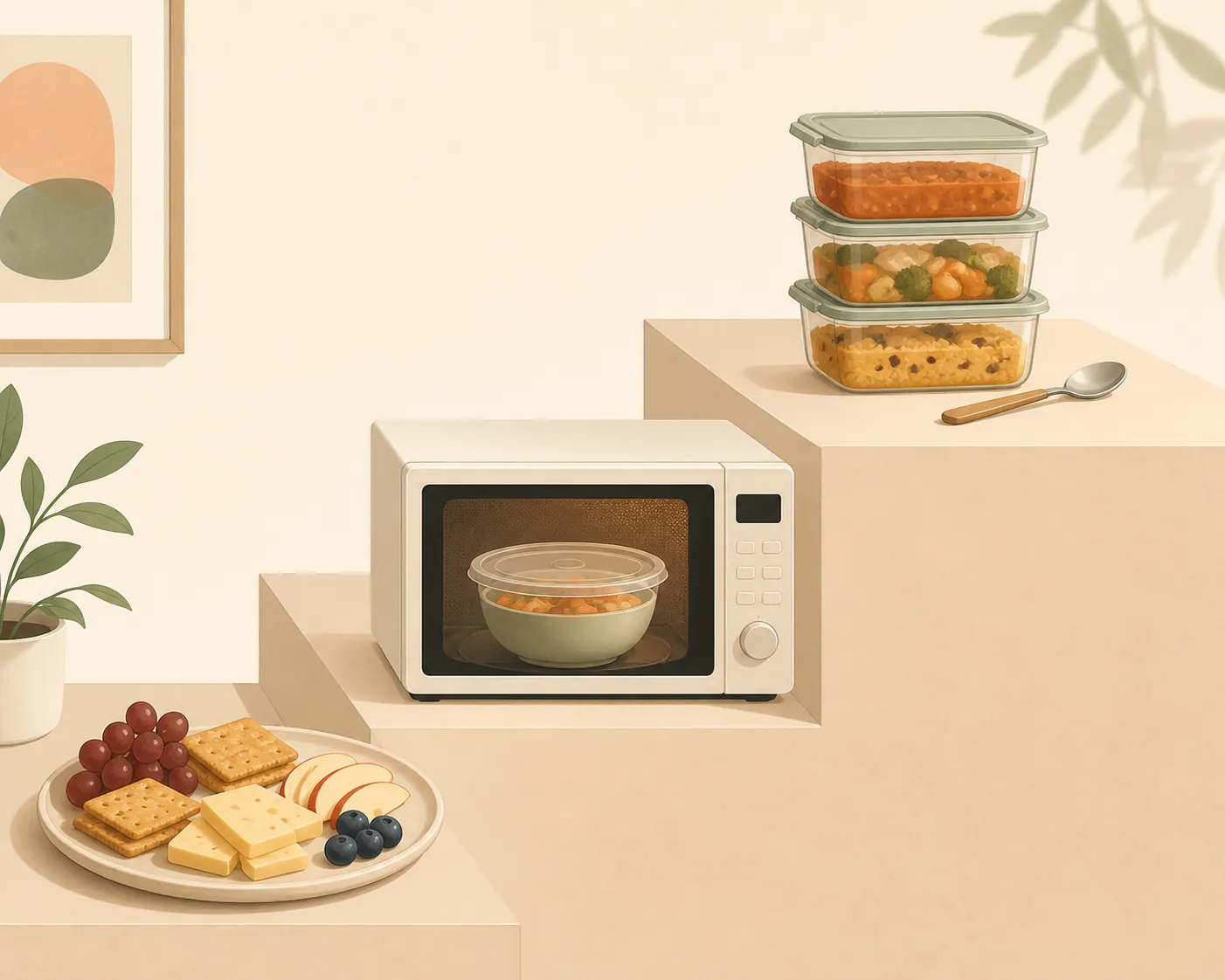
Use an effort ladder instead of a weekly meal plan
A weekly plan assumes the person has roughly the same energy on Tuesday that they had on Sunday. Many older adults do not. A more forgiving system is an effort ladder: meals arranged by how much work and kitchen risk they require on that particular day.
| Energy level today | Meal tier | What counts | Main job |
|---|---|---|---|
| Very low | No-cook plate | Open, spread, pour, assemble | Get protein and calories in without heat |
| Low to moderate | Reheat-only meal | Microwave or safely reheat something already cooked | Make a warm meal without active stovetop cooking |
| Good day, or caregiver support day | Batch-and-freeze | Cook once, portion, label, freeze | Create future low-effort meals |
The ladder removes the all-or-nothing problem. If cooking feels impossible, the day is not a failure; it is a no-cook day. If standing at the stove feels unsafe but a microwave is manageable, it is a reheat-only day. If there is a rare good-energy day, or a caregiver is visiting, that is when a few freezer meals can be made for later.
Protein is the anchor, not a lecture
For most caregivers, the goal is not to calculate every gram. It is to stop the slow slide from a meal to a snack to almost nothing. Still, protein deserves special attention because it supports muscle, and muscle is part of balance, walking speed, getting up from a chair, and catching oneself during a near fall.
AARP’s meal-planning guidance for older adults cites dietitian Leslie Bonci’s general target of about 0.5 to 0.6 grams of protein per pound of body weight, and also frames about 20 grams of protein per eating occasion as a practical planning anchor.[3] Those are not individualized prescriptions. Kidney disease, diabetes, heart failure, cancer treatment, swallowing problems, weight loss, and other medical issues can change what is appropriate, so medical specifics belong with a clinician or registered dietitian.
The reason to keep protein visible is not cosmetic. Hebrew SeniorLife notes that muscle mass declines about 3% to 5% per decade after age 30 and describes research linking adequate protein intake in adults 60 and older with preserved muscle and grip strength.[4] In the kitchen, grip strength is opening a jar, carrying a bowl, holding a pan, and pushing up from the table. In the hallway, it is one part of staying upright.
Tier 1: no-cook plates for the hardest days
No-cook meals are not “giving up.” They are the safety net. They are for days when standing is tiring, the stove feels like too much, appetite is weak, or the thought of washing pans is enough to cancel dinner.
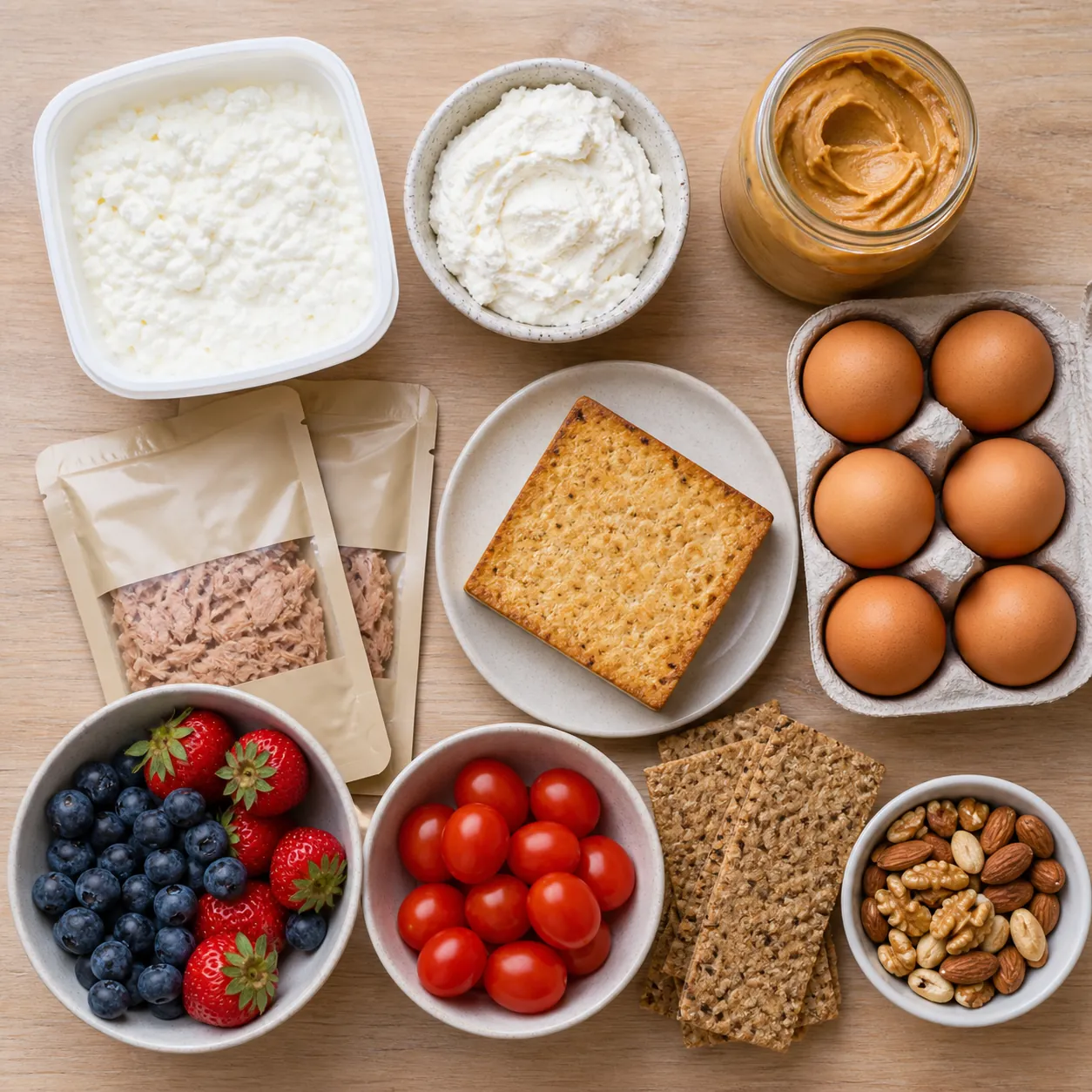
Good no-cook plates usually have three parts: a protein, a calorie source, and something easy to eat with it. Duke Health’s list of healthy convenience foods includes options such as cottage cheese, ricotta, nut butters, hard-cooked eggs, tuna pouches, and baked tofu; AARP also points caregivers toward practical protein staples for older adults, including items that require little or no cooking.[5][3]
| Protein base | Add-on for calories or texture | Easy plate idea |
|---|---|---|
| Cottage cheese | Berries, canned peaches, crackers, toast | Cottage cheese bowl with fruit and crackers |
| Ricotta | Honey, sliced banana, toast, soft fruit | Ricotta toast or ricotta bowl |
| Peanut butter or another nut butter | Banana, apple slices, whole-grain toast, crackers | Nut butter toast with fruit |
| Hard-cooked eggs | Prewashed greens, crackers, cherry tomatoes, avocado | Egg plate with crackers and vegetables |
| Tuna pouch | Mayonnaise or olive oil, crackers, prewashed salad, bread | Tuna cracker plate or tuna sandwich |
| Baked tofu | Microwave rice if desired, slaw mix, bottled dressing | Tofu salad bowl or tofu wrap |
| Greek yogurt | Granola, berries, nut butter, soft fruit | Yogurt bowl with added nut butter |
The plate does not have to look like dinner to count as dinner. A bowl of cottage cheese with fruit, crackers, and a glass of water may protect intake better than an untouched casserole. A tuna pouch with crackers and prewashed salad is a meal if it gets eaten. Nut butter on toast with banana is useful when chewing, appetite, or motivation are limited.
Make no-cook food visible and reachable
Low-effort food fails when it is stored like regular groceries. If the tuna pouches are in a high cabinet, the cottage cheese is hidden behind leftovers, and the crackers are across the kitchen, the meal still asks too much.
- Keep two or three protein items at eye level in the refrigerator.
- Put crackers, nut butter, tuna pouches, and shelf-stable snacks in one easy-to-reach bin.
- Use easy-open packaging when possible, or open difficult jars during a caregiver visit.
- Pre-place a lightweight plate, bowl, spoon, and napkin where they do not require bending or climbing.
- Buy smaller containers if large tubs become too heavy or spoil before they are eaten.
On very low-appetite days, a smaller plate can be kinder. Large portions may look like a demand. The job is to create a starting point: a few bites of protein, something easy to chew, and a drink within reach.
Tier 2: reheat-only meals when warm food still sounds good
Warm food can feel more like a meal, but stovetop cooking is often where the burden returns: standing, remembering a burner, lifting hot pans, draining water, and cleaning up. Reheat-only meals keep warmth while removing as many moving parts as possible.
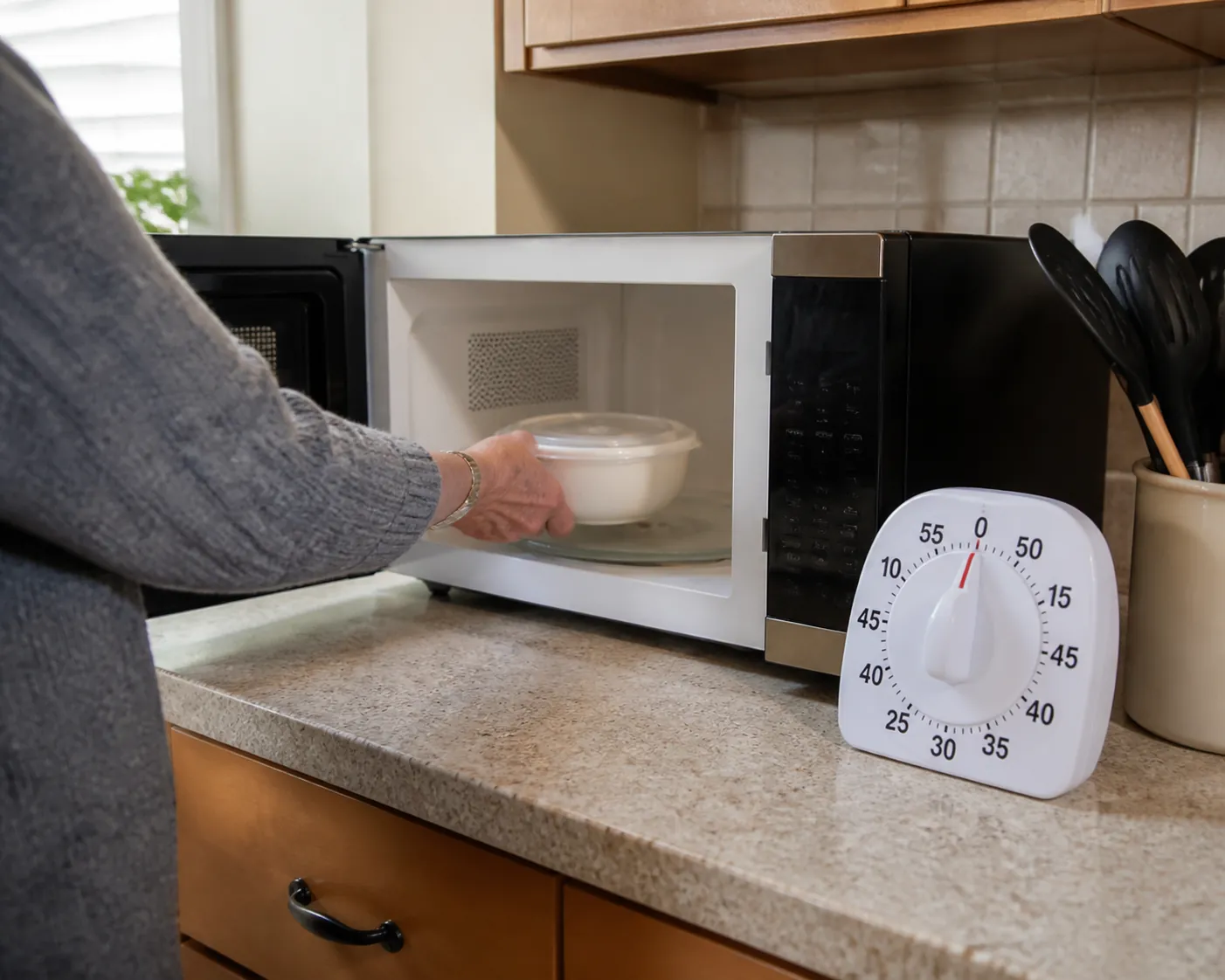
This tier includes frozen meals, refrigerated prepared meals, soup, chili, cooked grains, rotisserie chicken, cooked meatballs, cooked vegetables, and leftovers that someone has already portioned. Frozen meatballs, for example, belong here only when they are already fully cooked and can be reheated according to the package instructions.
| Reheat base | Protein helper | How to make it more complete |
|---|---|---|
| Microwave soup | Add shredded rotisserie chicken, beans, tofu, or Greek yogurt on the side | Serve with toast or crackers |
| Frozen entrée | Choose one with a clear protein source when possible | Add fruit, yogurt, or a no-cook side |
| Microwave rice or grain pouch | Add tuna, baked tofu, cooked chicken, beans, or cooked meatballs | Use bottled sauce or dressing |
| Reheated chili or stew | Beans, meat, tofu, or lentils already in the dish | Top with cheese or serve with bread |
| Cooked pasta from a caregiver visit | Add ricotta, shredded chicken, or meat sauce | Portion into single servings before refrigerating |
Reheat-only works best when portions are already single-serving. A large container asks the older adult to lift, scoop, judge the amount, re-cover, and put it back. A labeled bowl asks much less: remove lid if needed, cover safely, heat, sit down.
Microwave safety is part of the meal
Kitchen safety is not a side issue for older adults who are tired of cooking. The American Burn Association says cooking is the leading cause of home fires and accounts for about 47% of all home fires; it also warns that adults over 65 have a much higher risk of injury or death from kitchen fires.[6] That does not mean an older person must stop preparing food. It means the meal method should match attention, stamina, vision, grip, and reaction time.
- Use microwave-safe containers that are light enough to lift with both hands.
- Avoid containers that become floppy, slippery, or too hot to hold.
- Keep a clear path from refrigerator to microwave to table; no throw rugs, bags, pet bowls, or cords in the walking route.
- Use a large-print timer if the microwave signal is easy to miss.
- Let hot food sit briefly before carrying or opening it, especially soups and saucy meals.
- Use oven mitts with good grip, not thin towels that can slip or catch fire.
- Keep paper towels, mail, packaging, and dish towels away from burners even if the plan is to use only the microwave.
Access Care Partners also emphasizes practical kitchen adaptations for older adults and people with disabilities, such as organizing tools within easy reach, using adaptive equipment, improving lighting, and reducing bending or overreaching during meal preparation.[7] These are small changes, but they decide whether a reheated bowl is realistic or just another task that gets postponed.
Tier 3: batch-and-freeze for good days, not proof of virtue
Batch cooking is useful only when it serves the low-energy days that follow. It should not become another standard the older adult is failing to meet. For many households, the best batch-and-freeze plan happens when a caregiver, friend, neighbor, or paid helper is already there.
Hebrew SeniorLife recommends time-saving meal preparation approaches for older adults, including preparing ingredients ahead, using leftovers, and freezing meals in portions that are easy to reheat later.[4] The key is portioning before the food goes into the freezer. A frozen family-size pan is not a low-effort meal for one tired person.
| Good-day dish | Freeze it as | Why it helps later |
|---|---|---|
| Chili, stew, or bean soup | Single microwave-safe containers | Soft texture, easy to add cheese, yogurt, toast, or crackers |
| Meatballs in sauce | Small portions with sauce | Can go over microwave rice, pasta, or toast |
| Shredded chicken | Flat freezer bags or small containers | Can become soup, sandwich filling, grain bowl, or quesadilla filling |
| Pasta with sauce | One-meal portions | No draining or stovetop work later |
| Cooked lentils or beans | Half-cup or one-cup portions | Can be added to soup, rice, salad, or toast |
Labeling matters more than variety. A container marked “chicken chili — heat 2 minutes, stir, heat 1 minute” is more likely to be eaten than a mystery block of frozen food. If writing is hard to read, use large labels, color stickers, or a simple freezer map taped to the door.
A low-effort day can still have enough food
The meal ladder is most useful when it is applied before the day unravels. If breakfast was small and lunch was skipped, dinner does not need to become ambitious. It needs to become easy enough to happen.
| If today looks like this | Use this tier | A realistic option |
|---|---|---|
| No appetite, no cooking energy | No-cook | Greek yogurt with nut butter and banana |
| A little hungry but tired | No-cook | Tuna pouch, crackers, fruit, and water |
| Wants something warm but should not use the stove | Reheat-only | Microwave soup with added chicken or beans |
| Can manage the microwave but not cleanup | Reheat-only | Single frozen meal plus cottage cheese or fruit |
| Caregiver is visiting and the older adult has decent energy | Batch-and-freeze | Portion chili, stew, shredded chicken, or pasta into single servings |
MedlinePlus advises older adults to eat a variety of foods, get enough protein, and stay hydrated, while also noting that calorie needs may change with age.[8] In real kitchens, that may mean accepting repetition. If cottage cheese, tuna crackers, and microwave soup are the three meals that reliably get eaten this month, they are doing important work.
When the problem is not the meal idea
Low-effort meals can protect a difficult week. They cannot diagnose persistent appetite loss, unexplained weight loss, new weakness, nausea, depression, dental pain, swallowing trouble, medication side effects, or repeated skipped meals.
Bring in a doctor or registered dietitian if an older adult is losing weight, eating much less than usual, coughing or choking during meals, avoiding whole food groups, seeming weaker, falling, nearly falling, or becoming unable to shop, open packages, use the microwave, or carry food safely. The same is true if a caregiver is quietly compensating for more and more steps while the older adult’s intake keeps shrinking.
The goal is not to make someone love cooking again. It is to make sure there is always a safe, realistic way to get protein, calories, and fluids on the table when cooking energy is gone.
References
- Is it normal to lose your appetite as you get older? — UCLA Health
- Causes of Appetite Loss in Seniors — Hebrew SeniorLife
- Meal Planning for an Older Adult at Home — AARP
- Time-Saving Meal Prep Ideas for Older Adults — Hebrew SeniorLife
- Healthy Convenience Foods that Require No Cooking or Prep Time — Duke Health
- Cooking Safety for Older Adults — American Burn Association
- Healthy Cooking for Older Adults and Individuals with Disabilities — Access Care Partners
- Nutrition for Older Adults — MedlinePlus
Questions to bring to a clinician or OT
This is not medical, legal, or a family's final decision — only a framework. Bring these questions to a clinician, occupational therapist, or your local Area Agency on Aging.
Find Local HelpRelated reading
Noticed something outdated or inaccurate on this page? Flag a correction. We review every report against CDC, NIA, and AARP HomeFit guidance before updating a page.