
Equipment comparison
COVID-19 Travel Testing Checklist for Older Adults
A practical pre-trip testing plan for travelers over 65: when and where to test, what Medicare and at-home antigen tests cover and cost, which destination and cruise rules may still apply, and how to act on a positive result before the antiviral treatment window closes.
| Equipment category | at-home covid-19 tests |
|---|---|
| Comparison criteria | test type, timing, cost and Medicare coverage, documentation rules, symptom status |
| Best fit for | older travelers planning trips who need early detection and treatment access |
Last verified: August 25, 2026.
For most older adults planning travel in 2026, the answer to “Do I still need a COVID-19 test to travel?” is usually: not because of a U.S. federal entry rule. The federal negative-test requirement for air passengers entering the United States was rescinded on June 12, 2022, and the federal COVID-19 vaccination entry requirement ended on May 12, 2023.[1] That does not make testing irrelevant. It changes what the test is for.
A 2026 COVID-19 travel testing checklist for older adults should be built around one practical purpose: catching an infection early enough to protect the traveler and, if needed, start treatment before the clock runs out. Destination, airline, cruise-line, and venue rules can still vary by itinerary and change without notice, so they belong in the trip-verification folder, not in anyone’s memory of what the rules “usually” are.[2]
The reason to stay deliberate is not that travel is reckless. It is that COVID-19 still punishes age. CDC states that more than 81% of COVID-19 deaths occur in people over 65, and that the death rate among people over 65 is roughly 97 times that of people ages 18–29.[3] For this age group, a test result is not just information. A positive result can be the trigger to call a clinician while antiviral treatment can still help.
The travel testing plan, by timeline
The most useful COVID-19 testing plan starts before anyone has symptoms. It covers where testing will happen, who will pay for it, what rules apply to this exact itinerary, and who gets called if a test turns positive on a Sunday morning in a hotel room.
| When | What to do | Why it matters |
|---|---|---|
| 4–6 weeks before travel | Schedule or request a pre-travel health review, especially for international travel, cruises, or complex medical histories.[5] | This is the time to discuss vaccine status, treatment eligibility, medication interactions, and how to reach care while away. |
| 1–2 weeks before departure | Verify COVID-19 testing or documentation rules for the destination, airline, cruise line, tour operator, and any high-risk venue on the itinerary.[2] | Federal U.S. entry rules are no longer the main issue; trip-specific rules are. |
| Before packing | Buy at-home antigen tests or confirm access to clinician-ordered testing. Check expiration dates and storage instructions. | A test that sat in a hot car or expired months ago is not the backup plan anyone wants. |
| Within the few days before departure | If testing for reassurance, do it early enough to repeat a negative test if symptoms or exposure make that necessary. | FDA cautions that one negative antigen test does not rule out infection.[6] |
| During travel | Test promptly if symptoms begin. If the result is negative, follow the repeat-testing schedule rather than assuming the first result settles it.[6] | The treatment window is counted from symptom onset, not from the day it becomes convenient to find a clinic. |
| After a positive result | Call a clinician, telehealth service, plan nurse line, or local care site the same day. | CDC says COVID-19 treatment must be started within 5–7 days of symptom onset and can reduce hospitalization risk by more than 50%.[3] |
Four to six weeks out: settle the care plan, not just the packing list
A pre-travel visit or message to a clinician 4–6 weeks before travel is not only for vaccines or faraway destinations. It is the easiest time to ask a very plain question: “If I test positive while traveling, who should I call, and how fast can treatment be arranged?” CDC travel guidance recommends a pre-travel medical visit 4–6 weeks before departure, especially for travelers with medical conditions or international itineraries.[5]
For an older adult, that conversation should cover more than “bring tests.” Ask whether the traveler is likely to be eligible for COVID-19 treatment, whether any regular medications need special review before an antiviral is prescribed, and whether the clinician can provide telehealth support if the traveler is out of state or abroad. CDC identifies adults over 65 as a high-risk group and notes that treatment is most useful when started quickly, within the first 5–7 days after symptoms begin.[3]
- Put the clinician’s office number, after-hours number, pharmacy number, Medicare or Medicare Advantage card, and medication list in one travel folder.
- If an adult child helps with travel, agree in advance who will make calls if the traveler is tired, feverish, or dealing with hotel or cruise staff.
- If traveling internationally, ask whether the usual clinician can prescribe across state or national lines, and what the backup plan is if they cannot.
- If the trip includes a cruise or remote destination, identify the first realistic place to get clinician-ordered testing or medical care.
Before departure: verify rules for this trip, not for “travel” in general
The old habit was to ask, “What does the airport require?” That is too broad now. A traveler might have no U.S. federal testing requirement and still face a rule from a cruise line, destination country, tour operator, assisted-living facility, medical appointment site, conference, or performance venue. Mayo Clinic’s travel advice continues to point travelers toward checking requirements for the places they are going, including destinations and transportation providers, because rules can differ and change.[2]
Do the verification in writing if possible. Save screenshots or emails with dates, because the person at the check-in desk may not be reading the same page you read two weeks earlier. For international trips, check the destination’s official government or embassy pages. For cruises, check the cruise line’s current health protocols for the exact ship and sailing. For flights, check the airline’s page for the route, not just the airport’s general advice.
- Destination entry or transit rule: Is testing required? If yes, what kind of test and what timing?
- Airline rule: Does the carrier require documentation beyond destination rules?
- Cruise rule: Does the cruise line require pre-boarding testing, symptom reporting, or onboard isolation procedures?
- Venue rule: Will a hospital visit, long-term care visit, group tour, or event require testing?
- Return-home plan: If a positive test delays travel, who changes the flight, hotel, ride, pet care, or caregiver schedule?
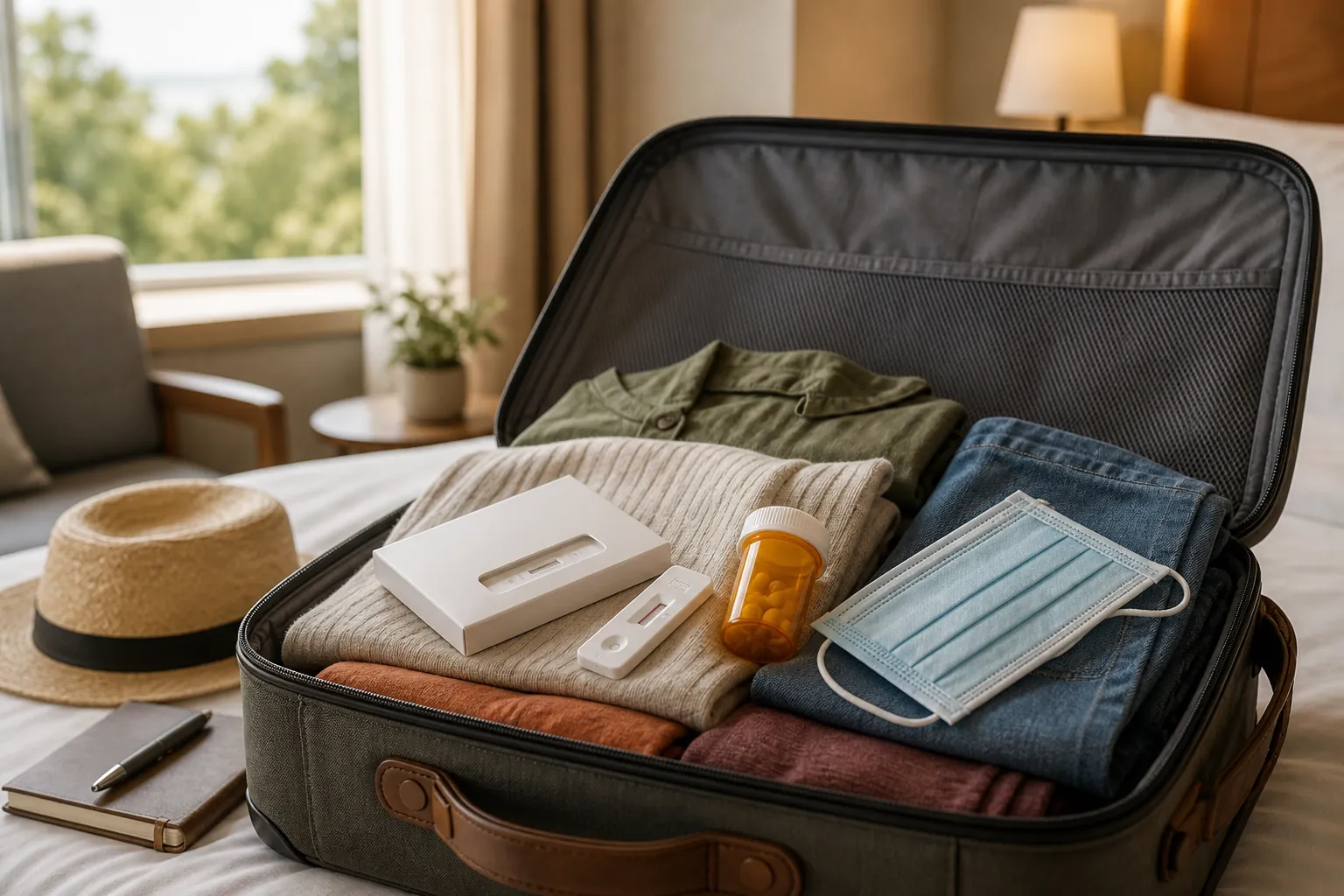
What to pack for COVID-19 testing and care
CDC Yellow Book 2026 advises travelers to be up to date on the 2025–2026 COVID-19 vaccine and to pack well-fitting masks or respirators, rapid antigen tests, and hand sanitizer with at least 60% alcohol.[4] That is a sensible baseline, but the useful version is a little more specific.
- At-home antigen tests: Pack enough for repeat testing, not just one “just in case” test. A couple traveling together needs more than a solo traveler.
- A printed medication list: Include prescription drugs, over-the-counter medicines, supplements, allergies, kidney or liver conditions if known, and the usual pharmacy.
- Masks or respirators that actually fit: They are useful in crowded airports, shuttle vans, cruise embarkation lines, and waiting rooms.
- Hand sanitizer: Use sanitizer with at least 60% alcohol, as CDC’s traveler guidance specifies.[4]
- Care contacts: Bring the clinician number, insurance plan number, pharmacy number, and a family contact who can help change travel plans.
- Rule documentation: Keep screenshots or printouts of destination, cruise, airline, or venue testing rules.
Store antigen tests like medical supplies, not like spare socks. FDA notes that most at-home antigen tests should be stored between 2°C and 30°C, or 35.6°F to 86°F, and that tests should not be used if they have been stored outside the manufacturer’s recommended range.[6] Keep them in carry-on luggage, away from a hot trunk, freezing baggage hold, or sunny dashboard.
How to use at-home antigen tests without trusting one negative too much
The most common testing mistake is also the most tempting one: one negative home test, followed by relief, followed by ignoring symptoms. FDA’s guidance is clear that a single negative at-home antigen test does not rule out COVID-19 infection.[6]
| Situation | First result | What FDA says to do next |
|---|---|---|
| You have symptoms | Negative antigen test | Test again 48 hours later. FDA says symptomatic people should have at least 2 negative antigen tests over 3 days before feeling more confident they are negative.[6] |
| You do not have symptoms | Negative antigen test | Test again after 48 hours, and again 48 hours after that. FDA says asymptomatic people should have at least 3 negative antigen tests over 5 days.[6] |
| Any situation | Positive antigen test | Treat the result as a likely infection and contact care promptly, especially for a traveler over 65.[6] |
| Any situation | Invalid or unclear test | Use a new test and follow the manufacturer’s instructions. |
Do not rush the swab, lighting, timing, or reading window. If the print is too small, use a magnifier or ask someone to read the instructions aloud before opening the test. If shaky hands make the drops difficult, set everything on a flat table first. The goal is not to prove independence by doing every tiny step alone; the goal is to get a result reliable enough to guide the next decision.
When to test before and during travel
If the trip has a formal testing rule, follow that rule exactly. If there is no rule, testing becomes a judgment call based on symptoms, exposure, the traveler’s risk, and who they will be around.
If symptoms appear before departure
Test as soon as symptoms begin. If the result is positive, move directly to the care plan. If the result is negative, do not treat it as final. Repeat the antigen test 48 hours later, following FDA’s symptomatic testing cadence.[6] If the trip begins before that second test can happen, the traveler needs a more conservative plan: call the clinician, consider whether travel should be delayed, and avoid exposing travel companions while the answer is still uncertain.
If there was a recent exposure but no symptoms
A single negative test after exposure is especially easy to overread. FDA recommends repeat antigen testing for people without symptoms: at least 3 tests over 5 days, with 48 hours between tests.[6] For an older traveler, the exposure also belongs in the clinician conversation if symptoms develop or if the trip includes close contact with medically fragile relatives.
If testing for reassurance before seeing vulnerable family
Testing before visiting an older sibling, a newborn, or someone in cancer treatment is still reasonable, even when no one requires it. Just be honest about what it can and cannot prove. A negative antigen test lowers concern at that moment; it does not guarantee the traveler will remain negative for the next several days.
If symptoms begin during the trip
Test where you are. Do not wait until returning home unless the symptoms are so mild and the return is immediate that a clinician agrees waiting is reasonable. The antiviral window is short, and travel logistics have a way of swallowing a day: checkout time, a delayed flight, a closed pharmacy, a time-zone difference, then suddenly the “I’ll call tomorrow” plan is no plan at all.
What to do with each result
| Result | Do this | Do not do this |
|---|---|---|
| Positive | Call a clinician or plan nurse line the same day. Say the traveler is over 65, when symptoms started, what medications they take, and where they are located. | Do not wait to “see if it gets worse” before asking about treatment. |
| Negative with symptoms | Repeat the antigen test 48 hours later and consider clinician-ordered lab testing if symptoms are concerning or the traveler is high risk.[6] | Do not use one negative result to dismiss symptoms. |
| Negative without symptoms after exposure | Repeat testing over the FDA-recommended 5-day sequence.[6] | Do not assume the first negative test means the exposure is settled. |
| Invalid | Use a new kit, check the expiration date, and reread the timing instructions. | Do not photograph an unclear strip and build travel decisions around it. |
| Required test result for a rule | Use the test type, timing, and documentation the destination, cruise line, airline, or venue requires. | Do not substitute a home test if the rule requires a lab report. |
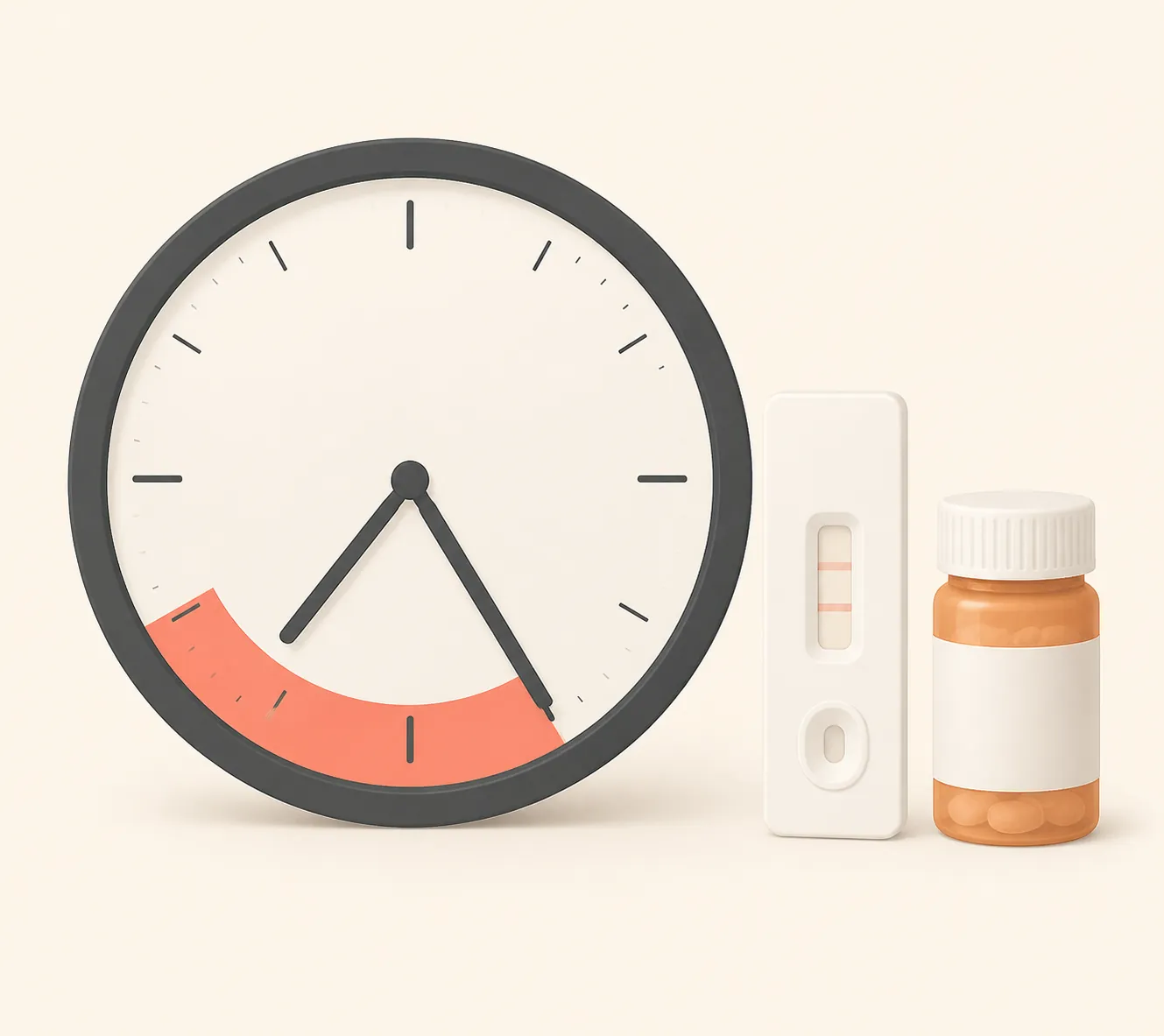
A positive result changes the job. At that point, the test has done its work; the next task is care access. CDC says treatment must be started within 5–7 days of symptom onset and can reduce hospitalization risk by more than 50%.[3] For a traveler over 65, the safest wording on the call is direct: “I am over 65, I tested positive for COVID-19, my symptoms started on this date, and I am asking whether treatment is appropriate.”
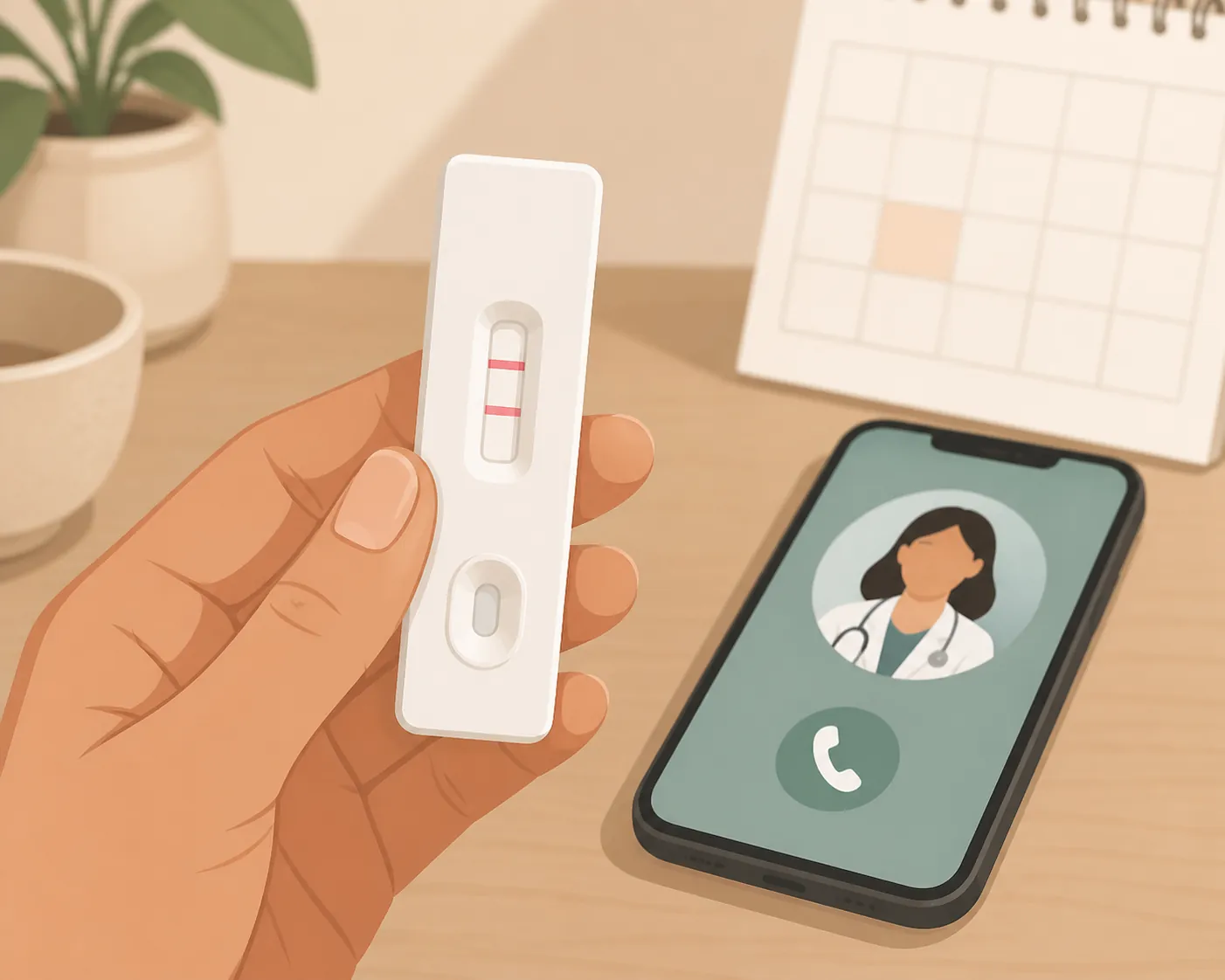
If the traveler is away from home, the caller should be ready with the hotel address, cruise ship location, local pharmacy options if known, medication list, allergies, and insurance information. If the traveler has chest pain, severe shortness of breath, confusion, bluish lips or face, or another emergency symptom, use emergency medical services rather than a routine message portal.
Where to get tests, and who pays
There are two different testing buckets, and mixing them up causes many unpleasant surprises: at-home over-the-counter tests that you buy yourself, and clinician-ordered diagnostic lab tests that may be covered by Medicare.
At-home tests
Original Medicare no longer covers over-the-counter at-home COVID-19 tests; that coverage ended May 12, 2023, according to NCOA’s 2026 Medicare testing guidance.[7] NCOA notes that at-home kits commonly cost roughly $10–$20 at pharmacies.[7] Prices vary, and buying a few extra tests before a trip is usually easier than hunting for them after symptoms start.
Clinician-ordered lab tests
Medicare Part B covers COVID-19 diagnostic laboratory tests when they are ordered by a doctor or other healthcare professional and performed by a laboratory, with no out-of-pocket cost when Medicare covers the test.[8] This is the route to ask about when a clinician wants a PCR or other lab-confirmed result for diagnosis, treatment decisions, or documentation.
Medicare Advantage
Medicare Advantage members should not assume their at-home test coverage matches a neighbor’s plan. NCOA states that Medicare Advantage plans must cover PCR and antigen tests, but cost sharing and coverage for over-the-counter at-home tests vary by plan.[7] The practical step is simple: call the plan before travel and ask what COVID-19 tests are covered, where to get them in network, whether telehealth can order a lab test while traveling, and whether at-home tests are reimbursed.
| Testing need | Likely source | Cost question to ask before travel |
|---|---|---|
| A quick symptom check in a hotel room | At-home antigen test | How many kits should I buy, and are any reimbursed by my Medicare Advantage plan? |
| A clinician wants confirmation | Clinician-ordered diagnostic lab test | Is the lab Medicare-participating or in network for my plan? |
| A cruise line, destination, or venue requires documentation | Whatever test type the rule specifies | Does the rule require a lab report, supervised test, or specific timing? |
| A positive result may disrupt departure | At-home test plus clinician documentation if needed | What documentation would the airline, tour company, cruise line, or travel insurer require? |
Cruises deserve their own check
Cruise travel changes the testing calculation because the ship is both transportation and temporary housing. CDC Yellow Book 2026 notes that shipboard medical care is generally not included in the fare, that roughly half of passengers seeking shipboard care are over 65, and that COVID-19 transmission rates on ships have been documented as much higher than in other settings.[9]
That does not mean older adults should not cruise. It means the pre-trip folder should include the cruise line’s current testing and medical-care policy, the cost or billing rules for onboard care, the plan for obtaining antivirals if appropriate, and the procedure if a positive test occurs before boarding or during the sailing. If mobility, tender ports, or ship layout are also concerns, use a cruise-specific mobility checklist such as the Alaska cruise safety checklist for seniors with mobility needs alongside the COVID-19 testing plan.
If a positive test threatens the trip
A positive result before departure creates two separate problems: health care and trip logistics. Health comes first because of the treatment clock. Logistics come next: cancel or postpone flights, notify the hotel or cruise line, protect travel companions, and find out what documentation is needed for refunds, credits, or an insurance claim.
Before buying travel insurance or relying on a credit-card benefit, read how illness-related cancellation or interruption is documented. A home test photo may not be enough for every claim. Some plans may require clinician documentation, a lab test, or proof that a physician advised against travel. For the broader cancellation branch, see the guide to travel insurance coverage for seniors and confirm the illness rules in the actual policy.
The pre-trip packet to keep handy
The finished packet does not need to look dramatic. It should make the first hour after symptoms or a positive result less confusing.
- Two or more at-home antigen tests per traveler, with expiration dates checked and enough supply for repeat testing.
- Manufacturer instructions for each test, kept with the kits.
- Masks or respirators that fit the traveler comfortably.
- Hand sanitizer with at least 60% alcohol.
- Medication list, allergy list, pharmacy information, Medicare or Medicare Advantage card, and clinician contact numbers.
- Screenshots or printouts of destination, airline, cruise-line, and venue testing rules, dated when saved.
- A written positive-result plan: who calls the clinician, who changes travel plans, and where the traveler can get prescriptions filled.
- Insurance or cancellation documentation requirements, if the trip cost is high enough that a positive test would create a financial problem.
For broader airport and flight preparation that is not COVID-specific, the senior travel safety checklist for nonstop flights can sit beside this testing plan. For holiday crowding, heat, medication timing, and general trip pacing, use the Labor Day weekend senior travel safety checklist without letting it replace the COVID-19 testing workflow.
An older traveler in 2026 does not need to plan as if border testing rules still run the trip. The better plan is more useful and less theatrical: verify the rules for this itinerary, pack tests correctly, understand what Medicare will and will not pay for, repeat negative antigen tests when FDA guidance calls for it, and treat a positive result as the start of a same-day care call.
References
- COVID Vaccine and Test Requirements for U.S. Entry — NAFSA
- COVID-19 travel advice — Mayo Clinic
- COVID-19 Risk Factors — Centers for Disease Control and Prevention
- CDC Yellow Book 2026: COVID-19 — Centers for Disease Control and Prevention
- Before You Travel — CDC Travelers’ Health
- Understanding At-Home OTC COVID-19 Antigen Diagnostic Test Results — U.S. Food and Drug Administration
- COVID Testing and Medicare: What to Know in 2026 — National Council on Aging
- COVID-19 diagnostic laboratory tests — Medicare.gov
- CDC Yellow Book 2026: Cruise Ship Travel — NCBI Bookshelf
Questions to ask your clinician or OT
This comparison doesn't decide final medical fit — bring it to a clinician or occupational therapist conversation, not a purchase decision.
Find Local HelpRelated reading
Noticed something outdated or inaccurate on this page? Flag a correction. We review every report against CDC, NIA, and AARP HomeFit guidance before updating a page.