
Caregiver decision guide
Can Low-Impact Dance Really Improve Senior Balance?
Low-impact dance measurably improves balance and lower-body strength in older adults, yet current evidence is too weak to show dance alone prevents falls. Readers get a clear picture of which styles and weekly doses help, and why dance belongs inside a structured strength-and-balance plan — not instead of one.
Low-impact dance exercise can improve senior balance, especially the kinds of balance measured in clinic and research settings: steadiness, mobility, lower-body control, and confidence moving through space. It can also help older adults accumulate weekly activity minutes in a way many people will actually repeat. That is the encouraging part.
The harder part is this: better balance scores are not the same as proven fall prevention. Current evidence does not support using dance alone as a replacement for a structured strength-and-balance fall-prevention program, particularly for someone who has already fallen more than once or is unsteady when turning, standing from a chair, or walking without support.
That distinction matters because falls are not a minor wellness inconvenience. CDC fall-prevention materials report that more than 1 in 4 adults age 65 and older falls each year; about 3 million older adults are treated in emergency departments for falls annually, and about 41,000 die from fall-related injuries each year.[1]
What dance seems to improve — and what it has not proved
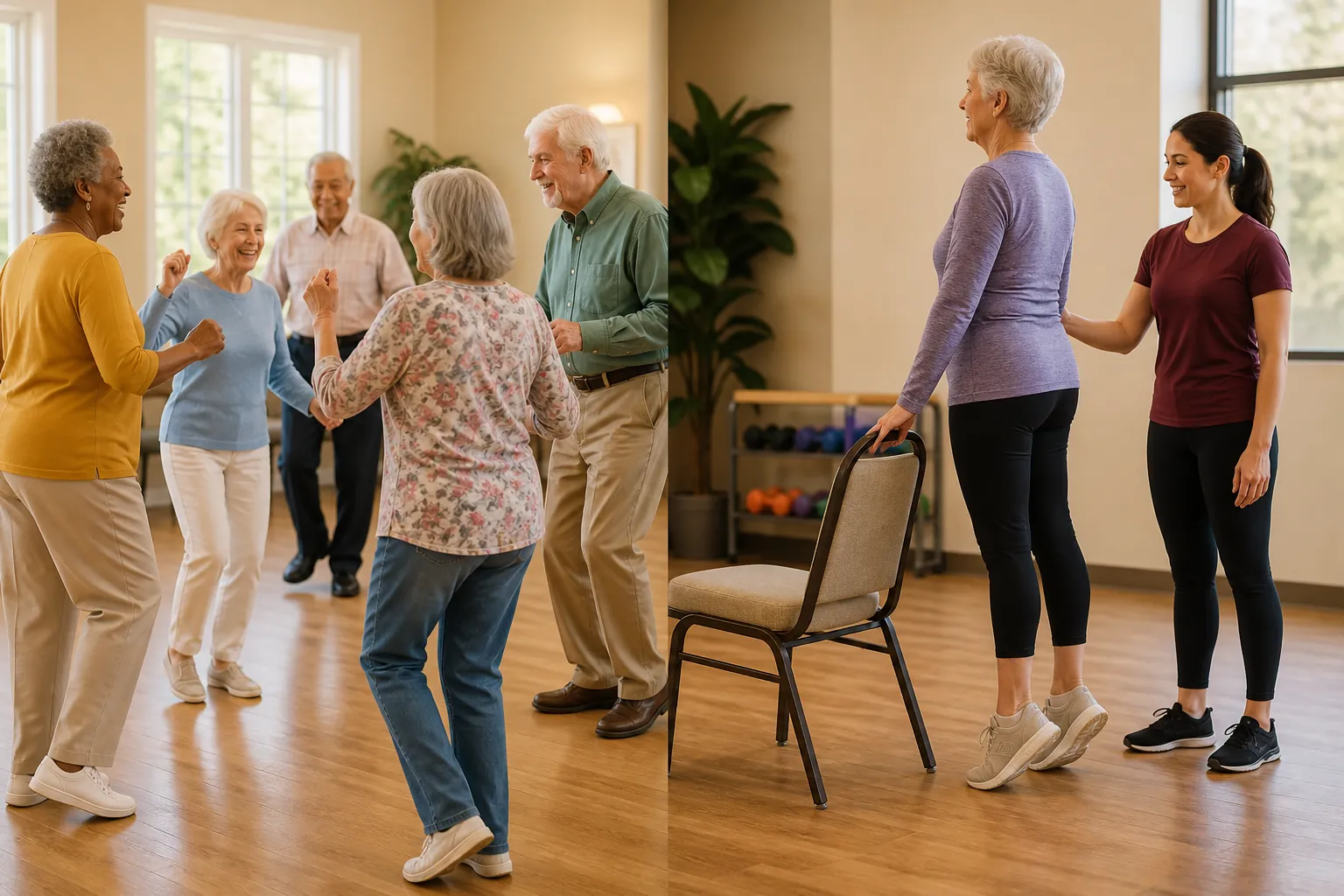
The best case for dance is not imaginary. A 2015 systematic review by Hwang and Braun looked at 18 studies of dance interventions for older adults. Across those studies, 8 of 9 balance measures, or 89%, improved significantly, and 23 of 28 strength and endurance measures, or 82%, improved significantly, regardless of dance style.[2] That is a broad, useful signal: dance can train the body in ways that matter for balance.
It makes sense mechanically, too. Even low-impact dance asks an older adult to shift weight, start and stop, turn, step sideways, respond to rhythm, and coordinate the trunk, hips, knees, and ankles. A class that avoids jumping can still challenge balance because balance is not only standing still; it is recovering smoothly when the body is already moving.
A newer 2024 network meta-analysis gives a more detailed view. Li and colleagues analyzed 27 randomized controlled trials with 1,219 participants and found that different dance forms performed differently depending on the balance measure. Creative dance ranked best for the Berg Balance Scale, while folk dance ranked best for Timed-Up-and-Go; ballroom and folk dance significantly improved Timed-Up-and-Go compared with controls.[3]
Those outcomes are worth taking seriously. The Berg Balance Scale tests tasks such as standing, reaching, turning, and transferring. Timed-Up-and-Go measures how long it takes someone to stand from a chair, walk, turn, return, and sit down. They are not decorative scores; they reflect movement tasks that families notice in kitchens, bathrooms, hallways, and parking lots.
But the fall-prevention claim has to clear a higher bar. A 2024 systematic review and meta-analysis in Age and Ageing included 41 studies with 2,451 participants and rated the certainty of evidence for dance as a fall-prevention intervention as very low. The authors concluded that dance is not supported as an alternative to structured strength-and-balance exercise for preventing falls.[4]
That is the gap a cheerful class flyer usually skips. A person can improve on a balance test and still fall if medication side effects, poor vision, neuropathy, weak hip muscles, rushing to the bathroom at night, cluttered pathways, or unsafe footwear remain unaddressed. Falls are events with many causes. Dance may improve one part of the system without controlling the whole risk picture.
The Merom trial is the cautionary study families should know
The most sobering evidence comes from a 2016 cluster randomized controlled trial by Merom and colleagues. The study included 530 older adults and tested a 12-month, twice-weekly social dancing program. Overall, the program did not reduce falls.[5]
That does not mean the class was useless. The study reported a mixed picture: high attenders had a lower incidence of falls, yet the overall program did not produce a fall reduction across the full group. This is exactly the kind of result that gets flattened when “dance helps balance” is turned into “dance prevents falls.” Participation, consistency, baseline risk, and who actually keeps attending all change the meaning of the outcome.[5]
The detail that deserves the most attention is the subgroup with previous multiple falls. In the dance group, prior multiple fallers fell more, with an adjusted incidence rate ratio of 2.02.[5] That does not prove every high-risk older adult will be harmed by dance, and it does not mean all dance is unsafe. It does mean a person with repeated falls should not be sent into a twice-weekly class as though social dancing were a complete fall-prevention prescription.
There are many possible reasons a pleasant program can fail to reduce falls overall. Some participants may not attend enough sessions. The dance may improve mobility but also increase confidence faster than strength. People with a history of falls may need more individualized progression, more support during turns, or a separate plan for home hazards and medical contributors. The trial cannot answer all of those questions, but it does warn against a one-size-fits-all promise.
Where the optimistic fall-reduction numbers fit
Some summaries of the research sound much more favorable. McMaster Optimal Aging Portal reports that dance-based mind-motor activity may reduce fall risk by 37% and fall rate by 31% in healthy older adults, with greater benefit when programs are done 3 or more times per week for 12 to 24 weeks.[6]
The careful wording is important. This was a summary of dance-based mind-motor activity, and it included Tai Chi.[6] Tai Chi has its own fall-prevention evidence base and should not be quietly folded into a claim that any low-impact dance class cuts falls by the same amount. The number is encouraging, but it is not a clean promise that ballroom, line dance, folk dance, or a senior center dance-fitness class will reduce falls by 37%.
For a healthy older adult who has not been falling, that evidence may support trying a well-run, low-impact dance class as part of an active lifestyle. For an older adult with repeated falls, dizziness, a new walking aid, Parkinsonian symptoms, neuropathy, significant weakness, or fear of turning, it supports a different next step: screen the fall risk first, then decide what kind of movement belongs in the plan.
Which low-impact dance styles look most useful for balance?
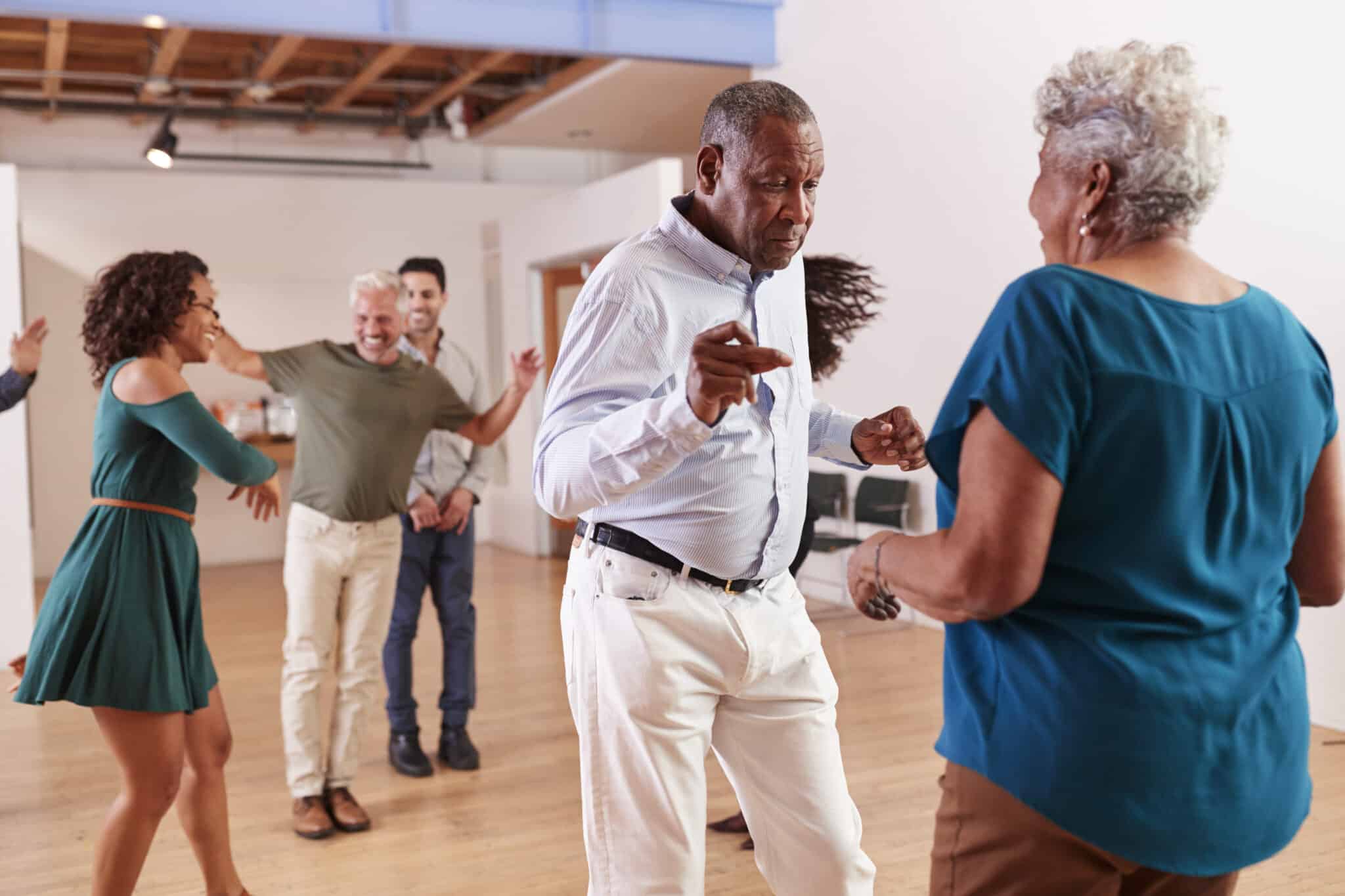
The research does not justify ranking dance styles like consumer products. It does suggest that several styles can help balance-related outcomes when they are taught safely and practiced consistently.
| Dance style or format | What the evidence suggests | Practical safety reading |
|---|---|---|
| Creative dance | Ranked best for Berg Balance Scale in the 2024 network meta-analysis.[3] | May be useful when it includes varied, controlled movement rather than fast choreography. |
| Folk dance | Ranked best for Timed-Up-and-Go, and significantly improved Timed-Up-and-Go versus controls.[3] | Often trains directional changes and repeated stepping patterns; turning support still matters. |
| Ballroom dance | Significantly improved Timed-Up-and-Go versus controls in the 2024 analysis.[3] | Partnering may help some people feel secure, but it can also add turning, timing, and crowding demands. |
| Social dance | Tested in the Merom trial; twice-weekly social dancing did not reduce falls overall.[5] | Enjoyment and attendance are strengths, but higher-risk participants may need more structure than a social class provides. |
The safer question is not “Which dance is best?” It is “Which class matches this person’s current balance, strength, attention, vision, and fall history?” A slow class with good spacing, chairs nearby, clear cueing, and permission to skip turns may be better than a more “evidence-based” style taught too fast for the people in the room.
Chair or seated dance belongs in a separate category. It can be valuable for enjoyment, circulation, upper-body movement, and activity on low-energy days. But seated movement should not be sold as a standing-balance solution unless the program also trains standing weight shifts, leg strength, stepping, turning, and safe recovery from small losses of balance.
Dose matters more than finding a perfect dance label
A single weekly class may lift mood and routine, but it is unlikely to carry the whole physical-activity load. CDC guidance for adults 65 and older recommends 150 minutes a week of moderate-intensity aerobic activity, 2 or more days a week of muscle-strengthening activity, and activities that improve balance.[7]
Low-impact dance can help with the aerobic and balance portions, depending on intensity and class design. It usually does less for progressive strengthening unless the class intentionally includes repeated sit-to-stands, heel raises, controlled squats, step-ups, resistance work, or other muscle-loading exercises. A class that feels lively may still leave the hip abductors, quadriceps, calves, and ankle stabilizers undertrained for fall prevention.
A reasonable weekly plan for a lower-risk older adult might include dance as one or two enjoyable activity sessions, plus separate strengthening and balance practice. For someone with a prior fall, the plan should be more deliberate: assess fall risk, build strength and balance progressively, then use dance where it fits without replacing the harder work.
- Use dance to build consistency, coordination, rhythm, and moderate activity minutes.
- Use structured exercise to progress leg strength, ankle control, single-leg stability, stepping reactions, and walking endurance.
- Use clinical screening to catch risks dance cannot fix, such as medication effects, dizziness, vision problems, unsafe blood pressure changes, foot pain, or home hazards.
Why a fall-risk screen should come before the class for higher-risk adults
CDC’s STEADI initiative is built around screening, assessing, and intervening for older-adult fall risk.[1] That sequence is less glamorous than a dance class, but it is the part that protects the person who has already fallen twice, stopped walking outside, or started touching walls during turns.
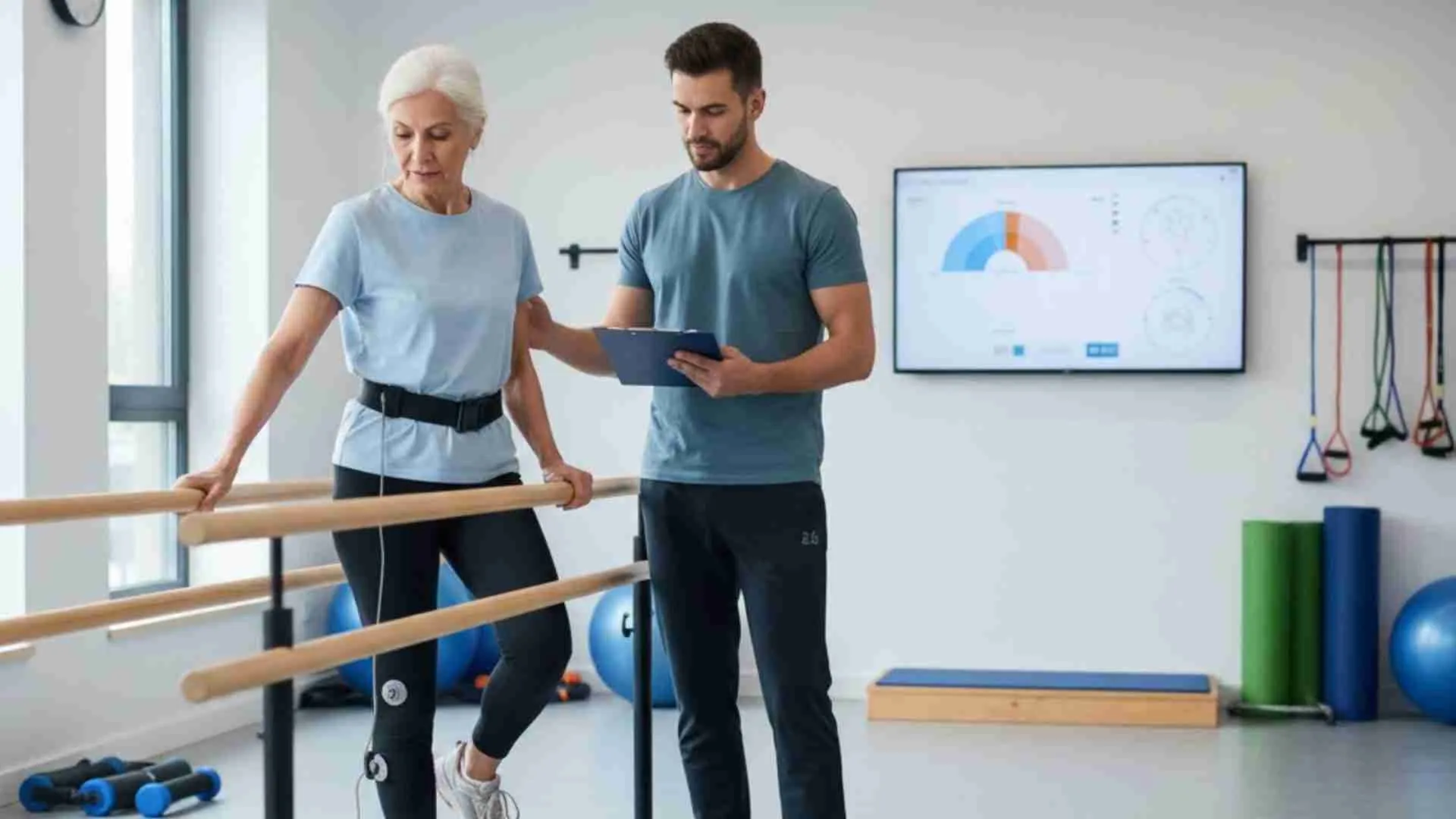
A fall-risk screen does not have to mean taking dance away. Often it clarifies how to make movement safer: whether the person needs a physical therapy referral, medication review, vision care, footwear changes, a walking aid check, home modifications, or a class with a smaller group and more support. The point is not to make life smaller. It is to stop one pleasant activity from being asked to solve risks it was never designed to solve.
Some signs should push dance into the “ask first” category rather than the “try it and see” category:
- Two or more falls in the past year
- A fall with injury, loss of consciousness, or unclear cause
- Dizziness, faintness, or new unsteadiness
- Needing furniture or walls to turn or walk indoors
- New use of a cane, walker, or major change in walking pattern
- Significant foot pain, numbness, vision problems, or medication changes
The structured comparator: Otago-style strength and balance work
When fall risk is already elevated, dance needs a stronger partner. One widely used structured option is the Otago Exercise Program, which the National Council on Aging describes as 17 strength and balance exercises plus a walking program, typically performed 3 times per week. NCOA reports that Otago reduces falls by 35% to 40% for frail older adults.[8]
Otago-type work is not as immediately charming as music and a circle of friends. It is more targeted. It asks the body to practice the capacities that often fail during a fall: standing from a chair, controlling the ankle, strengthening the knee and hip, narrowing the base of support, stepping safely, and walking with enough endurance to move through daily life.
That is why “dance plus” is a better decision rule than “dance instead.” Dance may be the part an older adult looks forward to. Structured exercise may be the part that deliberately loads weak muscles and progresses balance challenge. A good plan can include both, but they are not interchangeable.
| If the older adult is… | A safer role for low-impact dance |
|---|---|
| Active, steady, and not reporting recent falls | A good option for enjoyable aerobic activity and balance challenge, alongside strengthening and balance work. |
| Mildly unsteady or fearful of falling | Reasonable after screening or clinician guidance, with a beginner class, nearby support, and separate strength training. |
| A prior multiple faller | Not a standalone fall-prevention plan; start with fall-risk assessment and structured strength-and-balance exercise. |
| Frail, recently injured, dizzy, or newly using a walking aid | Needs clinician input before standing dance; chair-based movement may be used for activity but should not be treated as standing-balance training. |
What a well-chosen class looks like
A low-impact dance class for older adults should leave room for different bodies. The instructor should cue turns clearly, avoid surprise direction changes, offer no-turn alternatives, keep the floor uncluttered, and make it normal to use a wall, chair, barre, or partner support. The class should not reward people for keeping up at the cost of safety.
The best classes often have a social looseness that makes attendance easier, but enough structure that no one is guessing where to put their feet. Laughter during a missed step is fine. Quietly gripping the wall during every turn is information. So is sitting out the last third of class because the legs are too tired to respond quickly.
For caregivers, the useful observation is not whether the class looks “senior friendly” in the advertisement. Watch the exits, the spacing, the pace, the turns, and whether the instructor notices the participant who is fading. If the class increases movement but also increases near-falls, it needs modification or a different place in the plan.
The practical answer
Low-impact dance is worth considering for senior balance. The evidence supports improvements in balance-related measures and lower-body function, and the social pleasure of dance is not a small advantage. An exercise plan only works if the person returns to it.
But for fall prevention, especially after repeated falls, dance should sit inside a broader plan. Start with fall-risk screening when risk is elevated. Keep the dance if it is safe, enjoyable, and appropriately paced. Add structured strength-and-balance exercise, such as an Otago-style program when appropriate, and involve a clinician for medical risks, recent falls, dizziness, injury, or new mobility changes.
This article is for education only and is not a substitute for medical advice, diagnosis, physical therapy assessment, or individualized fall-risk care. A qualified clinician should review fall risk, recent falls, dizziness, injury, or new mobility changes before an older adult starts a standing dance program.
References
- STEADI - Older Adult Fall Prevention, CDC.
- The Effectiveness of Dance Interventions to Improve Older Adults’ Health: A Systematic Literature Review, Hwang & Braun, 2015.
- Comparative effectiveness of different dance interventions on balance function in older adults: a systematic review and network meta-analysis, Frontiers in Public Health, 2024.
- Dance for falls prevention in community-dwelling older adults: a systematic review and meta-analysis, Age and Ageing, 2024.
- Social Dancing and Incidence of Falls in Older Adults: A Cluster Randomised Controlled Trial, PLOS Medicine, 2016.
- Dancing our way to fewer falls and better physical function, McMaster Optimal Aging Portal, 2021.
- Older Adults: Physical Activity Guidelines, CDC.
- Evidence-Based Program: Otago Exercise Program, National Council on Aging.
Questions to bring to a clinician or OT
This is not medical, legal, or a family's final decision — only a framework. Bring these questions to a clinician, occupational therapist, or your local Area Agency on Aging.
Find Local HelpRelated reading
Noticed something outdated or inaccurate on this page? Flag a correction. We review every report against CDC, NIA, and AARP HomeFit guidance before updating a page.