
Caregiver decision guide
Pet Adoption Helps Seniors Living Alone Stay Safe and Active
Learn how pet adoption can reduce loneliness, boost physical activity, and slow cognitive decline for seniors living alone—and discover the real fall risks and safety steps you need to take to make it work.
The benefit starts with a clock, not a cuddle
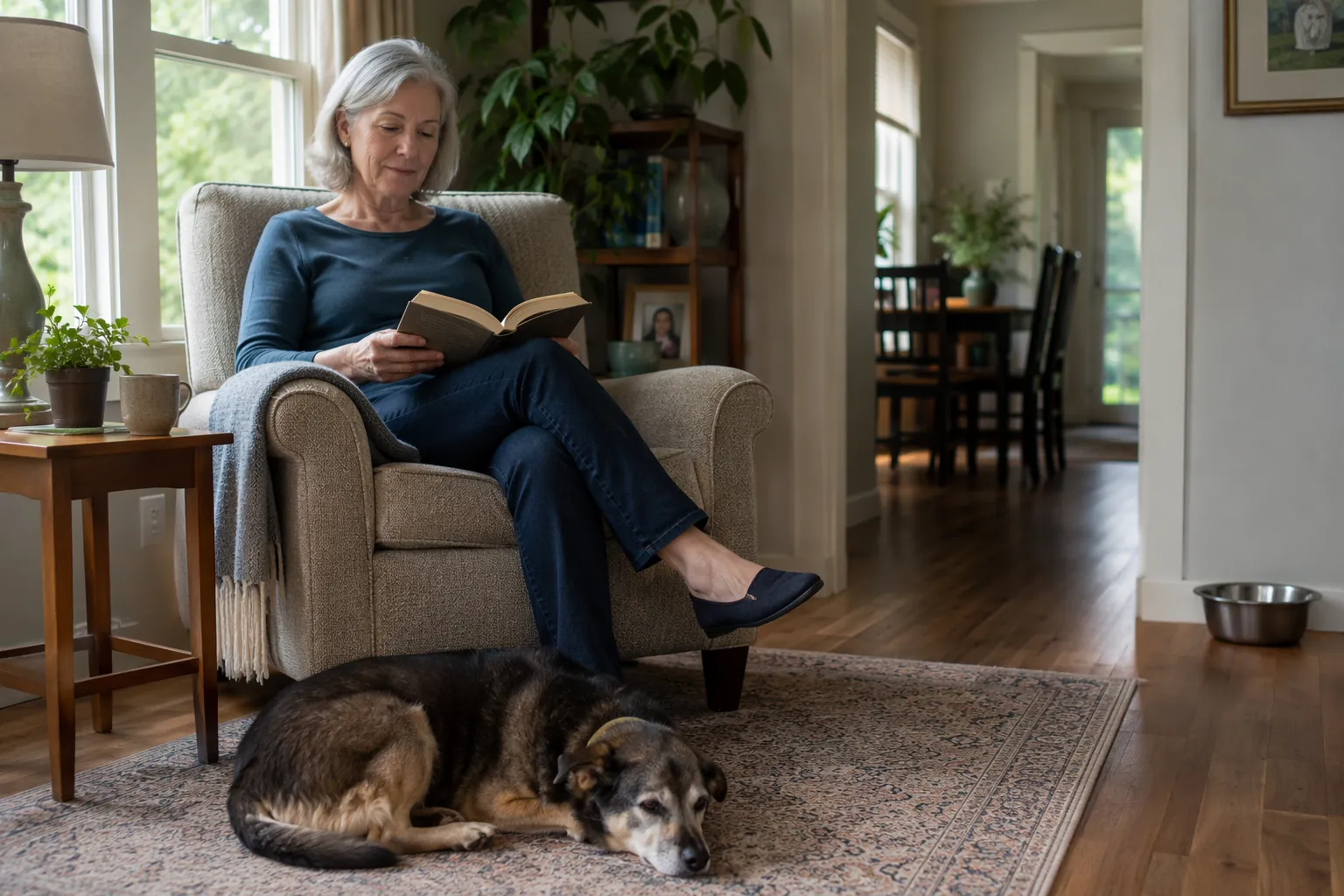
The benefits of pet adoption for seniors living alone begin in the ordinary parts of the day: getting up because someone needs breakfast, opening the curtains because the cat is waiting at the window, walking to the mailbox because the dog expects a short outing, speaking aloud in a house that might otherwise stay quiet until the phone rings.
That kind of routine is not sentimental decoration. For an older adult living alone, predictable daily patterns can be part of safety. They help mark time, create small movement, and make changes more noticeable. If the food bowl is untouched, if the leash has not moved, if the litter box has not been scooped, someone paying attention may see a problem sooner than they would in a silent house with no living creature depending on the person.
The loneliness evidence is the right place to start because it is older-adult-specific and it does not require pretending that a pet solves everything. In a study of 830 adults age 60 and older, pet owners were 36% less likely to report loneliness, and the association was strongest among people living alone [1]. That finding does not mean every lonely person should adopt an animal. It does mean that, for some seniors, a pet may change the daily texture of living alone in a way that matters.
The same practical theme shows up in reported emotional benefits. In a 2025 University of Michigan National Poll on Healthy Aging summary, 83% of older pet owners said their pet gave them a sense of purpose, 71% said their pet helped them enjoy life, and 64% said they felt loved by their pet [2]. Purpose is a large word, but in the home it often arrives as a small duty done twice a day.
What the research suggests, and what it does not prove
The strongest claims about pets and aging should be handled with care. Most of the evidence is observational. People who own pets may already be healthier, more mobile, more financially stable, or more socially connected than people who do not. A study can adjust for some of that, but it cannot turn pet ownership into a guaranteed treatment.
Still, the findings are worth taking seriously because they point toward mechanisms that make sense in daily life. A 2023 JAMA Network Open study of nearly 8,000 older adults living alone found that pet ownership was associated with slower decline in verbal memory and verbal fluency over 8 years. The authors wrote that pet ownership “might completely offset the association of living alone with faster rates of decline” in those measures [3].
A longer analysis using 18 years of SHARE data from 16,582 adults age 50 and older also found that pet owners showed slower decline in executive functioning and episodic memory, with dog and cat ownership driving the association [4]. Again, that is not proof that adopting a cat preserves memory or that walking a dog prevents cognitive decline. It is evidence that pet ownership may sit inside a pattern of daily stimulation that protects some older adults better than isolation does.
The likely supports are plain enough: remembering feeding time, noticing whether medication was taken before the morning walk, talking to the animal, planning a vet appointment, reading a label, calling a neighbor for help, or walking the same route often enough to notice when balance or stamina has changed. None of these activities needs to be dramatic. They work, when they work, because they repeat.
Do not save the fall-risk conversation for the end
A pet can help a senior stay active, but the same pet can also become a moving obstacle at ankle height. This is where cheerful adoption advice often becomes careless. A senior who is steady in the hallway at 10 a.m. may be much less steady when a dog cuts across the kitchen at feeding time, or when the leash tightens because a squirrel moved.
A summary citing CDC fall data reports that about 1% of hospitalized falls among older adults involve pets, 88% of pet-related falls involve dogs, and about one-third occur during walks [5]. Those numbers should not scare every older adult away from adopting. They should keep the decision honest. The relevant question is not whether pets are “good for seniors.” It is whether this particular animal can be handled safely by this particular person in this particular home.
The dangerous moments are usually ordinary: stepping over a sleeping dog in a narrow hall, bending to refill a bowl on a slick kitchen floor, being pulled sideways at the curb, carrying groceries while holding a leash, or turning quickly because a pet got underfoot. A stronger, younger visitor may not notice the hazard. The person who lives there will meet it every day.
Match the pet to the person who will actually handle it
The safest adoption conversations start with the senior’s real day, not with a breed list or a cute photo. How far can the person comfortably walk? Do they use a cane, walker, oxygen tubing, or stair rail? Is the home carpeted, tiled, narrow, cluttered, or split-level? Does the senior wake at night? Can they bend to the floor? Who drives to the vet? Who comes if the senior is hospitalized?
| Pet option | When it may fit | What needs watching |
|---|---|---|
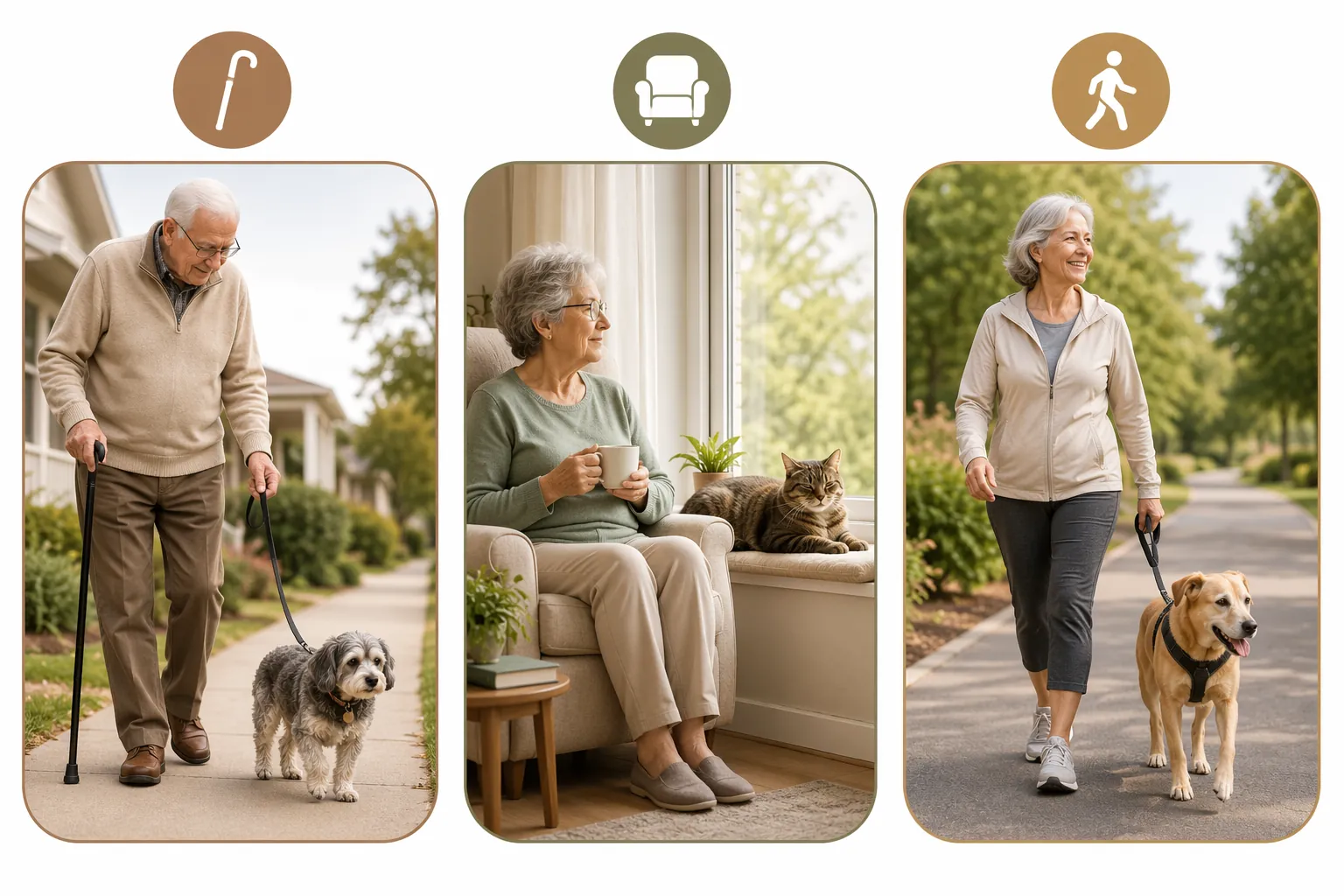
| Calm adult or senior cat | Often a better match for someone who wants companionship but should not manage outdoor walks or leash pulling. | Litter box access, bending, tripping near food stations, vet transportation, and whether the cat tends to dart underfoot. |
| Older small dog | May suit a senior who wants more interaction and can manage short, predictable outings. | Leash manners, barking at visitors, getting tangled around feet, nighttime toileting needs, and the dog’s comfort being handled. |
| Medium or larger calm dog | May work for an active senior with good balance, safe walking routes, and confidence handling the dog. | Pulling, lunging, icy or uneven sidewalks, strength mismatch, and what happens if the senior cannot walk the dog for several days. |
| Young, energetic dog or puppy | Usually only reasonable when the senior has strong mobility and reliable daily help with training, exercise, and supervision. | Jumping, chewing, house-training accidents, sudden bursts of energy, leash pulling, and the long time commitment. |
A calm senior cat may do more good than a high-energy dog for a person with knee pain and a narrow hallway. An older small dog with polite leash habits may be a fine companion for someone who already walks daily. A large dog that is gentle in the shelter still may be the wrong match if it can pull the senior off balance at the first rabbit. Size matters, but temperament, training, and the senior’s handling strength matter just as much.
Set up the home before the adoption is final
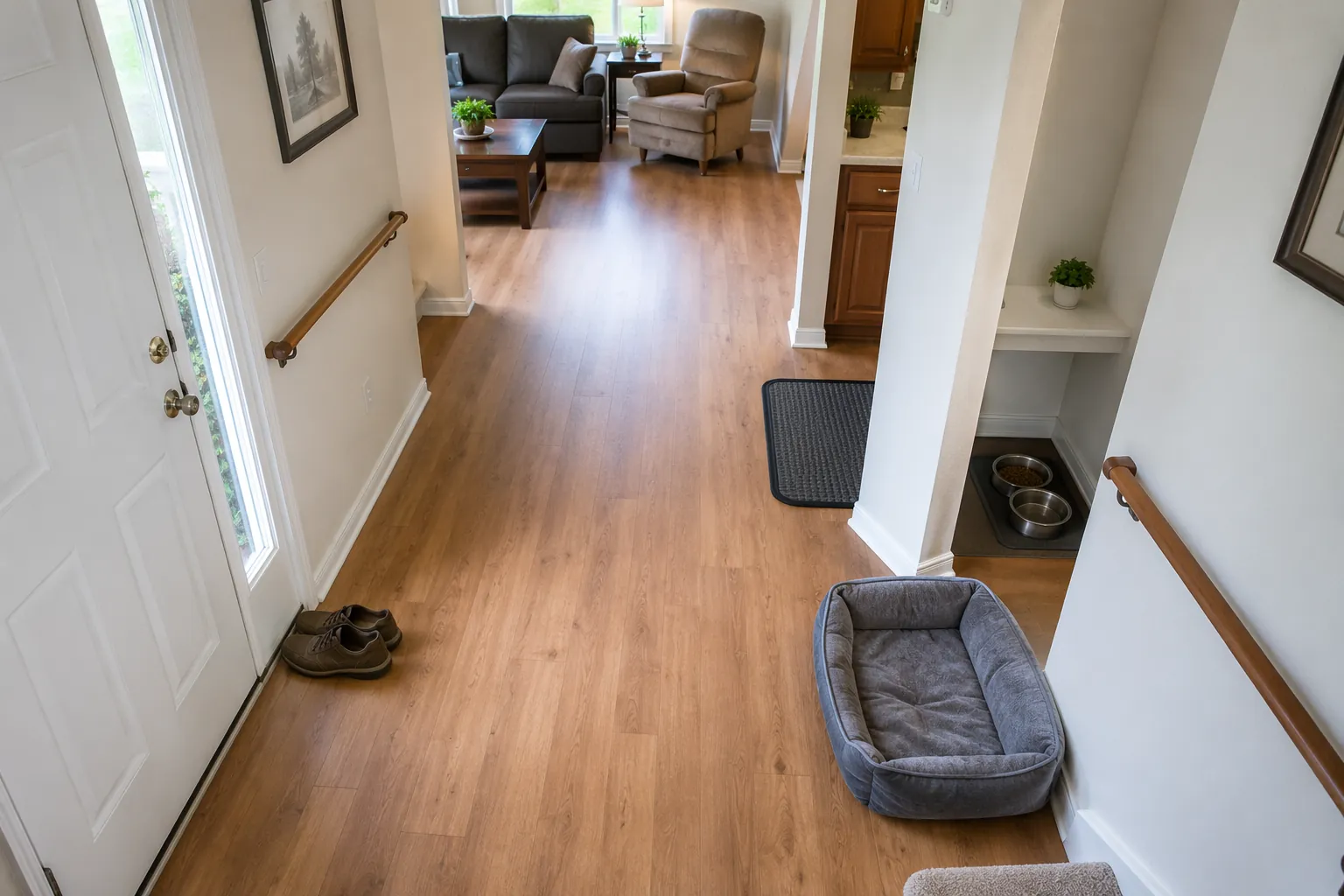
A good adoption match can be spoiled by a bad setup. Before the animal comes home, walk through the house as if the pet is already moving through it. Look at the routes from bed to bathroom, chair to kitchen, kitchen to door, and door to mailbox. Those paths matter more than the corner where the new pet bed looks nicest.
- Keep main walking paths clear. No pet beds, toy baskets, scratching posts, or food bowls in the route between commonly used rooms.
- Place food and water against a wall or in a low-traffic corner. Water belongs where spills can be seen and wiped up, not where someone turns quickly with a cane.
- Use non-slip surfaces where bowls, litter boxes, or outdoor shoes sit. The point is not decoration; it is keeping wet paws and spilled water from becoming a slide.
- Decide where leashes live. A leash clipped on at the same chair or entry area is safer than chasing an excited dog around the room.
- Keep sturdy shoes by the door. Slippers and leashes are a poor combination, especially on steps, ramps, wet pavement, or uneven sidewalks.
- Make nighttime movement predictable. If the pet sleeps in the bedroom, there should be a consistent sleeping spot that is not beside the senior’s feet.
- Choose litter box and feeding heights carefully. Some seniors cannot safely bend to the floor several times a day; others cannot lift heavy bags or boxes.
For a dog, leash handling deserves its own trial. The senior should practice clipping the leash, opening the door, stepping outside, turning around, and returning home while someone else watches. That short practice tells the truth faster than a long discussion. If the dog surges through the doorway or circles behind the person’s legs, the problem is not theoretical.
Training is a safety tool here. A dog that waits at the door, walks without pulling, responds to its name, and can settle on a bed creates less risk. A cat that has a predictable feeding area and safe resting places is less likely to weave around feet at every step. This does not require a perfectly behaved animal; it requires a household where the senior is not constantly compensating for chaos.
The money question belongs in the first conversation
Pet care is not just an adoption fee. Food, litter, grooming, flea and tick prevention, vaccinations, routine vet care, emergency visits, transportation, and boarding can all become part of the monthly reality. In the University of Michigan poll summary, 31% of older pet owners reported budget strain from pet care [2]. That is not a small side note for someone on a fixed income.
There are supports worth checking before ruling adoption out. Pets for the Elderly Foundation helps cover adoption fees at participating shelters for adults age 60 and older [6]. Some local shelters run “seniors for seniors” programs that reduce fees when older adults adopt older pets. In some communities, senior nutrition or aging-service programs may also know about pet-food assistance for homebound clients. The practical move is to ask locally before the animal is adopted, not after the first expensive month.
A lower adoption fee should not be mistaken for a low-cost care plan. A senior cat may be less physically demanding than a dog, but it still needs veterinary care and litter supplies. An older dog may be calmer than a puppy, but it may also need dental work, medication, or more frequent checkups. Affection does not pay the emergency clinic.
Backup care is part of safety, not a family favor
A senior living alone needs a written backup plan before the pet comes home. This is not because the senior is incapable. It is because even capable people get the flu, fall, have surgery, lose transportation, or spend a night in the hospital. A pet with no backup plan can turn a health event into a crisis for the animal and a source of panic for the person.
- Name at least two people who can enter the home and feed or walk the pet.
- Keep written feeding instructions, medication details, veterinarian contact information, and the pet’s usual routine in one visible place.
- Give a trusted person a key or documented access plan.
- Decide who can transport the pet if the senior cannot drive.
- Ask the shelter or rescue what happens if the adoption fails because of a health change.
- Discuss long-term rehoming wishes in case the senior dies or can no longer safely care for the animal.
That last conversation is uncomfortable and necessary. Older adults may outlive their pets; pets may outlive them. Either way, bereavement and continuity of care should be treated as part of responsible adoption. A person who has already lost a spouse, siblings, friends, or mobility may feel the loss of a pet sharply. Planning does not remove grief, but it prevents confusion from being added to it.
A readiness check for seniors and adult children
Adult children often step into this decision awkwardly. Too much enthusiasm can leave a parent with work they cannot manage. Too much caution can sound like taking over. The better conversation is specific. Stay away from “Are you sure you can handle a dog?” and ask about the mechanics.
| Question | Why it matters |
|---|---|
| Can the senior feed, water, clean up after, and supervise the pet on an ordinary bad day? | Adoption has to work when arthritis flares, sleep is poor, or the weather is unpleasant. |
| Can the senior safely manage doors, stairs, sidewalks, and leashes with this animal? | Many pet-related hazards happen during movement, not while sitting quietly together. |
| Is the home ready before the pet arrives? | Clear paths, bowl placement, non-slip areas, and predictable pet zones reduce daily risk. |
| Is there money for routine and unexpected care? | A strained budget can delay veterinary care or turn the pet into a source of worry. |
| Who takes over for 24 hours, one week, or permanently if health changes? | Backup care protects both the senior’s independence and the animal’s welfare. |
| Has the senior spent time with this specific animal outside the first introduction? | Shelter behavior, first impressions, and real home routines are not always the same. |
A trial foster arrangement, a sleepover allowed by a shelter, or repeated visits with the same animal can reveal what a brochure cannot. Does the dog settle after ten minutes or pace for hours? Does the cat hide peacefully or bolt underfoot? Does the senior look more relaxed with the animal, or more vigilant? Those observations carry more weight than a general opinion about whether pets are good for older people.
Pet adoption can be part of a safe aging-in-place plan, especially for a senior living alone. It can add routine, movement, speech, affection, and a reason to keep the day organized. But it should be treated like any other support for independence: matched carefully, checked against fall risk, budgeted honestly, and backed by a plan for the day the senior cannot do the work alone.
References
- Pet Ownership May Attenuate Loneliness Among Older Adult Primary Care Patients Who Live Alone, Aging & Mental Health, 2013
- Pets and Seniors, American Humane Society, 2025
- Pet Ownership, Living Alone, and Cognitive Decline Among Adults 50 Years and Older, JAMA Network Open, 2023
- Pet ownership and cognitive decline in aging: longitudinal evidence from SHARE, Scientific Reports, 2025
- Pets and Fall Prevention, Concierge Care Advisors
- Our Work: Research, Pets for the Elderly Foundation
Questions to bring to a clinician or OT
This is not medical, legal, or a family's final decision — only a framework. Bring these questions to a clinician, occupational therapist, or your local Area Agency on Aging.
Find Local HelpRelated reading
Noticed something outdated or inaccurate on this page? Flag a correction. We review every report against CDC, NIA, and AARP HomeFit guidance before updating a page.