
Caregiver decision guide
Are Your Rohto Eye Drops Recalled? What to Do
Here's how to tell whether a bottle in the house is part of the July 2026 Rohto cooling eye drops recall — by product name, lot code, and expiration — and what to do if it matches: stop use, dispose or return it, watch for eye-infection signs, and report reactions to MedWatch.
If you are standing at the medicine cabinet asking whether a Rohto bottle in the house is recalled, start with the label in your hand. Rohto-Mentholatum voluntarily initiated a July 14, 2026 recall of certain Rohto cooling eye drops made in Vietnam and distributed by The Mentholatum Company of Orchard Park, New York; the FDA enforcement record lists the reason as “lack of assurance of sterility.”[1][2] That wording does not mean an infection has been reported from the bottle in your house. It means the company and FDA do not have enough sterility assurance for the affected lots, so a matching bottle should be stopped today.
Last verified: August 1, 2026. Recall listings can update, and the FDA enforcement page may not show the full details unless you open the live record; verify current lot, expiration, carton or bottle count, and NDC details against FDA Event 99440.[2]
The five-minute check
- Match the product name against the affected Rohto varieties.
- Find the lot code and expiration date.
- If the product, lot, and expiration match, stop using it.
- Dispose of the bottle or return it to the place of purchase for a full refund.
- Watch for eye symptoms and report any adverse reaction to FDA MedWatch.
Do the steps in that order. A familiar Rohto name alone is not enough to decide. A lot code alone is not enough either. The safe answer comes from matching all three things on the package: product name, lot code, and expiration date.
1. Check the product name first
The recall covers eight Rohto varieties reported from the FDA enforcement action: Rohto All-in-One, Rohto Max Strength, Rohto Max Strength Twin Pack, Rohto Optic Glow, Rohto Digi Eye, Rohto Dry Aid, Rohto Dry Aid Twin Pack, and Rohto Cool Relief.[3][4]
| If the label says | What to do next |
|---|---|
| Rohto All-in-One | Go to the lot and expiration check |
| Rohto Max Strength | Go to the lot and expiration check |
| Rohto Max Strength Twin Pack | Check both bottles and the outer carton if you still have it |
| Rohto Optic Glow | Go to the lot and expiration check |
| Rohto Digi Eye | Go to the lot and expiration check |
| Rohto Dry Aid | Go to the lot and expiration check |
| Rohto Dry Aid Twin Pack | Check both bottles and the outer carton if you still have it |
| Rohto Cool Relief | Go to the lot and expiration check |
If the product name is not one of those eight, set it aside from this recall check. If it is one of those eight, do not stop at the product name. Many households have older eye drops, duplicate bottles, or a bottle separated from its carton; the lot and expiration are what keep this from becoming guesswork.
2. Find the lot code and expiration date
Look for the lot code on the bottle label or the carton. The affected lot codes reported for this recall contain the letter “V,” with examples such as 3H1V and 4A1V, and the reported expiration dates run from July 2026 through February 2029.[3][4][5]
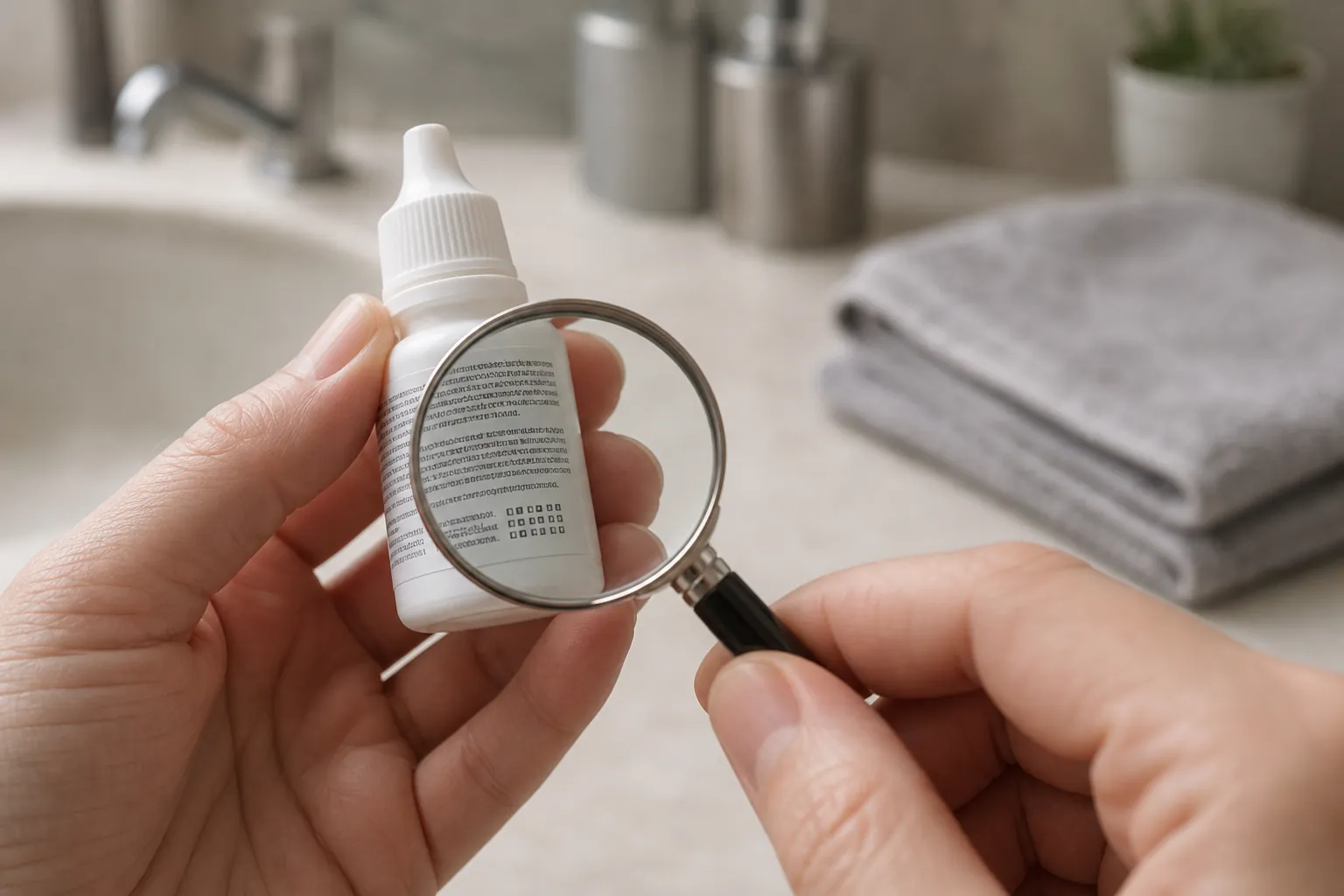
Read the lot code slowly. The practical mistake here is seeing a Rohto name, noticing an expiration in the right date range, and forgetting to confirm the lot. Another common mistake is seeing a “V” somewhere else on the packaging and treating it as the lot code. You are looking for the printed lot identifier, then comparing that lot with the affected list.
- Product name matches, affected lot matches, expiration is in the affected range: treat the bottle as recalled.
- Product name matches, but the lot does not match the affected list: that bottle is not part of this recall based on FDA lot-check guidance.
- Product name matches, but the lot or expiration cannot be read: do not keep using it while you are unsure; check the carton, ask the pharmacy or retailer, or use the FDA information line.
- Twin pack in the house: check each bottle and the carton, because bottles may have been separated after opening.
The FDA’s general lot-check guidance matters for caregivers because the same brand or product name can appear on bottles that are not included in a particular recall. A same-name bottle with a different, non-affected lot is not automatically part of this Rohto action.[6]
3. If it matches, stop using it
A matching bottle should come out of use now. Do not wait for a letter, a store sign, or another article. Put it in a separate spot from the products still in use, and tell the person who uses it that this is a lot-specific sterility recall, not a judgment about whether they used it correctly.
The FDA classified the Rohto action as Class II, a category used when the health effects are expected to be temporary or medically reversible and the probability of serious harm is remote.[4][5] That classification supports a calm response, not a slow one. The right balance is to stop the affected drops today without turning every eye sensation into an emergency.
4. Dispose of it or return it for a refund
Once a bottle matches the recalled product, lot, and expiration, dispose of the drops or return them to the place of purchase for a full refund. For recall questions, the FDA information line is 1-888-463-6332.[1][4]
If the bottle belongs to a parent who resists throwing things away, keep the explanation short: the bottle matches a recall list, the issue is sterility assurance, and the instruction is to stop using that lot. A longer debate about whether the bottle “looks fine” does not help, because sterility cannot be judged by looking at the liquid.
5. Watch for symptoms, but do not diagnose from a recall notice
The sources cited here did not report infections specifically linked to this Rohto recall. Still, anyone who used a matching bottle should watch for eye-infection signs, including blurry vision, discharge, pain or discomfort, redness of the eyelid or eye, a feeling that something is in the eye, or increased light sensitivity.[7]
If symptoms do not improve or they worsen, contact an eye-care professional. This article is not medical advice, and a recall checklist cannot tell whether redness or blurred vision is from infection, dryness, allergy, medication effects, or another eye problem.
Report any adverse reaction to FDA MedWatch online at fda.gov/safety/medwatch or by phone at 1-800-FDA-1088.[5]
Keep the date straight
The Rohto recall initiation date is July 14, 2026.[1][5] A March 3, 2026 initiation date belongs to a separate K.C. Pharmaceuticals store-brand eye-drop recall, not this Rohto action. That distinction matters when a caregiver is comparing screenshots, social posts, or partial recall summaries at the counter.
The national scale is real: reports citing FDA Event 99440 described roughly 11,960,623 cartons and 12,460,649 bottles.[4][5] Those numbers are useful for understanding why the recall is widely reported, but they do not decide what happens in your bathroom. The label does.
One caregiver note for seniors
If a parent has new blurry vision, eye pain, light sensitivity, or discharge, mention both the symptoms and the recalled product at the next clinician or eye-care visit. If vision is suddenly worse, treat the day as a higher-risk walking day: improve lighting, clear the route to the bathroom, and use the same precautions you would use after a storm or power outage. CareWise’s guide to the Medicare Annual Wellness Visit and fall-prevention planning can help you decide what to raise with the clinician.
References
- Rohto brand eye drops recalled: See list, USA Today, July 30, 2026.
- FDA Enforcement Report Event 99440, U.S. Food and Drug Administration.
- Rohto Cooling Eye Drop Recall, Prevention.
- 11M eye drop cartons recalled nationwide, NBC 5 DFW.
- Rohto eye drops recall sterility FDA, Quartz.
- Eye drop recall FDA guidance, CNN / The Conversation, April 15, 2026.
- Eye drop recall 2026: FDA flags over 3 million bottles; eye doctors explain what you should know, UC Davis Health, April 2026.
Questions to bring to a clinician or OT
This is not medical, legal, or a family's final decision — only a framework. Bring these questions to a clinician, occupational therapist, or your local Area Agency on Aging.
Find Local HelpRelated reading
Noticed something outdated or inaccurate on this page? Flag a correction. We review every report against CDC, NIA, and AARP HomeFit guidance before updating a page.