
Caregiver decision guide
Budget Travel for Seniors in Europe Starts with Health Planning
Learn how to plan an affordable Europe trip for seniors by prioritizing health logistics—travel insurance, medication planning, and mobility options—before booking flights or hotels. This guide shows why medical preparation is the real key to staying on budget.
The most useful budget travel tips for seniors in Europe do not start with airfare alerts. They start with the bill nobody wants to imagine: a fall in Lisbon, chest pain in Prague, a delayed return after a cruise connection, or a prescription that runs out three days before the flight home.
For an older traveler, the cheapest Europe trip is not always the one with the lowest hotel rate. It is the trip least likely to trigger an uncovered medical expense, a medication scramble, or a mobility problem that forces last-minute changes. Once those risks are handled, senior rail cards, cheaper cities, shoulder-season fares, and free transit can do what they are supposed to do: reduce the cost of a real trip, not decorate a fragile plan.

Before Europe Is Affordable, It Has to Be Insurable
Original Medicare is the detail that changes the math. Medicare.gov states that Original Medicare generally pays nothing for health care received outside the United States, except in very limited situations, such as certain cases near the Canadian or Mexican border.[1] That means a senior who feels comfortably covered at home may be effectively self-paying once the trip crosses the Atlantic.
Medigap can help, but it is not a blank check. Medicare.gov says Medigap Plans C, D, F, G, M, and N may cover 80% of medically necessary emergency care outside the U.S. after a deductible, but only during the first 60 days of a trip and only up to a $50,000 lifetime limit.[1] That limit is worth reading twice. It may soften an emergency bill, but it does not make a major overseas medical event financially harmless.
Evacuation is the piece many families skip because it sounds dramatic until it becomes practical. A medically staffed flight home can cost $200,000 or more, while an annual travel insurance policy with evacuation coverage may cost around $100 to $200, depending on the plan and traveler.[2][3] That comparison is not an argument for buying the first policy that appears in a booking checkout. It is an argument for treating evacuation coverage as budget protection, the same way families treat a refundable fare or a hotel with a cancellation window.
The policy questions need to be asked before the flight is purchased, not while someone is trying to translate a hospital intake form. Does the plan cover emergency medical care outside the U.S.? Does it include medical evacuation to the traveler’s home country, or only transport to the nearest adequate facility? Are preexisting conditions covered, and under what purchase window? What documentation is required before care or evacuation is approved? Those answers vary by policy, state, plan type, and underwriting rules, so individual decisions belong with the insurer or a licensed insurance professional.
This is also where Medicare Advantage members, retiree-plan members, and people with employer or union supplemental coverage need to slow down. The fact that a wallet card says “Medicare” does not answer the foreign-care question. The plan document, insurer, or benefits administrator does.
| Coverage question | Why it matters before booking |
|---|---|
| Original Medicare outside the U.S. | Usually pays $0 for foreign care, with only narrow exceptions near U.S. borders. |
| Medigap foreign emergency benefit | Some plans cover 80% of qualifying emergency care, but with trip timing rules and a $50,000 lifetime limit. |
| Travel medical insurance | May fill gaps for overseas emergency care, depending on exclusions and preexisting-condition rules. |
| Medical evacuation coverage | Protects against the largest single budget shock: medically supervised transport home or to a higher level of care. |
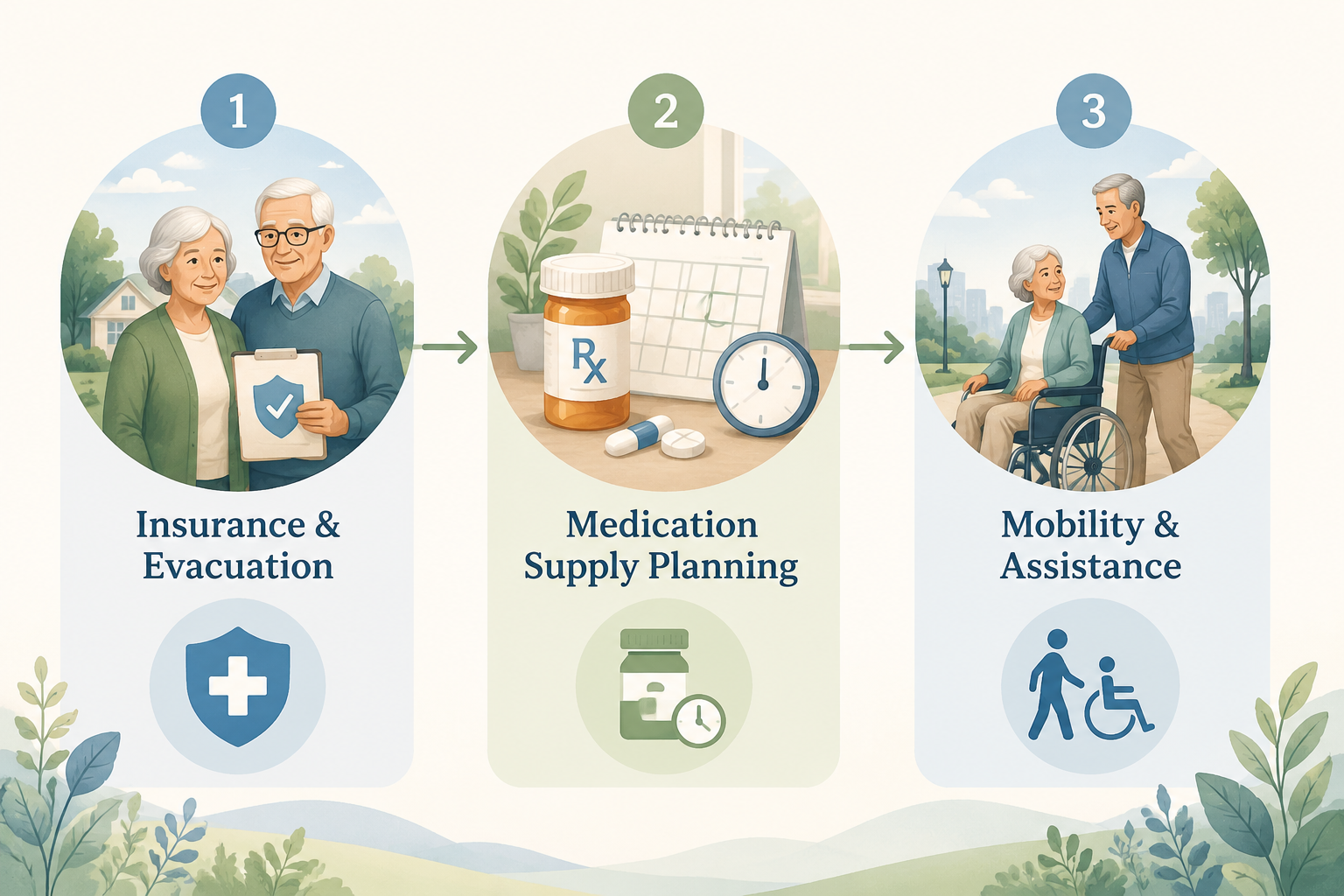
Medication Planning Is a Budget Item, Not a Packing Detail
A delayed return is annoying for anyone. For a senior who takes blood pressure medication, insulin, anticoagulants, seizure medication, or heart medication, it can become expensive and medically risky very quickly. Rick Steves advises older travelers to bring enough medication for the trip plus extra, keep prescriptions in their original containers, and carry a copy of prescriptions using generic drug names.[4] Road Scholar and A Place for Mom give similar guidance for older adults and family caregivers, including extra medication, clear documentation, and planning around routines.[5][6]
For a Europe trip, “extra” should not mean one spare pill rattling in a plastic bag. A practical target is 7 to 10 additional days in original labeled containers, especially when flights, rail strikes, missed connections, illness, or weather could stretch the itinerary.[4][5][6] If a physician, pharmacist, or insurer limits refill timing, that conversation needs to happen weeks before departure.
The medication folder should travel in a carry-on, not in checked luggage. It should include the medication list, generic names, dosages, prescribing physician, pharmacy contact information, and a doctor’s letter for controlled substances, injectables, or supplies that could raise questions at security or customs. A weekly organizer is useful once settled, but the original containers are what identify the medication if a border officer, airport screener, clinician, or pharmacist needs to know what it is.
Time zones are the quiet complication. A pill normally taken at 8 p.m. in Chicago does not neatly become 8 p.m. in Rome without asking what the medication is meant to control. Some schedules can shift gradually; some should not. The prescribing clinician or pharmacist should review the plan before departure, especially for medications tied to meals, sleep, blood sugar, blood pressure, pain control, or clot prevention.
The same logic applies to supplies: hearing-aid batteries, glasses, compression socks, mobility-device chargers, glucose-monitoring supplies, CPAP parts, wound-care items, and incontinence products. Buying replacements abroad may be possible, but “possible” is not the same as easy when the traveler is tired, the pharmacy is closed, and the product name is different.
For a more packing-specific version of this process, the medication and safety framework in Packing for a Senior Cruise? Start with Medication and Safety carries over well to a Europe land trip. The ship changes; the medication risk does not.
Mobility Help Can Prevent the Most Expensive “Small” Problems
Airport assistance is not an admission that a senior cannot travel. It is a way to preserve energy for the trip itself. AARP recommends that older travelers request airport assistance in advance, and Road Scholar points families toward tools such as TSA Cares and prearranged support for navigating airports.[3][5] That matters because the first day of a Europe trip can combine an overnight flight, a long immigration line, unfamiliar signage, a distant baggage claim, and a train or taxi transfer before the hotel room is ready.
The cost problem is not simply discomfort. Fatigue changes decisions. A traveler who could have managed a planned train transfer at noon may need a private taxi after a sleepless overnight flight. A missed connection can turn into a same-day hotel booking. A rushed walk over cobblestones can become a fall, a clinic visit, a canceled excursion, or a revised itinerary. None of those outcomes is guaranteed, but they are exactly the kind of avoidable friction that can eat the savings from a cheap fare.
Pre-booked assistance is usually most valuable at transition points: departure airport, arrival airport, major train stations, cruise ports, and hotel check-in. Families should confirm wheelchair or cart assistance with the airline, leave longer connection windows, avoid tight rail transfers with luggage, and ask hotels about elevator access before booking. “Third floor, charming walk-up” may be romantic in a listing and miserable after 14,000 steps.
This is where pacing becomes a budget tool rather than a personality preference. One major sight in the morning and a flexible afternoon can be cheaper than an overbuilt itinerary that collapses into taxis, unused tickets, and change fees. A rest day is not wasted money if it keeps the next three days usable.
If the flight itself is the part that worries the family, the airport-planning logic in Plan a Safe Senior Flight From Spokane to Honolulu and How to Fly a Senior Safely from Seattle to Columbus applies to Europe as well: assistance, timing, hydration, medication access, and realistic walking distances are decided before the boarding pass is printed.
Now the Ordinary Savings Start to Matter
Once insurance, medication, and mobility logistics are in place, Europe’s traditional budget levers become useful. They are just not the foundation.
Destination choice matters. Portugal, the Czech Republic, and Croatia are repeatedly cited in budget-travel sources as costing roughly 30% to 50% less per day than higher-cost destinations such as France, the U.K., or Scandinavia.[7] That does not make every hotel in Porto cheap or every meal in Prague a bargain. It means the baseline cost of daily travel can be lower before senior discounts are even considered.
Shoulder season is the other large lever. April to May and September to October can reduce accommodation costs by up to 40%, and those months also avoid some of the heat stress that can make peak-summer travel harder for older adults.[3][8] This is one of the rare budget tips that helps both the spreadsheet and the body.
For a senior who wants Europe without turning every day into a spending negotiation, a lower-cost city in shoulder season often beats a famous expensive capital in July. The trip can still include museums, cafes, churches, markets, river walks, and day trips. It simply starts from a less punishing cost structure.
Travelers considering Iceland can use How to Plan an Affordable Reykjavik Trip for Your Aging Parent as a destination-specific companion. Reykjavik is not the cheapest European choice, but the same health-first budget logic still applies.
Senior Discounts Are Useful Only When They Beat the Fare You Can Already Get
Europe has real senior discounts, but they are uneven. France’s Carte Avantage Senior has been listed at €49 per year, while Spain’s Tarjeta Dorada has been listed at €6 and can provide 25% to 40% off Renfe train fares.[9] Those numbers sound like automatic wins, but one-off travelers should compare them against advance-purchase fares before buying a card. Which? UK notes that regular advance discounts can beat senior-card pricing in some cases.[9]
That is the part many travelers miss. A senior card is valuable when the traveler will take enough qualifying trips, on the right routes, with the right rules, to recover the card cost. It is less compelling when the itinerary includes one train ride that already has a deep promotional fare.
Prague is a clearer win for many older visitors. The city offers free public transport for people aged 65 and older, and visitors can use a passport as proof of age rather than needing a local resident card.[10] That can remove a meaningful daily cost from a stay, especially for travelers who want to avoid long walks between neighborhoods.
The caution is simple: verify before you go. Senior discount eligibility, non-EU visitor rules, card prices, and age thresholds can change. Museum staff, train conductors, and transit inspectors are not obligated to honor a blog post, a screenshot, or an outdated forum answer. Check the official rail, museum, or city transit page close to departure, and carry the required proof of age.
| Savings option | Best use | Watch for |
|---|---|---|
| France Carte Avantage Senior | Multiple qualifying rail trips within the card period | Advance fares may be cheaper for one-off travelers |
| Spain Tarjeta Dorada | Renfe rail travel where the discount applies | Discount percentage can vary by train and fare rules |
| Prague 65+ public transport | Urban sightseeing without paying daily transit fares | Carry passport or accepted proof of age |
| Shoulder-season booking | Lower hotel costs and less heat exposure | Weather and attraction hours may differ from peak season |
A Budget Itinerary Should Leave Room for the Body to Keep Up
There is a version of budget travel that tries to save money by squeezing more into every day: the cheaper hotel farther out, the extra connection, the 6 a.m. train, the museum pass that only pays off if everyone moves quickly. That can work for some travelers. It can also transfer the cost from the booking screen to the knees, the back, the blood sugar, or the adult child who has to rearrange everything by phone.
A senior-friendly budget itinerary should spend deliberately on friction points and save elsewhere. A hotel near transit may cost more per night but reduce taxis and fatigue. A nonstop or one-stop flight may cost more than a bargain itinerary with two tight connections but reduce the chance of missed medication windows and arrival-day collapse. A private transfer on arrival may be worth more than a discounted attraction ticket if it prevents the first day from turning into a recovery day.
This does not mean making Europe small. It means choosing where the trip asks for effort. Cobblestones, stairs, heat, jet lag, and luggage all draw from the same account. If a traveler spends that account in the airport, there may be less left for the castle hill, the neighborhood market, or the walk back after dinner.
The Booking Threshold
Before booking, the family or traveler should be able to answer a few plain questions. What happens if there is a medical emergency outside the U.S.? What is the evacuation plan? Are medications packed with enough extra supply, original labels, generic names, and clinician guidance for time zones? Has airport assistance been requested where walking distances or fatigue could become a problem? Is the itinerary built for shoulder-season weather, realistic pacing, and verified discounts rather than hopeful assumptions?
After those answers are in place, the familiar budget choices become safer to pursue: Portugal instead of a higher-cost capital, Prague with its senior transit benefit, Croatia in shoulder season, an advance-purchase train fare instead of a senior card that will not pay for itself, a hotel that prevents taxi dependence, a flight that does not turn the first day into a medical stress test.
That is the point where budget travel for seniors in Europe becomes realistic. Not because every risk has disappeared, and not because the trip has been padded into caution, but because the expensive failures have been addressed before the cheaper pleasures are chosen.
References
- Travel Outside the U.S. — Medicare.gov
- Does Medicare Cover Travel Abroad? A 2026 Guide — Wellcare
- Best Europe Travel Tips for Older Adults — AARP, July 14, 2026
- Savvy Senior Travelers — Rick Steves
- 22 Essential Travel Tips for Traveling with Elderly Parents — Road Scholar, February 2026
- 10 Essential Travel Tips for Seniors — A Place for Mom, March 2024
- My 85 tips to save money when travelling in Europe — BudgetTraveller, Updated June 2026
- Budget travel tips for over 60s — AllClear Travel, February 2026
- The hidden discounts for over 60s in Europe — Which? UK
- Prague for Seniors — Free Transport, Discounts and Practical Tips — Best Prague Guide
Questions to bring to a clinician or OT
This is not medical, legal, or a family's final decision — only a framework. Bring these questions to a clinician, occupational therapist, or your local Area Agency on Aging.
Find Local HelpRelated reading
Noticed something outdated or inaccurate on this page? Flag a correction. We review every report against CDC, NIA, and AARP HomeFit guidance before updating a page.