
Caregiver decision guide
Finding Affordable Ozempic Alternatives for Seniors with Diabetes
This guide compares affordable diabetes drug options for seniors on Medicare who cannot afford Ozempic's high cost. Readers will learn about cost-effective alternatives ranging from generic metformin at $10–30 per month to newer GLP-1s available through Medicare's 2026 Bridge program at $50 copay, along with safety considerations for each option.
The hard moment usually happens after the appointment, not during it. A parent leaves with an Ozempic prescription, everyone feels relieved that there is a plan, and then the pharmacy counter turns that plan into a monthly bill that can sit near $1,000. For many seniors with type 2 diabetes, the first practical question is not whether Ozempic is a strong medication. It is whether there is a safe diabetes medicine they can actually pick up this week.
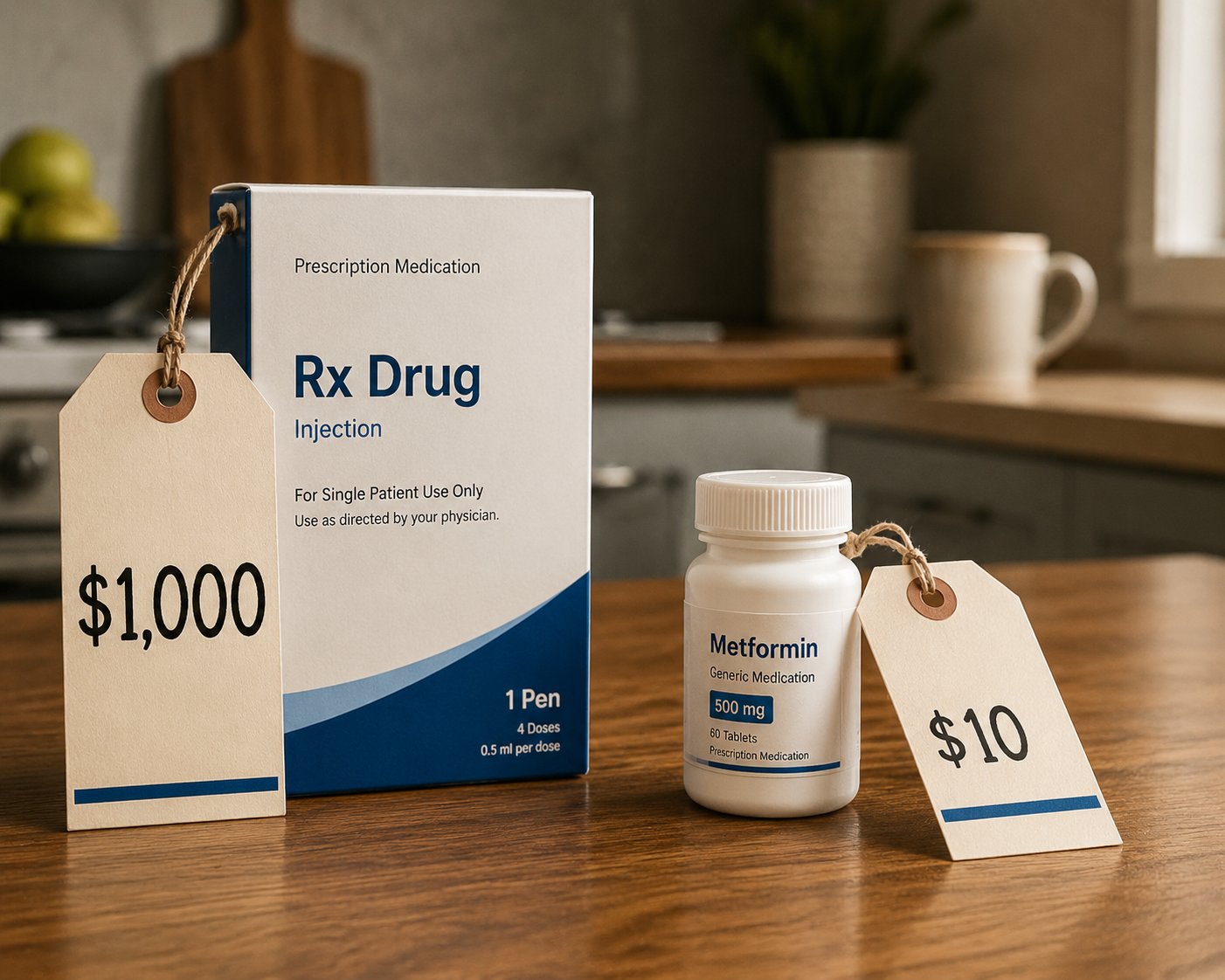
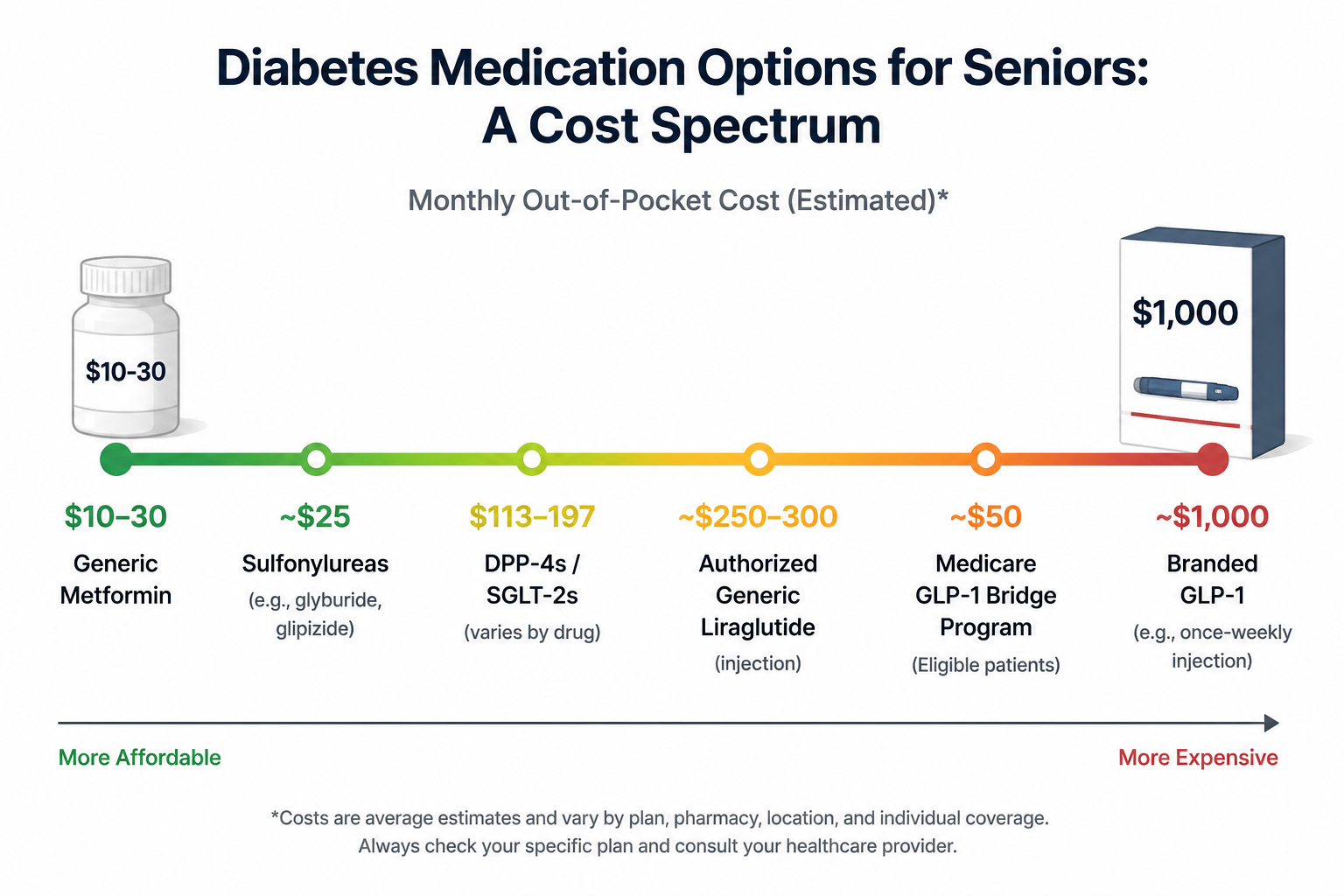
There are affordable Ozempic alternatives for seniors with diabetes, but they are not all interchangeable. Mid-2026 pricing estimates put generic metformin around $10–30 per month, compared with roughly $1,000 for Ozempic, and metformin remains a first-line treatment for many people with type 2 diabetes.[1] Other options sit between those two ends: older sulfonylureas around the mid-$20s per month, Medicare-negotiated 2026 prices for drugs such as Januvia, Jardiance, and Farxiga, lower-cost authorized generic liraglutide for some people who truly need a GLP-1, and a new Medicare GLP-1 Bridge program that can bring certain weight-loss GLP-1s to about a $50 monthly copay for eligible beneficiaries.[2][3]
The Cost Spectrum Families Should Bring to the Appointment
Prices vary by ZIP code, pharmacy, dosage, plan tier, and date. Still, a rough spectrum helps a caregiver ask better questions. It also keeps the conversation from becoming a false choice between paying full retail for Ozempic and doing nothing.
| Medication path | Approximate monthly cost noted in current sources | Where it may fit | Older-adult caution |
|---|---|---|---|
| Generic metformin | $10–30 | Common first-line treatment for type 2 diabetes | Needs prescriber review, especially if kidney function or stomach side effects are concerns |
| Generic sulfonylureas such as glipizide or glimepiride | About $24–26 | Low-cost oral diabetes option | Hypoglycemia risk matters in seniors because a low blood sugar episode can become a fall, confusion, or emergency visit |
| DPP-4 inhibitor: Januvia | $113/month under 2026 Medicare-negotiated pricing | Oral option for some type 2 diabetes patients | Still depends on Part D formulary, pharmacy, and clinical fit |
| SGLT-2 inhibitors: Jardiance and Farxiga | $197/month for Jardiance and $178.50/month for Farxiga under 2026 Medicare-negotiated pricing | May be clinically relevant for some seniors with type 2 diabetes and related heart or kidney considerations | Kidney function and drug-specific warnings must be reviewed by the prescriber |
| Authorized generic liraglutide | Lower-cost GLP-1 path than brand-name retail options; exact price varies | Possible option when a GLP-1 is medically needed but Ozempic is unaffordable | Still a GLP-1 medication, so coverage and tolerability need checking |
| Medicare GLP-1 Bridge | About $50/month copay, no deductible, for eligible beneficiaries | Applies to selected GLP-1 weight-loss medications under program rules | Not a general diabetes-drug discount and excludes some people already using GLP-1s for diabetes through Part D |
| Ozempic retail path | Around $1,000/month | Type 2 diabetes treatment when prescribed and covered | Unaffordable for many families without suitable coverage |
That table is not a substitute for medical advice. It is a way to make the next phone call less vague. Instead of asking, “Is there anything cheaper?” a caregiver can ask, “Would metformin fit her kidney function?” or “Is the low-cost sulfonylurea option too risky for him because of low blood sugar?” or “Is this prescription for diabetes control, weight loss, or both?”
Metformin Is the First Price Check, Not an Afterthought
When a senior has type 2 diabetes and cannot afford Ozempic, metformin is often the first lower-cost option to discuss because it is both inexpensive and established. Current consumer-facing price comparisons place generic metformin at about $10–30 per month, far below Ozempic’s roughly $1,000 retail cost.[1]
The important phrase is “to discuss.” A family should not restart an old bottle in the cabinet or borrow pills from a spouse. The prescriber needs to know the senior’s kidney function, current A1C goal, stomach tolerance, other diabetes medicines, and whether metformin has been tried before. But if the parent was handed a prescription they cannot fill, metformin is exactly the kind of practical alternative that deserves to be on the first callback list.
The Cheapest Pills Can Carry the Most Practical Risk
Generic sulfonylureas such as glipizide and glimepiride attract attention because they can be around $24–26 per month and have been used for decades.[1] For a household counting prescription costs against groceries, electricity, and the Medicare premium, that number matters.
The pause comes with hypoglycemia. A low blood sugar episode in an older adult is not a small footnote. It can look like dizziness, sweating, confusion, shakiness, or sudden weakness. It can happen when someone eats less than usual, forgets a meal, has kidney changes, or takes other medicines that complicate the picture. In a younger person, a low may be handled quickly. In an older person living alone, it can become a fall, a 911 call, or a frightening afternoon where nobody is sure what happened.
That does not mean sulfonylureas are wrong for every senior. It means the bargain has to be reviewed in context: history of falls, memory problems, meal regularity, kidney function, living situation, and whether someone is available to notice symptoms. The safer question is not “Can we get the $25 pill?” It is “Can this particular parent use this $25 pill without creating a bigger risk?”
The 2026 Medicare Prices Create a Middle Tier
Some seniors need more than the oldest generic options, but still cannot absorb brand-name retail prices. That is where the 2026 Medicare-negotiated prices deserve a careful look. DiaTribe reported that Januvia’s negotiated price dropped 79% to $113 per month, while Jardiance is listed at $197 per month and Farxiga at $178.50 per month under the 2026 negotiated pricing information.[2]
Those numbers are not the same as a guaranteed pharmacy counter charge for every person. They apply within Medicare Part D conditions, and the senior’s specific plan, tier placement, deductible design, pharmacy network, and year-to-date spending can still change the amount due at pickup. But they do give families a more realistic middle category between a $10 generic and a $1,000 retail GLP-1.
DPP-4 Inhibitors: Less Dramatic, Sometimes Easier to Live With
Januvia belongs to the DPP-4 inhibitor class. It is an oral medication, which can matter for a senior who struggles with injections, refrigeration routines, or the weekly anxiety of a shot. Its 2026 negotiated price of $113 per month is still much more than metformin, but much less than a roughly $1,000 retail Ozempic bill.[1][2]
For a caregiver, the question to the prescriber is whether this class fits the parent’s diabetes pattern and other conditions. It may not bring the same weight-loss expectations that drive much of the public conversation around GLP-1 drugs. If the real treatment goal is glucose control in type 2 diabetes, that distinction matters.
SGLT-2 Inhibitors: More Expensive, but Clinically Relevant for Some Seniors
Jardiance and Farxiga sit higher on the monthly-cost spectrum than generics, with 2026 negotiated prices reported at $197 and $178.50 per month.[2] That is not pocket change on a fixed income, but it may be a workable number for some families once the Part D plan and pharmacy price are checked.
This is also where clinical fit becomes more important than price ranking. SGLT-2 inhibitors may be considered for some people with type 2 diabetes when heart or kidney considerations are part of the medical picture, but older adults need a prescriber to review kidney function and drug-specific warnings. A caregiver should not treat them as simply “the next cheapest brand option.”
Authorized Generic Liraglutide Is the GLP-1 Option Worth Asking About
If the doctor’s reason for choosing Ozempic was that the patient needs a GLP-1 medication, the family should ask whether authorized generic liraglutide is appropriate. It contains the same active ingredient as Victoza and entered the market as a lower-cost GLP-1 path in 2024, though the actual price still varies by plan and pharmacy.[1]
This is not the same as saying liraglutide is identical to Ozempic in dosing, device, schedule, effect, or coverage. The useful point is narrower: for a senior who truly needs a GLP-1 and cannot afford Ozempic’s retail price, there may be a GLP-1 conversation before the family gives up or jumps to a completely different drug class.
Medicare in 2026 Changes the Math, but Not the Fine Print
For seniors, affordability is rarely one price. It is the Part D formulary, the deductible, the tier, the preferred pharmacy, the coverage stage, and what has already been spent that year. In 2026, two Medicare details deserve special attention: negotiated Part D prices for selected diabetes drugs and the $2,100 annual out-of-pocket cap for Part D prescription drug costs.[2][3]
The cap can change the annual picture for someone who uses expensive medications, because there is now a ceiling on covered Part D out-of-pocket spending. But a cap is not the same as a low monthly copay. A senior may still face difficult costs before reaching the cap, and the medication must be covered under the plan’s rules. Families should ask the plan for the exact expected cost at the chosen pharmacy, not just the annual policy headline.
The Medicare GLP-1 Bridge Is Valuable, Narrow, and Easy to Misread
The Medicare GLP-1 Bridge launched July 1, 2026, and offers eligible beneficiaries access to selected GLP-1 weight-loss medications, including Wegovy, Zepbound, and Foundayo, at about a $50 monthly copay with no deductible.[3] NCOA describes the program as a way to expand access to weight-loss medications for older adults, and CMS states that the demonstration is scheduled to run through December 31, 2027.[3][4]
The diabetes-versus-weight-loss distinction is the place to slow down. The Bridge is not a universal $50 Ozempic replacement for every senior with diabetes. It is tied to selected GLP-1 weight-loss medications under program rules. Seniors already receiving a GLP-1 for diabetes through Part D do not qualify for the Bridge in the way many families might assume.[3]
That matters at the kitchen table because one person may hear “Medicare covers GLP-1s for $50” and think the pharmacy problem is solved. The next step is more specific: ask whether the prescription is being written for diabetes treatment, weight-loss treatment, or another covered indication; ask whether the exact drug is part of the Bridge; and ask whether the senior’s current GLP-1 history affects eligibility.
Coupons and Cash Prices Are Secondary for Many Medicare Families
Manufacturer coupons, discount cards, and cash-pay programs can be useful for some people, and savings guides commonly list them as ways to reduce Ozempic costs.[5] For Medicare beneficiaries, though, the rules are different from commercial insurance. Many manufacturer coupon programs exclude people enrolled in federal health care programs, and cash prices may not count toward Part D spending.
A discount card price can still be worth checking if the prescriber and pharmacist think the medication is appropriate, but it should not replace the Part D formulary check. A family needs to know whether using a cash price today creates a problem with annual out-of-pocket tracking, prior authorization, or future refills.
A Caregiver-Ready Way to Narrow the Choice
The safest affordable option usually appears after four questions, not after a brand-name comparison chart. The first question is the treatment goal: is the doctor trying to control type 2 diabetes, support weight loss, reduce another health risk, or some combination? If the goal is diabetes control, metformin, sulfonylureas, DPP-4 inhibitors, SGLT-2 inhibitors, and GLP-1s may all come up in different ways. If the goal is weight loss, the Medicare GLP-1 Bridge may matter, but only if the eligibility rules fit.
- Ask the prescriber: “Is this prescription mainly for diabetes control or weight loss?”
- Ask whether generic metformin is appropriate, especially if it has not been tried or was stopped years ago.
- If a sulfonylurea is suggested, ask specifically about hypoglycemia risk, falls, irregular meals, kidney function, and living alone.
- If Januvia, Jardiance, or Farxiga is suggested, check the 2026 Part D formulary price at the senior’s actual pharmacy.
- If a GLP-1 is medically important, ask whether authorized generic liraglutide or a covered GLP-1 pathway is available.
- If someone mentions a $50 GLP-1, confirm whether they mean the Medicare GLP-1 Bridge and whether the senior qualifies under its weight-loss rules.
The pharmacy can then answer the question that matters most before anyone rearranges the monthly budget: what will this person pay for this medication at this pharmacy under this plan today? If the answer is still too high, the prescriber’s office can often consider a different class, start a prior authorization, or document why a specific medication is needed.
A senior who cannot afford Ozempic is not automatically out of options. The realistic range runs from $10–30 metformin to mid-$20 sulfonylureas, to 2026 negotiated Part D prices in the low-to-high hundreds for some brand-name diabetes drugs, to narrower GLP-1 pathways such as authorized generic liraglutide and the Medicare GLP-1 Bridge. The right answer is the one that fits the diagnosis, the body in front of the doctor, and the price the family can verify before the prescription is waiting at the counter.
References
Questions to bring to a clinician or OT
This is not medical, legal, or a family's final decision — only a framework. Bring these questions to a clinician, occupational therapist, or your local Area Agency on Aging.
Find Local HelpRelated reading
Noticed something outdated or inaccurate on this page? Flag a correction. We review every report against CDC, NIA, and AARP HomeFit guidance before updating a page.