How to Access Medicare's $2,500 GUIDE Respite Benefit
Stage: intensive careReviewed: 2026-07-09
How to Access Medicare's $2,500 GUIDE Respite Benefit
Learn how to access the $2,500 GUIDE respite benefit for a loved one with dementia, including eligibility rules, how funds are managed by providers, and steps to take to get relief from caregiver burnout.
By Editorial Team
new caregiver
experienced caregiver
long-distance caregiving
spousal caregiver
working caregiver
daily routines
medication management
personal hygiene
care coordination
first steps
ADLs
IADLs
The first thing to know about Medicare’s GUIDE respite benefit is this: you probably will not receive a $2,500 check.
The GUIDE Model can pay for respite for some dementia caregivers, and that is a real change. But the money is not a gift card, a reimbursement you submit on your own, an IHSS payment, or a direct Medicare deposit into a family bank account. The participating GUIDE provider manages the benefit, coordinates approved respite, and pays the respite partner through Medicare’s model rules.
That distinction matters because a burned-out spouse or adult child does not need another phone tree that ends with, “That is not how this works.” If you are trying to understand Medicare’s dementia care management GUIDE Model in practical terms, the useful question is not whether the program sounds generous. It is whether your loved one qualifies, whether a participating provider is available, whether respite is included for your situation, and who submits the payment.
Under CMS rules, the respite amount is described as up to $2,500 per year, adjusted for inflation, with no patient cost-sharing. The funds renew on July 1 each year and do not carry over if they are unused.[1] Those are the bones of the benefit. The hard part is getting through the gates in the right order.
Start With The Two Screens: GUIDE Enrollment And Respite Eligibility
A person can meet some GUIDE requirements and still not receive the respite benefit. That is the place where many explanations get too loose.
The GUIDE Model is for people with dementia who are in Original Medicare, not Medicare Advantage, and who are not already in certain excluded care situations such as hospice or long-term nursing home residence.[1] For respite specifically, the person must have moderate-to-high-complexity dementia and an unpaid caregiver.[2]
That last phrase, “unpaid caregiver,” is doing real work. The benefit is aimed at the person who is providing unpaid help: the husband who sleeps lightly because wandering has started, the daughter who is leaving work early for appointments, the son who has become the backup bath aide because paid hours run out. If there is no unpaid caregiver, the respite portion is not available under the standard described by participating GUIDE programs.[2]
Question to ask first
Why it matters
Is my loved one in Original Medicare?
GUIDE is not available to Medicare Advantage enrollees under CMS model rules.
Has dementia been diagnosed and assessed as moderate-to-high complexity?
Respite is limited to beneficiaries who meet that higher-complexity standard.
Is there an unpaid caregiver?
The respite benefit exists to relieve that unpaid caregiver’s burden.
Is my loved one in hospice, a nursing home, or a memory care unit?
These settings can block respite access under current CMS rules.
Is there an operational participating GUIDE provider I can contact?
The provider, not the family, manages access to the respite funds.
The Residential Care Rule Needs Careful Reading
As of July 2026, CMS states that residents of residential care communities may be eligible for GUIDE services, but they are not eligible for the respite benefit.[1] This is one of those details that can save a family several useless calls if it is said plainly.
A person living in a residential care community may still be worth screening for GUIDE care management, depending on the provider’s interpretation and CMS rules. But if the family is asking specifically about respite dollars, current CMS FAQ language draws a line around residential care community residents. Families should confirm this directly with the participating GUIDE provider, especially when the residence markets itself with overlapping terms such as assisted living, memory care, dementia care, or secured care.
How The $2,500 Respite Benefit Actually Moves
Here is the cleanest way to picture the payment path: CMS pays the participating GUIDE provider. The provider coordinates respite with an approved respite partner. The provider must pass through 100% of CMS respite reimbursement to that respite partner organization.[1]
For the family, that usually means the question is not, “Where do I submit my receipt?” It is, “Which respite partners do you work with, and what do you need from us before care can be scheduled?”
CMS calls this a payment pass-through requirement. Operational summaries for providers describe the participating organization as responsible for coordinating respite and paying the partner, rather than handing cash to the beneficiary or caregiver.[1][3] That is why a family may be told that a preferred aide, neighbor, private caregiver, or adult day program cannot be used unless that arrangement fits the GUIDE provider’s approved process.
The benefit can support several kinds of respite, including in-home respite, adult day center care, and facility-based overnight respite, when arranged through the model’s rules.[1] If you need a broader refresher on what those settings look like outside the GUIDE program, start with this respite care guide for seniors. If the likely option is home-based help, it also helps to understand the practical difference between agency care and privately hired help in this guide to choosing care at home.
The Annual Cap Is Real, But It Is Not A Personal Account
CMS describes the respite cap as up to $2,500 per year, adjusted for inflation.[1] Because the amount is indexed, families should ask the provider for the current benefit-year figure rather than assuming every calendar year will show the same exact number.
The timing also matters. CMS says the respite funds renew every July 1 and do not carry over.[1] If a caregiver uses only part of the available amount before the renewal date, the unused portion does not become a larger balance later. If a family waits too long to ask, they may lose time that could have been used to arrange care.
No patient cost-sharing is attached to the GUIDE respite benefit under CMS FAQs.[1] That does not mean every form of care a family wants is covered, or that every provider has the same partner network. It means that when eligible respite is arranged under the GUIDE Model, the beneficiary is not supposed to owe a copay or coinsurance for that model-paid respite.
A Practical Phone Script For Getting To The Right Office
Before calling, gather the Medicare card, dementia diagnosis information if you have it, the name of the primary care clinician or neurologist, current living setting, and the name and relationship of the unpaid caregiver. You do not need to solve the entire eligibility question alone, but you do need enough information to keep the call from drifting into general dementia resources.
Confirm Medicare type: “My loved one has Original Medicare. Are you a participating GUIDE Model provider, and are you currently accepting GUIDE patients?”
Ask for GUIDE screening: “Can you screen for GUIDE eligibility and for the respite benefit specifically?”
Name the caregiver: “There is an unpaid caregiver providing regular support. What documentation or intake information do you need?”
Clarify the dementia complexity requirement: “How do you determine moderate-to-high-complexity dementia for respite access?”
Ask about settings: “My loved one lives at home / in assisted living / in memory care / in a nursing home. Does that affect respite eligibility under your current GUIDE rules?”
Ask about the actual respite network: “Which in-home care agencies, adult day centers, or facility-based respite partners can be used through your program?”
Ask how scheduling and payment work: “Do you pay the respite partner directly, and is there any cost-sharing or paperwork the family must submit?”
Ask about timing: “How much of this benefit year remains before the July 1 renewal, and what happens if we do not use the full amount?”
The important word in that script is “respite.” GUIDE includes broader dementia care management services, and those matter, but a family asking for a break from round-the-clock care needs to make sure the intake person is checking the respite-specific rules, not only general program enrollment.
What A Real Break Can Look Like
The benefit is not theoretical. AARP described caregiver Sharon Hall using an adult day center that cost $85 per day, with GUIDE helping cover that form of respite.[4] For a caregiver who has been stretching errands, showers, sleep, and medical appointments around dementia supervision, a day center slot is not a luxury. It can be the difference between keeping a routine intact and watching the whole household start to fray.
Carolyn Clevenger of Emory University told AARP that respite is the number one benefit participating families cite.[4] That rings true. Care plans, education, and coordination all have value, but the caregiver who has not had four uninterrupted hours in months will often name relief before anything else.
Still, one adult day center example should not be read as a guarantee that every family can use the same center, the same rate, or the same schedule. The GUIDE provider’s approved respite partners, local availability, and the remaining annual cap will shape what the benefit can actually buy.
Where GUIDE Fits With Other Dementia Support
GUIDE is larger than respite. The Alzheimer’s Association describes the model as including core services such as comprehensive assessment, care planning, care coordination, caregiver education and support, medication management, referrals to community-based services, and 24/7 access to help through the participant’s care team.[5] Those services may be valuable even when respite is limited or unavailable.
But if the immediate problem is caregiver burnout, keep the conversation concrete. Ask who provides the break, where the care happens, how soon it can start, whether transportation is involved, and how the GUIDE provider handles payment. A beautifully written care plan does not watch someone with dementia while the caregiver sleeps.
Families comparing Medicare respite routes should also separate GUIDE respite from hospice respite. They are different paths with different eligibility rules. For that broader comparison, see this overview of Medicare respite for dementia caregivers.
If The Answer Is No
A “no” can mean several different things, and each one points to a different next step. If your loved one is in Medicare Advantage, GUIDE is not the route. If dementia complexity is not high enough for respite, ask whether other GUIDE services or community programs are available. If the living setting blocks respite, ask whether care management still applies. If no participating provider is operating in your area, ask the diagnosing clinician, Area Agency on Aging, adult day centers, and local Alzheimer’s support organizations about non-GUIDE respite options.
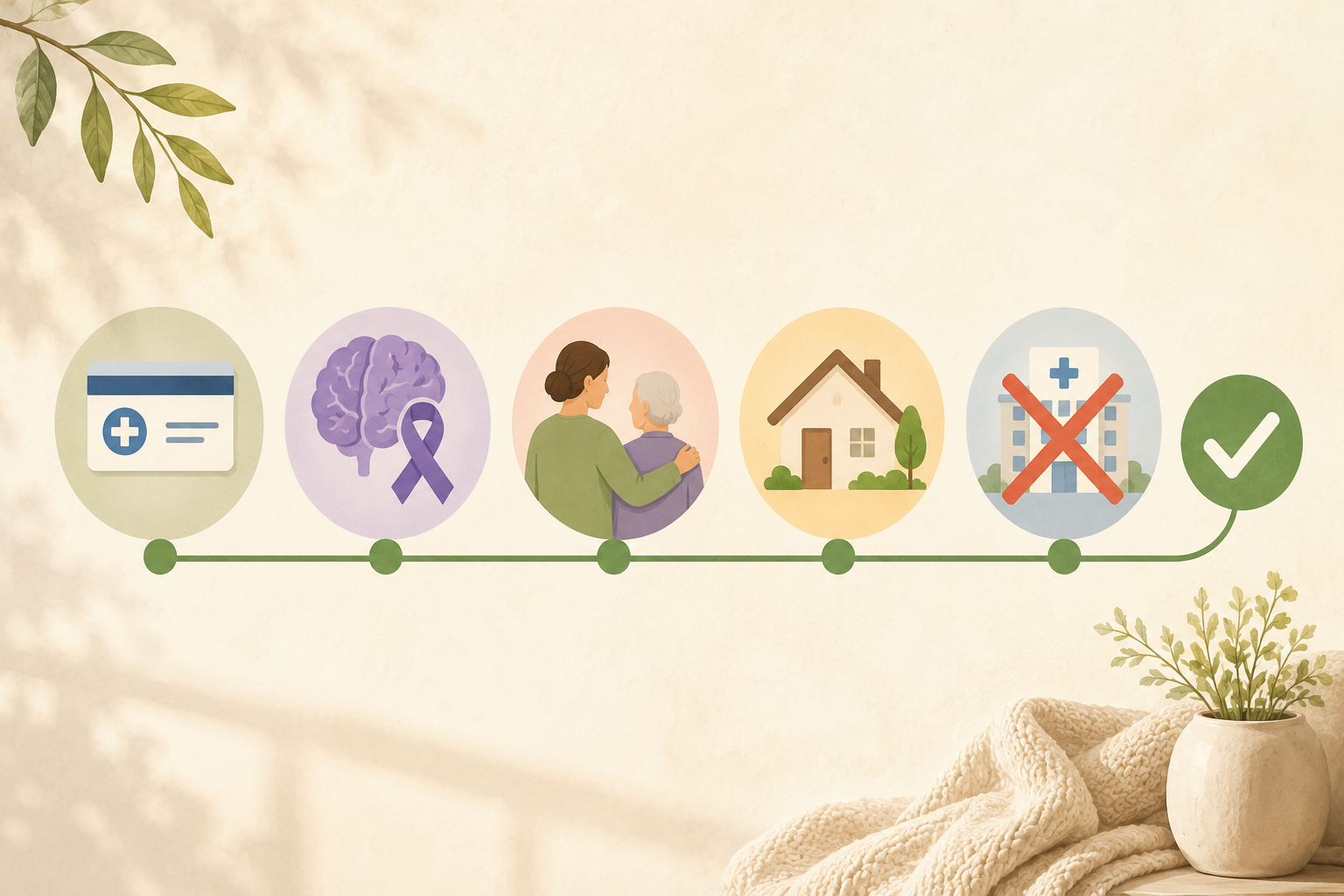
If your loved one has Original Medicare, has moderate-to-high-complexity dementia, has an unpaid caregiver, is not in hospice or a nursing home, and is not in a residential care community setting that blocks respite under current CMS rules, the next correct step is to contact a participating GUIDE provider and ask for respite screening and coordination.
Ask it that plainly: “Are you participating in GUIDE, and can you tell me whether my loved one qualifies for the respite benefit?” Then ask who the approved respite partners are, how much of the current annual benefit remains, and whether the provider pays the partner directly through the GUIDE pass-through process.
This is meaningful help. It is also a provider-managed Medicare model with strict gates. Treat it that way from the first call, and you have a much better chance of getting to the part that actually matters: a safe block of time when someone else is responsible for the care.



Comments
Join the discussion with an anonymous comment.