Why Bathing Difficulty Is a Warning Sign of Declining Independence (And What to Do Next)
For adult children who have noticed their parent struggling with bathing, this article reframes the issue as a sentinel health event. Backed by landmark research, it explains why bathing is the first activity of daily living to decline, what early signs to watch for, and how proactive steps can prevent a crisis.
By Editorial Team
new caregiver
ADLs
personal hygiene
first steps
daily routines
📄
A printable version of this guide is available. Use your browser's print function (Ctrl+P / ⌘P) to save or print.
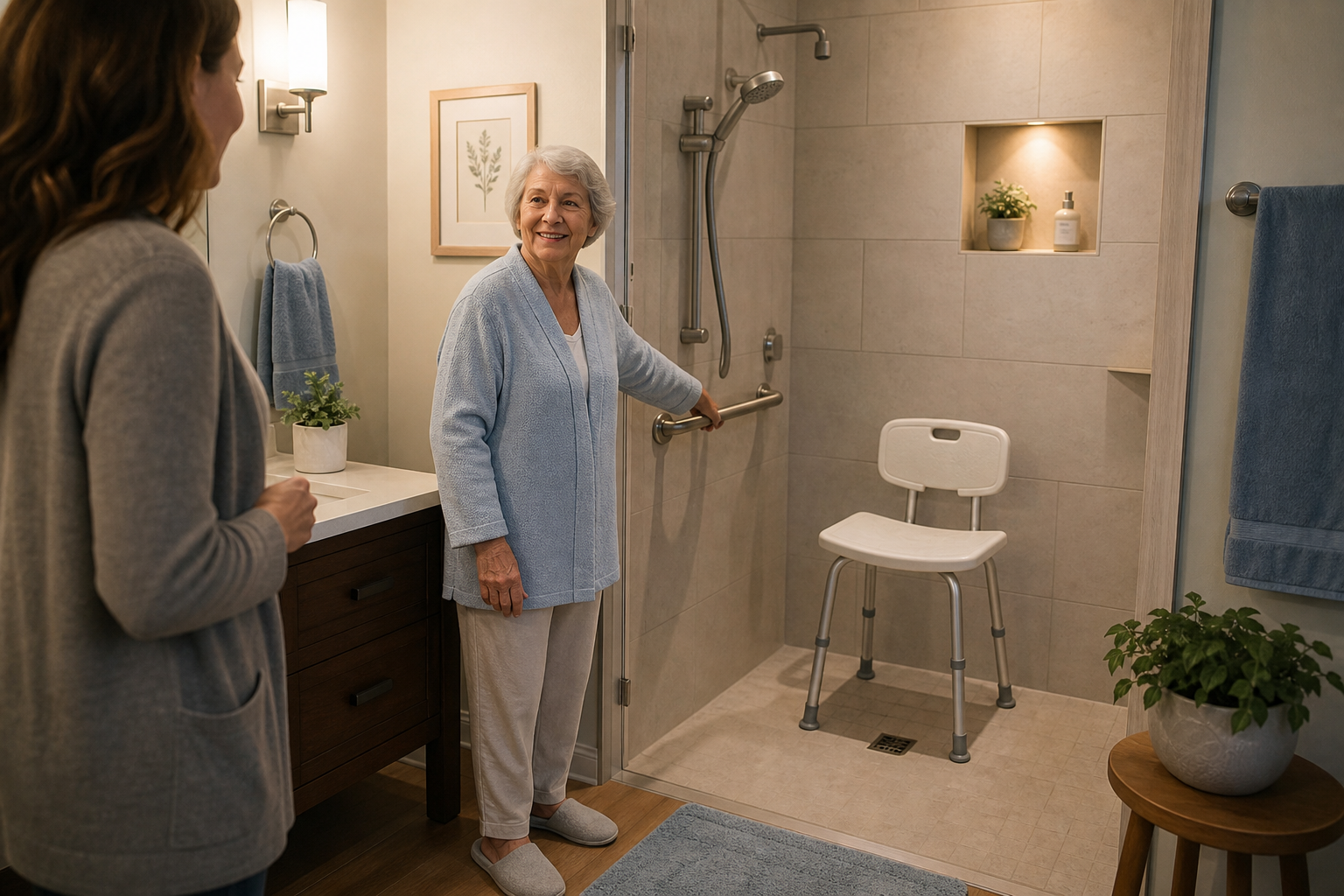
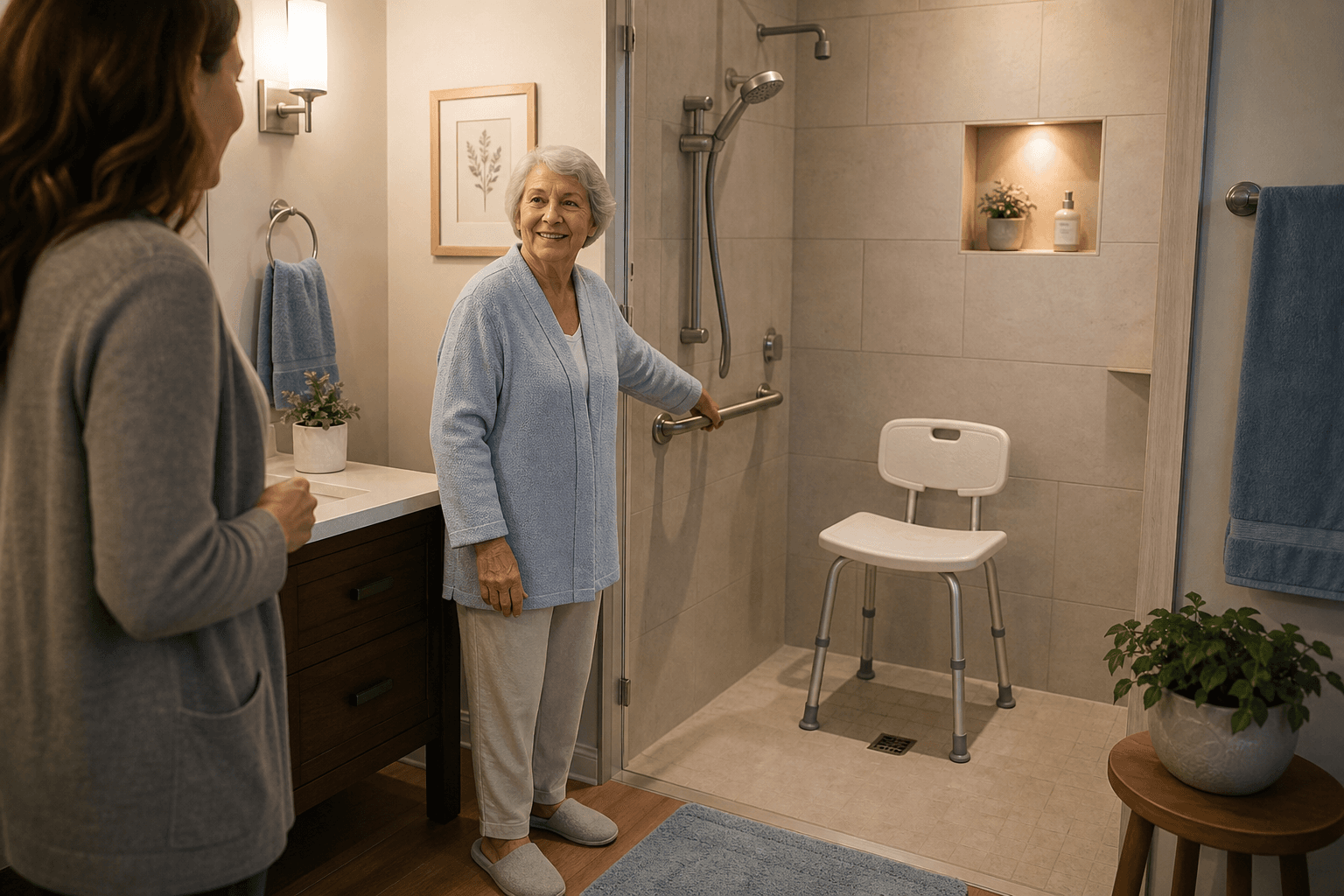
A bathroom set up for safety and dignity — the kind of proactive adaptation that can preserve independence after bathing difficulty first appears.
Bathing Difficulty: The Warning Sign Most Families Miss
You notice your mother has started skipping showers. She says she "just didn't feel like it" or that the bathroom "feels too cold." When she does bathe, she seems drained for the rest of the day. Maybe she has started wearing the same clothes more often, or you have noticed a faint odor you cannot quite place.
It is easy to dismiss this as a preference or a minor quirk of aging. But the research tells a different story. Difficulty bathing is not just a hygiene issue — it is one of the earliest and most reliable signals that an older adult is losing the ability to live independently. Recognizing it early gives you a window of opportunity to act before a crisis forces your hand.
The Research: Bathing Disability as a Sentinel Event
The most important study on this topic was published in 2006 by Dr. Thomas Gill and his colleagues in the Journal of the American Geriatrics Society. It followed 754 community-living adults aged 70 and older for six years, tracking how and when they began to lose the ability to perform basic activities of daily living (ADLs) — bathing, dressing, transferring, and walking.
The findings were striking:
Over the six-year period, 58.4% of participants had at least one episode of bathing disability. More than a third (34%) had multiple episodes, each averaging about six months in duration.
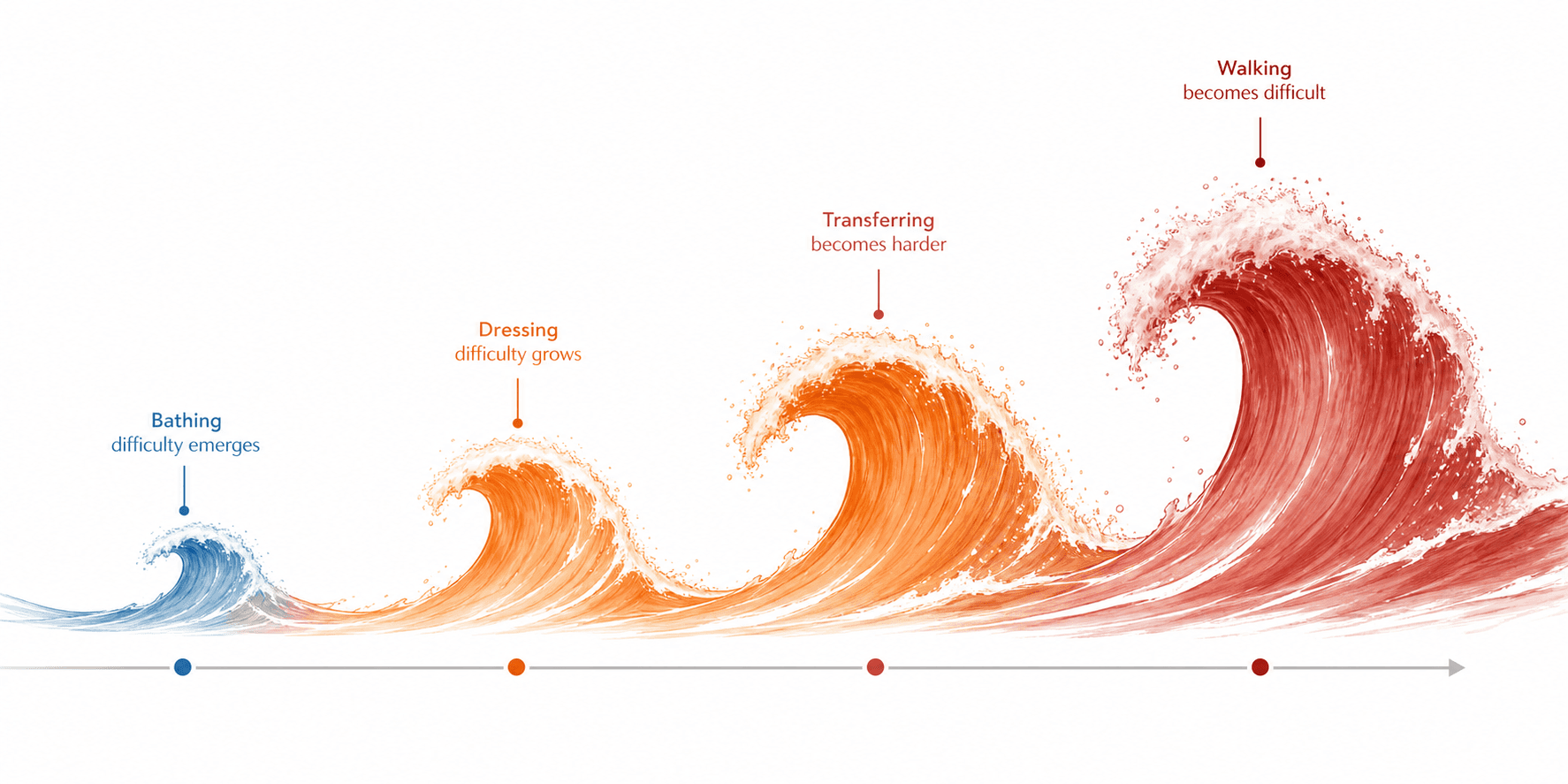
86.1% of those bathing disability episodes were NOT preceded by disability in dressing, transferring, or walking. Bathing was the first ADL to decline in the vast majority of cases.
Nearly half (48.3%) of bathing disability episodes were not even accompanied at onset by disability in those other ADLs.
The study concluded that disability in bathing "may serve as a sentinel event in the disabling process" — a warning signal that appears before other, more obvious signs of decline. This finding has held up over two decades of subsequent research. More recent longitudinal surveys continue to show that bathing is the ADL with the highest limitation prevalence among older adults.
Why Bathing Is the First ADL to Decline
Bathing is not a simple activity. It is a complex, multi-step process that places demands on nearly every physical and cognitive system at once. Understanding why it fails first helps you see the warning signs more clearly.
Balance and stability: Stepping over a tub wall or onto a wet shower floor requires dynamic balance that declines with age. The fear of falling in the shower is not irrational — bathrooms are among the most dangerous rooms in the home.
Range of motion: Reaching to wash your back, legs, and feet requires flexibility in the shoulders, hips, and knees. Arthritis and reduced mobility make these movements painful or impossible.
Temperature regulation: Older adults are more sensitive to temperature changes. The sensation of cold water or a drafty bathroom can be genuinely uncomfortable, even distressing.
Depth perception: Stepping into a tub or shower requires judging the distance to the floor. Age-related vision changes, including reduced depth perception, make this harder — and scarier.
Multi-step sequencing: A bath involves undressing, adjusting water temperature, stepping in, washing, rinsing, stepping out, and drying. Each step requires memory, attention, and executive function. For someone with mild cognitive changes, this sequence can become overwhelming.
Compare this to other ADLs. Feeding requires fine motor skills but little balance or sequencing. Toileting is a shorter, more familiar routine. Dressing involves reaching but not the same combination of balance, temperature, and depth perception. Bathing is uniquely demanding — which is why it is the first to break down.
Bathing difficulty typically appears first, followed by other ADL declines. Recognizing the earliest wave gives you time to act.
Early Signs of Bathing Difficulty to Watch For
Bathing difficulty does not appear overnight. It emerges gradually, and the early signs are easy to miss if you do not know what to look for. Here are the most common indicators:
Skipping baths or showers — going two, three, or more days without bathing, or making excuses to avoid it.
Seeming exhausted afterward — a bath or shower that used to take 15 minutes now leaves your parent drained for hours.
Expressing fear or anxiety — comments like "I'm afraid I'll slip" or "the water feels wrong" are red flags.
Neglecting personal hygiene — wearing the same clothes for days, noticeable body odor, or unkempt hair.
Changing bathing habits — switching from showers to sponge baths, or bathing at odd hours to avoid the task.
Physical signs after bathing — redness or bruising from gripping the sink or tub edge, or wet clothes from an incomplete drying process.
If you notice any of these signs, it is time to take them seriously. They are not laziness or stubbornness — they are adaptations your parent is making to cope with a task that has become genuinely difficult.
What Happens Next: The Fivefold Risk of Broader Decline
The most urgent finding from the Gill study is what happens after bathing disability appears. In a multivariable model, the onset of bathing disability increased the likelihood of developing disability in other essential ADLs — dressing, transferring, and walking — the following month fivefold (hazard ratio = 5.1, 95% confidence interval = 4.1–6.4).
This is not a subtle signal. A fivefold increase in risk is the kind of number that should change how you think about a skipped shower. It means that the difficulty your parent is having with bathing is not an isolated problem — it is the leading edge of a broader decline that is likely already underway.
Bathing disability is also a strong predictor of long-term nursing home admission. When an older adult can no longer bathe safely or independently, the burden on family caregivers increases sharply. Combined with the risk of falls — each year, more than one in four older adults falls, and falls are the leading cause of fatal and non-fatal injuries among Americans 65 and older — the trajectory can accelerate quickly.
Proactive Steps After Recognizing Bathing Difficulty
Once you recognize bathing difficulty as a sentinel event, the goal shifts from "helping Mom bathe" to "preserving her independence for as long as possible." Here is a step-by-step action plan:
1. Schedule an Occupational Therapy (OT) Evaluation
An occupational therapist is the single most valuable professional you can consult at this stage. An OT can assess exactly where the difficulty lies — balance, range of motion, vision, sequencing, or fear — and recommend specific solutions. This is not a vague "see a doctor" recommendation; it is a targeted, evidence-based intervention that can make an immediate difference.
Medicare Part B covers occupational therapy when it is deemed medically necessary. A primary care physician can provide a referral. The evaluation typically happens in the home, so the OT can see the actual bathroom environment and recommend changes that fit the space.
2. Consider Home Modifications and Adaptive Equipment
Research shows that environmental adaptations for bathing are significantly underused. A 2005 study by Naik and Gill found that among community-living older adults who reported difficulty with bathing (but were not yet dependent), fewer than 60% had basic adaptations like grab bars or shower chairs. Among those who had already become dependent on personal assistance, the rate was 88%. In other words, most families wait until the problem is severe before making changes.
You do not need to wait. The most common and effective adaptations include:
Grab bars installed at the shower or tub entrance and inside the shower area
A shower chair or transfer bench so your parent can sit while bathing
A handheld showerhead on a sliding bar for easier rinsing
Non-slip bath mats inside and outside the shower or tub
A curbless (roll-in) shower for more significant mobility limitations
A professional home care aide can visit a few times per week to assist with bathing. This is not an all-or-nothing decision — even two hours of help per week can make a significant difference. The national median cost of home care in 2026 is approximately $34–$35 per hour, according to data from A Place for Mom and SeniorLiving.org. Rates vary by state, from around $25 per hour in Mississippi and Alabama to $42–$44 per hour in Washington and South Dakota.
This is often the hardest step. Your parent may not see the problem, or may feel embarrassed or defensive. If you are feeling overwhelmed about where to begin, our 5-step triage framework for new caregivers provides a structured approach to starting the conversation and making a plan.
The Cost of Waiting: Preventive Adaptations vs. Crisis-Driven Care
One of the most compelling reasons to act early is financial. The cost of preventive adaptations is modest compared to the cost of crisis-driven care. Consider the following comparison:
Cost comparison: preventive adaptations vs. crisis-driven care. Sources: industry estimates for equipment; A Place for Mom and SeniorLiving.org for 2026 home care costs; CDC for fall-related healthcare costs.
Intervention
Typical Cost Range
When to Consider
Grab bars (installed)
$50–$200
At the first sign of balance difficulty or fear of falling
Shower chair or transfer bench
$50–$150
When standing in the shower becomes tiring or unsteady
Handheld showerhead with sliding bar
$30–$100
When reaching to rinse becomes difficult
Curbless shower conversion
$2,500–$7,000
When using a walker or wheelchair in the bathroom
Occupational therapy evaluation
Covered by Medicare Part B (with referral)
As soon as any bathing difficulty is noticed
Home care aide (2 visits/week, 2 hours each)
~$544–$560/month at national median rates
When bathing requires hands-on assistance
Fall-related emergency department visit
$1,000–$3,000+ (average)
After a fall has already occurred
Fall-related hospitalization
$30,000–$60,000+ (average)
After a serious fall injury
Nursing home (semi-private room, annual)
$108,000+ (2026 national median)
When independent living is no longer safe
The total healthcare cost of non-fatal older adult falls in the U.S. is approximately $80 billion per year (2020 data), with 67% paid by Medicare. That figure is projected to exceed $101 billion by 2030. A single fall-related hospitalization can cost more than a decade's worth of grab bars, shower chairs, and OT visits combined.
There is also evidence that people who receive even small amounts of support with day-to-day tasks remain independent longer. A few hundred dollars a month for home care or a one-time investment in bathroom modifications can delay or prevent the need for far more expensive institutional care.
Recognizing This Signal Is the First Step
Noticing that your parent is struggling with bathing is not a failure on your part or theirs. It is an opportunity — a chance to intervene early, before the problem escalates into a crisis that forces reactive decisions.
The key takeaways are straightforward:
Bathing is the earliest ADL to decline — 86% of the time, it appears before any other functional limitation.
Bathing disability signals a fivefold increased risk of broader decline in the following month.
Proactive steps — an OT evaluation, home modifications, and modest home care support — can preserve independence and prevent a crisis.
Preventive adaptations are far more affordable than the cost of a fall, a hospitalization, or a rushed move to long-term care.
You do not need to have all the answers today. Recognizing the signal is enough. From here, you can move step by step — starting with a conversation, then an evaluation, then a few targeted changes to the bathroom. For a broader roadmap of what to expect as care needs evolve, see our 6-phase caregiver transition roadmap. And if you need a concrete action plan for the next week and month, our senior care triage guide breaks it down by what to do now, next week, and next month.
You noticed the signal. That is the hardest part. Now you can act.

Comments
Join the discussion with an anonymous comment.