The Caregiver's Complete Incontinence Supply Checklist: What You Actually Need (and What to Skip)
For: new caregiverReviewed: 2026-07-05
The Caregiver's Complete Incontinence Supply Checklist: What You Actually Need (and What to Skip)
This priority-ranked checklist helps new caregivers buy only the incontinence supplies they truly need—absorbent products, skin care, bed protection, and disposal essentials—while avoiding costly mistakes, with a three-layer overnight system that protects skin and bedding.
By Editorial Team
new caregiver
experienced caregiver
long-distance caregiving
spousal caregiver
working caregiver
daily routines
medication management
personal hygiene
care coordination
first steps
ADLs
IADLs
If you need urinary incontinence supplies for caregivers by tomorrow, do not start with a giant online catalog. Start with enough protection for the next few days, enough skin care to prevent soreness, and enough bed protection to keep one bad night from becoming a mattress problem.
This is not a side chore. More than 40% of family caregivers help with toileting needs, so learning the supply categories is part of basic home care, not a failure of planning or privacy. [1]
Buy first
What to get
Why it matters
1
One small pack of the right absorbent product: adult briefs, pull-ups, pads, or guards; add booster pads if overnight leaks are happening
This is the item your parent wears. Fit and use case matter more than the word “maximum” on the package.
2
Barrier cream and gentle, pH-balanced wipes
Skin protection starts immediately; moisture and friction can turn into pain faster than new caregivers expect.
3
Disposable or washable underpads, plus a waterproof mattress cover
The bed needs its own protection. A worn product should not be the only thing standing between urine and the mattress.
4
Odor-control disposal bags and a covered, discreet trash setup
Trash management affects odor, embarrassment, and whether care feels manageable in a shared home.
5
A small travel kit for outings
Useful after the home routine is stable; urgent only if appointments or car trips are already scheduled.
Before buying a case of anything, buy small packages or samples when possible. AARP cites a National Association for Continence survey finding that most caregivers tried seven or more products before finding the right fit. [2] That is not indecision. It is what happens when bodies, mobility, sleep patterns, waist sizes, leg openings, and leakage volume all have to match one product.
First, Choose the Product Your Parent Actually Wears
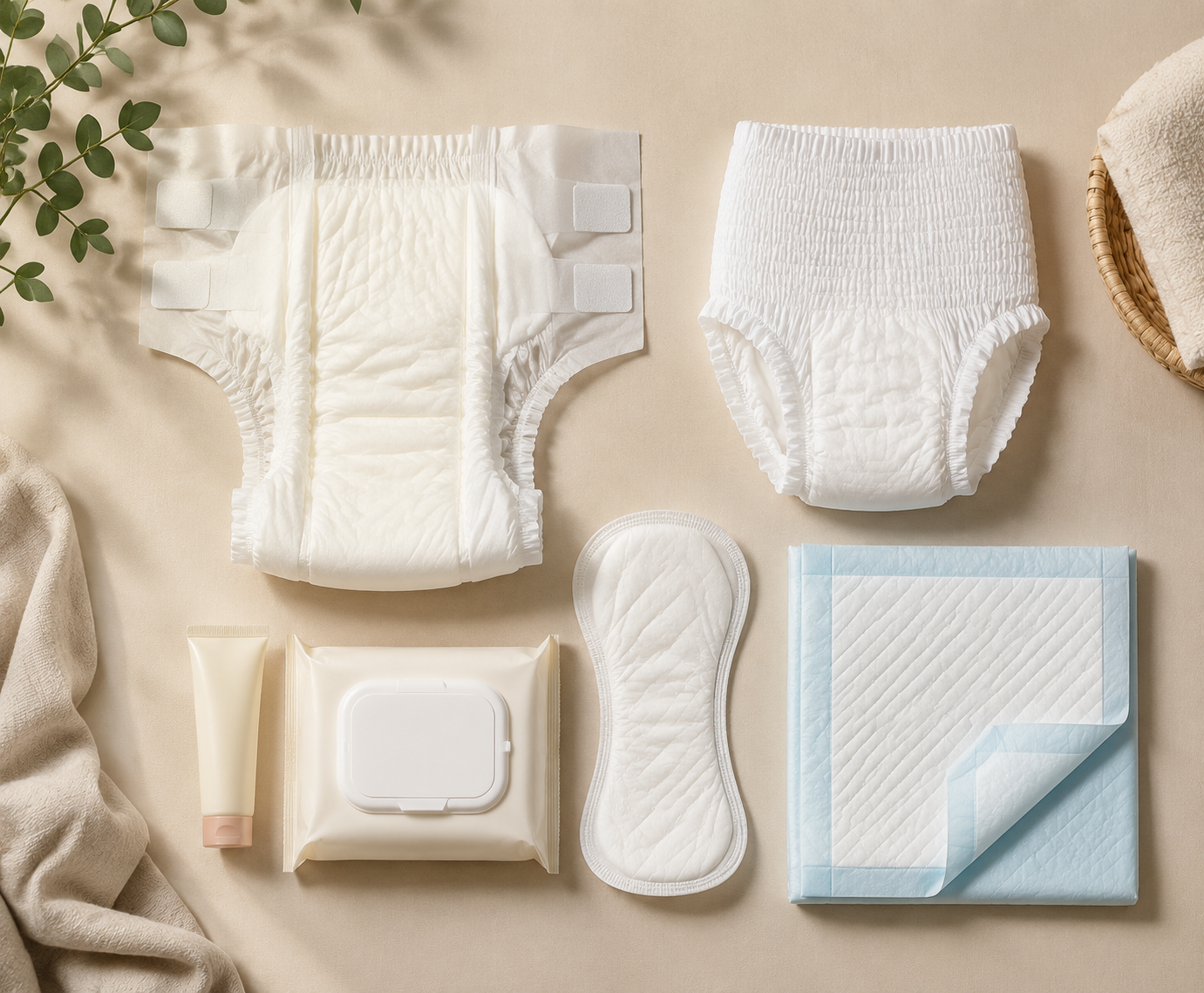
Package names are often less helpful than product categories. MedlinePlus separates urinary incontinence products into types such as pads and guards, protective underwear, adult briefs, and bed or chair protectors. [3] That taxonomy is a better starting point than treating every product labeled “overnight” or “maximum” as interchangeable.
Product
Best first use
Usually wrong when
Adult briefs with tabs
Heavy leakage, overnight use, limited mobility, or a caregiver changing the product in bed
Your parent is fully mobile, strongly prefers underwear-style products, and only has light leakage
Pull-up protective underwear
Moderate leakage and a parent who can stand, walk, and help with clothing changes
Changing requires removing shoes and pants repeatedly, or overnight leaks are already happening
Pads or guards
Light to moderate leakage for someone who can use the toilet and change pads independently or with minimal help
Leakage is heavy, occurs during sleep, or spreads beyond the pad area
Booster pads
Adding absorbency inside a brief or pull-up, especially overnight
Used alone, or used with a product that does not allow flow-through absorption
Underpads
Protecting beds, chairs, wheelchairs, and car seats
Used as a substitute for a worn absorbent product instead of backup protection
For a parent who is mostly in bed or needs hands-on help changing, start with tab-style adult briefs. Tabs let you change the product while the person is lying down or turning side to side. Pull-ups can work beautifully for someone who is mobile, but they become frustrating if every change means taking off shoes, pants, and socks.
For a parent who still gets to the bathroom and has occasional leaks, pads or guards may be enough. They are not built for the same job as a heavy brief. If the bed is wet in the morning, do not keep stacking small pads and hoping for a different result.
Fit matters as much as absorbency. A product that gaps at the legs leaks even if the package promises heavy protection. A product that is too tight can rub, dig into the skin, or make your parent resist wearing it. Measure waist and hip size, use the larger measurement if the package asks for one, and test during the time of day when leaks actually happen.
The Overnight Setup: Brief, Booster, Underpad
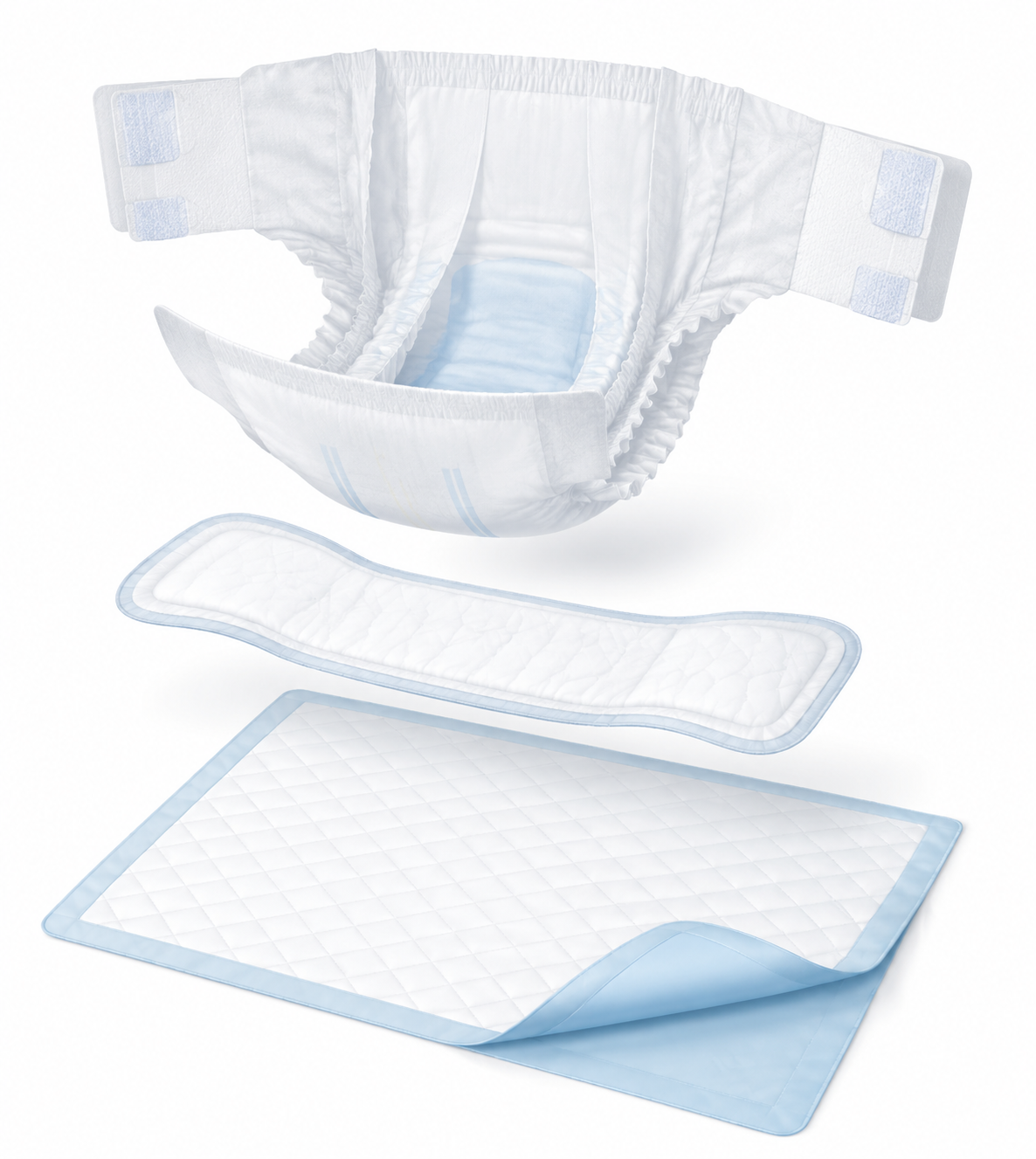
Overnight leaks deserve their own setup because sleep changes everything. Your parent may not wake in time. You may not hear them. A product that works for three daytime hours may fail after a long night. The answer is usually not simply “buy the thickest thing on the shelf.” The better starting system is three layers: an absorbent brief, a booster pad, and an underpad.
Layer 1: The Absorbent Brief
The brief is the main garment. For overnight care, a tab-style adult brief is often easier for a caregiver because it can be adjusted around the legs and changed without fully dressing and undressing the person. The brief should sit snugly at the waist and leg openings without pinching. After fastening, run a finger gently along the leg gathers so they are turned outward, not tucked inside.
Layer 2: The Booster Pad
A booster pad adds absorbency inside the brief. The important detail is that booster pads are designed to let fluid pass through once they are saturated, so the brief underneath can keep absorbing. Do not substitute a regular pad with a waterproof backing unless the product instructions say it is meant to be used that way; a waterproof-backed pad can block absorption and push leaks toward the legs.
Layer 3: The Underpad
The underpad protects the sheet, mattress cover, chair, or recliner. It is backup, not permission to leave wet products against the skin. Place it where leakage actually lands, usually under the hips and upper thighs. If your parent slides down in bed, a larger pad or a washable pad that grips better may be worth trying.
This three-layer setup also makes troubleshooting clearer. If the brief is dry but the bed is wet, placement or fit may be wrong. If the booster is soaked and the brief is partly dry, the booster may be blocking flow or sitting in the wrong place. If everything is saturated, the absorbency level or change schedule needs adjustment.
Skin Care Is Not Optional
A wet bed is exhausting. Wet skin is a health problem. The National Association for Continence notes that prolonged moisture exposure can cause incontinence-associated dermatitis and increase pressure injury risk. Barrier products containing zinc oxide or petrolatum are used to protect the skin from moisture. [4]
For the first supply run, buy a barrier cream and gentle wipes. Look for wipes meant for perineal or incontinence care, preferably pH-balanced and fragrance-free if your parent’s skin is sensitive. If you are using washcloths instead, use a mild cleanser and dry the skin gently before applying barrier cream.
Use wipes or cleanser to remove urine or stool without scrubbing.
Pat dry, especially in skin folds and at the groin.
Apply a thin layer of barrier cream where moisture contacts the skin.
Check for redness, rash, open areas, new pain, or skin that feels unusually warm.
Ask a clinician about persistent rash, broken skin, bleeding, or signs of infection.
If intimate care is new for both of you, the supplies are only half the work. Privacy, pacing, and plain language matter. For help with the hands-on side of bathing, dressing, toileting, and hygiene, see Personal Care for Elderly Parents.
Protect the Bed Before You Need a New Mattress
Bed protection should be in the first purchase, not the second week’s correction. Buy underpads and a waterproof mattress cover early. Disposable underpads are convenient during unstable periods, after discharge, or while you are still figuring out leakage volume. Washable underpads usually feel sturdier and may sit better on beds and chairs.
A waterproof mattress cover is the quiet item that prevents a small supply mistake from becoming an expensive one. PeelAways cites hidden incontinence costs that include extra laundry and mattress replacement in the $500 to $1,000 range. [5] That figure is not a reason to panic-buy every product in bulk. It is a reason to protect the surface that cannot go in the washing machine.
For the bed: waterproof mattress cover plus an underpad under the hips.
For a favorite chair: washable or disposable underpad that does not bunch when your parent sits.
For a wheelchair or transport chair: a smaller underpad or seat protector that does not interfere with safe positioning.
For the car: a discreet washable pad or disposable underpad kept in the trunk or travel bag.
Disposal Supplies Belong on the Main List
Disposal is not glamorous, but it changes daily life in the house. AARP’s caregiver guidance points to odor-control disposal bags and discreet disposal options as part of managing embarrassment and odor. [2] That matters when the trash can is in a shared bathroom, when grandchildren visit, or when your parent is already mortified that someone else is handling their underwear.
At home, start with odor-lock bags or small disposal bags and a covered trash can with a liner. If changes are frequent, use a pail or bin that can be emptied daily without advertising its contents. For outings, pack two disposal bags: one for the used product and one backup in case clothing or wipes need to be contained too.
The Outing Kit Can Be Small
Do not build a suitcase before you know the home routine. For most appointments or short visits, the outing kit can be simple: one or two absorbent products, wipes, barrier cream in a small tube, disposable gloves if you use them, disposal bags, a spare pair of underwear or pants if leaks are common, and a folded underpad for the car seat or exam table.
The emotional strain is real. Family Caregiver Alliance notes that incontinence can create embarrassment, isolation, and tension for both the person receiving care and the caregiver. [6] A compact kit helps because it makes leaving the house less dependent on luck.
What to Delay or Skip at First
Some supplies are useful later but poor first purchases. The problem is not that they are bad products. The problem is that they answer questions you may not have yet.
Delay or skip
Why
Bulk cases of briefs or pull-ups
Fit and absorbency usually take testing. A case of the wrong size becomes expensive clutter.
Multiple product styles at once
Testing too many variables makes it hard to know what worked.
Scented wipes or heavily fragranced disposal products
Fragrance can bother sensitive skin or make odor feel more obvious, not less.
Specialty travel organizers
A clean zip pouch or small tote works until you know what you actually carry.
Chair, bed, and car protectors in every size
Start with the locations where leaks have already happened.
Sample programs and starter packs are worth considering because they let you test fit, leg openings, absorbency, and ease of changing without committing to a month’s supply. MedlinePlus and AARP both encourage trying samples or different products to find what works. [3][2]
How Much This May Cost
Supply costs vary because light daytime leakage and full overnight care are not the same job. PeelAways cites survey data showing that 35% of caregivers spend $50 to $100 per month on incontinence supplies, 29% spend $100 to $200, and 27% spend more than $200. [5]
The useful lesson is not to choose the cheapest package. It is to avoid the expensive pattern: buying a case too early, discovering leaks, adding more laundry, then replacing bedding or a mattress because the protection system was incomplete. If your parent has overnight leakage, a higher-performing brief, booster pad, and underpad may cost more per change while still costing less than repeated failures.
Supplies manage leakage; they do not explain it. New, sudden, painful, or worsening incontinence should be discussed with a doctor. HealthInAging.org notes that incontinence can have treatable causes and that clinicians may review symptoms, medications, infections, mobility, and other health issues. [7]
That medical step can happen while you still buy what is needed for tonight. A doctor’s visit does not keep the sheets dry this evening, and a pack of briefs does not rule out a urinary tract infection, medication side effect, prostate issue, constipation, or mobility problem.
If you are trying to understand why toileting help is treated as a core care need, ADLs and IADLs explains where toileting fits in common care assessments.
A First-Purchase Plan That Is Enough for Now
For the first few days, buy one small pack of the absorbent product that matches your parent’s mobility and leakage pattern. If overnight leaks are happening, make that a tab-style overnight brief plus booster pads. Add underpads, a waterproof mattress cover, barrier cream, pH-balanced wipes, disposal bags, and a covered trash setup.
Then test one change at a time. Check the fit at the legs. Look at where the product is wet in the morning. Notice whether the skin is red. Ask whether your parent can pull the product up and down without help, or whether tabs would make changes less humiliating and less difficult. Keep the package until you know the size and style worked; reordering is easier when you can see the exact product name and absorbency level.
Bulk buying can wait until one product has survived the real test: the usual chair, the usual bathroom timing, the usual night’s sleep, and the person who has to wear it.

Comments
Join the discussion with an anonymous comment.