Companion Care for Seniors: The Health Evidence for Social Connection
For: long-distance caregiverStage: early independence9 minutesReviewed: 2026-06-26
Companion Care for Seniors: The Health Evidence for Social Connection
Understand why companion care is a health intervention, not a social luxury. This article presents evidence from the Surgeon General's loneliness advisory and NIH research showing that social connection reduces risks for dementia, heart disease, and depression in older adults.
By Editorial Team
new caregiver
experienced caregiver
long-distance caregiving
spousal caregiver
working caregiver
daily routines
medication management
personal hygiene
care coordination
first steps
ADLs
IADLs
In many families, companion services for seniors are the first item questioned and the last item approved. A medication organizer feels medical. A grab bar feels practical. A ride to the cardiologist is easy to defend. Paying someone to come by, talk, walk, notice, and keep an older adult connected can sound like a kindness rather than a health decision.
That is the private argument underneath the budget conversation: is companion care worth paying for, or is it just a nice extra when everything else is covered? The evidence does not support treating chronic isolation as decorative. The National Institute on Aging describes loneliness and social isolation as health risks linked with higher rates of dementia, heart disease, stroke, depression, anxiety, and premature death. Among older adults, social isolation is associated with about a 50% increased risk of dementia; it is also associated with a 29% higher risk of coronary heart disease and a 32% higher risk of stroke. [1]
That does not mean a companion can prevent dementia or a heart attack in one particular parent. Families should be suspicious of anyone selling it that way. It does mean that a week with almost no meaningful contact belongs in the same care conversation as sleep, nutrition, falls, medication routines, and transportation.
Loneliness is not the same as living alone
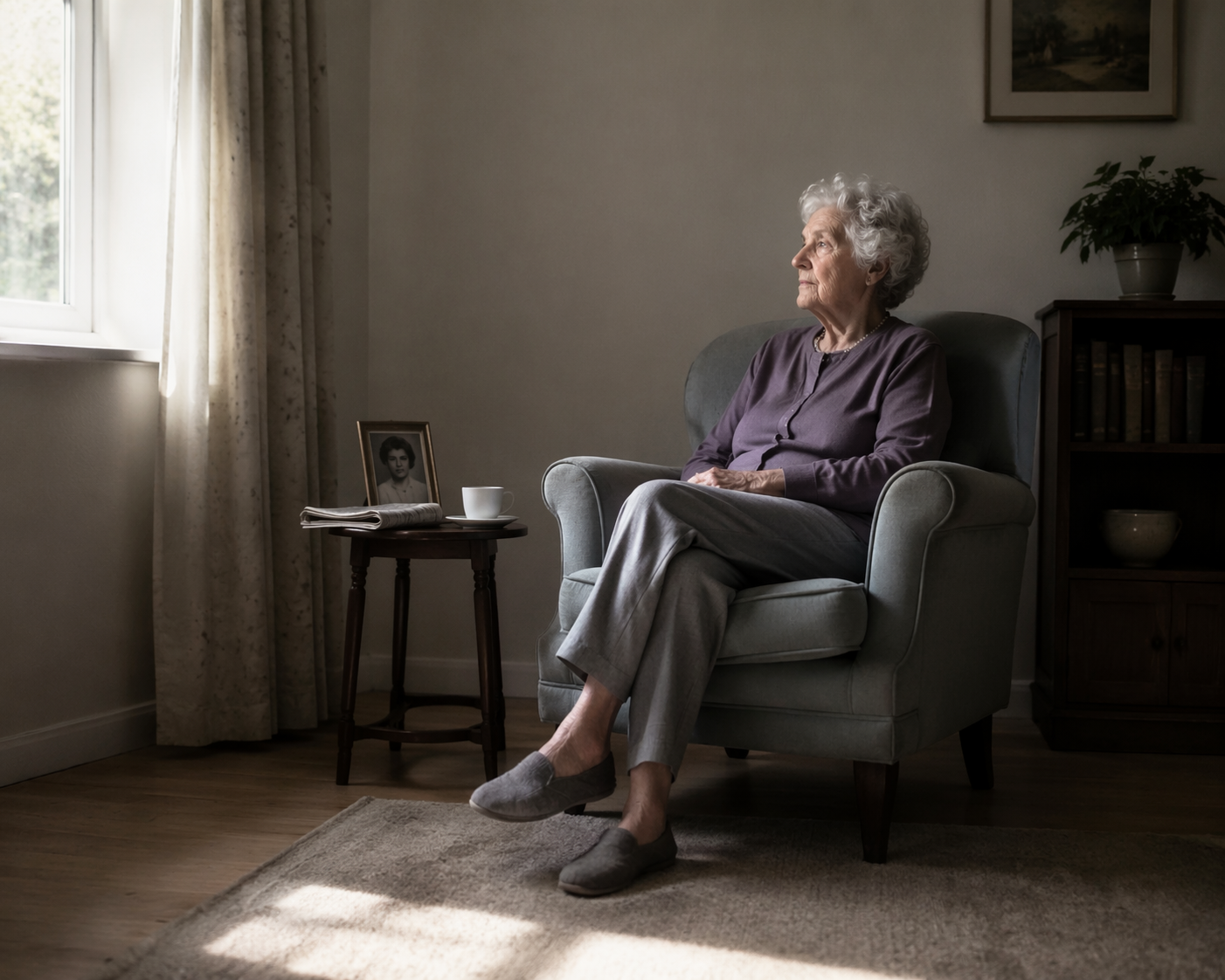
Some older adults live alone and remain socially well anchored. They talk with neighbors, attend services, volunteer, keep standing lunches, answer calls, and have people who would notice if something changed. Others live with a spouse or adult child and are still lonely because conversation has narrowed to tasks, illness, reminders, or television noise.
This distinction matters because companion care is not simply a cure for an empty house. The problem is the shrinking of dependable, meaningful human contact. A parent may still see people at the pharmacy or clinic and yet have no one asking why lunch was skipped, why the mail is unopened, why the same story is being repeated more often, or why church was quietly dropped three months ago.
The National Institute on Aging makes the same practical distinction: social isolation refers to having few social contacts and few people to interact with regularly, while loneliness is the distressing feeling of being alone or separated. Either can harm health, and they can appear together or separately. [1]
Why the health evidence changed the conversation
For years, families treated loneliness as sad but separate from care planning. The Surgeon General’s 2023 advisory helped move the issue into public health language, and the NIA’s older-adult guidance puts the concern in terms caregivers can act on: chronic loneliness and isolation are associated with cognitive decline, cardiovascular disease, depression, anxiety, weakened immune function, and mortality. [1]
The dementia figure is usually the one that stops a family meeting. A roughly 50% higher dementia risk among socially isolated older adults is not a small lifestyle footnote. It does not prove that isolation alone causes dementia in every case, and it does not prove that hiring a companion reverses cognitive disease. But it is strong enough to make chronic disconnection a care risk rather than a personality preference. [1]
The cardiovascular numbers deserve the same seriousness. A 29% higher risk of coronary heart disease and a 32% higher risk of stroke among socially isolated older adults puts social connection in the same practical frame as other risk-management conversations families already know how to have. [1]
The mechanism is not mystical. Chronic loneliness is associated with stress responses in the body, inflammation, immune changes, and pain pathways. Over time, a person who feels persistently disconnected may sleep worse, move less, eat less regularly, delay care, withdraw from routines, and lose the small daily prompts that keep health problems visible. [1]
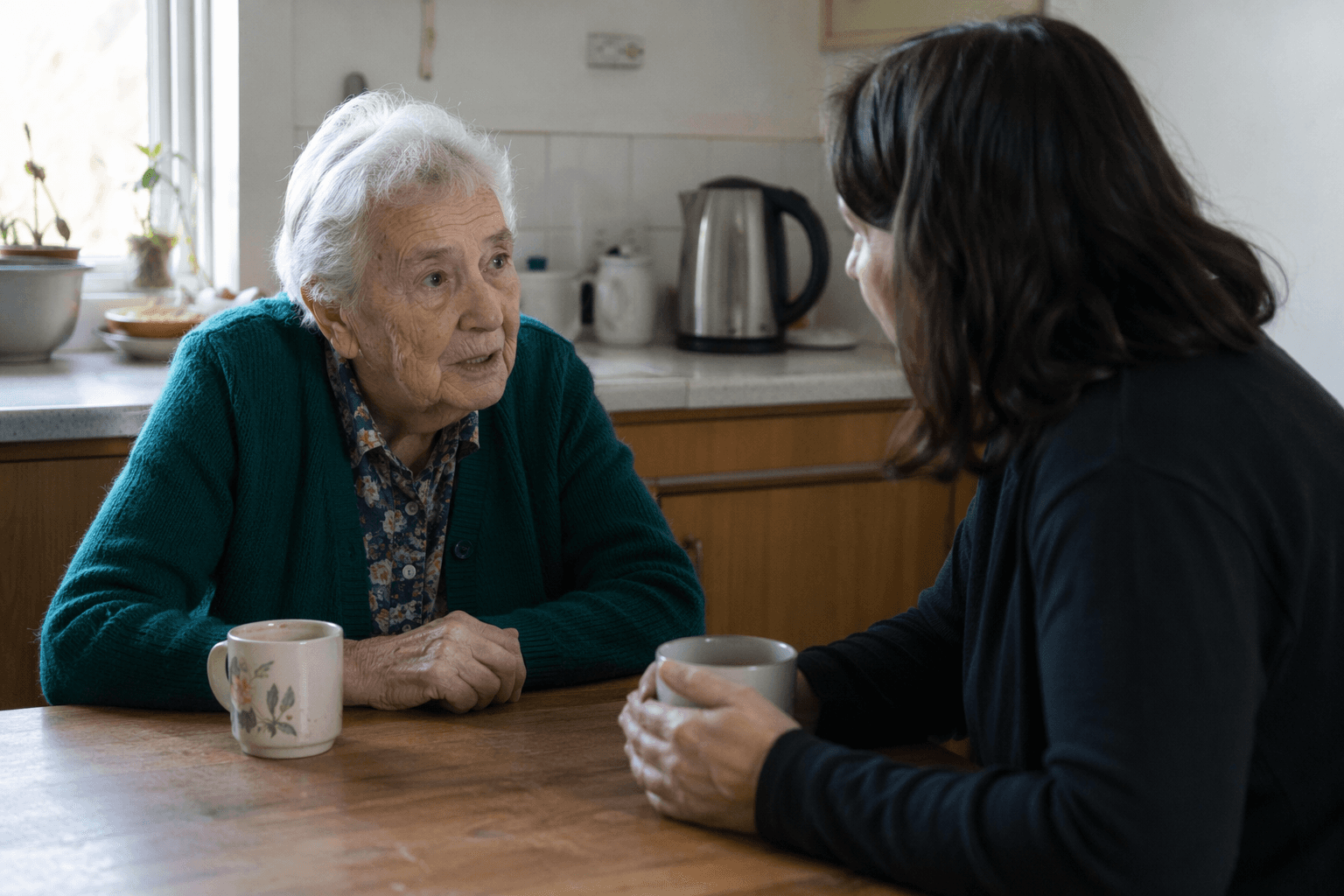
That is where companion care becomes more concrete than “someone to visit.” A reliable companion can add structure to a day that has collapsed into long, unmarked stretches. The companion is not acting as a physician, therapist, or family replacement. The value is more ordinary and often more useful: another person sees the week as it is actually being lived.
What companion care can realistically interrupt
The strongest case for companion care is not that conversation is pleasant, although it may be. It is that regular human contact can interrupt patterns that families often recognize too late.
Unstructured days: When every day looks the same, meals, medication timing, hygiene, movement, and sleep can drift without anyone noticing.
Shrinking routines: A cancelled lunch, skipped church service, or abandoned senior center class may be treated as a choice until it becomes the new normal.
Fewer conversations: Less talking means fewer chances for someone to hear confusion, breathlessness, sadness, pain, or fear.
Missed cues of decline: A companion may notice unopened mail, spoiled food, repeated stories, changes in grooming, or new reluctance to walk.
Loss of motivation: Some older adults will take a walk, prepare lunch, or make a phone call when another person is present, even if they would not initiate it alone.
Those are not small things in an older adult’s life. They are the connective tissue between medical instructions and daily reality. A physician can advise movement, nutrition, and follow-up visits; a family can agree in principle. But if the older adult’s actual week has become empty and repetitive, many good instructions never become habits.
Families who need a broader map of where companionship fits among personal care, homemaker support, transportation, and home health can use an at-home senior care options guide. If the concern is round-the-clock presence rather than scheduled visits, a live-in companion guide is the more practical next step. The health question, though, starts earlier: is the person becoming socially disconnected enough that waiting is its own risk?
This is common enough that families should stop treating it as unusual
The lonely older adult is not an edge case. University of Michigan National Poll on Healthy Aging data found that 37% of adults ages 50 to 80 reported feeling a lack of companionship in 2023, and the figure remained 33% in 2024. The same research context notes that nearly 1 in 4 adults age 65 and older are socially isolated. [2]
Those numbers are useful because they make the family problem less private and less shameful. An older parent who has stopped making plans may not be “being difficult.” A widowed spouse who says no to every invitation may not simply need more encouragement. A long-distance caregiver who senses that calls are getting shorter and flatter may be noticing something with health meaning.
The persistence matters too. If one-third of older adults in that age range continued to report lack of companionship after the acute disruption of the pandemic years, then many families are dealing with more than a temporary social dip. They are looking at a pattern that can settle into daily life.
What structured social contact can show — and what it cannot prove
AmeriCorps Seniors’ Senior Companion Program is often mentioned in this conversation because it connects older adult volunteers with people who need companionship and help with daily tasks. AmeriCorps reports that 84% of Senior Companion volunteers had stable or improving health after one year of service, and that 88% of volunteers who initially lacked companionship reported fewer feelings of isolation after volunteering. [3]
That is encouraging, but it needs to be used honestly. Those figures describe volunteers, not paid companion-care recipients. They do not prove that hiring a companion will produce the same outcomes for a parent receiving care. What they do support is narrower and still important: structured, purposeful social connection has measurable health relevance for older adults who participate in it. [3]
That distinction should make families more confident, not less. Evidence does not have to be stretched into a sales claim to be useful. The better conclusion is that regular companionship is part of the environment in which older adults maintain routines, purpose, conversation, and visibility.
The family decision point
A family does not need to wait until an older adult is severely isolated before taking companionship seriously. By then, the person may already have lost routines that are hard to rebuild: the weekly errand, the neighbor visit, the walk after breakfast, the habit of answering the phone, the willingness to leave the house.
A reasonable threshold is not perfection. It is pattern recognition. Companion care deserves a place in the care plan when several of these changes are becoming normal:
The older adult goes several days with little meaningful conversation.
Former routines have disappeared and have not been replaced.
Family calls are shorter, less frequent, or harder to complete.
Meals, hygiene, mail, or household order are drifting.
The person refuses activities they used to enjoy but cannot name something else they are choosing instead.
Long-distance relatives are relying on guesswork because no one is regularly seeing the home environment.
This is also where the budget argument should be more honest. Families routinely spend money after a crisis: after a fall, after hospitalization, after medication mistakes, after a frightening period of not knowing what is happening at home. When a fall has already occurred, a post-fall senior services plan may be necessary. But companion care often belongs before that point, as one piece of a safer aging-in-place arrangement.
Cost still matters. If siblings are comparing paid companionship with other long-term supports, it is reasonable to review long-term care costs and the broader steps involved in aging in place. But the comparison should not start from the assumption that companionship is optional while every physical modification is essential.
A preventive support, not a miracle claim
Companion care will not fix dementia. It will not erase grief. It will not make frailty disappear. It may not persuade a fiercely private parent to become outgoing, and it should not be used to make an older adult feel managed or pitied.
The case for companion services for seniors is stronger when it stays within the evidence. Chronic loneliness and social isolation are associated with measurable risks to cognition, cardiovascular health, mood, immune function, and mortality. Regular companionship can address the daily conditions that allow isolation to deepen: empty calendars, fewer conversations, declining routines, and missed signs of change.
If an older adult’s week has become thin, repetitive, and socially disconnected, companion care deserves to be evaluated alongside home safety, mobility support, medication routines, and medical follow-up — not after everything else is solved.


Comments
Join the discussion with an anonymous comment.