
Caregiver decision guide
Senior Care Assistance at Home: A Step-by-Step Guide to Aging in Place
A comprehensive playbook for older adults and their families on coordinating in-home care, support services, home modifications, and funding to make aging in place safe and sustainable.
Why Aging in Place Requires a Coordinated Plan — Not Just a Wish
The desire to stay home is nearly universal. Over 90% of older adults prefer to age in place rather than move to a facility, according to surveys cited by Choice Mutual. Yet the same research reveals a stark gap between preference and preparation: only 10% of U.S. homes are considered "aging-ready." That means 9 out of 10 seniors who want to stay home live in a house that, without modifications, presents real safety and accessibility risks.
This gap is not just about grab bars and ramps. It is about the absence of a coordinated system. Most families piece together services reactively — a home health aide after a hospital discharge, a meal delivery service after a neighbor notices weight loss, a medical alert pendant after a fall. By then, the crisis has already happened.
Making aging in place work requires intentional planning across five domains: in-home care services, support services that fill daily gaps, safety technology, home modifications, and sustainable funding. This guide walks through each domain and ends with a practical checklist to help you evaluate whether home care is feasible and safe for your specific situation.
The Four Types of In-Home Care: What Each Does and Who Provides It
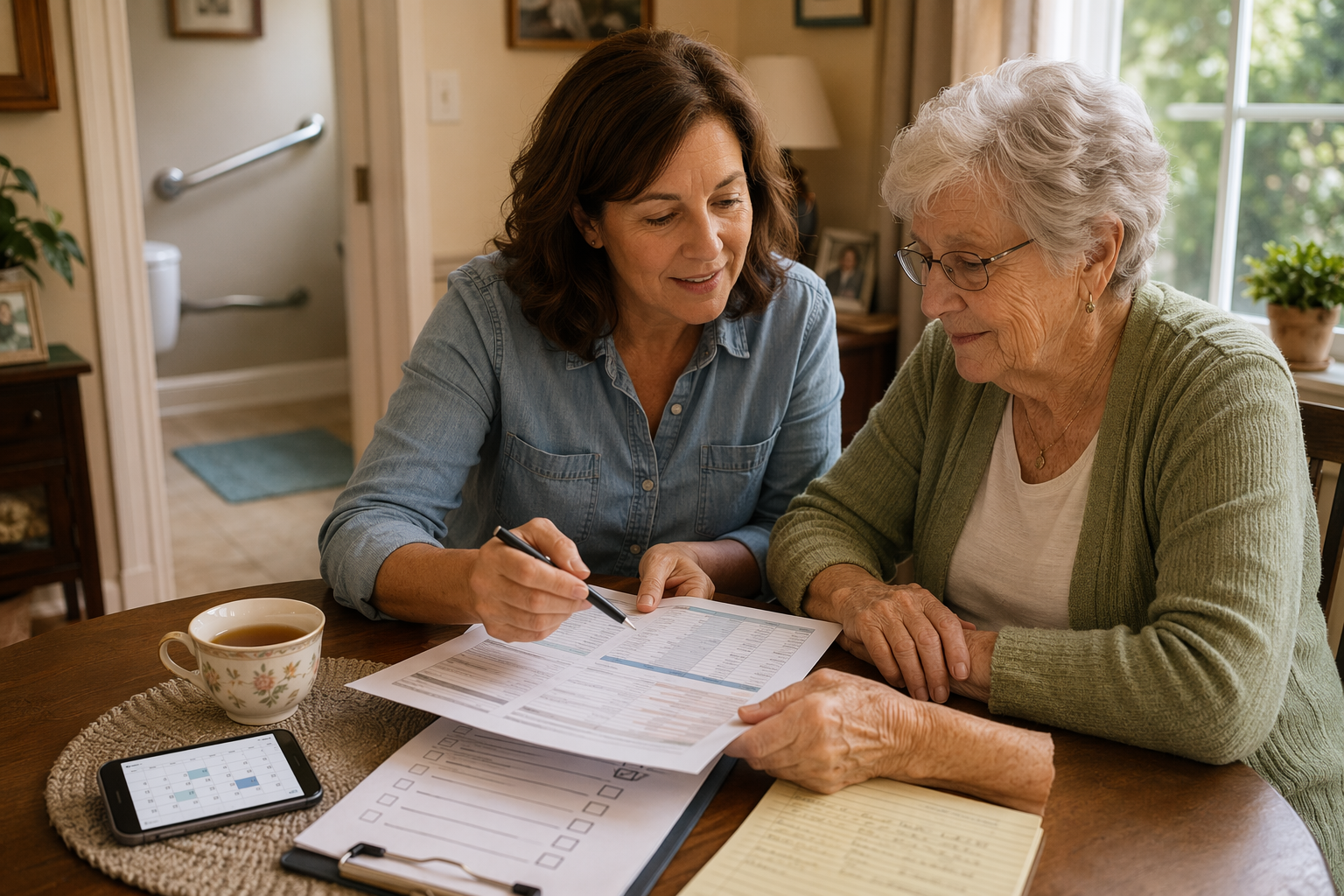
In-home care is not a single service. It is a category that covers four distinct types of support, each with a different provider, cost structure, and funding source. Understanding the difference is the first step toward building a care plan that matches actual needs.
| Care Type | What It Covers | Who Provides It | Typical Cost |
|---|---|---|---|
| Home health care | Skilled nursing, physical therapy, occupational therapy, wound care, medication management | Licensed nurses and therapists employed by Medicare-certified home health agencies | Covered by Medicare Part A/B if homebound and under a physician's plan of care; private pay otherwise |
| Personal care (ADL assistance) | Bathing, dressing, grooming, toileting, transferring, eating | Home health aides or personal care aides (certification varies by state) | Median $35/hour (CareScout 2025); ~$80,080/year at 44 hours/week |
| Homemaker services | Light housekeeping, laundry, meal preparation, grocery shopping, errands | Homemaker or chore workers (no clinical license required) | Median $35/hour; often bundled with personal care |
| Companion care | Social interaction, supervision, conversation, medication reminders, light activity accompaniment | Companions or senior sitters (no clinical license required) | Typically $25–$35/hour; may be lower through volunteer programs |
Most families layer these services. A senior recovering from hip surgery might receive home health (skilled nursing and physical therapy) for six weeks, then transition to personal care for bathing and dressing assistance, with a homemaker visiting twice a week for cleaning and meal prep. Companion care may be added later if isolation becomes a concern.
For a deeper breakdown of each service type, including how to evaluate agencies and what questions to ask, see our complete guide to types of in-home care services. For a step-by-step action plan on arranging these services, read how to set up home assistance for an aging parent.
Support Services That Fill the Gaps: Meals, Transportation, Money Management, and Social Connection
Clinical care and ADL assistance get most of the attention, but the services that keep daily life running are often the ones that determine whether aging in place is sustainable. These non-medical support services address the practical and social needs that, when unmet, erode a senior's ability to live independently.
Meal Services
Proper nutrition is one of the first things to slip when a senior lives alone. Cooking becomes difficult due to mobility, energy, or cognitive issues. Meals on Wheels delivers prepared meals to homebound seniors, typically at low or no cost depending on income. Local senior centers, religious organizations, and area agencies on aging also run congregate meal programs and grocery delivery services. The NIA notes that these programs are available in most communities and can be found through the Eldercare Locator (1-800-677-1116).
Transportation
Loss of driving privileges is a major turning point for many seniors. Without reliable transportation, medical appointments, grocery shopping, and social activities become difficult or impossible. Options include:
- State and local government programs: Many counties offer free or low-cost door-to-door transportation for seniors. Contact the local Area Agency on Aging for options.
- Medicaid non-emergency medical transportation (NEMT): Required by federal law for Medicaid beneficiaries who need rides to medical appointments. Covers doctor visits, dialysis, therapy, and pharmacy trips.
- Volunteer driver programs: Organizations like the American Red Cross and local faith-based groups often provide rides for medical appointments at no cost.
- Ride-hailing services: Uber and Lyft offer senior-friendly options, and some local programs provide subsidized ride credits.
Money Management
Paying bills, tracking accounts, and managing benefits can become overwhelming. The NIA recommends two approaches: a formal power of attorney (POA) for financial decisions, which requires legal documentation, and daily money management programs offered by nonprofit agencies. These programs help with bill paying, checkbook balancing, and benefit applications without requiring full legal authority. The American Association of Daily Money Managers (AADMM) maintains a directory of vetted professionals.
Social Connection and Friendly Visitor Programs
Social isolation is a serious health risk. Premier Home Care reports that 1 in 3 adults aged 50–80 felt isolated at least some of the time in 2023. Friendly visitor and senior companion programs pair volunteers with older adults for regular visits, phone calls, or outings. The NIA notes that these visits are typically under two hours and provided at no cost. Local senior centers, faith communities, and organizations like Little Brothers – Friends of the Elderly run these programs. Adult day care centers also provide structured social engagement, meals, and activities — often at a lower cost than in-home care, though Medicare does not cover them.
Emergency Alert Systems and Monitoring Technology: Staying Safe When Alone
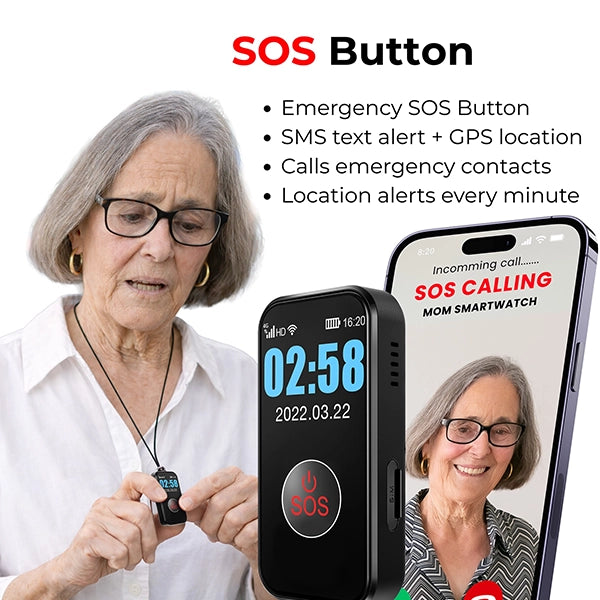
For seniors living alone or with limited supervision, the fear of falling and being unable to call for help is real — and statistically justified. The CDC reports that 3 million older adults visit emergency rooms annually for fall-related injuries, and 1 in 4 adults aged 65 and older falls each year. Monitoring technology cannot prevent falls, but it can dramatically reduce the time between a fall and help arriving.
The main categories of personal emergency response systems (PERS) and monitoring technology include:
| Device Category | How It Works | Best For | Key Considerations |
|---|---|---|---|
| Traditional PERS (medical alert button) | Press a pendant or wristband button to speak with a monitoring center via base station speakerphone | Seniors who can remember to press the button; good for general fall risk | Monthly fee ($20–$50); Medicare generally does not cover it; some Medicaid and private insurance plans may |
| Automatic fall detection PERS | Built-in accelerometer and algorithms detect a fall and automatically alert the monitoring center | Seniors at high fall risk who may be unable to press a button after a fall | Higher monthly fee ($30–$60); false alarms possible; accuracy varies by device |
| Passive home sensors | Motion sensors, door sensors, stove monitors, and bed sensors that detect unusual patterns (no motion for hours, door opened at night, stove left on) | Long-distance caregivers who want to monitor activity patterns without a wearable device | No monthly fee for some systems; privacy concerns if the senior is not fully consenting; best for early-stage cognitive decline |
| GPS trackers | Wearable device with GPS that allows caregivers to locate the senior via smartphone app | Seniors with dementia who are at risk of wandering | Monthly fee ($20–$40); requires charging; some models include fall detection and two-way calling |
| Wearable health monitors | Smartwatch or medical-grade wearable that tracks heart rate, activity, sleep, and sometimes blood oxygen or ECG | Seniors with chronic conditions (heart disease, diabetes) who need health trend data | Upfront cost ($100–$500); may require a smartphone; data is informational, not a substitute for medical monitoring |
For detailed, product-neutral explainers on each technology category — including evaluation criteria, battery life comparisons, and privacy considerations — visit our Monitoring Technology section.
Home Modifications That Make Aging in Place Possible — and What They Cost
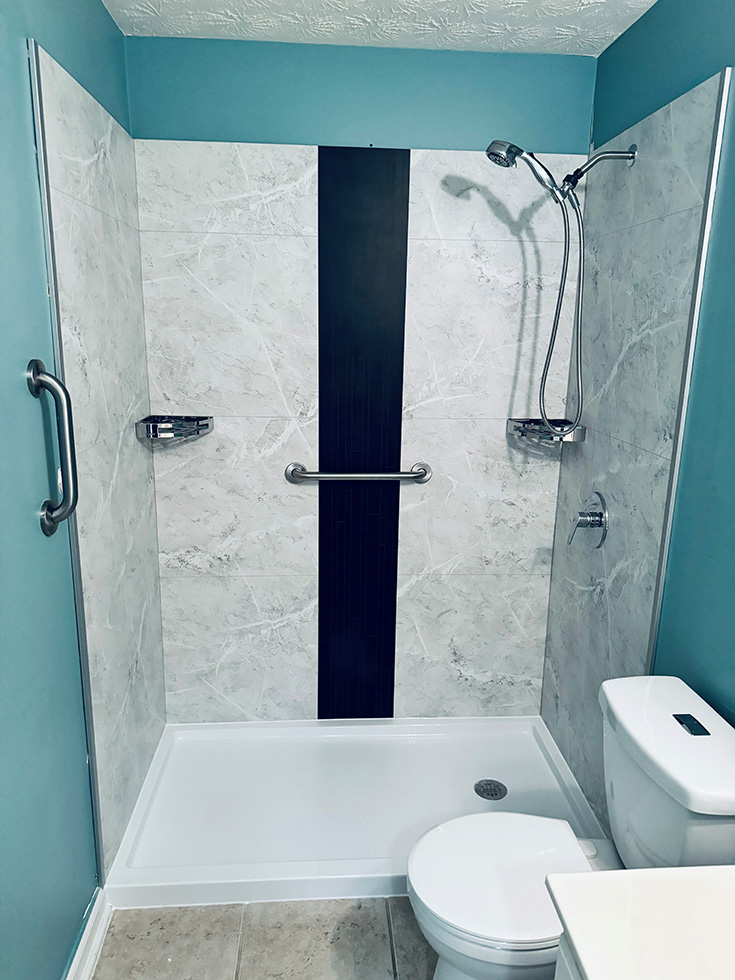
The physical environment is the foundation of safe aging in place. Choice Mutual reports that home modifications for accessibility typically cost between $10,000 and $100,000, depending on the scope. The good news: most homes do not need a full renovation. Targeted modifications in the highest-risk areas — bathroom, entryways, and stairs — can eliminate the most common hazards.
Nearly 80% of seniors say they would need bathroom modifications like grab bars and walk-in showers, according to Choice Mutual. The bathroom is the most dangerous room in the house for falls, and it is also where the most impactful modifications can be made.
| Room / Area | Recommended Modifications | Typical Cost Range | Priority |
|---|---|---|---|
| Bathroom | Grab bars near toilet and shower, walk-in shower (no step-over curb), raised toilet seat, non-slip flooring, hand-held shower head | $500–$15,000 | Highest — bathroom is the most common fall location |
| Entryways | Zero-step entry (ramp or graded walkway), widened doorways (minimum 32 inches), lever-style door handles, good exterior lighting | $500–$5,000 per entry | High — entry barriers can trap a senior indoors |
| Stairs | Stair lift (straight or curved), handrails on both sides, high-contrast tread markings, adequate lighting at top and bottom | $3,000–$15,000 | High — stairs are a major fall risk and mobility barrier |
| Bedroom | Bed rail or transfer pole, night lights along path to bathroom, clear floor path (no rugs or cords), accessible closet rods | $100–$1,000 | Medium — safety improvements are low-cost but important |
| Kitchen | Pull-out shelves, side-by-side refrigerator, lever faucet, lowered counter section for seated use, stove shut-off device | $500–$10,000 | Medium — reduces burn and fall risk during meal preparation |
| General / Whole Home | Improved lighting throughout, removal of loose rugs and clutter, non-slip flooring, widened hallways, smart home devices (voice-activated lights, thermostat) | $1,000–$20,000 | Varies — depends on current home condition |
For a detailed cost comparison between home modifications and moving to assisted living, including a decision framework, see our aging in place remodel cost vs. assisted living guide.
When You Need a Professional: Geriatric Care Managers and Mental Health Support
For families managing complex care situations — multiple chronic conditions, dementia, long-distance caregiving, or conflict among siblings — a geriatric care manager (GCM) can be invaluable. GCMs are licensed nurses or social workers who specialize in aging. They conduct an in-home assessment, develop a comprehensive care plan, coordinate services, and monitor the situation over time.
What Geriatric Care Managers Do
- Conduct a comprehensive assessment of the senior's medical, functional, cognitive, and social needs
- Develop a written care plan with specific recommendations for services, providers, and timing
- Coordinate and oversee multiple in-home providers (home health, personal care, meal delivery, transportation)
- Serve as a neutral advocate in family decision-making
- Provide ongoing monitoring and adjust the plan as needs change
The NIA notes that GCMs charge by the hour, and their services are generally not covered by Medicare or Medicaid. Some long-term care insurance policies may cover care management. The Aging Life Care Association (formerly the National Association of Professional Geriatric Care Managers) maintains a directory of certified professionals.
Mental Health Counseling for Seniors
Depression and anxiety are common among older adults facing functional decline, chronic illness, or the loss of a spouse. Yet mental health needs are often overlooked in care planning. Medicare Part B covers outpatient mental health counseling, including individual and group therapy, with the same copayment and deductible as other Part B services. Medicare also covers annual depression screening in primary care settings. For seniors with both Medicare and Medicaid, mental health services are covered with no cost-sharing.
For families managing multiple services, see our guide on how to orchestrate multiple in-home services into a functioning care team.
How to Pay for It All: Medicare, Medicaid HCBS Waivers, PACE, and Private Pay
Funding is the most complex and emotionally charged part of aging in place. The reality is that most long-term care in the U.S. is paid for out of pocket or by Medicaid after assets are spent down. Medicare covers very little. Understanding what each program actually pays for — and what it does not — is essential to building a realistic budget.
| Funding Source | What It Covers | What It Does NOT Cover | Key Eligibility |
|---|---|---|---|
| Medicare Part A & B | Short-term skilled home health care (part-time, intermittent skilled nursing or therapy) for homebound seniors under a physician's plan of care; hospice care | Custodial care (bathing, dressing, toileting assistance); 24/7 in-home care; meal delivery; transportation (except ambulance); home modifications | Must be homebound; must have a qualifying hospital stay for some services; no asset or income test |
| Medicare Advantage (Part C) | May cover additional benefits like adult day care, meal delivery, transportation, and caregiver training — varies by plan | Long-term custodial care; home modifications; 24/7 care | Must enroll in a Medicare Advantage plan; benefits vary by plan and county |
| Medicaid HCBS Waivers | Personal care (ADL assistance), homemaker services, home modifications, adult day care, respite care — varies by state | Room and board; 24/7 care; services not specified in the state's waiver plan | Strict income and asset limits (vary by state); must demonstrate need for nursing home level of care; waitlists common |
| PACE (Program of All-Inclusive Care for the Elderly) | Comprehensive care including adult day primary care, home care, meals, transportation, prescription drugs, and all Medicare/Medicaid covered services | Services not included in the PACE plan; must use PACE-approved providers | Must be 55+; must live in a PACE service area; must be eligible for nursing home level of care; must be able to live safely in the community with PACE support |
| VA Aid & Attendance | Monthly cash allowance to pay for in-home care, including care provided by family members | Does not cover room and board in assisted living; does not cover home modifications directly | Must be a veteran or surviving spouse; must meet medical and financial criteria; net worth limit $163,699 (2026) |
| Private Pay / Out-of-Pocket | Any service the family chooses to purchase | No limits other than budget | No eligibility requirements; most common funding source for in-home care |
The cost reality is sobering. At the median rate of $35 per hour for non-medical home care, 44 hours per week (roughly 6 hours per day) costs approximately $80,080 per year, according to CareScout data cited by U.S. News. That is more than the median annual cost of assisted living ($74,400 per year in 2025) and close to the cost of a semi-private nursing home room ($114,975 per year).
This does not mean aging in place is unaffordable. It means most families need to layer multiple funding sources and make trade-offs. A typical strategy might combine: a few hours of paid personal care per day (funded by Medicaid HCBS waiver or VA Aid & Attendance), family-provided care for the remaining hours, Meals on Wheels for nutrition, a PERS device for safety, and targeted home modifications paid out of pocket.
For a deeper dive into layering funding sources, including state-specific Medicaid waiver details and the CMS GUIDE Model for dementia caregivers, see our family guide to funding home services for the elderly in 2026.
Decision Checklist: Is Home Care Feasible and Safe for Your Situation?
Before committing to an aging-in-place plan, work through this checklist with the senior and any involved family members. It is designed to identify gaps, risks, and resource needs — not to produce a yes/no answer, but to surface what must be addressed for the plan to be safe and sustainable.
Home Safety Audit
- Are there grab bars in the shower and near the toilet? If not, can they be installed this month?
- Is there a step-over curb at the shower or bathtub entry? A walk-in shower or transfer bench may be needed.
- Are there loose rugs, cluttered pathways, or electrical cords across walking areas? These are the most common trip hazards.
- Is the lighting adequate in hallways, stairs, and the path from bedroom to bathroom? Night lights and motion-activated lights reduce fall risk.
- Can the senior enter and exit the home without navigating steps? If not, a ramp or zero-step entry is needed.
- Are stairs equipped with handrails on both sides and adequate lighting at top and bottom?
Care Needs Assessment
- Can the senior bathe, dress, toilet, transfer, and eat independently? Each ADL deficit requires a specific type of personal care assistance.
- Can the senior manage medications, prepare meals, handle finances, and use transportation? IADL deficits often require support services (meal delivery, money management, transportation).
- Is there a diagnosis of dementia or cognitive decline? If yes, wandering risk, sundowning, and safety supervision must be addressed specifically.
- Has the senior fallen in the past 12 months? Even one fall significantly increases the risk of future falls.
Available Family Support
- How many hours per week can family members provide hands-on care? Be honest about capacity — caregivers who provide 37+ hours per week are at high risk of burnout.
- Is there a long-distance caregiver who can handle coordination, finances, or technology monitoring? Long-distance caregivers can manage bill paying, research services, and monitor passive sensor systems.
- Is there a backup plan for when the primary family caregiver is sick, on vacation, or overwhelmed? Respite care options should be identified before they are needed.
Budget for Paid Care and Modifications
- What is the monthly budget for paid home care? At $35/hour, even 10 hours per week costs $1,400/month.
- Is the senior eligible for Medicaid HCBS waivers, PACE, or VA Aid & Attendance? These programs can cover a significant portion of care costs.
- What is the budget for one-time home modifications? Start with the highest-priority items (bathroom safety, entry access) and phase in others.
- Does the senior have long-term care insurance? Review the policy to understand what home care services are covered and what the elimination period is.
Backup Plan for Escalating Needs
- What will happen if the senior's care needs increase beyond what the current plan can support? Identify the trigger points that would prompt a move to assisted living or a nursing home.
- Has the family discussed and documented preferences for higher levels of care? Having this conversation before a crisis reduces guilt and conflict.
- Is there a financial plan for if/when paid care hours need to increase significantly? Understand the cost trajectory: 20 hours/week of home care costs ~$36,400/year; 40 hours/week costs ~$72,800/year.
For a deeper assessment of ADL and IADL needs, including a structured evaluation tool, see our decision guide for when an aging parent needs in-home services.
Questions to bring to a clinician or OT
This is not medical, legal, or a family's final decision — only a framework. Bring these questions to a clinician, occupational therapist, or your local Area Agency on Aging.
Find Local HelpRelated reading
- Building Your Parent's Services Stack: A Step-by-Step Guide to Layering Home Care From Free Community Services to Skilled Nursing at Home
- Home Help for Elderly Adults: A Complete Guide to Services, Costs, and Technology for Aging in Place
- How to Set Up Home Assistance for an Aging Parent: An 8-Step Action Plan for Family Caregivers
Noticed something outdated or inaccurate on this page? Flag a correction. We review every report against CDC, NIA, and AARP HomeFit guidance before updating a page.