
Caregiver decision guide
The Cost of Presbyterian Senior Living: Entrance Fees, Monthly Costs, and Financial Assistance in 2026
A practical, research-backed guide for adult children and older adults evaluating Presbyterian senior living. Covers national cost benchmarks, CCRC entrance fees, rental and affordable housing options, what monthly fees include, and the financial protections unique to nonprofit faith-based communities.

Understanding Presbyterian Senior Living: What Makes It Different
When families begin researching senior living options, the word "Presbyterian" in a community's name often raises a practical question: does the faith affiliation affect the cost? The short answer is that Presbyterian senior living is not systematically more expensive than secular alternatives. The longer, more important answer is that the nonprofit governance model common to these communities often provides financial protections that for-profit operators do not offer.
Presbyterian senior living communities are typically operated by nonprofit organizations affiliated with the Presbyterian Church (USA) or other Presbyterian bodies. Many belong to the Presbyterian Association of Homes and Services for the Aging (PAHSA), a national association representing more than 300 organizations serving older adults. These communities range from continuing care retirement communities (CCRCs) with entrance fees to rental-only independent living and income-based affordable housing.
The faith-based mission shapes the financial model in two critical ways. First, nonprofit communities are legally required to reinvest surpluses into operations and resident services rather than distributing profits to shareholders. Second, many maintain benevolent care funds — charitable resources that allow residents to remain in the community even after their personal funds are depleted. As Presbyterian Senior Living states in its own guide, nonprofit communities have benevolent care funds so residents are not asked to leave if they outlive their resources.
National Cost Benchmarks for Senior Living in 2026
Before examining Presbyterian-specific pricing, it helps to understand the national landscape. Senior living costs vary significantly by care level, geographic region, and the type of contract you choose. The following table summarizes the most current national median figures available.
| Care Type | National Median Monthly Cost | Source Year | Notes |
|---|---|---|---|
| Independent Living (rental) | $1,500 – $3,500 | 2024 | Varies widely by unit size and amenities |
| Assisted Living | $5,511 – $6,200 | 2024 (projected) | Genworth/CareScout 2024 survey; up ~5% from prior year |
| Semi-Private Skilled Nursing | $7,908 | 2024 | Genworth 2024 data for Illinois; national median similar |
| Private Skilled Nursing | $10,965 | 2021 | Genworth 2021; likely higher in 2026 |
| CCRC Entrance Fee (national average) | ~$400,000 | 2024 | U.S. News & World Report; range $40,000 – $2M+ |
| CCRC Monthly Fee (average) | $2,000 – $4,000 | 2024 | Varies by contract type and unit size |
CCRC entrance fees deserve special attention because they represent the largest single financial commitment in senior living. According to U.S. News & World Report, the national average entrance fee for a CCRC is approximately $400,000, though fees range from as low as $40,000 to well over $2 million for premium units and comprehensive life-care contracts. Nearly two-thirds of CCRCs require an entrance fee.
Presbyterian-Specific Pricing Models: CCRCs, Rentals, and Affordable Housing
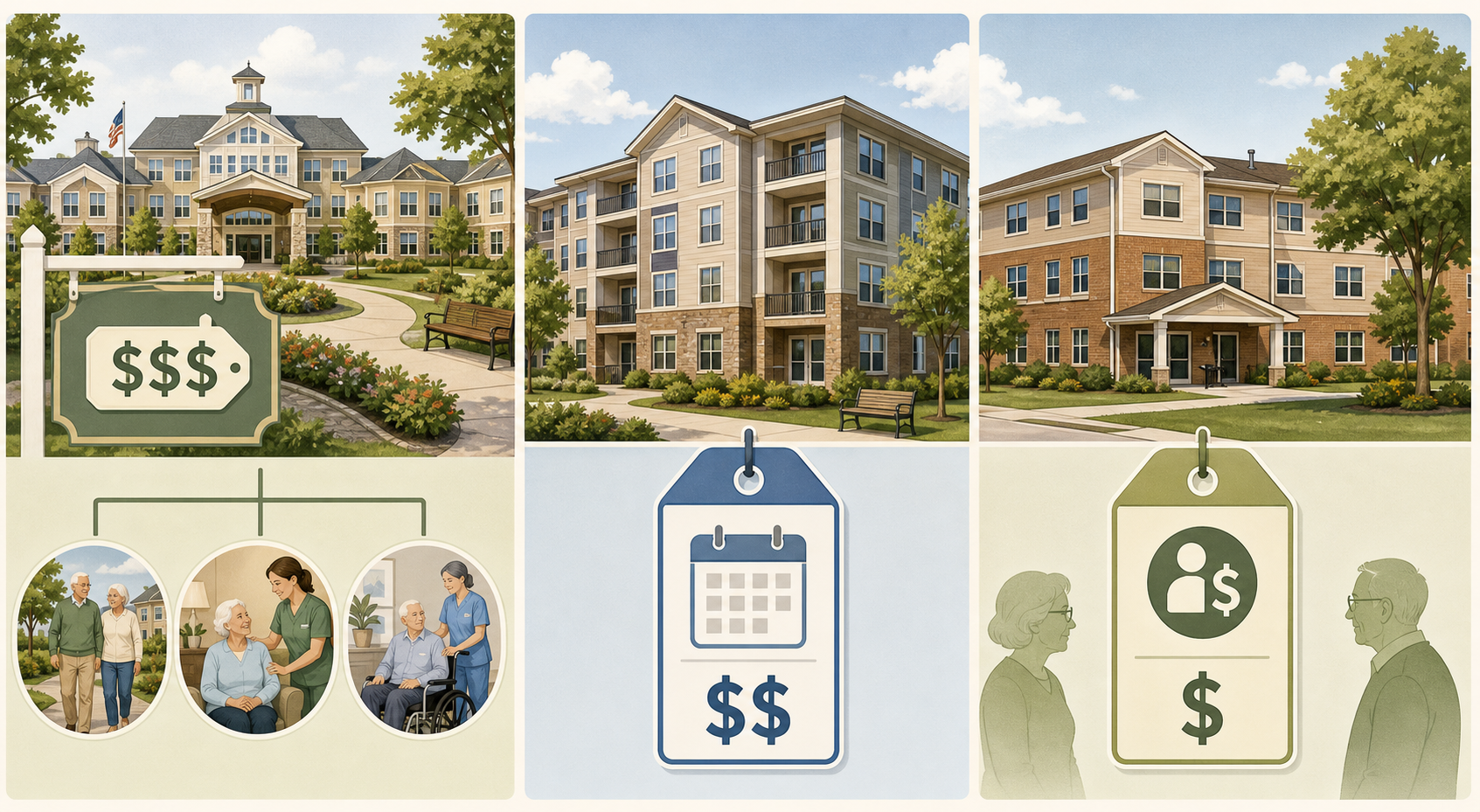
Presbyterian senior living communities typically offer one of three pricing models. Understanding which model a community uses is essential for accurate cost comparison.
1. Life Plan Communities (CCRCs) with Entrance Fees
Many Presbyterian-affiliated communities operate as CCRCs, also called Life Plan Communities. Residents pay a substantial entrance fee — often partially refundable — plus a monthly fee. In exchange, they gain access to a full continuum of care: independent living, assisted living, and skilled nursing, all on one campus.
Presbyterian Living, which serves the Chicago area, provides a concrete example. Its Life Plan Communities offer one-bedroom entrance fees starting at $126,200 for LifeCare coverage — the most comprehensive contract type, which covers unlimited access to higher levels of care without additional cost increases beyond the monthly fee. Other contract types (modified or fee-for-service) have lower entrance fees but less predictable future costs.
2. Rental-Only Independent Living
Some Presbyterian communities offer rental-only independent living with no entrance fee. Monthly rents typically range from $900 to $3,900 depending on the community, unit size, and geographic location. This model provides more flexibility and a lower upfront cost, but residents generally must move to a different community or pay market rates if they eventually need assisted living or skilled nursing.
3. Income-Based Affordable Housing
Many Presbyterian organizations operate HUD-subsidized or income-restricted affordable housing communities. According to Presbyterian Senior Living, these affordable senior housing options are based on an individual's income, with limits established at 50 to 80 percent of Area Median Income (AMI). Rent is typically set at 30% of the resident's adjusted income. These communities offer independent living with supportive services but do not include assisted living or skilled nursing.
| Model | Upfront Cost | Monthly Cost Range | Care Continuum | Best For |
|---|---|---|---|---|
| CCRC (LifeCare) | $126,200+ (example) | $2,000 – $4,000 | Full (IL, AL, SNF) | Those who want predictable lifetime costs |
| CCRC (Fee-for-Service) | $50,000 – $200,000 | $1,500 – $3,500 | Full, but care costs extra | Those willing to pay for care as needed |
| Rental Independent Living | None | $900 – $3,900 | Independent living only | Those who want flexibility and low upfront cost |
| Affordable Housing (Income-Based) | None | 30% of adjusted income | Independent living only | Low-income seniors who qualify |
What Your Monthly Fee Covers — and What It Doesn't
Monthly fees in Presbyterian senior living communities are generally all-inclusive for the base level of care, but the specific inclusions vary by community and contract type. Understanding what is and is not covered is essential for comparing costs across communities.
Typically Included in Monthly Fees
- Housing (apartment or cottage) with utilities (electricity, water, trash, and often cable and internet)
- Maintenance and repairs (plumbing, appliances, HVAC, groundskeeping)
- Daily meals (typically one to three meals per day in a communal dining room)
- Housekeeping and laundry services (frequency varies)
- Activities, social programs, and fitness classes
- Chaplain and spiritual services (worship services, pastoral counseling, Bible studies)
- Transportation (scheduled trips to medical appointments, shopping, and community outings)
- 24/7 security and emergency call systems
Typically Not Included (or Charged Separately)
- Higher levels of care (assisted living or skilled nursing) in fee-for-service or modified CCRC contracts
- Private rooms in assisted living or skilled nursing (semi-private is often included; private rooms cost extra)
- Specialized memory care (Alzheimer's and dementia units typically have higher rates)
- Personal care aides for activities of daily living (bathing, dressing, medication management) in rental or affordable housing models
- Guest meals and overnight guest accommodations
- Personal telephone and premium cable packages
Financial Assistance Options for Presbyterian Senior Living
One of the most significant advantages of nonprofit Presbyterian senior living is the availability of financial assistance programs that for-profit communities rarely offer. However, eligibility and terms vary widely by community, so families should investigate each option carefully.
Benevolent Care Funds
Many nonprofit Presbyterian communities maintain benevolent care funds — charitable resources that subsidize the cost of care for residents who have outlived their financial resources. Presbyterian Senior Living explicitly states that residents are not asked to leave if they outlive their resources. This is a critical protection that for-profit communities generally cannot offer. However, the exact terms, eligibility criteria, and application processes vary by community. Some communities require residents to exhaust their assets before benevolent care kicks in; others have more flexible policies.
Medicaid Waiver Programs
Medicare and Medicaid typically do not cover the cost of assisted living because it is considered custodial care rather than skilled medical care. However, some states offer Medicaid Home and Community-Based Services (HCBS) waivers that can help pay for assisted living services. These programs are state-dependent, have waiting lists, and eligibility is based on both financial need and functional need. Families should contact their state's Medicaid office to determine whether waiver funding is available for assisted living in their state.
VA Aid & Attendance Benefits
Veterans and surviving spouses who qualify for the VA Aid & Attendance pension can receive additional monthly payments to help cover the cost of assisted living or skilled nursing. In 2026, the maximum monthly benefit for a single veteran is approximately $2,300, and for a surviving spouse, approximately $1,500. These benefits can be used at any licensed senior living community, including Presbyterian-affiliated ones.
Long-Term Care Insurance
Long-term care insurance policies can cover a portion of assisted living or skilled nursing costs. However, policies vary widely in what they cover, benefit amounts, elimination periods, and inflation protection. Families should review existing policies carefully and understand whether the policy covers care in a CCRC or only in licensed nursing facilities.
Medicare (Limited Coverage)
Original Medicare covers skilled nursing facility care only after a qualifying hospital stay (typically three days or more) and only for up to 100 days per benefit period. It does not cover custodial care in assisted living or independent living. Medicare Advantage plans may offer additional benefits, but coverage is still limited to skilled care.
Hidden Costs of Aging at Home vs. Predictable Senior Living Costs
When families compare the cost of senior living to aging in place, they often compare the monthly fee of a community to their parent's current housing costs — mortgage or rent, utilities, and groceries. This comparison misses the many hidden costs of aging at home that can make senior living more affordable than it first appears.
| Cost Category | Aging at Home (Monthly Estimate) | Senior Living (Included in Monthly Fee) |
|---|---|---|
| Housing (mortgage/rent) | $1,200 – $2,500 | Included |
| Utilities (electric, water, gas, trash) | $200 – $400 | Included |
| Home maintenance and repairs | $150 – $500 (average) | Included |
| Property taxes and insurance | $200 – $600 | Not applicable |
| Groceries and meals | $400 – $600 | Included (1–3 meals/day) |
| Housekeeping and laundry | $100 – $300 | Included |
| Transportation (car payment, gas, insurance, maintenance) | $400 – $800 | Included (scheduled) |
| In-home care aides (if needed) | $1,500 – $4,500 | Included in higher care levels |
| Home modifications (grab bars, ramps, stair lifts) | One-time $500 – $10,000+ | Not applicable (community is accessible) |
| Emergency response system | $30 – $50 | Included |
| Activities and social programs | $50 – $200 | Included |
| Total estimated monthly cost | $3,230 – $10,450 | $2,000 – $6,000 (varies by model) |
The table above illustrates a key point: when all costs are accounted for — including the often-overlooked expenses of home maintenance, transportation, and in-home care — the monthly cost of a senior living community may be comparable to or even lower than aging at home, especially if the older adult needs assistance with daily activities.
State-by-State Cost Variation: Pennsylvania, Illinois, and South Carolina
Location is one of the most significant factors affecting senior living costs. The same level of care can cost twice as much in one state compared to another. The following examples illustrate how costs vary across three states with significant Presbyterian senior living presence.
Pennsylvania
Pennsylvania is home to Presbyterian Senior Living, which operates 27 communities across the state and in Maryland, Ohio, and Delaware, serving over 6,000 seniors. The average cost of assisted living in Pennsylvania is $3,555 per month, with a range from $2,665 in Erie to $4,756 in Philadelphia. Pennsylvania is also one of the most tax-friendly states for retirees: Social Security benefits are not taxed, and the state does not tax 401(k)s, IRAs, or other retirement accounts.
Illinois
In Illinois, Presbyterian Living (Chicago area) offers Life Plan Communities with entrance fees starting at $126,200. According to 2024 Genworth data, independent living outside a CCRC in Illinois ranges from $576 to $3,575 per month, assisted living averages $5,836 per month, and a semi-private skilled nursing room averages $7,908 per month. These figures are higher than the national median for assisted living, reflecting the higher cost of living in the Chicago metropolitan area.
South Carolina
South Carolina offers more affordable options. The Florence Presbyterian Community, for example, costs approximately $3,000 per month for assisted living — significantly below the national median. This makes South Carolina an attractive option for families seeking lower-cost Presbyterian senior living, though the availability of communities is more limited than in Pennsylvania or Illinois.
| State | Independent Living (Monthly) | Assisted Living (Monthly) | Skilled Nursing (Semi-Private, Monthly) | Notable Presbyterian Provider |
|---|---|---|---|---|
| Pennsylvania | $1,200 – $2,800 | $3,555 (avg); $2,665–$4,756 (range) | $7,000 – $9,500 | Presbyterian Senior Living (27 communities) |
| Illinois | $576 – $3,575 | $5,836 (avg) | $7,908 (avg) | Presbyterian Living (Chicago area) |
| South Carolina | $900 – $2,000 | $3,000 (example at Florence) | $6,000 – $8,000 | Florence Presbyterian Community |
Questions to Ask About Pricing and Financial Protection
When touring or evaluating a Presbyterian senior living community, bring this checklist of questions. The answers will help you compare communities on an apples-to-apples basis and avoid unexpected costs.
- Is this community a nonprofit or for-profit organization? (Nonprofit status affects pricing philosophy and benevolent care availability.)
- What is the benevolent care policy? Under what circumstances can a resident qualify? Is there a written policy I can review?
- Is the entrance fee partially or fully refundable? What is the refund schedule if I leave within the first year? After five years?
- What exactly is included in the monthly fee? Can I get a detailed list of included services and items that cost extra?
- How much do care services cost above the base fee? Is there a published rate sheet for assisted living, skilled nursing, and memory care?
- Is there a buy-in or endowment fee in addition to the entrance fee? Are there annual increases to the monthly fee, and if so, what is the historical average increase?
- What happens if I need a higher level of care? Do I have priority access to assisted living or skilled nursing on the same campus?
- Are there any additional fees for services like guest meals, parking, or premium cable?
- Does the community accept Medicaid waiver funding or VA Aid & Attendance benefits?
- Can I speak with current residents or their family members about their experience with costs and financial transparency?
Decision Guide: When a CCRC Makes Financial Sense vs. Rental
Choosing between a CCRC with an entrance fee and a rental-only community is one of the most consequential financial decisions in senior living. There is no universal right answer — the best choice depends on your family's specific circumstances, risk tolerance, and financial goals.

| Factor | CCRC (Entrance Fee Model) | Rental Model |
|---|---|---|
| Upfront cost | High ($40,000 – $2M+) | None or low (security deposit) |
| Monthly cost | Moderate ($2,000 – $4,000) | Lower ($900 – $3,900) |
| Cost predictability | High (especially with LifeCare contract) | Low (rent may increase annually; care costs are market rate) |
| Care continuum | Full (IL, AL, SNF) on one campus | Independent living only; must move for higher care |
| Financial protection | Benevolent care may apply | No benevolent care typically |
| Flexibility | Low (entrance fee is a long-term commitment) | High (can leave with minimal financial loss) |
| Best for | Those who want lifetime predictability and have significant assets | Those who want flexibility and lower upfront cost |
When a CCRC Makes Financial Sense
- You have significant assets (typically $300,000+) that can cover the entrance fee while preserving enough income for monthly fees.
- You want predictable lifetime costs and are willing to pay a premium for the peace of mind that comes with a LifeCare contract.
- You are in good health and expect to live in the community for 10+ years, allowing the entrance fee to amortize over a longer period.
- You value the social and community aspects of a full-service campus and want to avoid moving again as care needs change.
When a Rental Model Makes More Sense
- You have limited assets and cannot afford a large entrance fee.
- You are unsure about committing to a specific community and want the flexibility to move if your needs or preferences change.
- You are in relatively good health and do not anticipate needing higher levels of care in the near future.
- You prefer to keep your assets invested or accessible rather than tying them up in an entrance fee.
Questions to bring to a clinician or OT
This is not medical, legal, or a family's final decision — only a framework. Bring these questions to a clinician, occupational therapist, or your local Area Agency on Aging.
Find Local HelpRelated reading
Noticed something outdated or inaccurate on this page? Flag a correction. We review every report against CDC, NIA, and AARP HomeFit guidance before updating a page.