
Caregiver decision guide
Government Benefit Programs for Seniors: A Categorized Guide for Family Caregivers
This guide helps family caregivers navigate the patchwork of U.S. government benefit programs for older adults. Organized by type of need — health care, income support, in-home services, housing, nutrition, legal advocacy, and veteran benefits — it explains what each program covers, who qualifies, and how to apply, so you can find help before a crisis.

Why a Categorized Guide? Understanding the Patchwork
If you have recently started researching how to pay for a parent’s care or find services to help them stay at home, you have likely run into a wall of acronyms: Medicare, Medicaid, SSI, SNAP, AAA, AoA, NFCSP, VA. Each program has its own eligibility rules, application process, and funding stream. Some are federal. Some are state-run. Some require a specific diagnosis or income level. Most families encounter this system only after a crisis — a fall, a hospital discharge, a rapid decline — when there is no time to methodically sort through the options.
This guide is organized the way a caregiver actually thinks: by the type of need. Instead of listing agencies and asking you to figure out which one applies, we walk through health care coverage, income support, in-home services, housing, nutrition, legal advocacy, and veteran-specific benefits. Within each category, you will find what each program covers, who qualifies, and where to start. The goal is to help you identify what your loved one may be eligible for before a decision deadline forces you to settle for less.
Health Care Coverage: Medicare and Medicaid
The single most important distinction to understand is that Medicare and Medicaid serve fundamentally different purposes, and confusing the two is the most common reason families miss out on coverage for long-term care.
Medicare: Health Insurance for Adults 65+
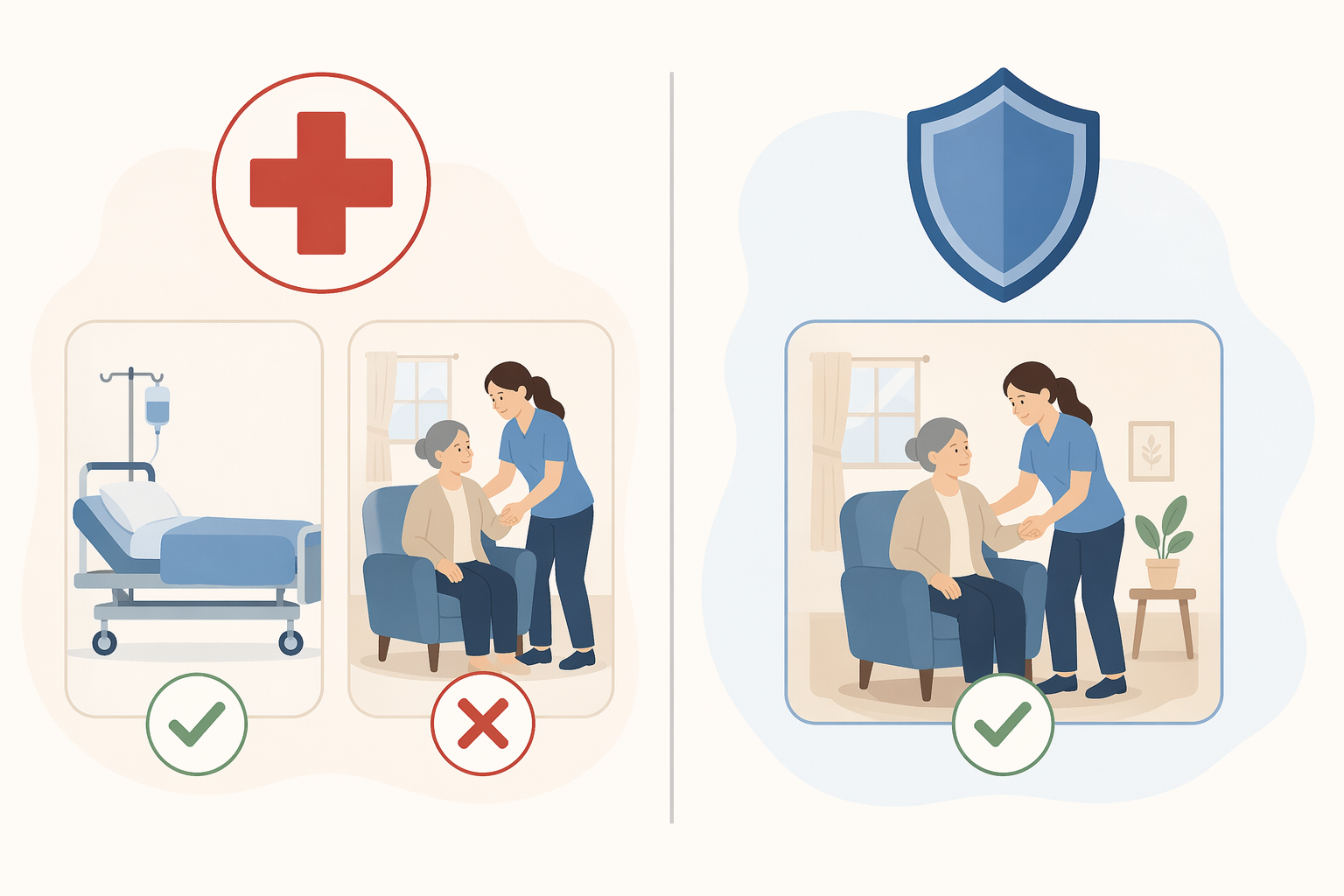
Medicare is federal health insurance for people age 65 and older and for certain younger individuals with disabilities. It covers hospital stays (Part A), doctor visits and outpatient care (Part B), and prescription drugs (Part D). It also covers short-term home health care from a Medicare-certified agency — but only if the person is homebound and needs skilled nursing or therapy on a part-time basis.
What Medicare does not cover is long-term custodial care at home — the kind of help with bathing, dressing, eating, and toileting that most family caregivers provide. It also does not pay for adult day care, meal delivery, or long-term stays in assisted living or nursing homes beyond a limited skilled nursing benefit.
Low-income seniors may qualify for help with Medicare costs through the Medicare Savings Programs (which pay Part B premiums and sometimes deductibles) and Extra Help (which lowers prescription drug costs). These programs are administered through Social Security, not Medicare directly.
Medicaid: Long-Term Care Coverage for Low-Income Seniors
Medicaid is a joint federal and state program that covers health care and long-term services for people with limited income and assets. Unlike Medicare, Medicaid does cover long-term custodial care at home, in adult day care, and in nursing facilities — but only for individuals who meet both financial and functional eligibility criteria.
The catch is that each state runs its own Medicaid program within federal guidelines. Eligibility thresholds, covered services, and wait lists for home- and community-based services (HCBS) waivers vary dramatically from one state to the next. A senior who qualifies in New York may not qualify in Texas, and the services available in California may look very different from those in Florida.
| Program | What It Covers | Key Limitation |
|---|---|---|
| Medicare Part A | Hospital stays, skilled nursing facility care (limited), home health (skilled only) | Does not cover custodial care or long-term nursing home stays |
| Medicare Part B | Doctor visits, outpatient care, preventive services, durable medical equipment | Requires monthly premium; does not cover most home care |
| Medicare Part D | Prescription drugs | Plans vary; donut hole coverage gap phases out by 2025 |
| Medicare Savings Programs | Pays Part B premiums and sometimes deductibles for low-income seniors | Income and asset limits apply; must apply through state |
| Medicaid (full coverage) | Hospital, doctor, long-term care, home- and community-based services | Income and asset limits vary by state; functional need assessment required |
| Medicaid HCBS Waivers | Home care, adult day care, respite, personal care services | Limited slots; wait lists common in many states |
Seniors who qualify for both Medicare and Medicaid are called dual eligibles. They typically receive Medicare as their primary insurance, with Medicaid covering Medicare premiums, deductibles, and services that Medicare does not cover, including long-term care. If your loved one may qualify for both, coordination between the two programs can significantly reduce out-of-pocket costs.
For a deeper look at navigating Medicare and Medicaid together, see our guide on how to navigate the senior health care system.
Income Support: Social Security, SSI, and SSDI
For many older adults, Social Security retirement benefits are the primary source of income. But for seniors with very low income and few assets, Supplemental Security Income (SSI) can provide a critical monthly payment that also unlocks access to other programs.
Supplemental Security Income (SSI)
SSI is a needs-based program administered by the Social Security Administration. It provides monthly cash payments to seniors age 65 and older (and to blind or disabled individuals of any age) who have very limited income and resources. Unlike Social Security retirement benefits, SSI does not require a work history.
One of the most important things to know about SSI is that it acts as a gateway. Most seniors who qualify for SSI automatically qualify for Medicaid and the Supplemental Nutrition Assistance Program (SNAP). Yet application rates for SSI among eligible seniors are estimated to be below 60%, meaning millions of older adults are missing out on benefits they are entitled to.
Social Security Disability Insurance (SSDI)
SSDI provides monthly payments to individuals who have worked enough years and paid Social Security taxes but are now unable to work due to a disability. For seniors under full retirement age who become disabled, SSDI can provide income until they transition to retirement benefits. Unlike SSI, SSDI is not needs-based — it is based on work history and earnings.
- Social Security retirement: Available at age 62 (reduced benefits) or full retirement age (66–67, depending on birth year). Based on work history.
- SSI: Needs-based. No work history required. Income and asset limits apply. Automatically qualifies for Medicaid and SNAP in most states.
- SSDI: For disabled individuals under full retirement age who have sufficient work credits. Not needs-based. Converts to retirement benefits at full retirement age.
For additional financial assistance beyond these programs, see our guide on financial help for family caregivers, which covers other sources of support including state and local programs.
In-Home and Community Services: Area Agencies on Aging and the National Family Caregiver Support Program
For many families, the most practical help comes not from a single federal program but from a network of local and state services coordinated through the aging services system. The entry point to this system is your local Area Agency on Aging (AAA).
Area Agencies on Aging (AAAs)
AAAs are local organizations that serve as the front door to aging services in your community. They provide information and referral, benefits counseling, case management, and direct services such as home-delivered meals, transportation, adult day care, and caregiver support. There are more than 600 AAAs across the country, and every community has one. You can find yours by calling the Eldercare Locator at 800-677-1116 or visiting their website.
National Family Caregiver Support Program (NFCSP)
The NFCSP, administered by the Administration on Aging (AoA), provides funding to states and territories to support family caregivers. Services include counseling, support groups, respite care, caregiver training, and supplemental services (such as home modifications or emergency assistance). The program is designed specifically for families caring for older adults, and services are often provided at low or no cost.
Despite being one of the most directly useful programs for family caregivers, awareness of the NFCSP remains extremely low. Many caregivers who could benefit from respite care or counseling have never heard of it. To access NFCSP services, contact your local AAA or state unit on aging.
- Friendly Visitor / Senior Companion programs: Volunteers visit seniors at home for companionship and social connection. Often free through local AAAs or nonprofit organizations.
- Home-delivered meals (Meals on Wheels): Nutritious meals delivered to homebound seniors. Costs vary; some programs use sliding-scale fees. Call 888-998-6325 to find a local program.
- Transportation services: Many AAAs and local transit authorities offer free or low-cost transportation for medical appointments, grocery shopping, and social activities.
- Adult day care: Supervised daytime programs that provide social activities, meals, and some health services. Medicare does not cover adult day care, but Medicaid may cover it in some states.
- Respite care: Short-term relief for family caregivers. For hospice patients, Medicare covers up to 5 consecutive days of inpatient respite care. Medicaid and NFCSP may also fund respite.
For a comprehensive overview of home care options, community programs, and funding, see our aging in place services guide.
Housing and Home Modification Assistance
Several federal programs provide direct housing assistance for low-income seniors, distinct from the general home modification guidance covered elsewhere on this site.
- Section 202 Supportive Housing for the Elderly: A HUD program that provides rental housing for very low-income seniors age 62 and older. Residents pay 30% of their adjusted income for rent. Properties often include supportive services such as meals, housekeeping, and transportation.
- HOME Investment Partnerships Program: Provides grants to states and localities for building, buying, and rehabilitating affordable housing. Some HOME funds can be used for home repairs and modifications that improve accessibility for older adults.
- Local CAPS grant programs: Some states and municipalities offer grants or low-interest loans for home modifications such as grab bars, ramps, and bathroom renovations. These are typically administered through local housing authorities or AAAs.
Housing assistance programs often have long waiting lists, so it is important to apply as early as possible. Contact your local public housing agency or AAA to learn about available programs in your area.
Nutrition Programs: SNAP, Meals on Wheels, and Congregate Meals
Food insecurity is a serious but often overlooked issue for older adults. Three main government programs address nutrition needs.
Supplemental Nutrition Assistance Program (SNAP)
SNAP (formerly known as food stamps) provides monthly benefits on an electronic card that can be used to purchase food. Eligibility is based on income and household size. Many seniors who qualify for SSI automatically qualify for SNAP, but application rates among eligible older adults are below 60%. This means millions of seniors are leaving food benefits on the table.
Meals on Wheels and Congregate Meals
The Older Americans Act funds two meal programs for seniors age 60 and older: home-delivered meals (Meals on Wheels) for those who are homebound, and congregate meals served at senior centers and community sites. Both programs operate on a voluntary contribution basis — no one is turned away for inability to pay. Medicare does not generally cover meal delivery, though some Medicaid managed care plans may offer meal benefits in certain states.
- SNAP: Apply through your state’s SNAP office or online at your state’s benefits portal. Use BenefitsCheckUp.org to screen for eligibility first.
- Meals on Wheels: Call 888-998-6325 or visit mealsonwheelsamerica.org to find a local program.
- Congregate meals: Contact your local AAA or senior center for meal site locations and times.
Legal and Advocacy Resources
Navigating the benefits system often requires legal documents and advocacy. Several government-funded programs provide free or low-cost legal help for seniors.
- State Long-Term Care Ombudsman Program: Investigates complaints and advocates for quality care for residents of nursing homes, assisted living facilities, and board and care homes. Every state has an ombudsman program. Contact your local AAA for the number.
- Legal Services Corporation (LSC): Provides free civil legal assistance to low-income Americans, including seniors. LSC-funded programs help with issues such as Medicaid appeals, housing disputes, advance directives, and elder abuse protection.
- Elder abuse hotlines: The National Center on Elder Abuse (NCEA) provides information and referrals. Each state also has an Adult Protective Services (APS) hotline for reporting abuse, neglect, or exploitation.
- Administration on Aging (AoA) legal assistance: The AoA funds legal assistance and elder abuse prevention programs through state units on aging and AAAs.
Before you can apply for most benefits, you will need certain legal documents in order. Our guide on legal documents needed for senior living assistance walks through the seven key documents every caregiver should have ready.
Veteran-Specific Benefits
Veterans and their surviving spouses may qualify for benefits through the U.S. Department of Veterans Affairs (VA) that are separate from the programs described above. Eligibility generally requires a DD Form 214 (discharge paperwork) showing other-than-dishonorable discharge.
- Veteran-Directed Home and Community-Based Services (VD-HCBS): Provides a flexible budget that allows veterans to hire their own caregivers, including family members. The veteran (or their representative) manages the budget and schedules care.
- VA Respite Care Program: Offers temporary relief for family caregivers of veterans. Respite can be provided at home, in a VA facility, or in a community setting.
- Aid and Attendance Benefits: A monthly payment added to a VA pension for qualified veterans and survivors who need help with daily activities. The benefit can be used to pay for home care, assisted living, or nursing home care. It is not automatic — you must apply and provide evidence of medical need.
How to Apply: Your One-Stop Entry Points
The single most important thing you can do right now is use the three free tools that were designed to help families like yours navigate this system. Despite being the most powerful resources available, a majority of family caregivers have never heard of them.
| Tool | What It Does | How to Access |
|---|---|---|
| Eldercare Locator | Connects you to your local Area Agency on Aging and state aging services. Provides phone numbers for Meals on Wheels, transportation, legal help, and more. | Call 800-677-1116 or visit eldercare.acl.gov |
| BenefitsCheckUp.org | Free online screening tool from the National Council on Aging (NCOA). Answers a series of questions and generates a personalized report of federal, state, and local benefits the senior may qualify for. | Visit BenefitsCheckUp.org (no login required) |
| Benefits.gov | Official U.S. government website that lists all federal benefit programs. Use the Benefit Finder tool to answer questions and see which programs you may be eligible for. | Visit Benefits.gov and use the Benefit Finder |
Start with BenefitsCheckUp.org. It takes about 15 minutes to complete the screening, and it will generate a personalized report listing programs your loved one may qualify for, including estimated benefit amounts and application instructions. Then call the Eldercare Locator at 800-677-1116 to get connected to your local AAA, which can help you with the actual applications.
The U.S. senior care support system is undeniably fragmented, but it is not empty. Millions of dollars in benefits go unclaimed each year simply because families do not know where to look. By working through this guide one category at a time — health care, income, in-home services, housing, nutrition, legal help, and veteran benefits — you can build a complete picture of what is available and take action before a crisis forces your hand.
For a deeper dive into the out-of-pocket costs that many caregivers face and strategies to address them, read our article on the hidden $7,200 gap.
Questions to bring to a clinician or OT
This is not medical, legal, or a family's final decision — only a framework. Bring these questions to a clinician, occupational therapist, or your local Area Agency on Aging.
Find Local HelpRelated reading
Noticed something outdated or inaccurate on this page? Flag a correction. We review every report against CDC, NIA, and AARP HomeFit guidance before updating a page.