How to Choose a Senior Care Agency Your Family Can Trust
For: adult childReviewed: 2026-07-09
How to Choose a Senior Care Agency Your Family Can Trust
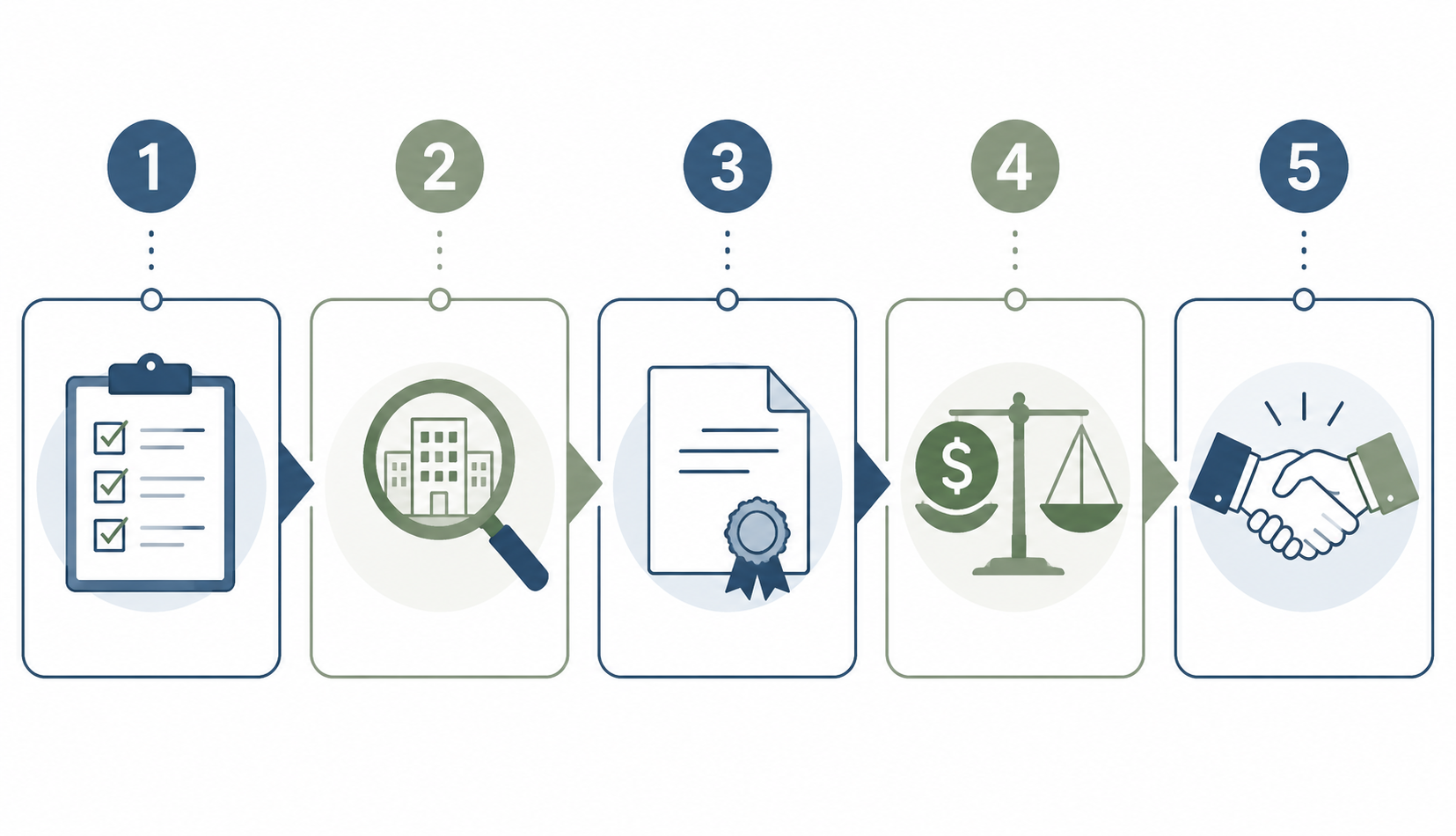
Choosing a senior care agency can feel overwhelming, but a systematic evaluation across five key domains helps you make a confident decision. This guide walks you through assessing needs, vetting agencies, verifying licensing, comparing costs, and planning a smooth onboarding.
By Editorial Team
new caregiver
experienced caregiver
long-distance caregiving
spousal caregiver
working caregiver
daily routines
medication management
personal hygiene
care coordination
first steps
ADLs
IADLs
A search for a senior care agency usually starts before the family has language for what it needs. Someone has fallen. A parent is coming home from the hospital. A dementia diagnosis has made afternoons unsafe. The adult children are comparing websites at night, while the older adult just wants home to keep feeling like home.
Before calling agencies, get clear on what kind of organization you are actually looking for. “Senior care agency” can mean several different things. Non-medical home care helps with companionship, meal preparation, transportation, housekeeping, bathing, dressing, toileting, and other daily activities. Skilled home health care involves clinical services such as nursing or therapy and is usually ordered by a doctor. Placement or referral services help families find providers or care settings, but they may not employ or supervise the caregiver who enters the home. The National Institute on Aging describes in-home services as a broad spectrum, from personal care and household help to health care and transportation, which is exactly why the first calls can get confusing so quickly.[1]
The safest way through the search is not to pick the agency with the kindest website or the fastest callback. Work through five decisions in order: what your parent needs, whether the agency can reliably deliver it, whether its credentials can be verified, what the care will actually cost, and how the first weeks will be managed.
Decision
What you are trying to confirm
Needs assessment
The parent needs companion care, ADL support, dementia-aware supervision, transportation, skilled home health care, or a combination.
Agency vetting
The agency has a working system for screening, training, supervision, backup staffing, care plan updates, and family communication.
Licensing verification
The agency meets your state’s requirements, if your state requires licensing for this type of care.
Cost comparison
The quote reflects hourly rates, minimum shifts, premiums, fees, and realistic weekly hours.
Onboarding
The first caregiver is introduced into a written plan, not dropped into a fragile household with vague instructions.
Start With The Care Your Parent Actually Needs
Families often call agencies with one sentence: “Mom needs help at home.” That is understandable, but it is too thin to price, staff, or supervise. A useful needs assessment separates ordinary household help from personal care, safety monitoring, memory support, transportation, and medical services.
Write down what happens on a normal day and what happens on a bad day. Normal days matter because they tell you the baseline schedule. Bad days matter because they reveal the risks that will cause everyone to scramble: missed medications, wandering, a shower that feels unsafe, a stove left on, a parent refusing food, or a late-afternoon confusion pattern that no one has been home to see.
Companion care: conversation, light meal support, errands, reminders, and presence for a parent who should not be alone for long stretches.
Household help: laundry, light housekeeping, grocery support, and organization that keeps the home livable.
ADL support: hands-on help with bathing, dressing, toileting, transferring, eating, and mobility.
Dementia-aware supervision: cueing, redirection, routine protection, exit-seeking awareness, and communication with family when behavior changes.
Transportation: rides to appointments, pharmacy trips, social visits, or errands, including clarity on whether the caregiver drives the client’s car or an agency-approved vehicle.
Skilled home health care: nursing, therapy, wound care, or other clinical services that usually involve a doctor’s order.
This distinction affects more than the job description. It changes who is qualified to provide the service, how the care is supervised, and whether insurance or Medicare may have any role. Medicare generally covers qualifying skilled home health care, not ordinary long-term non-medical help with bathing, meals, supervision, or errands.[1]
If you are still sorting the difference between daily tasks and safety risks, use an ADL and IADL assessment for aging parents before you call. It keeps the conversation from drifting into “a few hours here and there” when the real problem is shower safety, medication follow-through, or no one present after dinner.
Match Hours To Risk, Not To Guilt
The first schedule does not need to be perfect, but it should be honest. A parent who is lonely may do well with two or three companion visits a week. A parent who is unsafe in the shower needs visits timed around bathing. A parent who sundowns may need late-day coverage more than morning help. A parent recovering from hospitalization may need a temporary increase, then a planned reassessment.
Agencies commonly require minimum shifts of three to four hours, so a request for “just one hour to check in” may not be available through an agency model. That is not a reason to abandon the search; it is a reason to group tasks intelligently. A three-hour visit might cover lunch, bathing setup, laundry, a walk, medication reminders, and a short note to the family.
Vet The Agency’s Operating System, Not Just The Intake Call
A polished intake coordinator can make any agency sound reassuring. The harder question is what happens after the first caregiver is assigned, the family stops hovering, and real life starts. The Family Caregiver Alliance recommends that families ask direct questions about screening, training, supervision, fees, emergency procedures, and how problems are handled when hiring in-home help.[2]
Ask these questions in a calm voice and expect specific answers. If the person on the phone cannot answer, that is not automatically disqualifying. A strong agency can route you to the right supervisor. A weak one will stay vague.
Who employs the caregivers: the agency, a contractor network, or a registry model?
What background checks, reference checks, and work authorization checks are completed before a caregiver enters a home?
What training is required for personal care, transfers, dementia care, fall risk, infection control, and emergency response?
Who supervises the caregiver, and how often does that supervisor review the care plan?
How are missed shifts, late arrivals, caregiver illness, and last-minute callouts handled?
Who does the family call at 7 a.m., after hours, or on a holiday if the caregiver does not arrive?
How are concerns documented, escalated, and resolved?
Backup staffing deserves more attention than families usually give it. The national annual caregiver turnover benchmark was reported at 77% in the 2024 Home Care Pulse Benchmarking Report, as summarized by NCH Stats.[3] That number does not mean every agency is unstable. It does mean a family should not treat “we will send a wonderful caregiver” as a complete staffing plan.
The practical follow-up is simple: “If our regular aide quits, gets sick, or cannot work Tuesdays anymore, what happens next?” Listen for the sequence. Does the scheduler call the family first? Is a replacement sent automatically? Does the supervisor brief the substitute on transfers, dementia triggers, pet issues, door codes, and food routines? Can the family decline a substitute they have not met? These answers tell you whether the agency has a process or just optimism.
Caregiver Fit Still Matters
Once the basics are solid, personality fit becomes important. A parent with dementia may respond better to a calm, low-voice caregiver than to someone chatty and fast-moving. A retired teacher may want conversation and news. A private person may need someone who can help with bathing without turning the bathroom into a performance. Fit is not fluff; it affects whether the older adult accepts care.
But fit should sit on top of reliability, not replace it. A beloved caregiver who is unsupported by the agency can leave the family exposed when schedules change. A good agency should be able to discuss both: the human match and the system behind that match.
Verify Licensing And Oversight In Your State
Do not assume every senior care agency is licensed in the same way. Home care licensing requirements vary by state, and some types of non-medical care may be treated differently from skilled home health care. The Institute on Aging advises families to understand whether an agency is licensed or unlicensed and to check the rules that apply in their state.[4]
The verification step should be concrete. Ask the agency for its legal business name, license number if applicable, service area, and the name of the state body that regulates it. Then check with your state health department, department of aging, or aging services agency. If your state maintains a public lookup tool, use that rather than relying on a badge copied onto a website.
Confirm whether the agency is licensed for non-medical home care, skilled home health care, or both.
Ask whether caregivers are employees, contractors, or referred workers.
Ask for proof of liability coverage and workers’ compensation coverage where applicable.
Check complaint history if your state makes that information available.
Confirm who is legally responsible for payroll taxes, insurance, supervision, and replacement staffing.
Lead-generation sites can be useful for building a question list, and A Place for Mom’s home care guidance includes practical prompts for comparing agencies.[5] Still, the final verification should come from the agency’s documents and your state’s regulator, not from a directory profile.
Compare Costs After You Know What You Are Buying
Price matters. It just should not be the first filter, because the cheapest quote is meaningless until you know whether it includes the services, supervision, and backup coverage your parent needs.
For orientation, national median home care costs are clustered in the mid-$30s per hour. A Place for Mom reports a 2026 national median of about $34 per hour for in-home care, while CareScout’s 2025 long-term care data reports a $35 hourly median for homemaker services and a $35 hourly median for home health aide services.[5][6] CareScout’s state data also shows wide variation, with medians ranging from $25 per hour in Mississippi to $44 per hour in South Dakota.[6]
Build the comparison by week, not by hour. A $35 hourly rate becomes very different at 12 hours a week, 28 hours a week, or daily split shifts. Ask about minimum shifts, weekend rates, overnight rates, holiday premiums, mileage, cancellation rules, assessment fees, and whether the rate changes for hands-on personal care or dementia supervision.
Cost question
Why it matters
What is the hourly rate for the exact service level we need?
Companion care, personal care, and dementia-aware care may not be priced the same.
What is the minimum shift length?
Three- or four-hour minimums can shape the weekly schedule.
Are nights, weekends, or holidays billed at a premium?
The hours families most need covered may cost more.
What happens if we cancel a shift?
Hospital visits, illness, and family coverage can create short-notice changes.
Are there assessment, care management, transportation, or mileage fees?
A clean hourly quote may not include every recurring charge.
How often can rates change?
Long-term care planning needs more than the first invoice.
If the numbers are already making your stomach drop, pause and separate the payment sources. Medicare is not a general solution for non-medical home care. It may cover qualifying skilled home health care under specific conditions, but it generally does not pay for ongoing custodial help such as meal preparation, companionship, bathing support, or supervision when those are the main services needed.[1] For a deeper payment planning pass, review how to pay for home help in 2026 and a current home care cost guide.
Agency Versus Independent Caregiver
Hiring an independent caregiver can cost less than using an agency, and PayingForSeniorCare describes independent caregivers as often being roughly 20% to 30% less expensive than agency care.[7] That does not make the independent route a simple bargain. It changes the family’s job.
With a private hire, the family may need to handle recruiting, background checks, references, payroll, tax reporting, workers’ compensation questions, scheduling, sick coverage, termination, and replacement. Some families are ready for that. Some are not. If you are comparing both routes, treat the independent option as an employer-burden decision, not just a lower hourly rate. A separate private companion hiring guide can help you decide whether your family has the time and temperament for that role.
Ask For The Care Plan Before The First Shift
Choosing an agency is not the finish line. The first week is where many arrangements either settle or start to crack. A written care plan gives the caregiver something better than family folklore and gives the family something better than “we told someone on the phone.”
Before the first shift, the agency should document the tasks, schedule, safety risks, mobility needs, food routines, bathroom routines, medication reminder boundaries, emergency contacts, pets, door access, preferred name, communication style, and anything that tends to upset or reassure your parent. If dementia is part of the picture, include triggers, calming approaches, wandering risk, and what the caregiver should do if your parent refuses care.
A Place for Mom’s suggested agency questions include asking how care plans are created and updated, which is one of the more useful questions to carry into your calls.[8] The answer should name a person and a process. “We customize care” is not enough. Who updates the plan after a fall? Who changes it after a hospitalization? Who tells the caregiver that Dad now needs a gait belt, or that Mom is no longer safe reheating soup?
Make The First Week Deliberate
Confirm the written care plan with the agency supervisor before the first shift.
Introduce the caregiver while a family member is present, even if only for the first 30 minutes.
Walk through the home: bathroom setup, fall hazards, laundry, meals, supplies, thermostat, exits, and emergency information.
Document routines in one visible place: meals, favorite clothing, shower preferences, mobility cues, TV volume, nap habits, and topics to avoid.
Set communication expectations: daily note, app update, text to one adult child, phone call for urgent changes, and who should not be contacted for routine matters.
Schedule an early review with the agency after the first several shifts, not after the first month.
One adult child should be the main contact, even if siblings are sharing decisions. Agencies can work with families; they cannot efficiently manage five separate instruction streams. If siblings disagree, settle the disagreement away from the caregiver whenever possible. The caregiver needs a clear plan, and your parent needs the room to feel calm.
During that first week, watch for small mismatches before they become agency-ending grievances. Maybe the caregiver arrives on time but talks too loudly. Maybe the tasks are right but the visit is scheduled too early. Maybe the caregiver is kind but uncomfortable with transfers. These are not all reasons to switch agencies. They are reasons to test whether the agency supervises, adjusts, and communicates.
What A Trustworthy Agency Sounds Like
Trustworthy agencies do not need to sound perfect. They need to sound specific. They can explain what services they provide and what they do not. They can tell you whether they handle companion care, personal care, dementia support, transportation, or skilled services. They know their licensing status. They can describe caregiver screening without waving vaguely at “great people.” They have an answer for callouts. They put costs in writing. They expect the care plan to change.
That specificity protects the older adult as much as it protects the family. Every agency switch is not just an administrative correction. It is a new face at the door, a new person in the bathroom, a new schedule, and another round of explaining what should already be known.
The first-week plan is the last test before trust becomes routine: confirm the care plan, introduce the caregiver, document the home routines, set communication rules, and schedule an early review while small problems are still easy to fix.


Comments
Join the discussion with an anonymous comment.