12 Warning Signs Your Parent Can No Longer Live Alone
Wondering whether your parent is still safe living alone? This guide walks through the key warning signs across five areas of daily function, helping you recognize when patterns point to a need for help.
By Editorial Team
new caregiver
experienced caregiver
long-distance caregiving
spousal caregiver
working caregiver
daily routines
medication management
personal hygiene
care coordination
first steps
ADLs
IADLs
One bad afternoon does not automatically mean your parent can no longer live alone. A cluttered counter, a missed call, or one forgotten appointment can happen in any household. The question changes when the same problems repeat, spread into different parts of daily life, or require someone else to keep rescuing the situation.
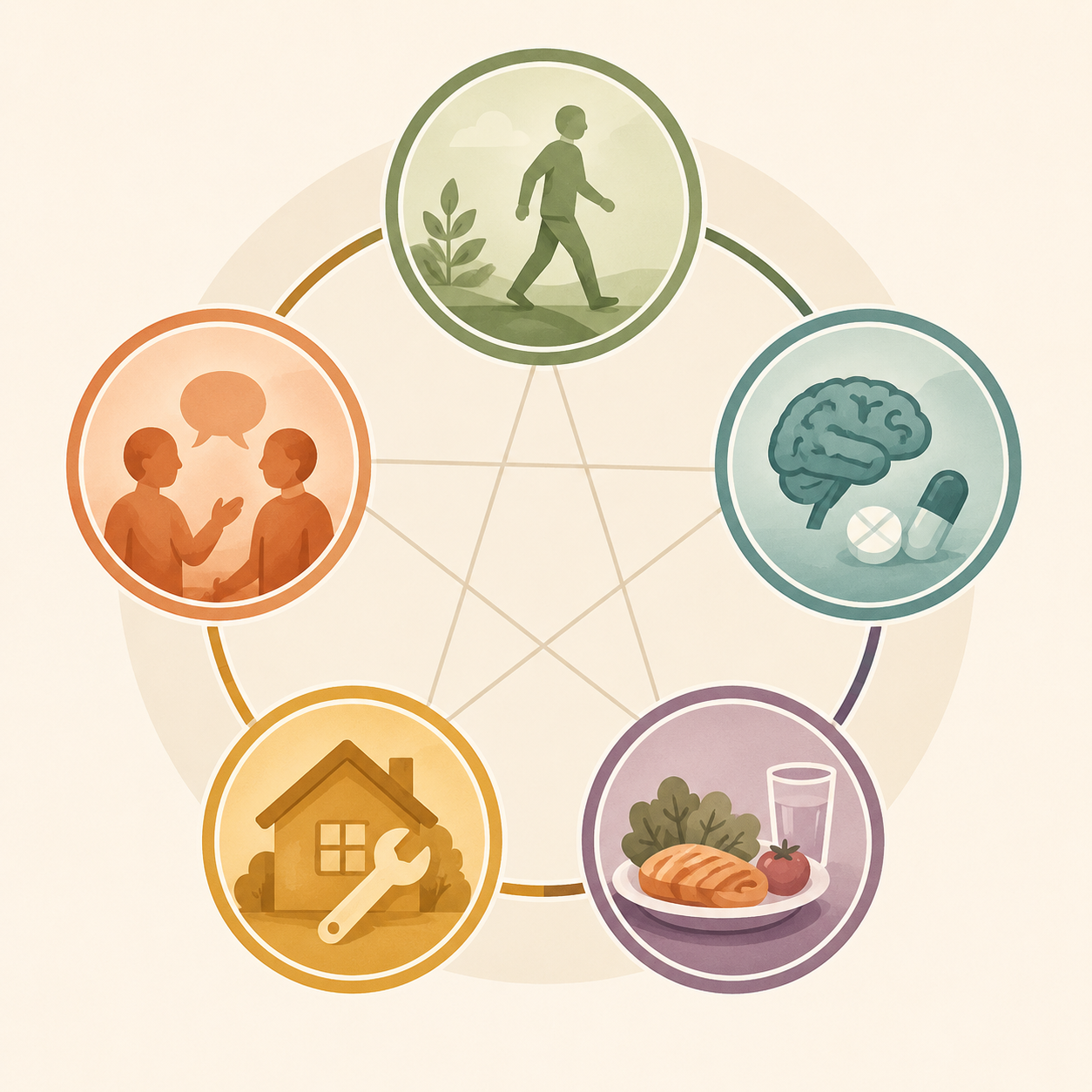
There are exceptions. A fall with injury, a cooking fire, wandering, or getting lost in a familiar place should be treated as urgent. Those events change the timeline immediately. Otherwise, the clearest answer usually comes from looking across five areas of function: physical safety and mobility, cognitive and medication management, self-care and nutrition, home maintenance and financial management, and social and emotional wellbeing.
The useful question is not “Can Mom still make her own choices?” or “Is Dad ready for assisted living?” It is narrower and more practical: is daily life still working, or are several systems now being held together by luck, denial, and unpaid family labor?
Start With the Pattern, Not the Argument
Before trying to persuade a parent, sibling, or clinician, write down what has actually happened. Dates matter. So do repeat observations. “She seemed off” is easy to dismiss. “Three times in six weeks, she left pills in the organizer, had expired food in the refrigerator, and could not explain a bruise” is harder to wave away.
Functional domain
Warning signs to watch for
Physical safety and mobility
Falls, new gait changes, fear of walking, unexplained bruises
Cognitive and medication management
Missed pills, repeated confusion with familiar tasks, technology or household mistakes that create risk
A warning sign in one domain deserves attention. Warning signs in three or more domains mean the old arrangement is no longer dependable without added support. That support may still happen at home, but “living alone” has stopped meaning “living without a safety net.”
Physical Safety and Mobility
Falls are the warning sign families most often recognize, but the earlier clues are usually quieter: a parent starts holding furniture while walking, avoids stairs, stops going to the mailbox, or says they are “just being careful” after previously moving around confidently. Bruises with vague explanations also belong in this category, especially when they appear more than once.
The reason to take this seriously is not that every stumble means a move is coming. It is that falls tend to repeat. More than one in four older adults falls each year, and falling once doubles the risk of falling again, according to the CDC.[1]
Living alone can add another layer of risk because there may be no one present to notice the fall, call for help, or see the pattern afterward. A 2024 BMJ Open pooled analysis of three randomized controlled trials in Switzerland found that living alone was associated with 76% higher odds of falling overall, rising to 2.19-fold among adults over 75. That study was conducted in a European population, so it should not be treated as a perfect US estimate, but the direction of the concern is still relevant for families assessing risk at home.[2]
Warning signs in this domain
A fall, especially one with injury, a long time on the floor, or a delayed call for help.
New unsteadiness, shuffling, grabbing walls or furniture, avoiding parts of the home, repeated unexplained bruises, or visible fear of falling.
Medication problems are easy to minimize because they can look like small housekeeping mistakes. A pill is still in the Monday slot. A refill was not picked up. Two bottles of the same medication sit in different rooms. The real concern is not one missed dose; it is whether your parent can still manage a routine where timing, refills, instructions, and side effects all have consequences.
Medication mismanagement is not a minor category of risk. Adverse drug events send more than 600,000 older adults to emergency departments each year, and the CDC identifies them as a leading cause of emergency visits among adults 65 and older.[3]
Cognitive changes often show up first in instrumental tasks rather than in dramatic memory lapses. A parent may still tell old stories beautifully and recognize everyone in the room, yet struggle to follow a familiar recipe, use the thermostat, manage passwords, or understand why a bill is overdue. CDC data on subjective cognitive decline found that 42% of older adults with memory decline needed help with household tasks.[4]
Warning signs in this domain
Pills left in the organizer, duplicate doses, missed refills, or confusion about what each medication is for.
Repeated confusion with familiar tasks, such as cooking a usual meal, using appliances, paying routine bills, or following written instructions.
Technology struggles that create safety or access problems, such as being unable to answer calls, use medical portals, manage passwords, or recognize scams.
A parent can insist they are eating fine while the refrigerator tells a different story. Look for spoiled food, very little fresh food, multiples of the same unused item, or a freezer full of meals that are never heated. Weight loss, looser clothing, dizziness, and fatigue may be the visible end of a routine that has been slipping for weeks.
Poor hygiene is another sign that families often explain away too gently. Everyone has low-energy days. The pattern that matters is repeated: unchanged clothes, body odor that was not typical before, unwashed hair, dental neglect, or a parent avoiding visitors because getting ready has become too hard.
Warning signs in this domain
Unintentional weight loss, skipped meals, little usable food in the home, or spoiled food left in the refrigerator.
Repeatedly wearing the same clothes, declining bathing or grooming, or visible neglect that is new for your parent.
Nutrition and hygiene problems do not always mean your parent is refusing care. Sometimes arthritis makes containers hard to open, vision changes make labels hard to read, depression lowers appetite, or memory changes interrupt the sequence of shopping, cooking, eating, and cleaning up. The cause needs assessment, but the practical effect is already visible: daily self-care is no longer reliably happening.
Home Maintenance and Financial Management
The home often shows decline before a parent names it. Mail stacks up in unopened piles. The trash is not going out. A once-orderly room becomes a place to set things “for now.” There is a difference between a lived-in home and a home where ordinary upkeep has stopped.
Financial warning signs deserve particular attention because they can stay hidden until there is a penalty, shutoff notice, scam loss, or foreclosure threat. Look for unopened bills, duplicate charitable donations, past-due notices, confusion about bank accounts, or a parent who suddenly becomes secretive because they are embarrassed by mistakes.
Scorched cookware belongs here too. A burned pan may be a kitchen accident. Two scorched pans, a burner left on, or smoke alarms going off without a clear response is a home-safety problem. It may also connect back to cognition, mobility, vision, fatigue, or medication side effects.
Warning signs in this domain
Unpaid bills, unopened mail, overdraft notices, utility shutoff warnings, or repeated confusion about routine finances.
Clutter, spoiled trash, blocked walkways, unsafe storage, pest problems, or maintenance issues your parent no longer reports.
Scorched pans, burners left on, smoke alarm incidents, or other signs that cooking has become unsafe.
Withdrawal can look like preference. Some people truly enjoy solitude. The change to notice is a parent who stops doing what used to keep them connected: church, clubs, neighbors, regular phone calls, coffee with friends, hair appointments, library visits, or family meals.
Unreturned calls matter when they become a pattern. They may mean hearing problems, depression, sleep disruption, cognitive change, fear of scams, or simple fatigue. They also shift the burden onto someone else: the daughter driving over after work, the spouse who is also aging, or the neighbor who keeps “just checking in.”
Loneliness is not just an emotional footnote. A 2024 systematic review of 47 studies found loneliness prevalence ranging from 6.5% to 28.5% among adults 60 and older, and described a bidirectional link between loneliness and functional decline: loneliness can accelerate decline, and decline can increase loneliness.[5]
Warning signs in this domain
Pulling back from usual people, places, routines, or activities without a clear substitute.
Repeatedly not answering calls, missing expected check-ins, becoming unreachable, or worrying others in ways that are new.
New irritability, anxiety, sadness, suspicion, or loss of interest that changes how your parent manages daily life.
This domain is often the one families postpone because it feels less concrete than falls or bills. But isolation can remove the very people who would otherwise notice the refrigerator, the mail, the bruises, or the missed medications.
When the Signs Mean Living Alone Is No Longer Sustainable
Use two thresholds. The first is immediate: a fall with injury, a cooking fire, wandering, or getting lost in a familiar place means the current setup is not safe enough while everyone waits to see what happens next. The response may be medical evaluation, temporary supervision, emergency home changes, or a pause on unsupervised cooking, but it should not be nothing.
The second threshold is cumulative: warning signs in three or more domains. A missed pill, spoiled food, and unpaid bills are not three unrelated annoyances when they appear together. They show that medication, nutrition, and financial management are all slipping. Add unsteady walking or withdrawal from usual contacts, and the margin for error gets thin.
What you are seeing
What it usually means for next steps
One isolated, noncritical sign
Observe, document, and check whether it repeats.
Repeated signs in one domain
Address that domain directly, such as fall prevention, medication setup, meals, or bill support.
Signs in two domains
Increase monitoring and involve a clinician or relevant professional.
Signs in three or more domains
Independent living without added support is no longer sustainable.
Fall with injury, cooking fire, or wandering
Treat as urgent even if other domains still look mostly intact.
This does not automatically mean your parent must move. It means the existing support level no longer matches the risk. The next arrangement might be home modifications, medication management, a meal plan, in-home help a few hours a week, adult day services, PACE where available, family caregiver coordination, or monitoring technology. For technology decisions, start with A Decision Framework for Choosing an Elderly Monitoring System rather than buying devices as a substitute for a care plan.
One more thing belongs in the calculation: who is already compensating. If a neighbor checks in daily, a daughter refills the pillbox every weekend, a spouse prevents cooking mistakes, and a son quietly pays overdue bills, your parent may not actually be living independently. The family system may already be providing care without naming it.
What to Do After You Recognize the Pattern
Once the pattern is visible, do not start with a debate over where your parent will live for the rest of their life. Start with the facts in front of you.
Document specific incidents: dates, what happened, who noticed, and what consequence followed.
Reduce immediate risks first: falls, fire hazards, medication errors, missed meals, and situations where your parent may not be able to call for help.
Involve the right professionals: a primary care clinician, pharmacist, occupational therapist, social worker, financial professional, or local aging-services agency depending on the signs.
Name the added support being provided already, especially by family members, neighbors, or an aging spouse.
Have the conversation before the next crisis decides the options for you.
The point is not to prove your parent has failed. It is to stop pretending that repeated breakdowns across daily life are isolated. When the same signs keep appearing in different rooms, different routines, and different people’s emergency errands, the evidence is already telling you that the current arrangement needs more support.


Comments
Join the discussion with an anonymous comment.